
Thai Wine in Singapore: A Guide to Thailand’s Distinctive Wines

What if a wine from a less familiar origin gave you a fresh way to think about familiar grapes? Thai wine can feel like a leap beside established wine regions, especially when a product listing says little about what’s in the glass. You don’t need specialist jargon to explore with confidence. A practical starting point for Thai wine Singapore searches is to consider the style, the occasion and the food you plan to serve.
Thailand’s wine scene includes international varieties such as Syrah, Cabernet Sauvignon, Chenin Blanc and Viognier. GranMonte brings these grapes into the story, offering a familiar reference point for exploring Thai wine. This guide explains the context, compares styles in straightforward terms and offers useful pairing ideas. You’ll also find a simple way to browse GranMonte wines through Stellez Vine Singapore’s curated selection and choose a bottle suited to your table.
Table of Contents
Thai wine in Singapore: why this emerging wine region merits a closer look
Thai wine is wine made in Thailand; the name describes where it is produced, not which grape is in the bottle. That distinction makes the category easier to explore. A Thai wine might use a familiar international variety, but its origin and the choices made in the vineyard and winery give it a different context from a wine made elsewhere. If you’re looking for Thai wine Singapore options, treat country of origin as one useful clue, not a complete tasting note.
Thailand’s wine scene isn’t one uniform style. Its tropical climate creates distinct growing conditions and challenges, while grape choice and winemaking decisions also shape what ends up in the glass. For an overview of the country’s wine history, growing challenges and regions, see Thai wine on Wikipedia. Keep those factors in mind rather than expecting every bottle from Thailand to taste alike.
GranMonte is a useful producer to know when exploring Thai wine. Its range includes international varieties such as Syrah, Cabernet Sauvignon, Chenin Blanc and Viognier. These names may already be familiar from other wine regions, but the grape alone doesn’t tell the whole story. Consider the bottle’s origin, style and tasting notes together to build a clearer picture.
What makes Thai wine different from familiar wine regions?
Origin, grape and winemaking all contribute to a wine’s character. A Syrah from Thailand is still Syrah, but it shouldn’t automatically be treated as interchangeable with one from France or Australia. The grape gives you a useful point of comparison; the place it grows and the decisions behind the wine add further context. Compare Thai wines bottle by bottle rather than assuming they share a single flavour profile or judging them against established regions.
Is Thai wine worth exploring for a first-time buyer?
Yes. Thai wine is worth exploring if you’re curious about a new origin and want to start with grapes you may already recognise. Familiar varietal names can make the first step approachable, while the Thai origin offers a new perspective. You don’t need to assume every bottle will be unusual or rely on broad claims about quality. Choose by grape and the specific wine’s stated style, then let your own tasting experience guide what you try next.
Singapore-based readers can explore Thai wines as part of a wider international selection. Stellez Vine curates wines from international regions, including GranMonte from Thailand. Start with a grape or style you know, then compare the bottle details to find something suited to your occasion.
How Thailand’s climate and growing conditions shape its wines
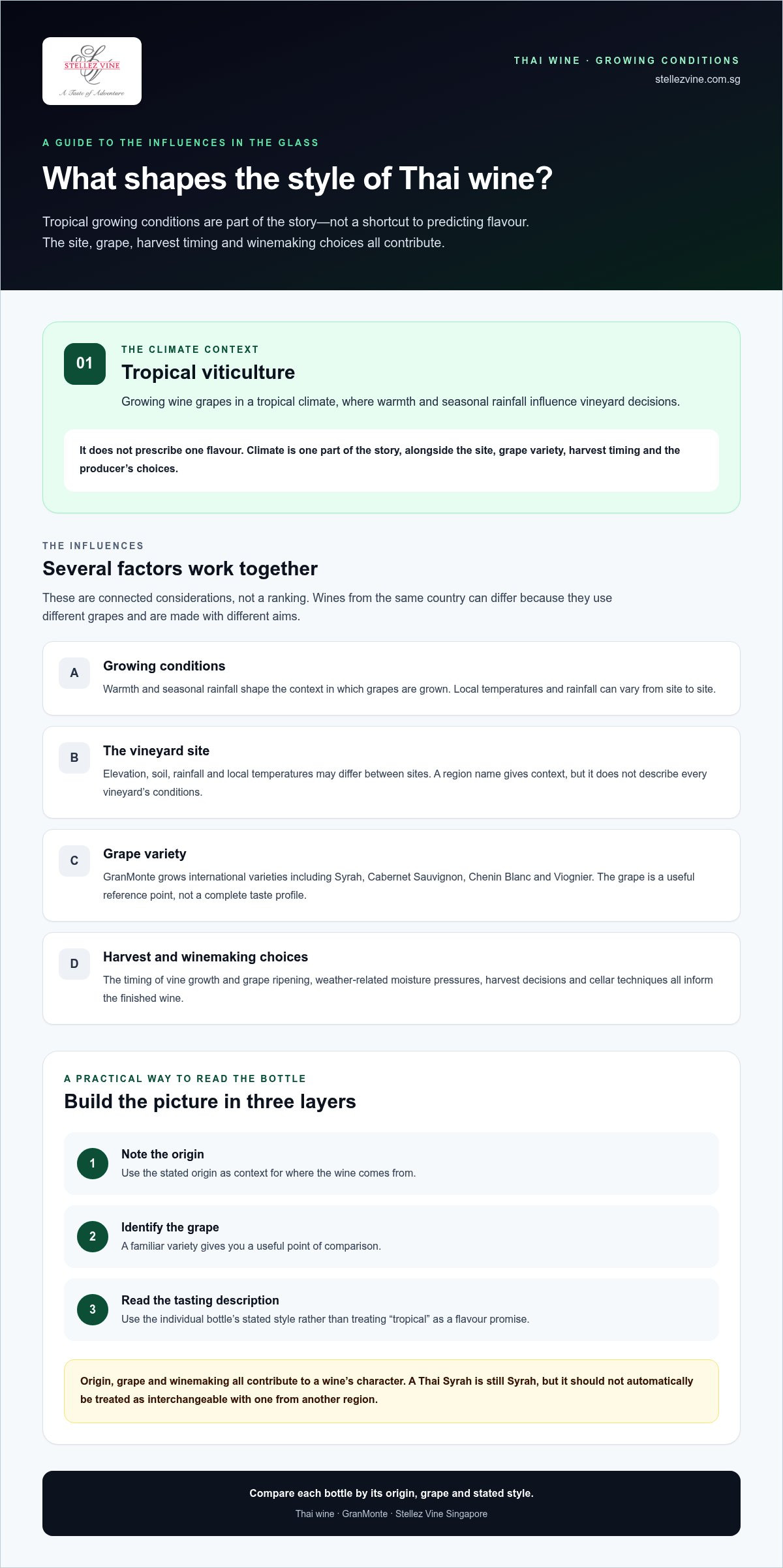
Wine grapes are often associated with temperate climates, where seasonal changes guide the vine’s yearly growth and fruit ripening. Thailand’s tropical setting creates a different context. Tropical viticulture means growing wine grapes in a tropical climate, where warmth and seasonal rainfall influence vineyard decisions. It doesn’t prescribe one flavour: the site, grape variety, harvest timing and winemaking choices all matter.
In Thailand, tropical growing conditions shape when and how grapes are cultivated, while grape variety and winemaking choices help determine the style in the glass. Think of climate as one part of the story, not a shortcut to predicting a wine’s taste. Wines from the same country can differ because they use different grapes and are made with different aims.
Where is Thai wine grown, and what shapes the vineyards?
Thailand has several wine-growing areas. A producer’s name and the origin stated on the bottle can help you understand where a wine comes from. GranMonte is a Thai winery, and its wines carry a geographical indication connecting them with their named origin. That gives the label more context than “Thai” alone by identifying a specific wine-growing area and producer.
A region’s name is a starting clue, not a complete description of vineyard conditions. Elevation, soil, rainfall and local temperatures can vary from site to site, so avoid assuming that every vineyard in one area shares identical conditions. For any bottle, rely on its stated origin and grape, and look for vineyard-specific evidence before drawing conclusions about its soil or microclimate.
How does tropical viticulture influence winemaking?
In warm, rainy growing environments, vineyard teams must account for the timing of vine growth and grape ripening, along with weather-related pressures such as moisture. These are general viticultural considerations, not a claim that every Thai grower uses the same methods. Site and season influence the choices available, while harvest decisions and cellar techniques further shape the finished wine.
Climate alone can’t guarantee freshness, body, aroma or quality. A grape variety responds to its growing conditions, but the producer’s decisions matter too. GranMonte grows international varieties including Syrah, Cabernet Sauvignon, Chenin Blanc and Viognier. Those grape names offer useful reference points when comparing bottles, but they don’t establish a precise taste profile without details about the individual wine.
For a first exploration, read the label in layers: note the origin, identify the grape, then look for the bottle’s tasting description. This keeps the regional story informative without turning “tropical” into a flavour promise. To compare bottles, browse Stellez Vine’s GranMonte selection and consider each wine according to its stated style.
Thai wine styles compared: choose by grape, taste, and occasion
Start with the style you usually enjoy, then use the grape and tasting notes to refine your choice. GranMonte’s Singapore selection includes sparkling, white, rosé and red wines, with familiar grapes such as Chenin Blanc, Syrah, Cabernet Sauvignon and Viognier. The examples below are a starting point, not a promise of how any individual bottle will taste.
Which Thai wine styles should a beginner explore first?
Use the wine category to narrow the field, then read the description for the specific bottle. “Fresh” commonly refers to lively acidity, while “structured” can suggest a firmer feel, often from tannin in reds. “Fruit-forward” means fruit flavours are prominent. Treat these as tasting cues rather than guarantees; the producer, vintage and winemaking all shape a wine’s profile.
Sparkling: GranMonte Crémant Methode Traditionelle NV is a sparkling example to consider for a toast or relaxed aperitif.
White: Spring Chenin Blanc 2024, Verdelho 2022 and GranMonte Orient Viognier 2025 give you different grape names to compare. Look to each bottle’s notes for cues on freshness, texture and fruit character.
Rosé: Sakuna Rosé 2025 is an option for rosé drinkers. Its colour identifies the category, while the tasting notes give more useful detail about its particular style.
Red: Heritage Syrah 2024, GranMonte Durif 2024 and Asoke Cabernet Sauvignon Syrah 2023 offer single-grape and blended labels to compare. Use the stated grape and tasting notes to decide whether you want a lighter-feeling or more structured red.
This framework helps you explore Thai wine Singapore listings without assuming that all reds, whites or wines made from the same grape will taste alike. A vintage is the year shown on the label, identifying when the grapes were harvested. A wine’s profile can vary between vintages.
How do you match Thai wine with food and occasions?
Pair by balance, not by nationality. Match the wine’s stated weight and acidity to the dish: a fresher white can suit lighter flavours, while a fuller-feeling red may work better with richer food. For spicy dishes, don’t assume one wine is a universal match. Heat, sweetness and sauce all affect the pairing, so choose a wine whose listed style complements the dish.
For casual discovery, pick a category you already enjoy and serve it with a simple meal. That gives you a chance to notice the wine’s character without competing flavours. For a special occasion, choose around the menu and mood, then use the bottle’s tasting notes to set expectations. The grape is a helpful first clue; the producer, vintage and winemaking complete the picture.
How to choose and enjoy Thai wine in Singapore
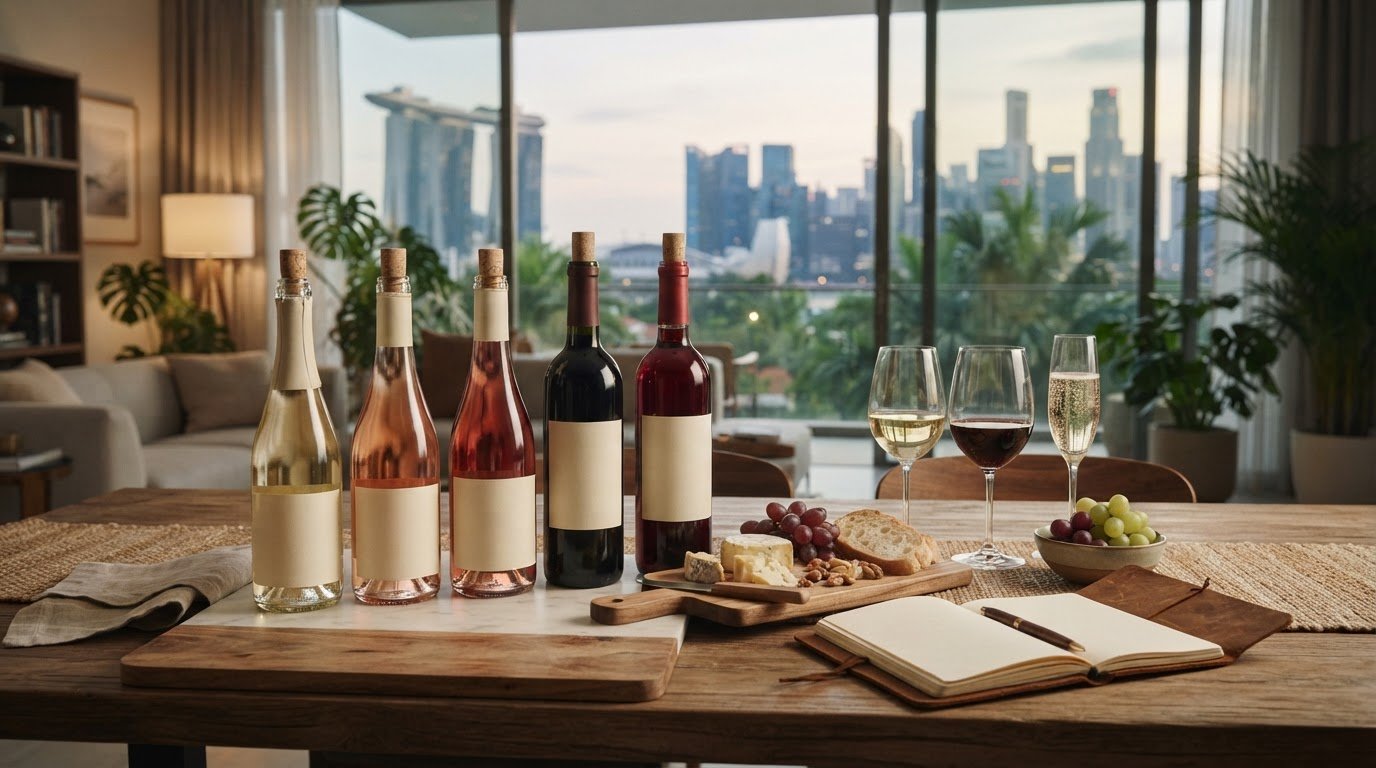
Make your choice in three steps: decide what style you enjoy, match it to the occasion, then compare labels for details that fit. This keeps Thai wine Singapore shopping approachable, even if you’re new to the region. You don’t need to decode every winemaking term. Start with what you like and use the bottle information to narrow the options.
Choose a style. Begin with colour and category. Are you in the mood for sparkling, white, rosé or red? If you already have a favourite grape, use it as another helpful starting point.
Match the occasion. Consider whether the wine is for a casual dinner, a gift or a more considered meal. The occasion helps set the mood, but it doesn’t have to dictate a strict pairing.
Browse the labels. Compare the producer, grape, vintage and tasting notes. Use descriptions as clues to the wine’s character, not as a guarantee that every palate will experience it in exactly the same way.
What should you look for when buying Thai wine online?
Set a short brief before browsing: preferred colour or style, the occasion and any grape you know you enjoy. Then read the label details in that order. The producer identifies who made the wine; the grape gives you a familiar reference point; and tasting notes can suggest whether the bottle sounds fresh, fruit-led or more structured.
Don’t choose by grape name alone. The same variety can be made in different styles, and the vintage and winemaking choices contribute to the individual bottle. If a description uses unfamiliar terms, focus on the plain-language cues and how they relate to your preferences. Stellez Vine’s online storefront features curated Thai wines from GranMonte, which you can shop online and have delivered within Singapore.
How should you serve Thai wine at home?
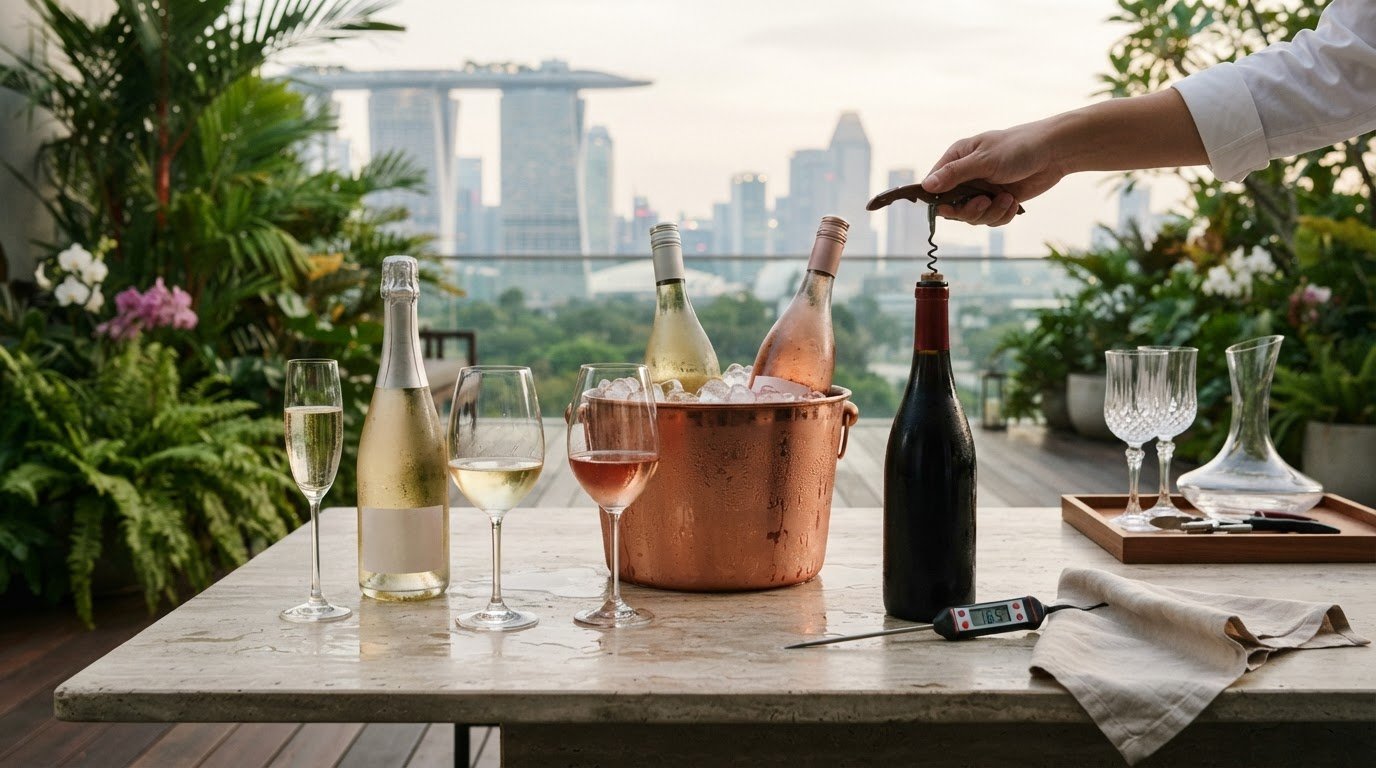
Serve sparkling, white and rosé wines chilled, and avoid leaving them out so long that they lose their refreshing feel. Red wines are often more expressive when they aren’t overly warm. If the bottle provides serving guidance, use it as your first reference. Appropriate serving conditions help reveal a wine’s character, while a clean glass and a little time to breathe can make tasting more comfortable.
Planning to keep a bottle rather than open it soon? Consider where it will be stored and how long you intend to hold it. Singapore’s warm conditions make thoughtful storage worth considering; consult a guide to long-term wine storage in Singapore for more detail. For your next bottle, browse GranMonte Thai wines online and use the three-step approach to find a style suited to your table.
Discover GranMonte Thai wines through Stellez Vine
Regional context makes a new wine easier to approach, but the bottle is where exploration becomes personal. If you’re curious about Thai wine Singapore selections, GranMonte offers a focused place to begin through Stellez Vine’s curated range. The winery is based in Thailand, giving its wines a specific producer and origin to explore rather than an unfamiliar country name alone.
Why start your Thai wine exploration with GranMonte?
GranMonte’s range includes grapes known internationally, including Chenin Blanc, Syrah, Cabernet Sauvignon and Viognier. That gives you a useful bridge into a new wine origin: begin with a variety you recognise, then pay attention to how the individual bottle is described. The range also includes different wine categories, so exploration isn’t limited to one colour or style.
Use the bottle details to make a considered choice. The producer tells you who made the wine; the grape gives you a familiar reference point; and the tasting notes help you picture its stated character. GranMonte examples in Stellez Vine’s selection include Spring Chenin Blanc 2024, Heritage Syrah 2024, Sakuna Rosé 2025 and Crémant Methode Traditionelle NV. These names indicate grape or category and vintage where provided, but each wine’s description is the best guide to its profile.
GranMonte is a practical starting point, not a claim that every bottle will suit every palate. If you enjoy comparing familiar grapes across different origins, or want to choose something beyond the regions you usually buy, a producer-led selection gives your discovery a clear focus.
Where can you explore Thai wine from Stellez Vine?
Browse Stellez Vine’s online storefront to explore its curated GranMonte Thai wines. Rather than choosing by country name alone, narrow your options by category, grape and the details provided for each bottle. Then consider what you’re buying for: a familiar style for dinner, a bottle to share with curious friends, or a sparkling wine for a celebratory moment. This simple approach keeps the choice grounded in your preferences.
Customers can shop online and arrange delivery within Singapore. For a smooth first browse, keep your preferred wine colour or category in mind, compare the listed GranMonte labels and read each description before deciding. If you’re new to online wine shopping, the existing guide to buying wine online can help you approach the process with confidence.
Ready to put your new knowledge to use? Explore GranMonte Thai wines at Stellez Vine and choose a bottle that fits your taste and occasion.
Make your next glass a discovery
Your first bottle doesn’t need to settle whether Thai wine is “for you.” Treat it as a starting point: notice which flavours, textures or pairings you enjoy, then use those preferences to guide your next choice. That turns an unfamiliar label into a more personal exploration, one glass at a time. For anyone looking into Thai wine Singapore, curiosity and a few clear tasting notes are more useful than expecting every bottle from one country to share the same character.
Stellez Vine’s online storefront offers a dedicated selection of Thai wines from GranMonte, with delivery within Singapore. Choose a bottle that suits your occasion, take time to savour it and let your own palate lead the way. Explore Thai wines from GranMonte and enjoy discovering a new favourite.
Frequently Asked Questions
What does Thai wine taste like?
Thai wine doesn’t have one defining taste; its profile varies by grape, producer and bottle. A white made from Chenin Blanc, for example, shouldn’t be assumed to taste like a red Syrah, and two wines from the same grape can differ too. Check the individual wine’s tasting notes for clues such as citrus, ripe fruit, spice or texture, then use those as a guide rather than a guarantee.
Is Thai wine worth trying?
Yes, especially if you enjoy discovering wines from places you haven’t explored before. A familiar grape gives you a helpful point of comparison, while the bottle’s origin adds something new to consider. For a first taste, choose a style you already enjoy rather than feeling you need to select the most unusual label. Notice what you like, then use that experience to guide your next bottle.
Which Thai wine should a beginner try first?
Start with the colour and style you usually reach for. If you prefer whites, GranMonte’s Spring Chenin Blanc 2024 is a specific option; if you usually choose reds, Heritage Syrah 2024 offers a familiar grape to explore from Thailand. For a celebration, consider the listed Crémant Methode Traditionelle NV. Read the individual bottle notes and pick one that fits your plans, whether it’s a quiet dinner or a toast.
Where can I buy Thai wine in Singapore?
You can explore Thai wine Singapore options through Stellez Vine’s online storefront, which features a dedicated selection of GranMonte wines. Browse by the style you prefer, then compare the producer, grape and bottle description to find a suitable choice. Customers can arrange delivery within Singapore. Use the listed bottle details to compare the available styles and make your selection.
Can Thai wine pair with Thai food?
Yes. Choose according to the dish’s intensity and seasoning rather than assuming one wine will suit every Thai meal. A lighter dish may work well with a lighter-feeling wine, while richer or more deeply flavoured food may call for a wine with more body. For spicy dishes, consider the heat and sweetness of the sauce too, and select a bottle whose tasting notes complement those flavours instead of overpowering them.
How should I store Thai wine at home?
Keep wine away from direct sunlight, heat and frequent temperature changes. A cool, dark, stable place is a better choice than a sunny shelf or a spot near an oven. If you’re saving a bottle, avoid moving it around unnecessarily and follow any storage guidance on its label. For more detailed advice tailored to local conditions, consult the article on long-term wine storage in Singapore.

Comments