
Wine Serving Temperature in Singapore: A Practical Guide by Style

Could the classic advice to serve red wine at room temperature be why it tastes heavy in Singapore? In a tropical climate, a bottle can warm quickly once it leaves the fridge, while an over-chilled white may hold back the aromas and flavours you want to savour. Getting wine serving temperature Singapore right starts with the style of wine, then considers the bottle’s actual temperature.
It’s worth looking beyond one-size-fits-all rules. “Room temperature” isn’t a reliable target for every home, and cooling times alone can’t tell you whether a bottle is ready. The wine’s style, the bottle’s starting temperature and how it opens up in the glass all matter.
This guide gives you practical serving ranges for reds, whites, rosés, sparkling and dessert wines, then explains how to adjust when a bottle is too warm or too cold. You’ll learn simple ways to judge its temperature without relying on the clock, so each pour can reveal its character. Serve with confidence, whether you’re opening a fresh, aromatic white or a structured red in Singapore’s warm surroundings.
Table of Contents
Why wine serving temperature in Singapore needs a style-first approach
A carefully chosen bottle can seem flat, sharp or out of balance if it’s poured too warm or too cold. In Singapore, a bottle may move from chilled storage into warm surroundings, so “serve at room temperature” isn’t a dependable instruction. Serving temperature means the wine’s temperature when it’s poured, not the temperature at which it has been stored.
That distinction matters because serving is a short-term decision shaped by the style in your glass. A lighter-bodied wine generally benefits from a different serving point than a fuller-bodied one, while the bottle’s starting temperature determines how much adjustment it needs. A wine taken from cool storage may be close to ready; one that has been sitting out may need attention before you pour.
Let the wine’s style set the target, then use the bottle’s starting temperature to decide how to reach it. This is the practical foundation of wine serving temperature Singapore, and it’s more reliable than treating every red or white as if it belongs at one fixed temperature. The Wine Serving Temperature Guidelines offer a broader overview of how serving temperature can affect taste and smell, including WSET recommendations.
Why “room temperature” can mislead wine drinkers
The familiar room-temperature rule comes from an era when indoor rooms were typically cooler than many modern living spaces. It was never a universal setting for every home or climate. In Singapore, a bottle left in a warm room can rise above a suitable serving temperature, so use the wine’s style and actual condition rather than the room as your guide.
Warm serving conditions can make alcohol seem more prominent and the wine feel less balanced. Excessive chill can mute aromas and flavours, making it harder to appreciate the wine’s character. Neither effect means the bottle is flawed: serving temperature may simply be masking some of what’s in the glass. Adjust gradually, then reassess as the wine responds.
Serving temperature is not the same as storage temperature
Longer-term storage aims to keep wine in stable conditions; serving aims to present it at a suitable temperature for enjoyment. A bottle kept in a wine fridge or another cool storage setting may still need a small adjustment before pouring. Conversely, a bottle stored at a suitable temperature can warm once it’s brought out and left in a warm room.
Think of storage as protecting the bottle over time, and service as preparing it for the moment it’s opened. For the separate question of maintaining wine over longer periods, Stellez Vine Singapore’s guide, “Long Term Wine Storage in Singapore,” covers storage considerations. Here, the focus is the final check before pouring: identify the style, consider where the bottle has been, and adjust it towards the serving range that suits it.
Wine serving temperature by style: a quick reference for Singapore
Use this chart as a starting point for wine serving temperature Singapore, not as a set of rigid rules. The ranges are practical benchmarks, and producer guidance can help you fine-tune the target for a specific bottle.
Lighter styles are generally served cooler than fuller-bodied styles, but the bottle’s structure and serving context refine the target. In Singapore, don’t assume that a red is ready simply because it’s been kept out of the fridge. A warm room can take it beyond its useful serving range.
How to choose a temperature within the range
Use body and structure as your first clues. A delicate, aromatic wine may show more clearly toward the cooler end, while a fuller-bodied or more structured style can benefit from moving toward the warmer end. Sweetness and aromatic delicacy also influence preference, so treat the range as a guide rather than forcing every bottle to the same point. If unsure, start slightly cooler and let the wine warm gradually in the glass. For an individual wine, follow producer guidance rather than assigning a precise temperature by grape or colour alone.
Red, white, rosé, and sparkling: what changes in the glass
Too much warmth can make red wine’s alcohol seem more pronounced and its balance less composed; too much chill can make its aromas and texture harder to appreciate. Whites and rosés served very cold may seem muted, while warmer pours can lose some of their lively lift. Sparkling wine needs careful chilling too: served too warm, it may feel less refreshing, while excessive cold can suppress aromatic detail. Notice how the wine develops as it sits in the glass, and adjust your next pour accordingly.
Pair your chosen style with suitable glassware to make the serving experience feel considered from first pour to last. Explore Stellez Vine’s wine selection to discover bottles for your table.
Chilling, warming, and common temperature mistakes
Once you know the style you’re serving, choose the simplest adjustment to bring the bottle closer to its target. A refrigerator is convenient for gradual cooling, while an ice-and-water bath is useful when you need a quicker change. Briefly holding a cool bottle in your hands can gently take the edge off if it’s too cold. These methods address serving temperature; they don’t replace stable conditions for longer-term storage.
There’s no dependable universal cooling time. The bottle’s starting temperature, size and chosen method all affect how quickly it changes. Check the bottle as you go instead of relying on a timer. Fast chilling can be useful, but leaving wine to become excessively cold may suppress aromas and flavour, particularly in delicate or aromatic styles.
Don’t serve every red at ambient tropical room temperature by default. If a red feels warm, a little chilling can help bring it closer to its style’s serving range. The aim isn’t to make it cold, but to avoid letting the room dictate the pour.
What to do when a bottle is too warm
Place it in the refrigerator for a short spell, or use an ice-and-water bath for a more direct adjustment.
Check the bottle rather than assuming a set amount of time will work. A larger bottle or a warmer starting point may need a different approach.
Taste, then chill in short increments if the wine still seems too warm. Reassess as it approaches its serving range.
An ice-and-water bath surrounds more of the bottle than ice alone, making it a practical option for cooling before service. Keep the process measured: a quick change is convenient, but overshooting can make the wine seem muted. For wine serving temperature Singapore, checking and adjusting is more reliable than treating a timer as a guarantee.
What to do when a bottle is too cold
Let the bottle rest at room temperature, or pour a small amount and allow it to warm in the glass. Avoid direct heat or placing the bottle in hot water; a gradual rise gives you more control. Taste as it warms. If the aromas begin to open and the flavours feel more expressive, continue serving at that pace rather than rushing the adjustment.
Use the glass as your final fine-tuning tool: a poured serving will respond more quickly than the bottle, so give it a moment and check again before changing the whole bottle. If you regularly keep wine on hand, explore wine chillers and fridges from Stellez Vine as an option for storage and temperature management, separate from the small adjustments made just before pouring.
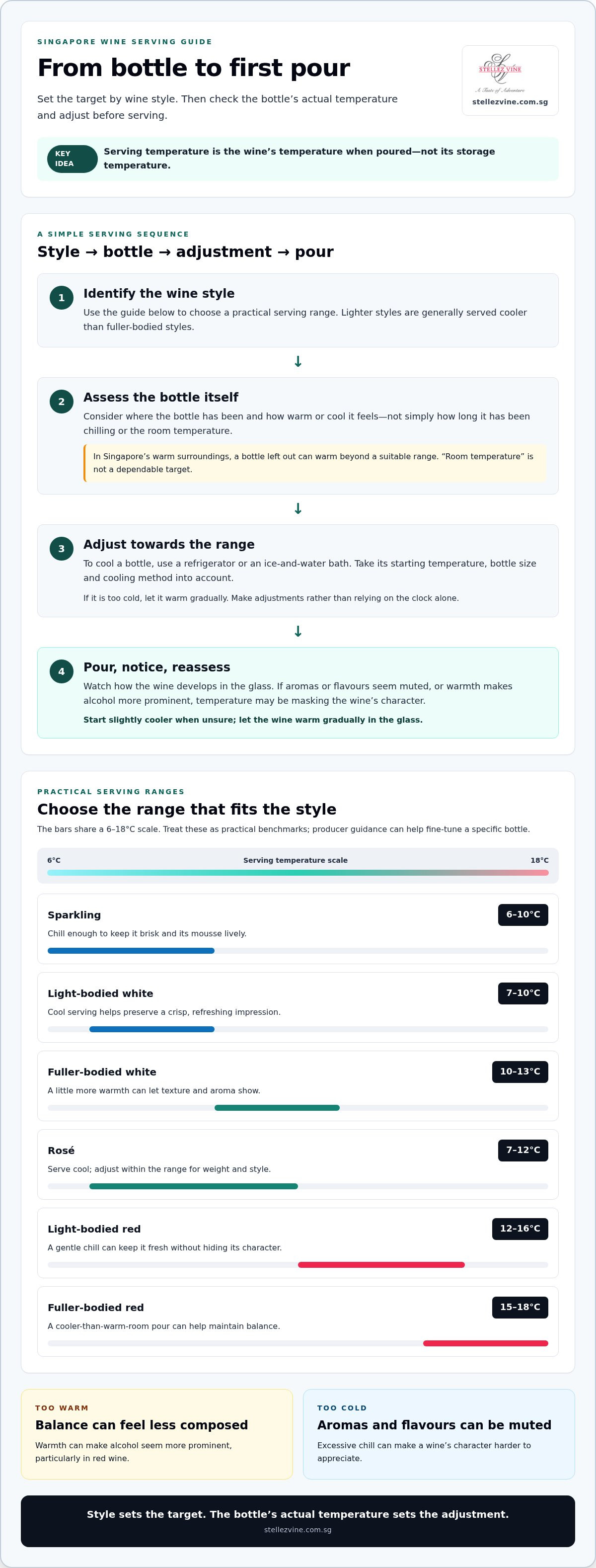
A simple Singapore wine-serving routine from bottle to first pour
Make the final temperature check part of opening the bottle, not a race against the clock. For wine serving temperature Singapore, use a straightforward routine: identify the style, assess the bottle’s starting point, then adjust before pouring. The chart gives you a target range; the bottle tells you how close you are.
Identify the style. Decide whether you’re serving sparkling, a light or fuller-bodied white, rosé, or a light or fuller-bodied red. Use the style chart as your starting point. If the producer gives advice for that particular bottle, use it to refine the general range.
Assess the bottle. Consider where it has been: in cool storage, in the refrigerator, or standing in a warm room. A bottle that has just come from a fridge may need time to rise; one that has been sitting out may need cooling. Don’t assume the same elapsed time will bring every bottle to the same temperature.
Adjust before pouring. If the bottle seems too warm, cool it gradually and check again. If it feels too cold, let it rest or allow a small pour to warm in the glass. Make small changes, then taste. A suitable glass completes the preparation, giving you a comfortable way to appreciate the wine’s aromas and texture.
Check the wine and its starting temperature
Begin with the wine’s broad style, then consider its recent temperature history. “Chilled” can mean the bottle has just been taken from a refrigerator; “stored” may mean it has been kept cool but not prepared for immediate service; “room-warm” signals that it may need attention before pouring. These descriptions are useful clues, not precise readings, so let the bottle’s condition guide your next step.
Cooling time varies with the starting temperature, bottle size and method. Treat a timer as a reminder to check, not proof that the wine is ready. This small habit keeps the routine calm, especially when preparing more than one style for the table.
Pour, taste, and make small adjustments
Pour a modest first taste. Notice whether the wine feels fresh, whether its aromas are opening, whether alcohol seems pronounced, and whether the overall balance feels composed. If it seems too warm or too cold, adjust the bottle gradually before serving the next glass. Keep it out of direct sunlight and away from unnecessary heat during the meal so its temperature doesn’t drift quickly.
Complete the ritual with glassware suited to the occasion. Explore Stellez Vine’s glassware to find a considered finishing touch for your next pour.
Make the right tools part of a better pour
Good service doesn’t depend on owning special equipment. A refrigerator, a suitable glass and a little attention to the bottle are enough for many occasions. For wine serving temperature Singapore, the most useful tools are the ones that make it easier to prepare wine thoughtfully, without confusing long-term storage with the final adjustment before pouring.
When a wine fridge helps with serving preparation
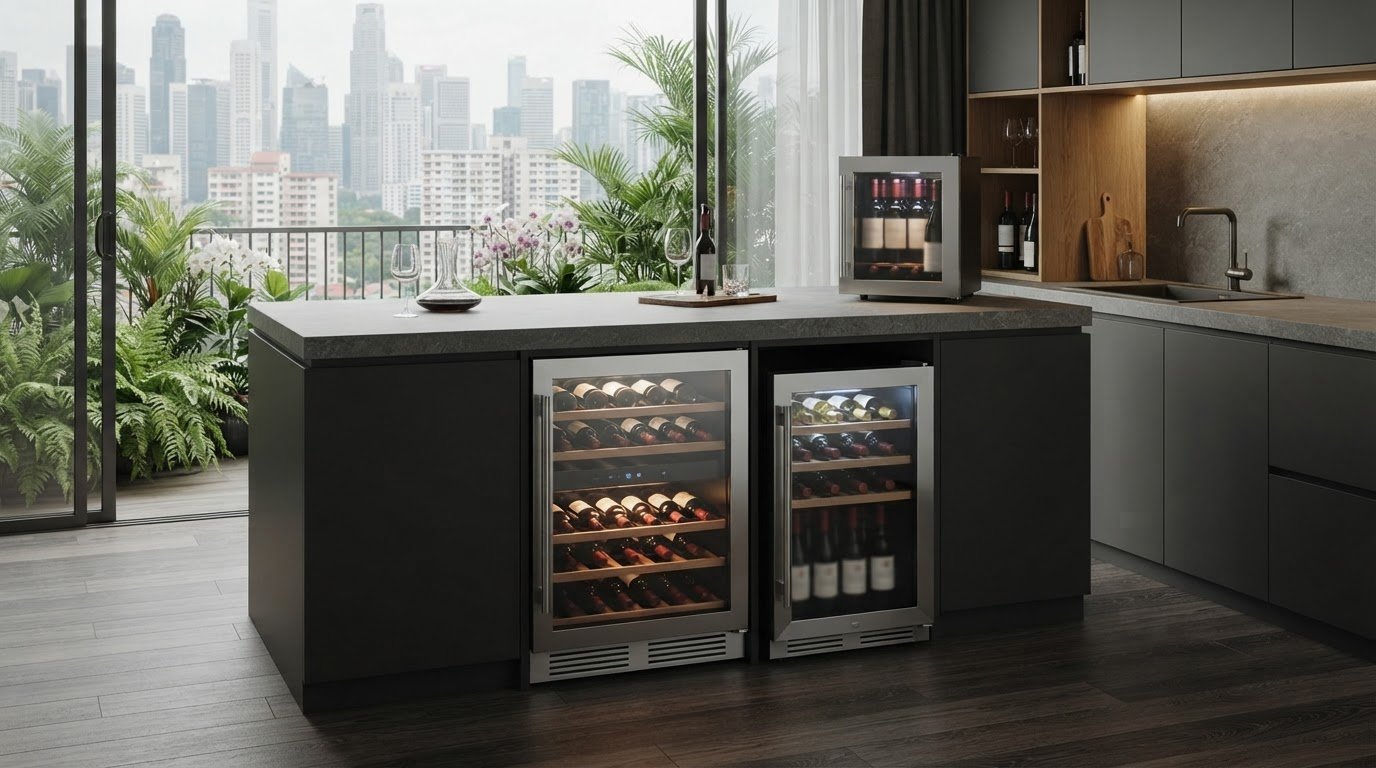
A wine fridge can support more consistent storage and keep bottles conveniently prepared for future occasions. That’s different from short-term chilling: a bottle may still need a small adjustment to suit its style just before service. Keeping wine in a controlled storage environment can reduce the need for last-minute temperature changes, but a wine fridge isn’t essential for serving every bottle.
Stellez Vine offers wine fridges from Eurocave, Kadeka and Liebherr. A wine fridge can help manage storage; check the bottle and adjust it as needed before pouring. For a broader look at whether this type of appliance suits your home, the article “Is a Wine Fridge Worth It in Singapore?” explores the decision from a storage perspective.
Pair thoughtful temperatures with thoughtful glassware
Once the wine is ready, choose glassware that suits its style and the occasion. The shape and size of a glass influence how the wine is presented and experienced, including how its aromas reach the nose. No glass guarantees a particular tasting result, but a considered choice can make the pour feel more intentional, whether you’re serving a crisp white at dinner or a structured red for a relaxed gathering.
Keep it simple. Choose a glass that feels comfortable to hold and leaves enough room to swirl the wine gently. If you’re serving different styles, suitable glassware for each can help distinguish the occasion and presentation without turning service into a formal exercise. The aim is to complement the wine, not distract from it.
Temperature, timing and glassware work together, but none needs to be complicated. Use a fridge when it supports your storage routine, make a measured adjustment before service, and choose a glass that suits the bottle and table. Then pour, taste and let the wine show its character.
Explore Stellez Vine’s curated wines and accessories to find bottles and glassware for your next occasion.
Choose your next bottle with confidence
Let your next pour be an invitation to explore. Choose a bottle for the meal, the company or simply a style you haven’t tried before, then make serving part of the pleasure rather than a last-minute guess. A thoughtful temperature brings the wine closer to the experience its maker intended, while the right glass adds a considered finishing touch.
Discover Stellez Vine’s curated international wines from established and emerging regions, alongside glassware and wine fridges from Eurocave, Kadeka and Liebherr. Whether you’re planning a dinner or finding a new favourite, each choice can shape a more rewarding occasion.
Explore Stellez Vine’s curated wines, wine fridges and glassware, and bring your next wine serving temperature Singapore decision to the table with confidence. Enjoy the discovery, and savour the pour.
Frequently Asked Questions
What is the best temperature to serve wine in Singapore?
There isn’t one ideal temperature for every bottle; the best range depends on the wine’s style. Use the article’s style chart as your starting point, then account for the bottle’s current condition and the setting where you’ll serve it. In Singapore, a room’s warmth can make “room temperature” an unreliable target. For a specific bottle, producer guidance can help fine-tune the general recommendation.
Should red wine be served at room temperature in Singapore?
Not automatically. The traditional phrase “room temperature” referred to a cooler indoor setting, not necessarily the warmth of a Singapore home. If a red has been sitting out and tastes hot or heavy, place it in the refrigerator briefly, then reassess with a small taste. A gentle chill can make the wine feel more balanced. Avoid leaving it in until it becomes cold and closed off.
Can white wine be served too cold?
Yes. If a white is extremely cold, its aromas and flavours may seem muted, making a lively or layered wine harder to appreciate. Check the style chart for a suitable range, and let the bottle or your glass warm gradually if it tastes subdued. For example, a white poured straight from a very cold refrigerator may need a little time before its character becomes clearer.
How do I chill wine quickly before serving?
An ice-and-water bath is a practical way to cool a bottle for service, while a refrigerator offers a more gradual option. Water helps surround more of the bottle than ice alone, but either method needs checking to avoid over-chilling. Start with the bottle’s current condition, inspect it periodically and taste before serving. Don’t assume a fixed time will bring every bottle to the same temperature.
How long should wine be chilled before serving?
There’s no single chilling time that works for every bottle. A bottle that starts warm will need a different adjustment from one already kept cool; bottle size and cooling method also affect the result. Use a timer only as a prompt to check, not as a readiness guarantee. Feel the bottle, assess the wine with a small taste, and continue cooling in short increments if needed.
Does wine serving temperature differ from wine storage temperature?
Yes. Serving temperature is the wine’s condition at the moment of pouring, while longer-term storage focuses on keeping bottles in stable conditions over time. A bottle taken from storage may still need adjustment before it’s served. For guidance on the longer-term side, consult the article “Long Term Wine Storage in Singapore.” Keep the two goals distinct: preserving a bottle and preparing it for a particular occasion.
Can I put red wine in the fridge before serving?
Yes. Brief refrigeration can help if a red has become warm, particularly after sitting out before dinner. Chill it gradually, then pour a small taste and check whether the wine feels fresher and more balanced. If it seems muted or too cool, let it warm in the glass before pouring more. The aim is a measured adjustment, not chilling every red to the same point.
Comments