
Slimline wine coolers for compact Singapore homes

A compact wine cabinet can preserve a considered collection without taking over your living space. For most wines, a small wine fridge’s typical temperature range is 10 to 13 degrees Celsius, making a slimline wine cooler for small spaces a practical option when floor area is limited.
Choosing a slimline wine cooler for small spaces isn’t just about finding the narrowest cabinet. Match its capacity and dimensions to your home and collection, then consider whether its temperature controls, lighting and shelves suit the bottles you plan to store.
This guide explains how to assess those features and choose with confidence for a compact home in Singapore. You’ll also learn how to plan placement and storage, balancing an elegant display with everyday practicality.
Table of Contents
Temperature controls, lighting and adjustable shelves
For most wines, the typical temperature range in a small wine fridge is 10 to 13 degrees Celsius. Assess the controls, lighting and shelf layout together, since each affects how easily the cabinet fits your collection and routine.
Wine Temperature Control Options
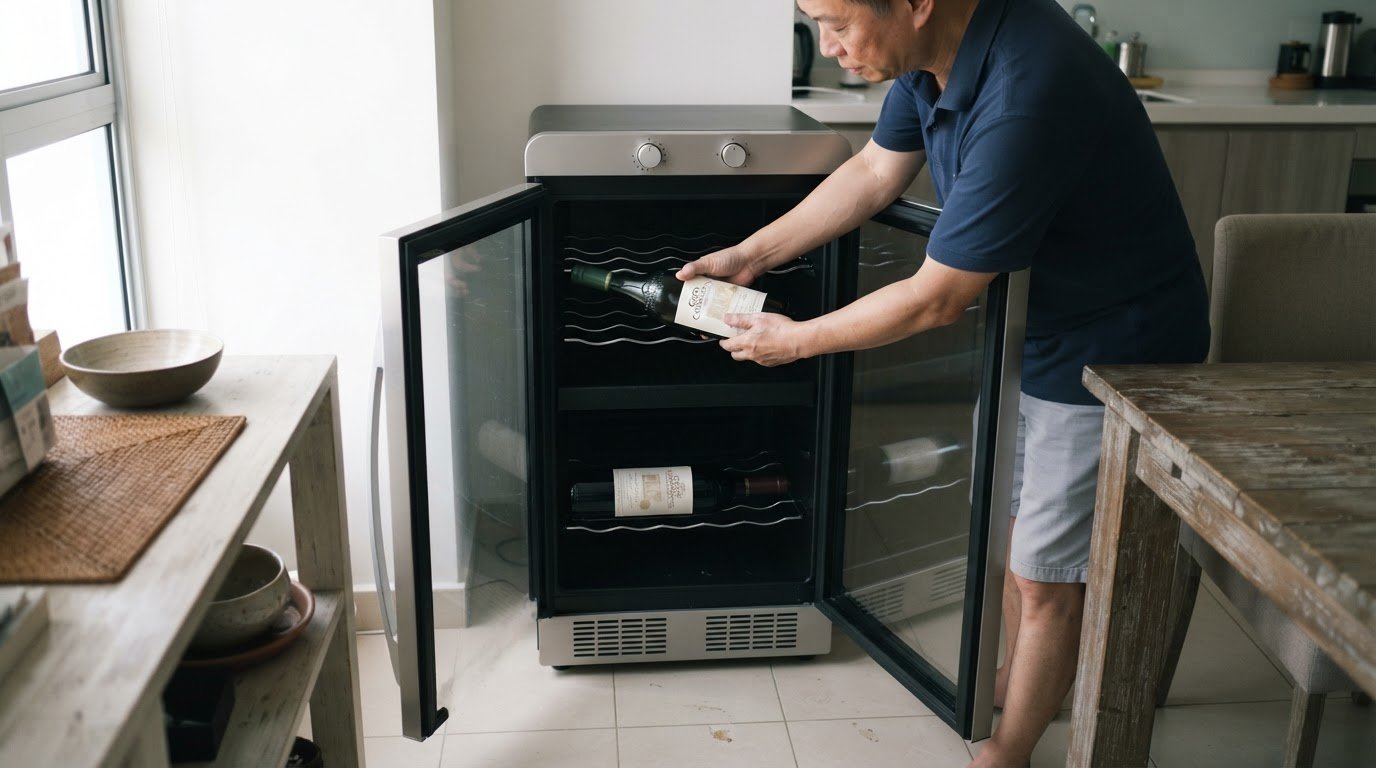
First, decide whether one storage temperature suits your collection or whether separate zones would be useful. A single-zone cabinet maintains one temperature throughout; a multi-zone cabinet has distinct areas with different settings. Check how the temperature is controlled and displayed, and whether you can read the display easily in the cabinet’s planned position.
When choosing a slimline wine cooler for small spaces, consider where the controls sit. If bottles or furniture obstruct them, adjusting the temperature can be inconvenient. Choose a layout that lets you read the display and operate the controls without moving the cabinet.
Cellaring and Serving Temperatures
Cellaring and serving are different goals. Cellaring prioritises a steady environment for bottles you plan to keep, while serving temperature is chosen to suit the wine’s style and the experience you want in the glass. The 10 to 13 degrees Celsius range is a useful general reference for storing most wines, not a single serving target for every bottle.
A collection with wines intended for different serving temperatures may benefit from a multi-zone cabinet. Consider whether you’ll store bottles long term, keep some ready to serve, or do both. Temperature control helps manage storage, but it doesn’t replace selecting a suitable serving temperature for each wine.
Lighting and Adjustable Shelves
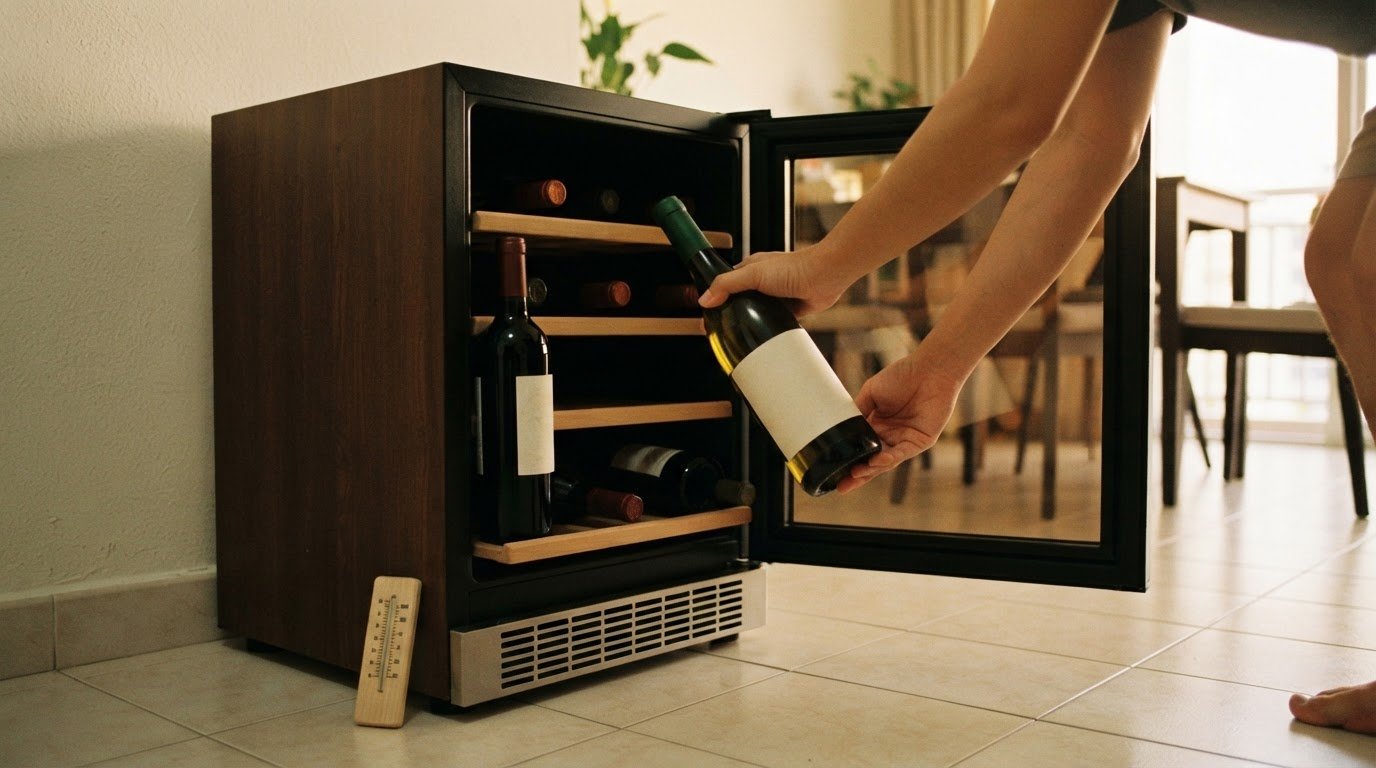
Check how the interior lighting illuminates bottles and labels. A clear view makes it easier to select a bottle without rearranging the cabinet. Consider where the light falls when the door opens, especially if the cooler will sit beneath a counter or in a compact dining area.
Next, compare shelf adjustability with the bottles you actually store. Standard bottles may fit differently from broader or taller formats, so fixed shelves can limit usable space. Adjustable shelves let you adapt the layout, while a secure fit keeps bottles organised and accessible. Review the available shelf positions alongside your collection before choosing.
How To Choose A Wine Cabinet?
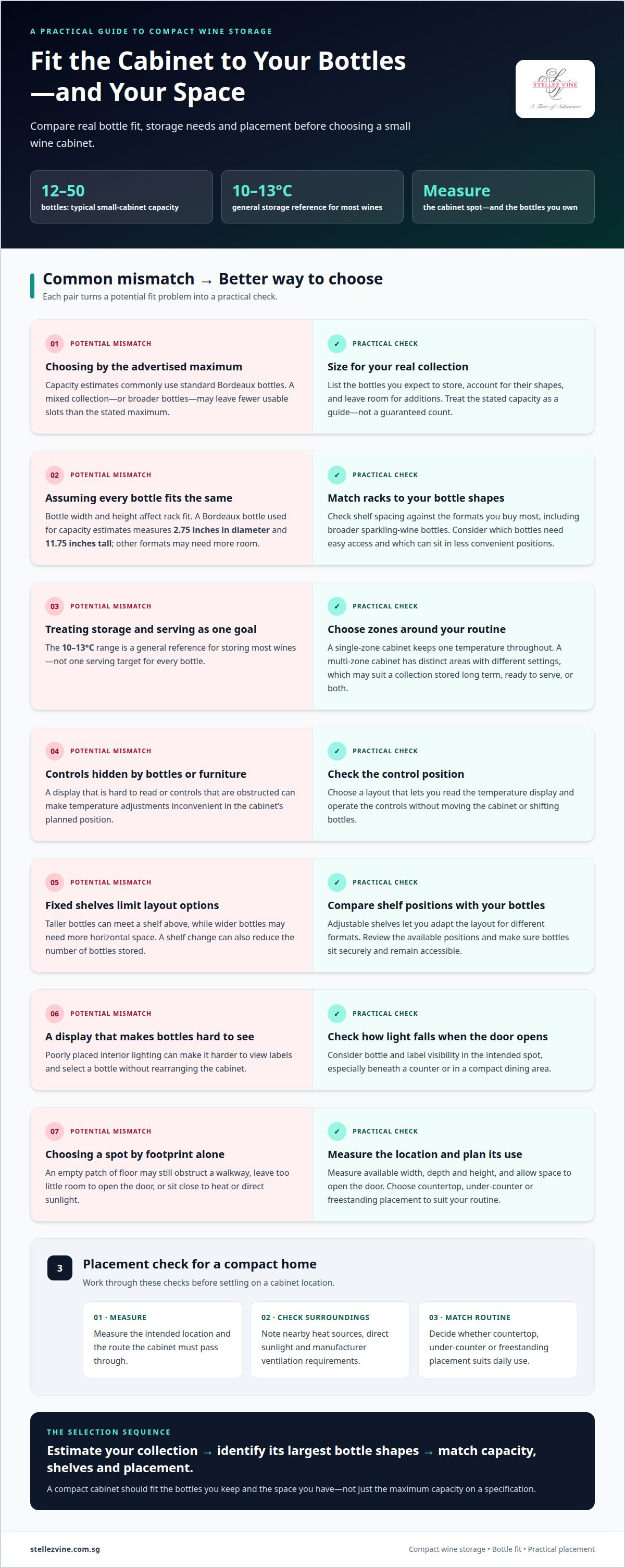
Choose capacity around the bottles you own, then consider how their shapes fit the racks. Small wine cabinets typically hold 12 to 50 bottles, but the optimal choice depends on your collection and available space.
Small Cabinet Bottle Capacity
A stated capacity is a helpful starting point, not a guaranteed count for every collection. Manufacturers commonly estimate capacity using standard Bordeaux bottles, so broader bottles may reduce the number that fit. List the wines you expect to store and allow room for new additions. Choose capacity for your real collection, rather than relying on a maximum that assumes every bottle has the same shape.
Bottle Fit and Shelf Flexibility
Check the shelf spacing against the bottle formats you buy most often. A Bordeaux bottle used for capacity estimates measures 2.75 inches in diameter and 11.75 inches tall. Wider bottles may need more horizontal space, while taller bottles can meet a shelf above. Adjustable shelves let you change the layout for different formats, but moving a shelf can also reduce the number of bottles stored.
Bottle Shapes and Rack Fit
Compare the rack design with bottles in your collection, such as a standard Bordeaux bottle and a broader sparkling-wine bottle. Their shoulders, bases and diameters affect how securely they sit and how closely they fit together. Capacity figures based on uniform bottles may not reflect a mixed collection. Treat the stated maximum as a guide, then consider which bottles need easy access and which can go in less convenient positions.
Use a simple selection sequence: estimate your everyday collection, identify its largest bottle shapes, then match those needs to the cabinet’s stated capacity and adjustable layout. For example, a collection of varied formats may need fewer usable slots than the advertised maximum. Explore wine cabinet options with those practical requirements in mind, so the cabinet complements your home without compromising bottle fit.
Compact wine storage for small Singapore homes
In a compact Singapore home, a wine cabinet should fit its intended position without disrupting how you use the room. Before choosing a model, identify a suitable spot, measure its available width, depth and height, and allow space to open the door.
Think beyond the cabinet’s footprint. A kitchen counter can keep bottles accessible, while a dining area can make serving convenient. A living-room corner may suit a collection you want to display, as long as the cabinet doesn’t obstruct walkways or furniture. Match the location to your routine, not just to an empty patch of floor.
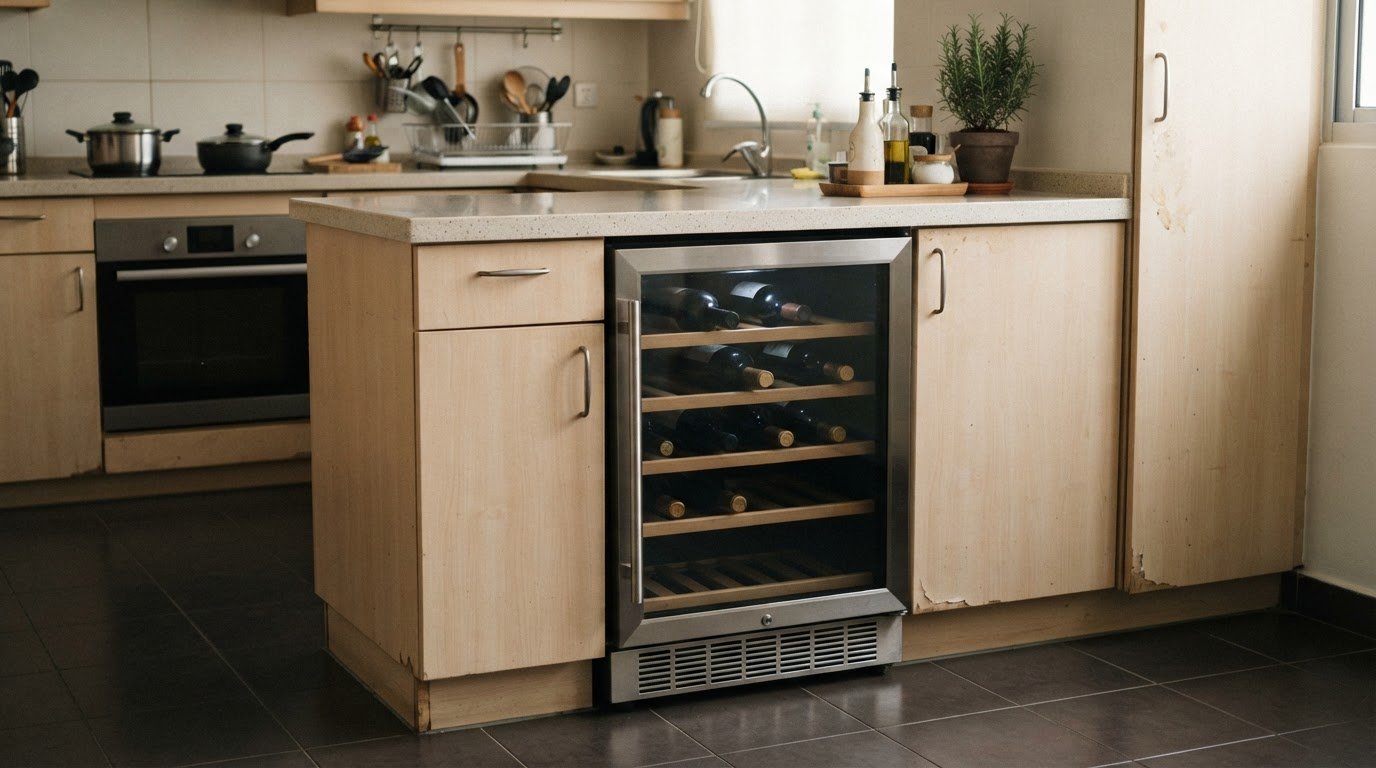
Also consider the conditions around the chosen spot. Avoid placing the cabinet beside an oven, hob or other heat source, where surrounding warmth can make temperature control work harder. Choose a position away from direct sunlight, and follow the manufacturer’s guidance on ventilation and clearance. These practical details matter in Singapore homes where storage areas and appliance layouts can be close together.
For a small collection, a compact cabinet can provide dedicated wine storage without taking up space for a full-size unit. Compare the energy rating when assessing models, alongside the cabinet’s size and the amount of wine you plan to store. A larger interior may seem appealing, but it can take up space your current collection doesn’t need.
Use this placement sequence before settling on a cabinet:
Measure the intended location and the route the cabinet must pass through.
Note nearby heat sources, sunlight and any manufacturer ventilation requirements.
Decide whether countertop, under-counter or freestanding placement suits your daily routine.
For instance, a household that serves wine at the dining table may prefer storage nearby, while a kitchen location may be more practical for bottles used with meals. Let your collection, room layout and access needs guide the choice, so compact storage feels considered rather than crowded.
What warranty, delivery and installation options do Singapore wine cooler sellers offer?
Warranty, delivery and installation terms are part of the ownership experience. Review the written terms for the exact model you’re considering, including what warranty coverage applies and how delivery to your home is arranged.
Start with warranty scope. Read which parts and faults are covered, how long coverage lasts, and what steps apply if the cabinet needs attention. A clear document distinguishes product coverage from damage during delivery or issues caused by placement. Keep the purchase record and warranty information together, so the model and terms are easy to identify later.
Next, consider the route from the delivery vehicle to the cabinet’s intended position. In a Singapore apartment, narrow corridors, lifts, doorways and tight turns can affect access. Measure the route as well as the space where the cooler will stand. A cabinet that fits an alcove may still be difficult to move through a turn or doorway.
Installation arrangements matter, too. Distinguish between positioning the cabinet and work involving built-in cabinetry, electrical changes or alterations to your home. These are different tasks, and the product instructions should guide placement and ventilation. For a freestanding unit, plan its final position before delivery rather than moving it around once loaded.
Use this practical sequence to compare the terms:
Match the warranty document to the model and record its coverage conditions.
Measure the delivery route, including doorways, lift access and tight corners.
Confirm the intended position follows the cabinet’s installation instructions.
After the cabinet is positioned, allow a new wine fridge 24 hours to cool before loading bottles. That gives the appliance time to reach its operating temperature before storage begins. For a compact home, aligning delivery access, placement and warranty paperwork helps avoid preventable surprises. Explore wine cabinet options with these practical considerations in mind.
Stellez Vine Singapore
Stellez Vine brings wine storage options and fine wines together for homes across Singapore. Its range includes Kadeka wine chillers, Eurocave wine fridges and Liebherr wine cabinets, giving you several brands to consider as you assess space, capacity and storage preferences.
Explore these options once you’ve measured your space and considered your collection, if you’re still deciding which cabinet suits your home. Compare the cabinet’s footprint with its usable capacity, then weigh its controls and shelf arrangement against the bottles you keep. Stellez Vine also offers South African wines, so you can consider storage alongside wines for your collection.
Contact Stellez Vine Singapore to discuss your wine storage needs and explore its cabinet range.
Make Space for Your Next Bottle
Choose a cabinet that supports the way you want to enjoy wine, not simply the one that occupies the least room. A well-considered slimline wine cooler for small spaces can give your collection a dedicated place while preserving the flow of a compact Singapore home.
Before deciding, picture the cabinet in its intended spot and consider how it will fit your routine. Think about which bottles you’ll reach for often, the space around the door and whether your collection may change. Looking ahead helps you choose storage that works today and as your tastes evolve.
Stellez Vine Singapore offers South African Wines, Kadeka Wine Chillers and Eurocave Wine Fridges, bringing wine and storage options together. If you’re ready to explore a cabinet that suits your home and collection, contact Stellez Vine Singapore. Take the next step toward a more thoughtful wine corner, and make room for bottles you’ll be glad to savour.
Frequently Asked Questions
When Should You Upgrade as Your Wine Collection Outgrows the Basics?
Consider upgrading when your current setup no longer suits how you buy, organise or serve wine. If mixed bottle shapes make the racks awkward to use, prioritise adaptable shelving. If you store bottles for different purposes, consider whether separate temperature zones would help. Assess your collection and available floor space together, so extra capacity doesn’t come at the cost of a practical fit.
What Is the Capacity in Bottles of Slimline Wine Coolers for Small Spaces?
Small wine fridges commonly hold 12 to 50 bottles, depending on the cabinet’s dimensions and rack layout. Treat capacity as an estimate: it’s generally based on standard Bordeaux bottles, while broader formats can occupy more shelf space. For example, a mixed collection may not fit the advertised maximum. Choose a cabinet around the number and types of bottles you actually store.
What Is the Difference Between Single-Zone and Dual-Zone Slimline Wine Coolers?
A single-zone cooler maintains one temperature throughout, making it a straightforward choice when your bottles share the same storage needs. A dual-zone model has separate areas with different settings. This can help if you want some bottles ready to serve while storing others. Consider how often you rotate bottles, since separate zones are most useful when you’ll use both.
Can a Slimline Wine Cooler Be Built In Under a Counter or Used Freestanding?
Some models are designed for built-in installation; others are freestanding and must not be placed inside cabinetry or under an island. Installation clearance requirements vary by model, so follow the fitting instructions and avoid enclosing a cooler unless the manufacturer allows it. Keep them away from stoves and other heat sources. Check the model’s fitting instructions before deciding where it belongs.
What Temperature and Humidity Ranges Suit Red, White and Sparkling Wine Storage?
For cellaring, focus on a stable environment rather than assigning a different storage temperature to each wine colour. Red, white and sparkling wines can share a cabinet when its setting suits the collection’s storage needs. Serving temperatures differ by style, so chill or temper bottles before opening. Use humidity controls as directed by the manufacturer, rather than assuming one setting suits every model.
What Should I Check Before Choosing a Wine Cooler for a Small Apartment in Singapore?
Measure the intended spot and the route through the apartment, including doorways and lift access. Note nearby heat sources, humid areas and direct sunlight, then follow the cooler’s ventilation and placement instructions. Decide whether built-in or freestanding installation suits the space; these formats have different clearance needs. Also compare usable capacity, bottle fit, controls and energy star rating before selecting a cabinet.
Comments