
Wine Fridge Placement in Your Kitchen: Where It Fits

The most convenient spot for a wine fridge can also be the wrong one if it traps heat or blocks airflow. Good wine fridge placement in the kitchen starts with matching the appliance’s ventilation design to the space, then keeping it clear of heat sources such as an oven or dishwasher.
It’s natural to focus first on access and appearance: a fridge near the counter or dining area makes serving simple and keeps the kitchen feeling considered. But the model matters. A built-in fridge designed to vent from the front can fit beneath a counter or beside cabinets, while a freestanding model needs room around it for airflow and shouldn’t be boxed into cabinetry. This guide explains how to choose between those options, assess nearby appliances and cabinets, and avoid spots exposed to direct sun, excess heat or changing room conditions. Use the model’s installation requirements to shape your layout, and you can create a practical place for your collection without compromising ventilation.
Table of Contents
1. Ventilation requirements for built-in and freestanding wine fridges
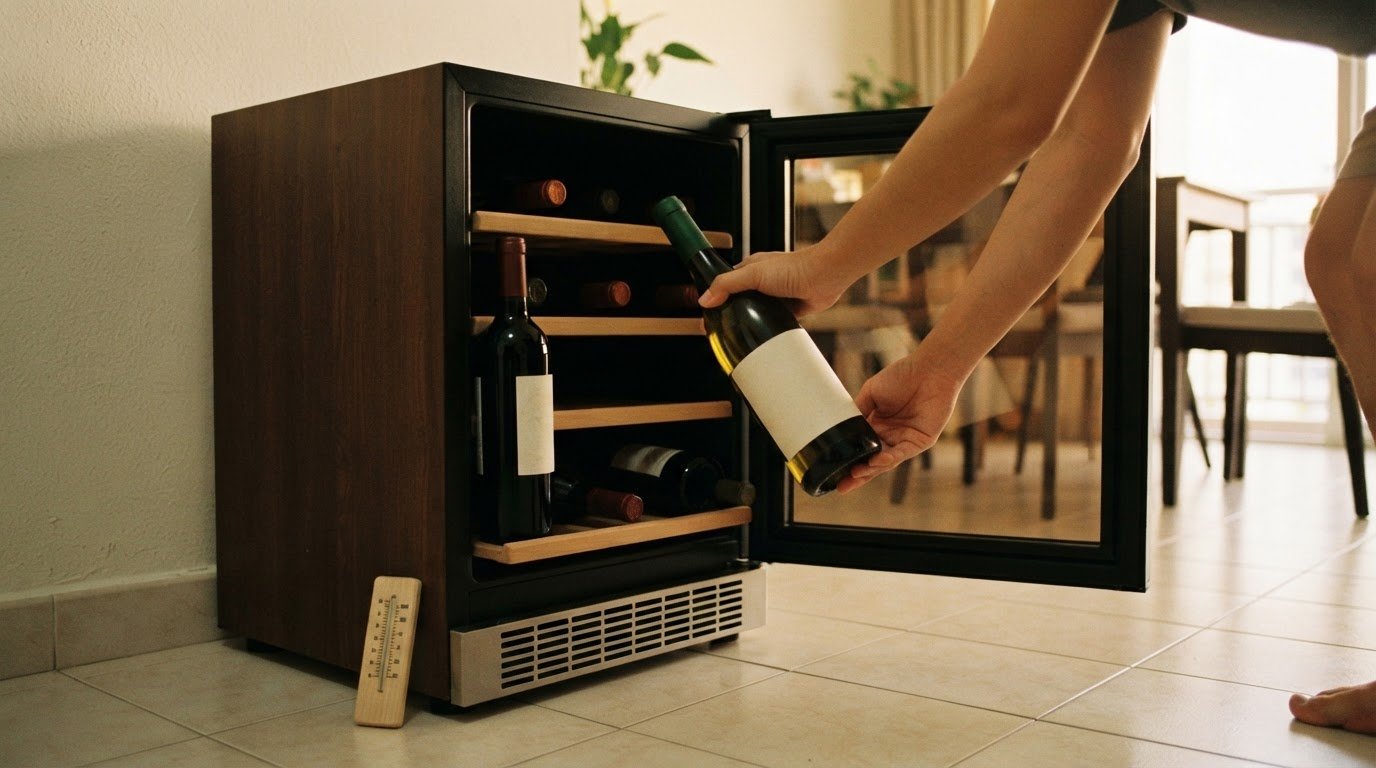
Start by identifying the fridge’s ventilation design. A built-in model vents from the front, allowing installation beneath a counter or within an island without blocking its airflow. A freestanding wine fridge needs open space around its sides and back, so enclosing it behind cabinet doors can trap heat. This distinction determines whether a neat, integrated finish is practical for your wine storage.
Clearance figures vary across general placement guidance, so the specific model’s installation requirements take priority. One recommendation allows at least 5 cm behind the fridge and about 1 cm on each side; other freestanding guidance calls for 2-3 inches around the unit. Don’t combine those figures as universal specifications. Follow the manufacturer’s requirements for the exact fridge, including space above and around ventilation openings. Keep grilles clear of cabinet panels, stored items and decorative trim.
For a below-counter installation, choose a built-in model designed for front ventilation. The same principle applies to an island: confirm the cabinet opening, airflow path, power position and door clearance before fitting the appliance. An integrated fridge can create a direct, convenient line from counter to glass, but a tight enclosure can restrict ventilation. A freestanding model belongs in an open position, not inside a finished cabinet simply because its dimensions fit.
In Singapore, wine fridge installation costs depend on the unit and whether cabinetry or electrical work is needed. The main cost factors are the installation type and any changes required to the space, rather than one universal figure. A wine fridge releases warmth through its ventilation system and produces operating noise; the amount depends on its design and conditions. Keep ventilation clear, particularly under counters, where restricted airflow can affect cooling and make operation more noticeable. Keep the fridge away from direct sunlight, which adds unwanted heat.
2. Where to Put a Wine Fridge: Kitchen or Dining Room?
For convenient serving, position the fridge near the kitchen’s dining or entertaining area, away from cooking heat. A built-in model can sit beneath a counter or within a peninsula; a dining room may suit a freestanding unit with open space around it. Decide where to put it by weighing access, ventilation and the room’s usual temperature. Good wine fridge placement in kitchen layouts begins with how you use the room.
Plan the cabinet opening, power point and door swing together. Measure the model and allow its door to open without hitting an island, drawer or walkway. Keep ventilation openings unobstructed, and leave the clearances specified for that model. A pantry works only when air circulates freely. For wine fridge placement in kitchen renovations, consider the appliance’s position before finalising cabinetry and electrical work.
Set the fridge according to its controls and your intended use. A relatively stable indoor environment helps avoid repeated temperature swings; very dry or overly damp conditions can be a concern for natural-cork bottles stored long-term. Temperature control does not make a warm, poorly ventilated pantry suitable. Choose a dry, open location away from heat and humidity rather than a sealed cupboard.
Choose a counter or peninsula position when easy serving access matters.
Consider the dining room if the kitchen layout restricts airflow or door clearance.
Keep the unit away from sunlight and heat-producing appliances, including ovens and dishwashers.
Before installation, compare the chosen spot with the model’s ventilation, electrical and clearance requirements. In Singapore, a shaded position may be preferable to a sunny kitchen corner, where direct sunlight can add unwanted heat. Select a model suited to the available space instead of forcing a larger unit into a narrow opening.
For a considered fit, explore wine storage options alongside your kitchen layout.
3. Locations to avoid, including garages, direct sunlight, and heat sources
Keep the fridge away from direct sunlight, which can cause overheating. A sunny kitchen window may look attractive, but afternoon exposure adds heat around the cabinet and makes cooling harder. In Singapore, avoid placing a unit on an exposed balcony or outdoor area, where heat and humidity can affect both the appliance and stored bottles. Choose an indoor position with stable temperatures instead.
Separate the fridge from cooking appliances. An oven, stove or dishwasher releases heat during use, so a nearby wine fridge has to work harder to maintain its set temperature. Avoid placing it directly beside these appliances or above a refrigerator, where heat, temperature changes and vibration can affect storage conditions. A cabinet at the opposite end of the kitchen is a better example than the narrow gap beside an oven.
Skip garages without climate control. Their temperature can swing beyond the wine fridge’s operating range, especially when doors open or the space heats up. A dry, ventilated storeroom can work, but avoid damp corners and locations that become excessively humid. An enclosed pantry is not a suitable alternative if its air remains warm or still.
Consider movement as well as heat. A freestanding fridge beside a busy kitchen walkway can be bumped by passing guests, shopping bags or an open cabinet door. During entertaining, bottles and glassware often move between the fridge and serving area; place the unit close enough for access, but outside the main traffic path. Check that its door opens without blocking a drawer or narrowing the route.
Avoid direct sunlight, outdoor areas and heat-producing appliances.
Keep the fridge off a refrigerator and away from garage temperature swings.
Choose a stable, dry indoor spot clear of busy walkways.
Before finalising the position, trace the room’s heat sources and traffic routes. For example, note where the oven door opens, where guests gather and where bottles are served. This simple walk-through helps protect your collection while keeping the fridge accessible.

4. Undercounter fridge placement beside cabinets and appliances
An undercounter wine fridge can sit neatly beside cabinets when its ventilation design supports that arrangement. Models that vent through a bottom-front panel can be placed directly next to cupboards and other appliances, preserving a streamlined run of cabinetry. The position still needs to follow the specific appliance’s installation requirements.
A standard 24-inch cabinet space is listed as a fit for built-in wine fridges, but that measurement isn’t a universal specification. Compare the model’s width, height, depth and required clearances with the actual opening. Include the door swing and any handle projection, so the fridge opens fully without striking an adjacent cabinet or appliance.
Check the ventilation route before fixing cabinetry. A bottom-front grille must remain uncovered by plinths, trim or stored items; blocking it can interfere with cooling and function. Nearby appliances are suitable only when the wine fridge’s design and installation requirements allow that placement. Keep it away from direct heat sources, such as an oven or stove, even if the cabinet opening fits.
Plan the electrical position alongside the cabinet layout. The outlet and cable must not obstruct the appliance’s fit, ventilation or access for installation. For example, a kitchen island can hold a built-in fridge, provided the opening accommodates the model and its vent remains clear. Measure the finished aperture, not just the cabinet carcass, before installation.
Freestanding wine fridges need a different approach. Don’t push one into an under-counter gap or enclose it with cabinets; its sides and rear need airflow. Choose a built-in model for an integrated finish, and reserve freestanding models for open positions with the clearances specified for the model.
Use the appliance’s ventilation design as the deciding factor, then align the opening, power position and door clearance. Plan your wine storage setup around those measurements before finalising cabinetry.
Stellez Vine Singapore: Eurocave Wine Fridges
Stellez Vine Singapore offers Eurocave Wine Fridges for wine storage at home. If your kitchen plan calls for an under-counter or integrated appliance, compare the model’s dimensions and ventilation design with the cabinet opening before deciding on placement. This helps you align the fridge with the available space and intended finish.
For a different kitchen layout, Kadeka wine chillers and Liebherr wine cabinets are also available. Choose based on the space, installation type and capacity your collection needs. Pair your setup with South African wines as you refine your home wine selection.
For help exploring wine storage options, contact Stellez Vine Singapore.
Make room for the right bottle
Let your kitchen layout guide the final choice. Before settling on a position, picture the fridge in daily use: opening it while preparing dinner, selecting a bottle for guests, and keeping the surrounding space uncluttered. Thoughtful wine fridge placement in a kitchen should feel natural to the room, not like an appliance squeezed into the last available gap.
Next, match your preferred location with a model suited to its ventilation needs and the available cabinet space. If you’re refining your home wine setup, explore Stellez Vine’s wine fridges alongside its wine selection. Choose a position that supports practical access and the pleasure of serving a well-kept bottle.
Contact Stellez Vine Singapore to explore your options and take the next step toward a kitchen that’s ready for your collection.
Frequently Asked Questions
What should I consider before getting a wine fridge?
Start with your bottle capacity, available position and how you’ll use the wine. A collection for longer-term storage may suit a single-zone model, while frequent serving of different wine styles can make multiple temperature zones useful. Consider shelf access, too: roller-type shelves can make bottles easier to reach. For example, measure the planned cabinet opening before choosing a model, not after purchase.
Where to Put a Wine Fridge: Kitchen or Dining Room?
Choose the kitchen for convenient access while preparing or serving food, or the dining room when it better suits your layout. In either room, keep the fridge away from hot, humid areas and direct sunlight. A shaded dining-room wall may work better than a sunny kitchen corner, provided ventilation remains clear. Consider the door swing and nearby walkways so opening the fridge doesn’t interrupt serving.
What clearance and ventilation space does a built-in wine fridge need?
Allow a minimum clearance of 5 cm on all sides for a built-in wine fridge, and keep ventilation space open rather than fully enclosing the appliance. Airflow openings must remain unobstructed by cabinetry, trim or stored items. For instance, a cabinet design that covers the side or rear clearance can restrict ventilation even if the fridge’s front grille is visible. Use the model’s installation instructions for the final layout.
Can a freestanding wine fridge be installed under a kitchen counter?
No. A freestanding wine fridge isn’t designed to be installed under a counter, inside cabinets or beneath an island. Its ventilation needs open space, and enclosing it can restrict airflow. Choose a built-in model for an under-counter position, then plan the opening around its required clearances. A freestanding model belongs in an open location where its sides and rear aren’t boxed in by cabinetry.
How far should a wine fridge be from an oven, hob, or dishwasher?
Don’t place a wine fridge directly beside an oven, hob, stove or dishwasher, because heat from cooking and appliance cycles can make cooling harder. There isn’t one distance that suits every kitchen and model. Instead, position the fridge outside the appliances’ immediate heat exposure and follow its installation requirements. Choose a cabinet away from the oven rather than squeezing the fridge into the adjacent gap.
What electrical outlet and power requirements does a wine fridge need in Singapore?
Use the voltage, current and outlet requirements stated for the specific model; these vary by appliance, so there isn’t one figure that applies to every wine fridge. Plan the outlet so the plug and cable don’t obstruct the fridge’s fit, ventilation or access. For a built-in installation, include the power position in the cabinet plan before fixing the opening, rather than routing the cable through a vent.


Comments