
Building a Versatile Wine Collection: 2026 Guide

A great wine collection isn’t the one with the most bottles; it’s the one you’re excited to open. Building a versatile wine collection can feel daunting when you’re weighing familiar favourites against new discoveries or choosing what will suit dinner, a celebration or a quiet evening at home. You don’t need to buy every style. Start with what you enjoy, then expand with intention.
This guide shows you how to choose wines for different tastes and occasions, explore new regions without losing sight of your favourites, and keep track of what you enjoy. You’ll also find practical storage guidance for home, so your collection stays manageable as it grows. From South African wines to discoveries from Argentina, China, Thailand, Italy and France, there’s room to find your own balance. Start with bottles you’ll reach for often, then let curiosity lead to the next pour.
Table of Contents
What Does Building a Versatile Wine Collection Actually Mean?
Versatility isn’t measured by how many bottles you own or how many famous labels you can name. It’s about how well your choices fit your preferences and the moments you want to enjoy them. A modest collection can be thoughtfully assembled when each bottle has a purpose and is there to be opened, not simply admired.
A versatile wine collection is a personal selection of wines you enjoy, with enough range to suit the meals, company and occasions that matter to you. You might keep a dependable style for an easy weeknight meal and make room for something distinctive to serve guests. Wine’s range of grapes, regions and production styles offers plenty to explore; the Wine overview is a useful introduction to that breadth.
Useful variety reflects your life. Buying bottles only for an impressive label, prestige or imagined future value can leave you with wines that don’t match your taste or plans. Let enjoyment and purpose guide your choices instead. There’s no universal bottle count or formula to follow.
Start with the wines you genuinely enjoy
Think about what you choose repeatedly, then identify the qualities behind those choices. Do you like crisp, bright whites, fuller-bodied reds, or wines with gentle fruit and softer tannins? Notice texture, acidity and how a wine works alongside food. These preferences give you a practical starting point. Then try an unfamiliar grape or region that shares a quality you already enjoy, rather than choosing something unfamiliar just for novelty.
Decide what the collection should do for you
Give each purchase a reason. Consider the situations that come up most often: a glass with dinner, a meal with friends, a celebration or a deliberate tasting. Your answer helps you prioritise useful styles and discoveries you’re genuinely curious about. A collection for relaxed evenings may look different from one for hosting, and neither needs to match another collector’s habits.
Everyday enjoyment: Choose styles you’re happy to open without waiting for a special occasion.
Meals with guests: Consider wines that complement the food you tend to serve and offer an easy point of conversation.
Celebrations: Reserve space for bottles that make meaningful moments feel distinctive.
Deliberate tasting: Explore a grape, region or style with a specific question in mind, such as how two wines differ in acidity or texture.
Before buying, ask yourself: “When would I open this, and what appeals to me about it?” A clear answer means the bottle has a place in your collection. If you can’t name an occasion or a quality that interests you, pause before buying. That simple check keeps building a versatile wine collection focused on pleasure and discovery, rather than an idea of what a collection is supposed to look like.
How to Build a Wine Collection in Three Taste-Led Steps
Turn curiosity into a clear routine. Building a versatile wine collection doesn’t require specialist knowledge or a rigid buying plan. Start with what you already enjoy, choose one thoughtful point of contrast, then let each bottle teach you something about your preferences. This keeps exploration personal and makes the next choice easier.
Step one: Map your preferences and occasions
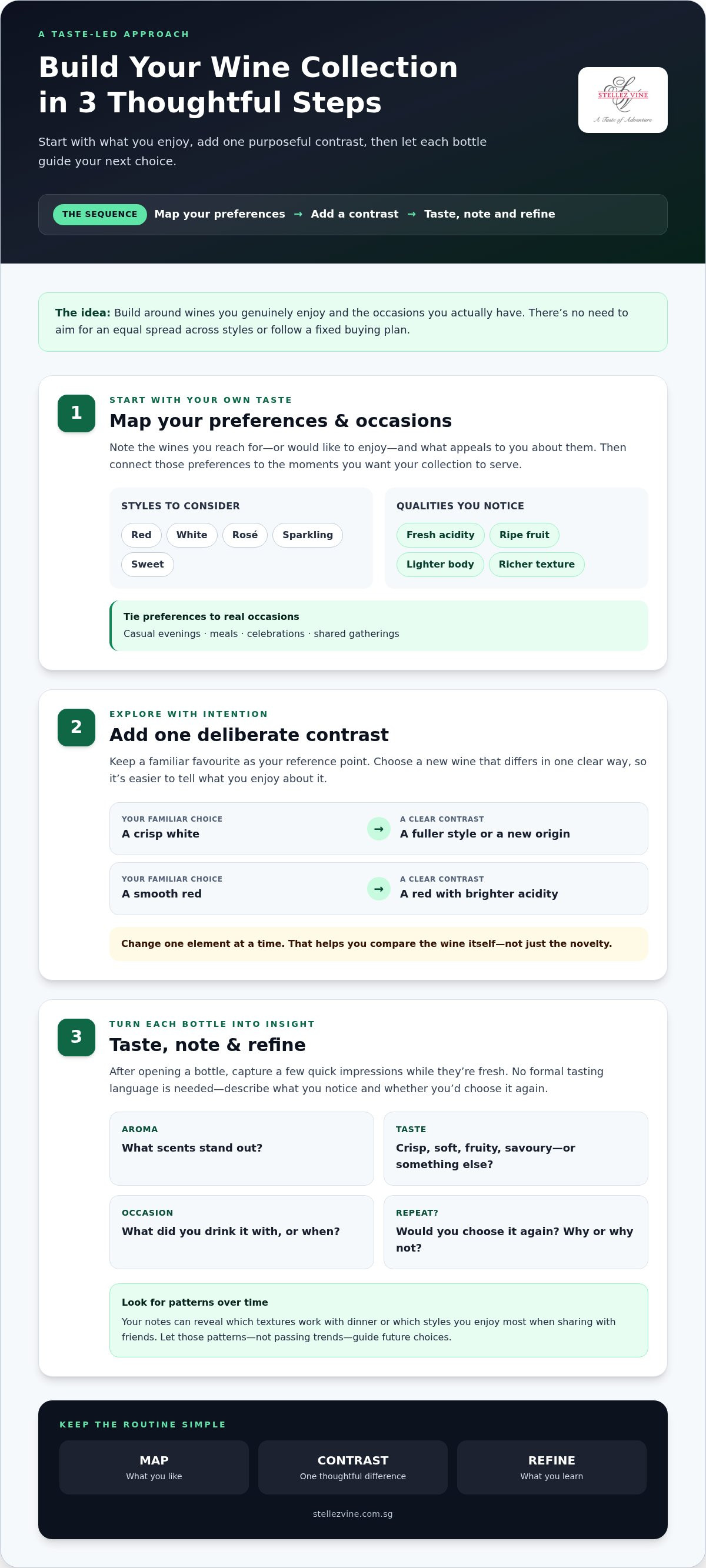
Write down the styles you reach for or would like to enjoy, whether red, white, rosé, sparkling or sweet. Note what appeals to you: fresh acidity, ripe fruit, a lighter body or a richer texture. Then connect those preferences to real occasions, such as casual evenings, meals, celebrations or shared gatherings. Don’t aim for an equal spread across categories; let your habits set the balance.
Step two: Add a deliberate contrast
Keep a familiar favourite as your reference point, then add a wine that differs in one clear way. If you usually choose a crisp white, explore a fuller style or a new origin. If you favour a smooth red, try one with brighter acidity. Changing one element at a time makes comparison easier and helps you work out whether you enjoy the wine itself, not just its novelty.
Step three: Taste, note and refine
After opening a bottle, record a few quick impressions while they’re fresh. No formal tasting language is needed. Describe what you notice, how the wine worked for the occasion, and whether you’d choose it again. Over time, your notes reveal patterns: perhaps you prefer a certain texture with dinner or enjoy a particular style most when sharing it with friends. Let those patterns guide future choices, not every passing trend.
Aroma: What scents stand out?
Taste: Is it crisp, soft, fruity, savoury or something else?
Occasion: What did you drink it with, or when?
Repeat: Would you choose it again? Why or why not?
Remember the sequence: map what you like, add one purposeful contrast, then record what you learn. This three-step method gives beginners a practical way to explore without buying at random or feeling obliged to follow someone else’s rules.
Ready to put your preferences into practice? Browse Stellez Vine Singapore’s curated wines from regions including South Africa, Argentina, China, Thailand, Italy and France. Use the range to find a considered next bottle.
How to Balance Familiar Favourites, New Regions, and Occasions
Variety works best when each bottle has a reason to be there. Keep a familiar style as a reliable reference, then introduce a different taste or origin that gives you something new to explore. As you build a versatile wine collection, think in terms of roles and moments, not fixed quotas. No category is essential for everyone; your choices should reflect how you actually drink.
Match wine styles to moments
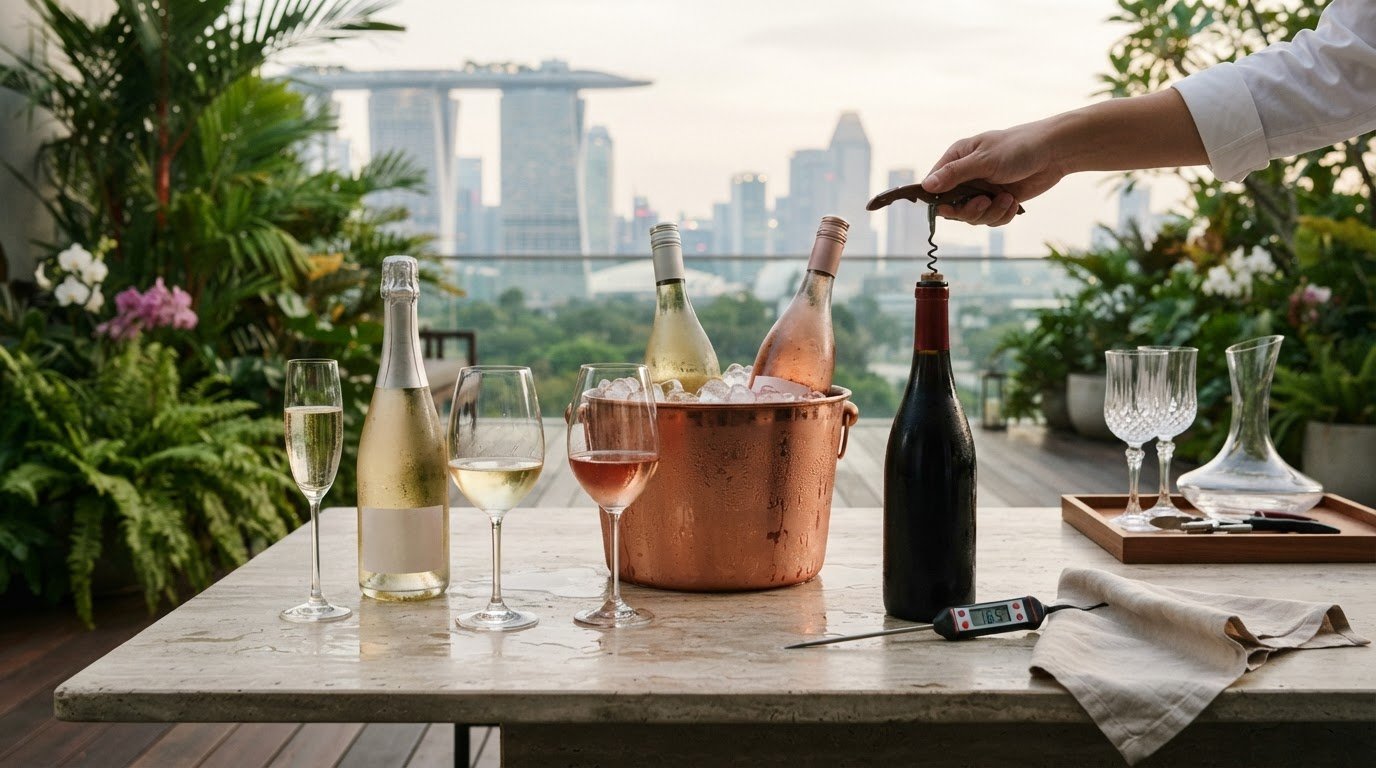
Start with the occasions that come up in your life. A relaxed meal might call for a wine you already know and enjoy; a gathering could suit a style that pairs easily with a range of dishes. For a celebration, sparkling wine may fit the mood, while a deliberate tasting is a chance to compare something unfamiliar with a trusted favourite. Let the occasion guide you instead of assuming every collection needs every style.
These are prompts, not rules. If you rarely serve sparkling wine, you don’t need to keep it on hand just to complete a set. The useful question is whether a bottle suits an occasion you’re likely to enjoy.
Explore origins without narrowing the collection
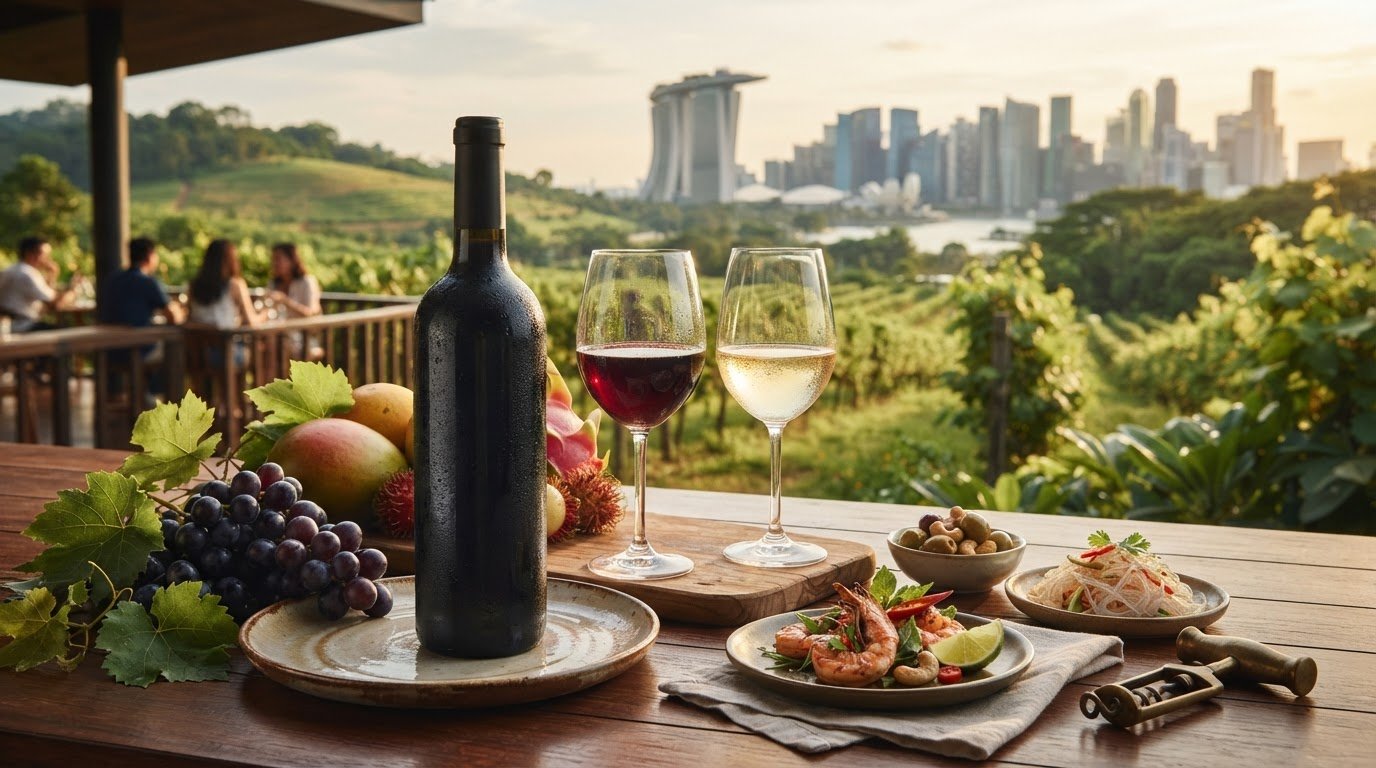
Once you know which styles appeal, use origin as another way to explore. South Africa, Argentina, China, Thailand, Italy and France offer different routes into the wider world of wine. You don’t need to represent every country; choose one that sparks your interest, then compare it with a familiar bottle. Notice differences in aroma, texture and structure, and record what you’d like to try again.
For a focused comparison, explore South African and Argentinian wine side by side. Comparing origins can make regional distinctions easier to notice without turning your collection into a checklist. If you’re planning around a shared meal, curated wines for dinner parties can offer occasion-led inspiration.
Keep the balance flexible: choose what you know you enjoy, add a bottle that offers a clear point of contrast, and let your next decision follow from what you learn. That approach leaves room for discovery while keeping your collection grounded in real occasions.
How to Keep a Collection Enjoyable, Trackable, and Well Stored
A collection should be easy to enjoy, not a puzzle to manage. A simple inventory helps you remember what you own, which bottles you’ve enjoyed and what you might choose next. Thoughtful storage matters too: as your collection grows, give bottles a suitable place and plan any appliance around its ventilation needs.
Make collection notes useful, not elaborate
Use a notebook, spreadsheet or notes app, whichever you’ll actually update. Record the details that help you recognise a bottle and make future decisions. You don’t need formal tasting vocabulary or a complicated cellar-management system. A few personal observations are more valuable than a long description you never revisit.
Wine name and origin: Capture the label details and where the wine comes from.
Purchase date: Note when it joined your collection.
Personal tasting note: Jot down its aroma, taste or texture in words that make sense to you.
Your verdict: Add a quick rating or simply note whether you’d choose it again.
After opening a bottle, take a moment to add your impression. “Fresh and lively with seafood, would buy again” is plenty. A note such as “too rich for a casual dinner” can be just as useful: it tells you when that style may suit you better. If you share a bottle, record the occasion or meal too, so you remember the context as well as the wine.
Before buying or choosing bottles for a gathering, review your inventory. You’ll spot what you already have, avoid accidental duplicates and see which styles or origins you haven’t explored. Your notes can also help you select a bottle for a future meal based on what worked well before. That turns each opening into practical guidance, rather than a memory that fades after the last glass.
Give bottles appropriate storage and serving care
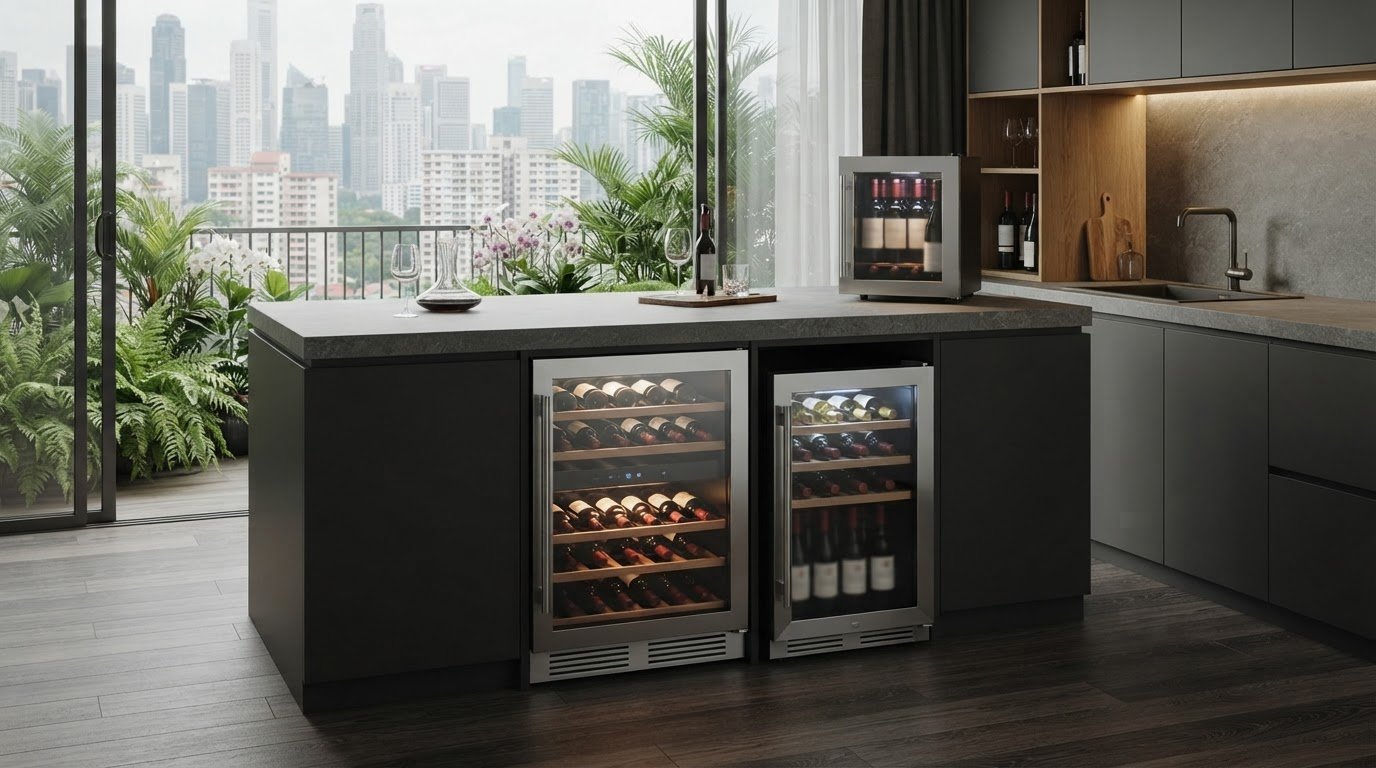
Choose a storage spot that suits your home and keeps wine away from heat sources, including stoves, and direct sunlight. If you use a wine fridge, leave at least 5 cm of clearance on all sides. The unit should not be completely enclosed. A freestanding wine fridge should not be in cabinets or under islands. These placement rules help you plan for the appliance before deciding where it belongs.
For a fuller discussion of home storage considerations, see this guide to long-term wine storage in Singapore. Storage needs can differ according to how you use your collection, so keep your approach practical and proportionate to the bottles you plan to hold.
Keep your records close, review them before your next purchase, and make storage part of your collection plan. If you’re considering dedicated storage, explore Stellez Vine Singapore’s wine fridges and wine cabinets for your home.
Where to Discover Wines for Your Collection with Stellez Vine Singapore
With your preferences, occasions and tasting notes in hand, turn them into a considered shortlist. Stellez Vine Singapore’s curated international selection offers a practical starting point for exploring wines from South Africa, Argentina, China, Thailand, Italy and France. Treat these origins as routes for discovery, not categories you must collect. Choose a region that catches your interest, then compare a wine from it with a style or flavour you already know.
Explore a curated range of international wines
Each new bottle can test a simple question: do you enjoy this wine’s character, and does it suit the occasion you had in mind? Stellez Vine Singapore’s winery partnerships include Groot Constantia, Savage, GranMonte and Kleine Zalze, offering examples of producers connected to different wine origins and traditions. Use your tasting notes as a guide. If you tend to like a certain texture or flavour, look for a discovery that offers a point of comparison rather than choosing at random.
For a closer look at how online browsing can support collection-building, explore Stellez Vine Singapore’s online wine shop. You can also order offline, with delivery available. Whichever way you browse, keep your shortlist focused on wines that match your taste and plans.
Turn a shortlist into your next discovery
Begin with the occasion, then narrow your choices by style or origin. For a meal, consider the food and the kind of wine you’ve enjoyed alongside similar dishes. For a relaxed evening, revisit a familiar preference or choose a nearby style to see how it compares. If you’re planning to share a bottle, select something that gives the gathering a point of discovery without making the choice feel like a test.
Before deciding, glance at your notes: what did you enjoy, what would you choose again, and what are you curious to compare? That small pause keeps each new purchase connected to what you’ve learned. It also helps building a versatile wine collection stay personal, rather than becoming a list of regions or labels to acquire.
Explore the curated selection at your own pace. Start with one bottle that fits your next occasion, then let your experience shape what you discover after it. Browse Stellez Vine Singapore’s curated wine selection and find a thoughtful next addition to your collection.
Choose Your Next Bottle with Confidence
Let your next choice be an experiment, not a test. Pick one wine that suits an upcoming occasion and gives you something new to notice, whether that’s a different grape, origin or style. Enjoy it without needing to decide whether it belongs in a perfect collection. What matters is whether it brings pleasure and helps you understand your taste a little better.
That spirit is the heart of building a versatile wine collection: thoughtful choices that evolve with you, one bottle at a time. Keep your plans flexible, stay curious and let experience shape what comes next. Stellez Vine Singapore brings together hand-picked wines from international regions, with winery partnerships including Groot Constantia, Savage, GranMonte and Kleine Zalze. Browse online or order offline, with delivery available.
Ready to find a bottle for your next occasion?Explore Stellez Vine Singapore’s curated wine selection and take the next step at your own pace. Your collection should feel like yours, and there’s always another discovery to savour.
Frequently Asked Questions
How do I start building a wine collection if I am a beginner?
Start with a few bottles you’re confident you’ll enjoy, then add one discovery that interests you. Building a versatile wine collection is easier when each purchase has a purpose, such as pairing with a meal or exploring a new grape. Keep the first round low-pressure: open the bottles, notice what you like, and use those impressions to shape your next choices rather than buying a large supply upfront.
What wines should every versatile wine collection include?
No wine style is essential for every collection. Choose based on what you drink and the occasions you host: a red that works with dishes you often serve, a white you enjoy on its own, or sparkling wine for a toast might suit your routine. If you rarely drink sweet wine or rosé, you don’t need to buy either just to complete a checklist. Let usefulness, not convention, decide.
How can I balance familiar wines with new discoveries?
Try a small comparison rather than changing everything at once. For example, open a familiar grape alongside a wine made from a different grape, or compare the same broad style from two origins. Notice which aromas, textures or flavours stand out to you. This gives each new bottle a useful reference point and helps you decide whether you enjoyed its character, the setting or the pairing.
Do I need a wine fridge to build a wine collection in Singapore?
No, a wine fridge isn’t a requirement for every collection. Consider how long you plan to keep bottles and whether you have a suitable spot away from heat and direct sunlight. If you choose a wine fridge, leave at least 5 cm of clearance on all sides. It should not be completely enclosed. Keep it away from stoves and other heat sources, and do not place a freestanding unit in cabinets or under islands.
How should I keep track of the wines in my collection?
Use a notebook or a simple spreadsheet, then add a status such as “on hand,” “opened” or “finished” so your record reflects what’s available. If you store bottles in more than one place, note their location too. Before choosing a bottle for dinner, scan your list for a style you’ve enjoyed with similar food. This makes your records useful in the moment, not just an archive.
Can a versatile wine collection include wines from different countries?
Absolutely. Collecting across countries can broaden your experience without requiring a bottle from every region. You might compare wines from South Africa and Argentina, or explore selections from China, Thailand, Italy and France as your curiosity develops. Focus on what each bottle tastes like to you rather than assuming origin alone predicts your preference. A cross-country selection can be personal and coherent when each choice connects to your interests.
How do I choose wines for different occasions?
Start with the food, setting and people you’ll be sharing the bottle with. For a richly flavoured meal, consider whether you want a wine with enough body to stand alongside it; for lighter dishes, a fresher style may feel more harmonious. For a celebration, choose a bottle that suits the mood and your guests’ preferences. There’s no mandatory match, so follow what you know the group enjoys.
Comments