
How to Read a Wine Label for Beginners: A Simple Guide

A beautiful label can catch your eye, but it can’t tell the whole story of what’s inside the bottle. Learning how to read a wine label for beginners means looking past the design and treating each detail as a clue, not a promise of exactly how the wine will taste.
If unfamiliar terms make bottles hard to compare, you’re not alone. It can be difficult to tell whether a name refers to a grape, a producer or a place. Phrases that sound impressive don’t always guarantee a particular style or quality. The good news is that you don’t need to know every wine region or labeling rule to make a more considered choice.
This guide explains how to identify the producer, origin, grape and vintage when they’re stated, and what common label terms mean. You’ll learn what those details can suggest, what they can’t confirm, and how to use them together to choose with greater confidence. Start with the main clues, then compare the bottle’s information with the kind of wine you’d like to enjoy.
Table of Contents
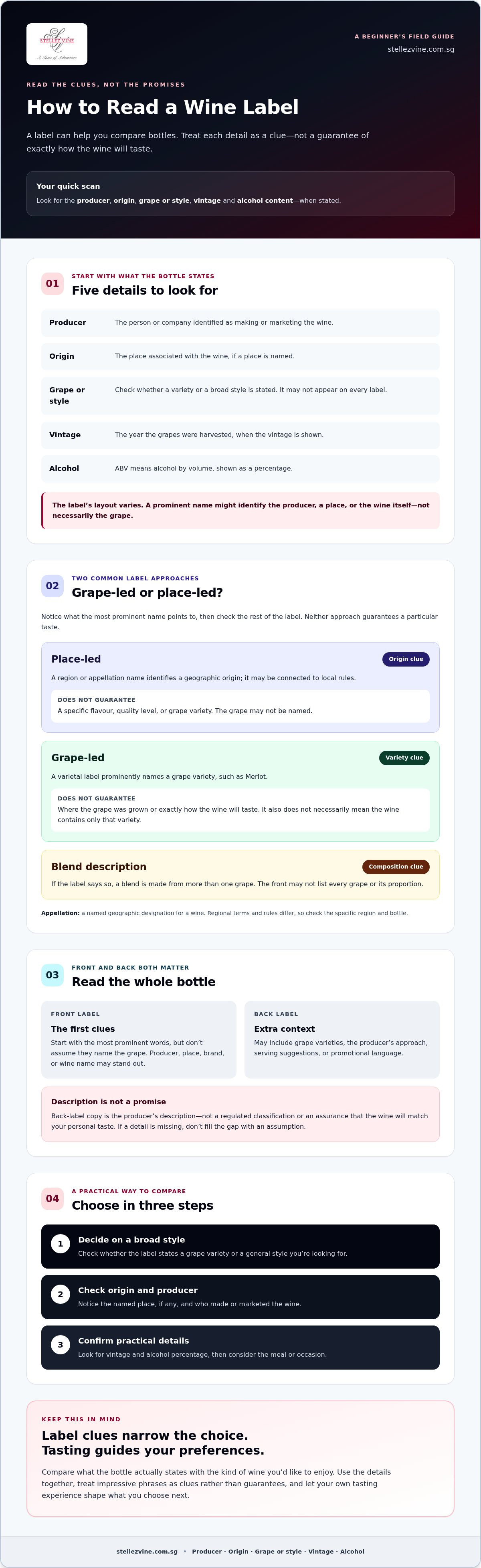
How to Read a Wine Label: Start with the Details You Can Trust
A wine label is a source of information, not an exam in wine expertise. You don’t need to recognise every term or region to use it well. Think of the label as packaging information that identifies and describes the bottled wine. The information found on a wine label can include the producer, origin, vintage and other details, though the exact presentation varies.
For a quick first scan, look for the producer, origin, grape or style, vintage and alcohol content. These are clues, not a complete tasting prediction. The details shown, their wording and their prominence can vary by producer, wine region and bottle, so don’t assume every label follows the same format.
Where to find the front-label essentials
Start with the most prominent words, but don’t assume they name the grape. They may identify the producer or brand, a place, or the wine itself. The producer is the person or company identified as making or marketing the wine. The origin points to the place associated with it. The vintage, when shown, is the year the grapes were harvested. These details help you compare bottles, but they don’t guarantee a particular taste.
Look for smaller print, too. A producer’s name may be less prominent than a region or brand, and a grape variety may not appear at all. When learning how to read a wine label for beginners, compare what the label actually states with what you want to know. Don’t treat a familiar-looking name as proof of a detail that isn’t shown.
What the back label can add
Turn the bottle around for extra context. The back label may name grape varieties, describe the producer’s approach or offer serving suggestions. It may also include promotional language. Treat that copy as the producer’s description, not as a regulated classification or an assurance that the wine will match your personal taste.
Read the bottle in front of you. Back-label details vary, and not every description will answer every question. If an important detail is missing, don’t fill the gap with an assumption.
Use this simple checklist as you browse:
Producer: Who made or marketed it?
Origin: What place is named, if any?
Grape or style: Is a variety or broad style stated?
Vintage and alcohol: Are the harvest year and alcohol percentage provided?
Some bottles make these answers easy to spot; others require a closer look. Either way, a consistent scan helps you compare useful details instead of relying on design alone.
Grape or Place? Decode the Two Main Wine-Label Styles
Once you know where to look, ask what the most prominent name tells you. Some labels lead with a place, while others put a grape variety front and centre. This distinction is a practical starting point for how to read a wine label for beginners, but it isn’t a strict divide between countries or a promise about taste. Wine Folly’s guide to how to read a wine label also explains this useful contrast.
Use the name as a clue, then check the rest of the label. A named place may identify where the wine comes from, while the grape variety may not be stated. A grape-led label makes the variety easier to spot, but doesn’t necessarily tell you the wine’s origin or whether it contains only that variety.
How to interpret a region or appellation
An appellation is a named geographic designation for a wine. Bordeaux, for example, is a place name that can signal origin, but it doesn’t guarantee one fixed flavour profile. Regional terms can also be tied to local rules, and those rules differ. Check the specific region and bottle rather than assuming every place name means the same thing.
How to read grape-led and blend descriptions
A varietal label prominently names a grape variety. A blend combines grapes, which may be listed individually or described another way. Look at both sides of the bottle, and don’t assume an unstated grape is absent. Label conventions vary by producer, region and market, so check the specific bottle before drawing conclusions.
Use both styles to guide your next comparison: a place name can direct you to origin, while a grape name offers a more direct clue about variety. Neither provides a complete tasting note. As you explore different regions and producers, browse curated wines and compare the label details that matter to you.
What Vintage, Alcohol, and Other Wine-Label Terms Really Mean
Once you’ve identified the label’s main name or place, look for more precise details. A year or alcohol percentage gives you a specific fact; words such as “reserve” or “old vines” need more context. When learning how to read a wine label for beginners, separate what the bottle explicitly states from what you might expect to taste.
Vintage, bottling date, and age
Vintage is the year the grapes were harvested. It may appear on the front or back label, but it isn’t the bottling date or the year you buy the wine. Some bottles are labelled non-vintage, meaning they don’t name a single harvest year as the vintage.
An older vintage isn’t automatically better. Wines are made in different styles, and storage can affect a bottle’s condition over time. Read the year as harvest information, not as a stand-alone quality score or proof that the wine is ready to drink.
Alcohol, sweetness, and producer claims
Look for ABV, or alcohol by volume, usually printed as a percentage. It tells you what proportion of the drink’s volume is alcohol. For example, a label marked 13% ABV states that alcohol accounts for 13% of the wine’s volume. It’s a measurable detail, but it doesn’t tell you everything about the wine’s body, balance or flavour.
Sweetness wording can offer a clue, but terms and conventions vary between wines and markets. Read the specific description rather than assuming every term has exactly the same meaning. Producer tasting notes, such as references to fruit or spice, describe an intended profile, not a guaranteed sensory result.
Give extra context to phrases like “estate bottled,” “reserve” and “old vines.” Their meaning can depend on the region, producer and applicable labeling conventions. Don’t treat them as universal grades or automatic proof of age, quality or a particular taste. Check what the term means for that wine before comparing bottles.
A label fact tells you what is stated on the bottle; it doesn’t guarantee how the wine will taste or how much you’ll enjoy it. Use the harvest year, ABV and descriptive terms as clues, while keeping your own preferences in view.
A Beginner’s Three-Step Method for Choosing Wine from a Label
Turn label details into a decision by following the same order each time. Start with what you want from the bottle, compare its origin and producer, then check practical details. This keeps your choice grounded in information you can compare, rather than prestige words or a striking design.
Step 1: Identify the style. Begin with the meal, occasion or broad style you have in mind, such as red, white, sparkling or rosé. If the label names a grape, region or style you already enjoy, use that as a starting clue. Don’t choose solely because a term sounds prestigious.
Step 2: Check the origin and producer. Note the place and producer named on the bottle. Compare these clues with another wine rather than assuming either one predicts a precise taste. For a useful origin comparison, explore South African and Argentinian wines.
Step 3: Confirm the practical details. Check the vintage if stated, alcohol content and bottle size. Make sure the information suits your plans, then compare like with like. If a detail you care about isn’t shown, don’t treat a marketing phrase as a substitute.
Match label clues to the occasion
For a meal, start with the broad style you want to serve. For a gathering, consider what guests tend to enjoy. A grape name or region can help you shortlist bottles, but neither is a guaranteed taste description. Food-pairing language on a label is a suggestion, not a strict rule. Compare a few bottles with similar clues and notice which origins, producers or styles you want to explore further.
Check the bottle before deciding
Before choosing, scan for the producer, origin, vintage where present, alcohol content and stated bottle size. Keep factual details separate from persuasive copy. This Matias Riccitelli wine guide offers producer context; check the specific bottle label for its details.
Label facts: stated origin, producer, grape or style, vintage and ABV.
Promotional cues: tasting language, decorative design and awards or prestige terms.
Give the facts more weight when comparing bottles. Promotional cues may add context, but they don’t replace details you can verify. To put this method into practice, explore curated wines and compare the information on each bottle.
Turn Wine-Label Clues into a Confident Next Bottle
A label helps you understand a bottle’s stated details, but tasting is what confirms whether you enjoy it. Use the information to make a thoughtful shortlist, then let your preferences guide what you choose again. That’s the practical value of how to read a wine label for beginners: you can make a more confident choice without memorising every region or relying on impressive-sounding claims.
Build confidence with each bottle
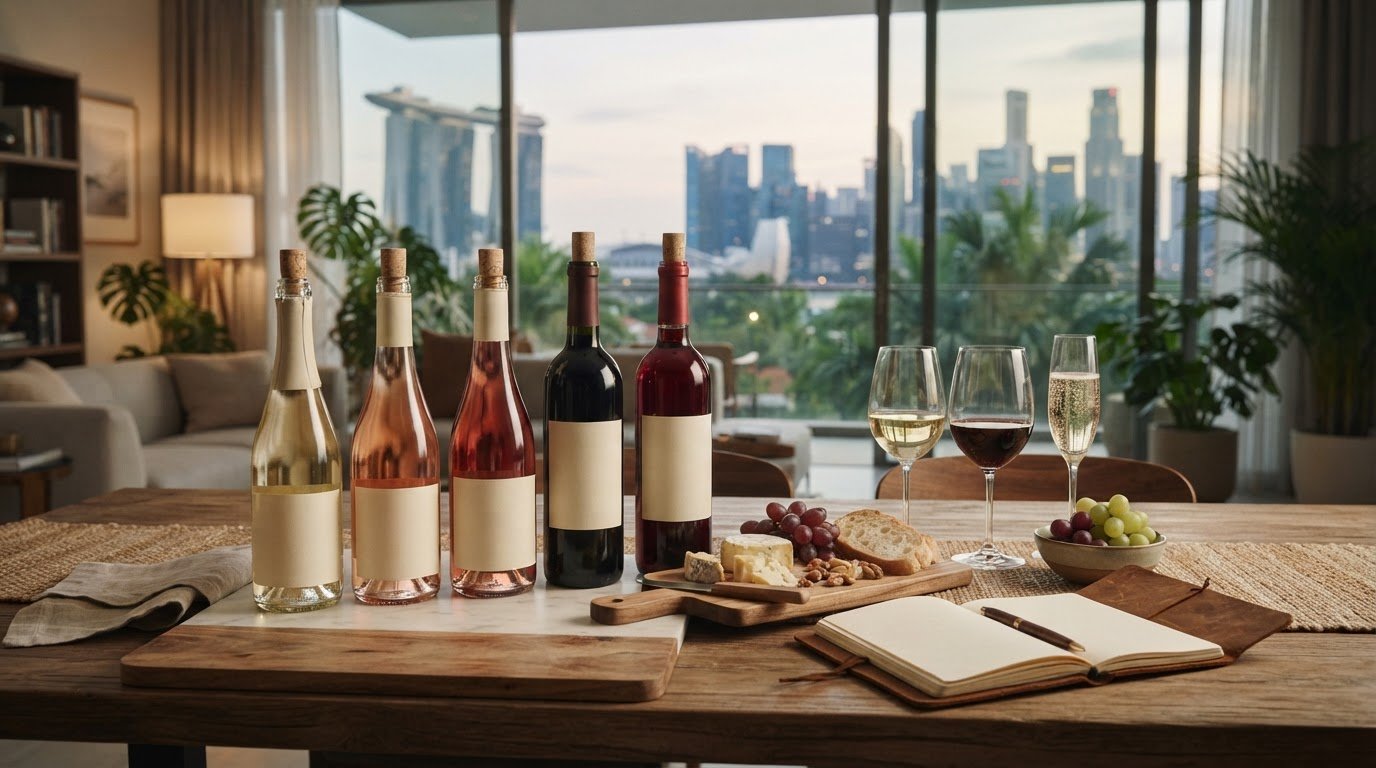
Keep a short note after trying a wine. Record the producer, origin, grape if stated, vintage if shown and your own impression. A few words are enough: note whether you liked it, what stood out and whether you’d choose it again. Compare those notes over time. Patterns in what you enjoy are more useful than trying to memorise every regional term. Taking part in hands-on tastings—such as guided vineyard outings with Wine Tours of Sedona—is another great way to explore different grapes and regions while asking winemakers directly about what appears on their labels.
Use this repeatable checklist when you browse or compare two bottles:
Producer: Who made or marketed the wine?
Origin and grape: What place and variety are stated, if any?
Vintage and ABV: Is a harvest year shown, and what alcohol percentage is listed?
Your purpose: Does the stated style suit your meal or occasion?
Your impression: After tasting, would you choose this style again?
If you’re shopping online or asking about a particular vintage, check the details for the exact bottle. A producer may offer different wines, and label information can vary between them. Don’t assume one bottle’s grape, year or description applies to another.
Explore wines with a clearer point of view
Once you have a few preferences to guide you, unfamiliar origins become an invitation to explore rather than a barrier. Stellez Vine Singapore’s selection includes wines from South Africa, Thailand, Italy, France and Argentina, with producer names including GranMonte, Matias Riccitelli, Chateau Canon Chaigneau and Casa Vinicola Caldirola. Treat these as starting points for reading labels, not as promises about any particular bottle’s taste. Check the current bottle information as you browse.
Keep your approach simple: read the clues, note what interests you, and see how the wine tastes to you. Each bottle gives you another reference point, making the next choice easier. Explore Stellez Vine Singapore’s curated wine selection and use your checklist to discover a producer or origin that’s new to you.
Read with Confidence, Choose with Curiosity
Wine labels are most useful when you treat them as clues, not promises. Look for the producer and origin, check whether a grape or vintage is stated, and use details such as ABV to compare bottles. Terms such as “reserve” or tasting notes may add context, but they don’t guarantee a particular flavour or quality.
That’s the heart of how to read a wine label for beginners: start with the style that suits your meal or occasion, compare the details that matter to you, then let tasting shape your preferences. You don’t need to memorise every region. A few notes about what you enjoyed can make your next choice more personal and assured.
Ready to put those clues into practice? Explore Stellez Vine’s curated wine selection, featuring wines from South Africa, Thailand, Italy, France and Argentina, with online retail and expert service in Singapore. Choose a bottle that sparks your curiosity, read its label closely and enjoy discovering what you like.
Frequently Asked Questions
How do you read a wine label for beginners?
Start with the producer or brand, then look for the origin, grape or style, vintage and alcohol by volume (ABV). These details help identify and compare bottles, but they don’t guarantee a particular taste or quality. Check both the front and back labels, since information can appear in different places or be omitted. Treat descriptive phrases as clues, and let your own tasting preferences guide future choices.
What does the year on a wine label mean?
The year shown as the vintage usually identifies when the grapes were harvested, not when the wine was bottled or purchased. Some wines are labelled non-vintage, so they don’t display one harvest year as their vintage. An older year doesn’t automatically mean a better bottle: wine style and storage also matter. If the year is important to your choice, confirm it on the specific bottle.
Does a wine label tell you which grape is in the bottle?
Sometimes. A grape-led label prominently names a variety, but an origin-led label may feature a region or appellation instead, leaving the grape unstated on the front. Blends combine grapes, and the label may list varieties or describe the wine another way. Check the back label for additional details, but don’t assume every bottle names all its grapes. Label conventions vary by producer, region and market.
What does appellation mean on a wine label?
An appellation is a named geographic designation for a wine. It can identify the place associated with the wine and may be linked to local production rules. The rules and meaning differ between regions, so a place name doesn’t tell you everything about the grape variety or taste. For example, Bordeaux identifies a wine origin, but it isn’t a guarantee of one fixed flavour profile.
Can you tell if a wine is sweet from the label?
Sometimes the label gives a sweetness clue through a style term or producer description, but wording and conventions can vary. Read the specific bottle’s information rather than assuming a term means exactly the same thing across all wines. Tasting notes can help you form an expectation, but they’re guidance rather than a guaranteed sensory result. If sweetness is a deciding factor, look for an explicit description and verify the details for that wine.
What does alcohol percentage on a wine label mean?
The alcohol percentage is usually shown as ABV, meaning alcohol by volume. It tells you what proportion of the drink’s volume is alcohol. For example, 13% ABV indicates that alcohol accounts for 13% of the wine’s volume. Treat this as a measurable label detail, not a complete description of body, balance or flavour. Compare the stated percentage alongside the wine’s style and other information.
Is a more detailed wine label a sign of better quality?
No. A longer description may offer more context about the producer, origin, grapes or suggested profile, but detail alone doesn’t prove quality. Some labels are concise, while others include extensive notes or promotional language. Focus on verifiable details you can compare, such as the producer, origin and vintage when stated. Use awards and design as secondary cues, not substitutes for the bottle’s facts or your own taste.

Comments