
Dessert Wine Recommendations: Find Your Perfect Sweet Pour

Updated: Oct 5
What if the best dessert wine isn’t the sweetest one? The most satisfying pour balances sweetness with acidity, texture and the moment you’re serving it. If you’re deciding between a rich fortified wine, a bright late-harvest style or a honeyed botrytised wine, these dessert wine recommendations will help you choose with confidence.
A sweet wine doesn’t have to feel cloying or overwhelm dessert. The right match complements the dish, whether you’re serving fruit, chocolate or cheese, and keeps the flavours in balance. You don’t need to know every wine region or production method to find a style you’ll enjoy.
Learn how different styles taste and feel, how to pair them, and what to consider when choosing a bottle for a celebration, dinner or gift. Then use your preferences to explore Stellez Vine’s curated international wine selection online, with delivery within Singapore.
Table of Contents
Dessert wine recommendations: what makes a sweet wine worth choosing?
Dessert wine styles compared: discover the character behind each pour
Which dessert wine suits your palate? Compare sweetness, texture, and occasion
How to pair dessert wine: match sweetness, flavour, and serving
Turn dessert wine recommendations into a confident bottle choice
Dessert wine recommendations: what makes a sweet wine worth choosing?
Dessert wine is a broad category of wines served with or instead of dessert. Sweetness is only one part of what makes a bottle satisfying. Acidity can add lift, texture can make a wine feel light or plush, and aromas and finish shape how its flavours unfold. Explore the many styles and traditions in Dessert wines, then use these qualities to identify a pour that suits your palate and the occasion.
Dessert wine is defined by its sweetness, but its overall balance depends on how sweetness meets acidity, texture, aroma and finish. A wine can taste sweet yet remain fresh and poised, or feel rich and lingering. Those differences are more useful than simply choosing the sweetest option.
How sweet can dessert wine taste?
Think of dessert wine as a spectrum. At one end are lightly sweet, fresh styles with lively fruit and a crisp impression. At the other are richly sweet, concentrated wines with fuller texture and lingering flavours. Between them, you’ll find a range of body and intensity.
Acidity helps balance sweetness, much as a squeeze of citrus can brighten a rich dish. A wine with noticeable freshness may feel more nimble, while a low-acid, concentrated style can come across as more opulent. Neither is automatically better. Choose according to what you enjoy: a clean, refreshing finish or a rounded, lingering sip. Good dessert wine recommendations begin with preference, not a sweetness ranking.
Is dessert wine only for dessert?
Not at all. Serve a small pour as an aperitif, alongside a course or on its own after dinner. The right style can complement fresh fruit, contrast with salty or savoury flavours, or add a considered finish to a celebration. Dessert itself can be simple, and sweet wine isn’t limited to cakes and pastries.
Consider the whole pairing. A bright, fruit-led wine may suit fresh fruit, while a richer style can stand up to a more intense dish. Cheese offers another option: sweetness can contrast with salty, savoury flavours. Rather than assuming every sweet pour belongs beside a sugary dessert, consider both the food and the wine. The next sections compare broad styles and explain how to match flavour and texture.
Dessert wine styles compared: discover the character behind each pour
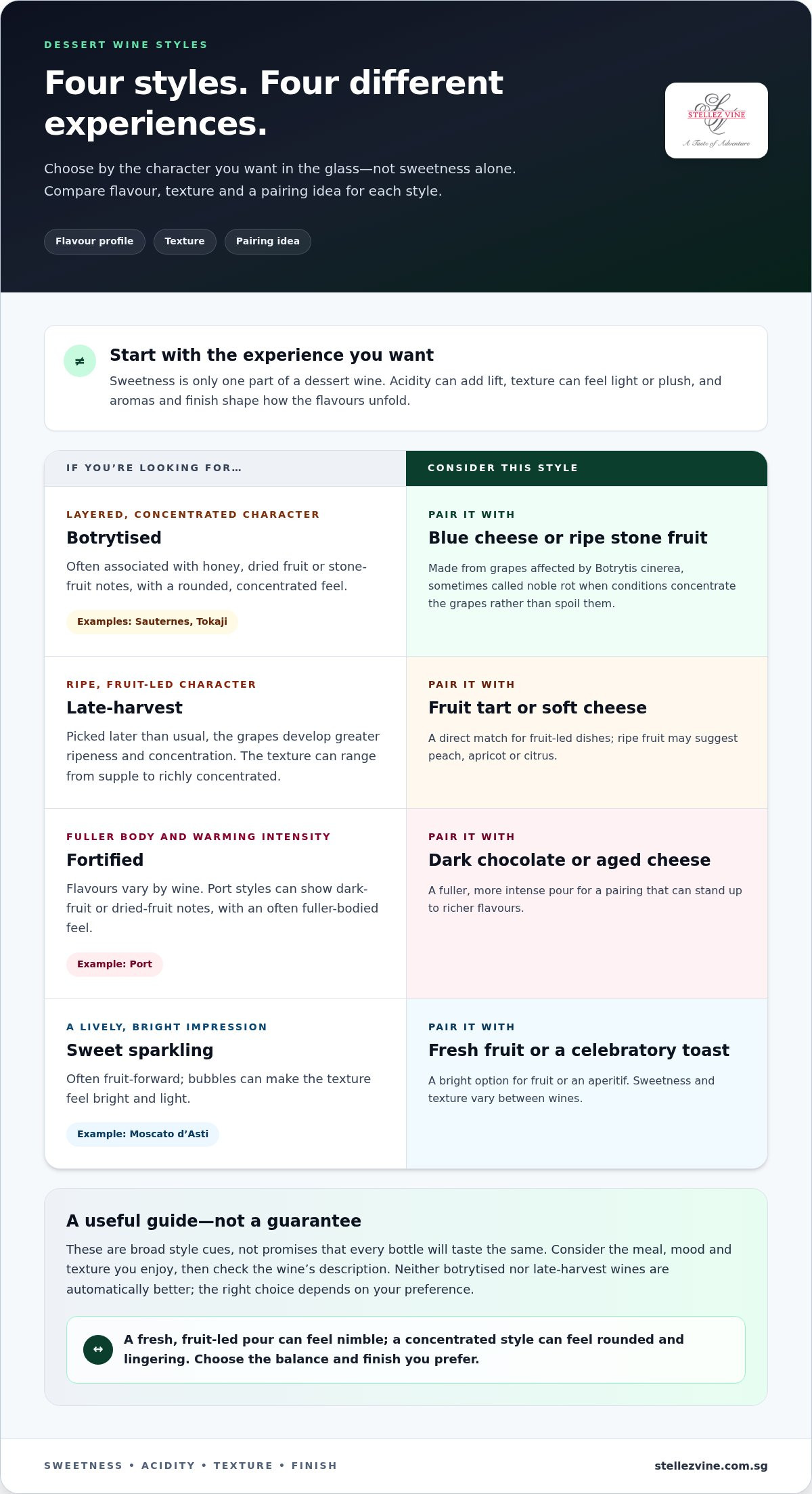
Production method influences more than sweetness. It can also shape a dessert wine’s concentration, texture and flavour profile. Use the table as a starting point, not a promise that every bottle in a style will taste the same. Sauternes, Tokaji, Port and Moscato d’Asti are examples of styles or regions, not guarantees of a particular flavour in every bottle. For another overview of classic styles, explore Wine Enthusiast’s guide to excellent dessert wines.
Rich and concentrated: botrytised and late-harvest wines
Botrytised wines are made from grapes affected by Botrytis cinerea, a fungus sometimes called noble rot when conditions allow it to concentrate the grapes rather than spoil them. These wines are often associated with honey, dried fruit or stone fruit. Sauternes and Tokaji are familiar examples, though each wine has its own character.
Late-harvest wines are made from grapes picked later than usual, allowing them to develop greater ripeness and concentration. They can offer luscious fruit without the distinctive botrytised character. Neither approach is superior. Consider botrytised complexity for layered, savoury-leaning pairings, or late-harvest fruit for a more direct match with fruit-led dishes.
Bright, bubbly, or fortified: other styles to explore
Sweet sparkling wines bring lift and a festive feel, making them appealing with fruit or as an aperitif. Moscato d’Asti is a familiar example, but sweetness and texture vary between wines. Fortified wines, including Port, can offer a fuller palate and warming intensity, though their sweetness levels and serving traditions also differ. Read the style description and choose based on the meal, mood and texture you enjoy. These distinctions make dessert wine recommendations more personal than simply picking the sweetest bottle. Browse Stellez Vine’s curated international wines as you consider a bottle for your table or celebration.
Which dessert wine suits your palate? Compare sweetness, texture, and occasion
Choose by the experience you want, not by sweetness alone. A lively, lighter-bodied wine may suit someone who enjoys crisp fruit, while a fuller, more intense pour may appeal to a palate drawn to richness. Acidity can sharpen the impression and keep sweetness feeling fresh, so a sweet wine isn’t automatically syrupy or heavy.
Use these cues to narrow your dessert wine recommendations:
Fresh and bright: Look for a lively profile, lighter texture and fruit-forward character. This can suit a small celebratory pour or a pairing that shouldn’t feel too weighty.
Rounded and aromatic: Choose this direction if you enjoy a softer texture and expressive fruit or honey-like aromas.
Rich and intense: Consider fuller body and concentrated flavours for a slower after-dinner sip or a pairing with bold, deeply flavoured food.
Consider perceived sweetness alongside acidity, body and intensity. A wine with pronounced freshness may seem less sweet than one with similar sweetness but a softer, fuller feel. Your preference is a guide, not a measure of quality.
Choose by flavour: fresh fruit, honey, or dried fruit
Flavour descriptions are useful clues, not promises that every bottle will show the same notes. “Fresh fruit” suggests a bright, juicy impression. “Honeyed” can point to a rounded, aromatic character. “Dried fruit” often signals deeper, more concentrated flavours. For a lighter match, try a fruit-forward style with fresh fruit or a delicate dessert. If you prefer richer flavours, pair them with more intense dishes, adjusting to the food rather than following a rigid rule.
Choose by moment: pairing, celebration, or gifting
For a gift, think about the recipient. Do they prefer crisp fruit or a richer, lingering finish? Will they open the bottle with cheese, a meal or on its own? These clues can help you choose a style that feels considered, even if you don’t know their exact favourite wine.
Once you’ve identified your preferred texture, intensity and occasion, comparing wine descriptions becomes easier. Use those preferences to make a shortlist, then consider the specific dish you plan to serve.
How to pair dessert wine: match sweetness, flavour, and serving
A thoughtful pairing doesn’t need complicated rules. Start with the dish, match the wine’s intensity, then decide whether contrast or complementary flavours will work best. One useful rule of thumb is that dessert wine should generally taste at least as sweet as the dessert. If the dish is sweeter, the wine can seem less vibrant or even tart by comparison.
Assess the dish: Notice its sweetness, richness, tartness and dominant flavour.
Match intensity: Pair delicate desserts with lighter-feeling wines and deeply flavoured dishes with wines that can hold their own.
Choose contrast or complement: Use freshness to cut through richness, or echo flavours for a harmonious match.
These dessert wine recommendations are starting points, not strict rules. The dessert’s recipe and your own preferences can shift the balance.
Pair wine with fruit, cream, and chocolate desserts
For fruit desserts, look to fruit-led wines, then consider whether the dish is tart, like a citrus tart, or ripe and sweet, like baked stone fruit. A lively wine can echo fresh fruit without weighing it down. With creamy desserts, freshness can offer a clean contrast, while a richer wine may complement the dish’s silky texture. Chocolate needs extra thought: dark cocoa often brings more intensity and bitterness than a delicate dessert, so choose a wine with enough body and flavour to meet it. Try a small sip with a bite before serving the pairing to guests.
Blue cheese is another useful contrast. Its savoury saltiness can play against a sweet wine’s fruit and richness. The cheese and wine should feel balanced together, rather than competing for attention.
Serve dessert wine to bring out its best
Start with a modest pour. Concentrated flavours can be rewarding in smaller amounts, and guests can always have more. Use suitable glassware that lets you appreciate the wine’s aroma, and follow the bottle’s serving guidance where available. Temperature affects how aroma and balance come across, but the ideal serving point depends on the wine’s style. Don’t treat one temperature as universal.
If you’re keeping a special bottle for a future meal or celebration, explore this guide to long-term wine storage in Singapore. To put your pairing preferences into practice, browse Stellez Vine’s curated international wine selection for a meal, celebration or considered gift.
Turn dessert wine recommendations into a confident bottle choice
You don’t need to memorize regions or production methods to make a thoughtful choice. Start with the experience you want, then use the food, occasion and bottle description to narrow your options. These dessert wine recommendations become practical when you focus on a few clear preferences instead of searching for a single “best” style.
A five-point checklist for choosing dessert wine
Pick your sweetness direction: Decide whether bright, fresh flavours or rich, concentrated ones sound more appealing.
Name the food or occasion: A wine for fruit, cheese or a celebration may call for a different style from one served on its own after dinner.
Choose the texture: Consider whether you’d enjoy a lighter, lively feel or a fuller, lingering finish.
Plan the serving moment: Think about when you’ll pour the wine and how many people will share it. This helps you consider the bottle and serving format.
Read beyond the sweetness: Compare grape, region and style descriptions for clues about aroma, acidity, body and provenance. Use the current bottle details to make your final choice.
Let the description guide you, not dictate your choice. A grape or region can offer useful context, while style notes help you picture how the wine may work with your chosen dish. If you’re choosing for guests, look for a profile that suits the food and feels welcoming to a range of palates.
Explore a curated selection for your next occasion
A considered selection makes it easier to compare wines from different regions and find a bottle suited to a meal, celebration or gift. Browse Stellez Vine’s curated international wines and use each current bottle’s information to shape your shortlist. For a broader menu, this guide to wine for a dinner party can help you think through the rest of the table.
Keep your checklist close as you browse: preferred sweetness, desired texture, food pairing, occasion and the people sharing the bottle. That’s a confident way to choose without overcomplicating the decision. Explore Stellez Vine’s curated wine selection online for a considered pour for your next occasion.
Choose a sweet pour worth sharing
The right dessert wine balances sweetness with freshness, texture and the flavours on your table. Use the style descriptions to find a pour that suits your palate, then match its intensity to the food and occasion. A small serving alongside fruit, cheese or dessert can make a thoughtful finish to a meal. A bottle chosen for its character can also make a celebration or gift feel more personal.
Keep your preferences in mind as you browse: do you lean towards bright and lively, or rich and concentrated? These dessert wine recommendations give you a starting point. Grape, region and style descriptions can help you narrow the choice with confidence.
Discover wines from renowned international regions through Stellez Vine’s curated online selection, with delivery within Singapore. Explore Stellez Vine’s curated wine selection to choose a bottle for your next meal, celebration or gift.
Frequently Asked Questions
What is the best dessert wine for beginners?
For beginners, a fruit-forward style with moderate sweetness and refreshing acidity is an approachable starting point. Sweet sparkling wines can feel lively, while some late-harvest wines offer ripe fruit flavours in a still style. These dessert wine recommendations aren’t a strict ranking. Consider whether you prefer bubbles, freshness or a softer texture, then choose a bottle description that appeals to you and pair it with a simple dessert or fresh fruit.
Is dessert wine always very sweet?
No. Dessert wines range from lightly sweet and fresh to richly sweet and concentrated. Acidity, body and texture change how sweetness feels: a lively wine can taste bright and balanced, while a fuller style may seem more indulgent. Sweetness isn’t a measure of quality. If you’re unsure, look for descriptions that mention freshness or acidity, and choose a sweetness level that suits your palate and the food you plan to serve.
What dessert wine goes best with chocolate?
Choose according to the chocolate’s intensity and sweetness. Dark chocolate has pronounced cocoa bitterness, so a fuller, flavourful wine can stand up to it. A rich fortified style, such as Port, is one option to explore. Sweeter milk chocolate may call for a wine with enough sweetness to avoid tasting sharp beside it. Try a small sip with a bite first, since cocoa content and recipe can change the balance.
Can you drink dessert wine without dessert?
Yes. Dessert wine can be enjoyed on its own as a small after-dinner pour, served as an aperitif or paired with savoury food. Try it with cheese or fruit, or pour a little to mark a celebration. Serve it in a way that suits its intensity and your preference. A sweet wine doesn’t need a sugary dish beside it to feel complete.
How should dessert wine be served?
Serve dessert wine in a modest pour, using glassware that lets you appreciate its aromas. The ideal temperature depends on the wine’s style, so follow the bottle’s serving guidance rather than applying one rule to every bottle. A cooler serving can emphasize freshness, while too much chill may mute aromas. If the bottle has been opened, reseal it and follow its storage guidance to preserve its character.
What food pairs well with dessert wine?
Fruit desserts, creamy dishes, chocolate and cheese can all pair well, depending on the wine’s sweetness and intensity. Try a fruit-led style with fresh fruit, or use a wine with freshness to balance a creamy dessert. Dark chocolate often calls for a more flavourful, fuller-bodied match. Salty blue cheese can create an appealing contrast with sweetness. Treat these as starting points and adjust to the dish and your taste.
How long does dessert wine last after opening?
There isn’t one dependable time limit for every dessert wine. How long it keeps its best flavour depends on the style, how it’s stored and how much air has entered the bottle. Reseal it promptly, keep it refrigerated after opening and avoid leaving it exposed for long periods. Fortified styles may hold their character differently from lighter wines, so use the bottle’s guidance and your own senses before serving again.
Is dessert wine a good gift?
Yes, dessert wine can make a thoughtful gift for a dinner host, celebration or someone who enjoys exploring wine. Choose with the recipient in mind: do they prefer fresh, fruit-led flavours or richer, more concentrated styles? Their favourite desserts, cheese preferences and plans for serving the bottle are useful clues. A carefully chosen style feels personal, and a concise note suggesting a pairing can make the gift even more considered.



Comments