
Understanding Wine Body and Tannins Through Texture

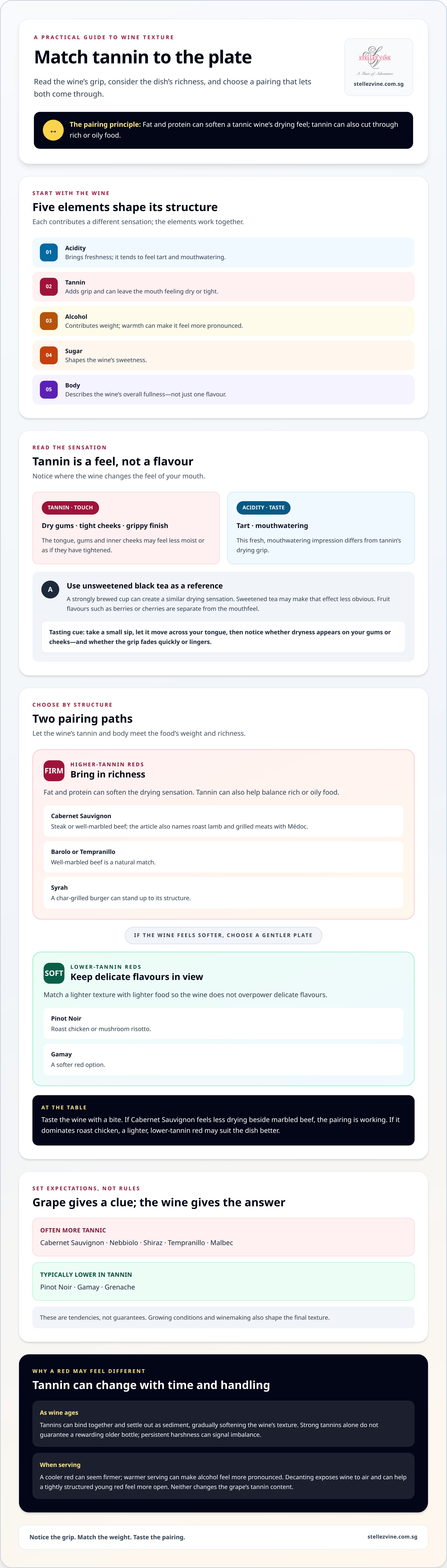
A wine’s texture tells you more than whether it feels light or full. Understanding wine body and tannins starts with five elements working together: acidity brings freshness, tannins create a drying grip, alcohol adds weight, sugar shapes sweetness, and body describes overall fullness.
If you’ve enjoyed a red wine’s bold structure but found its finish a little drying, you’ve already noticed how texture shapes the experience. Learn to recognise tannins on your palate, distinguish body from weight, and see how acidity, alcohol and sweetness balance a wine’s structure. You’ll also discover why tannins can soften as wine ages and how fatty foods can make a tannic red feel smoother. From a brisk, light-bodied pour to a firm Cabernet Sauvignon, these cues can help you choose and pair wine with greater confidence.
Table of Contents
How tannins affect red wine texture and ageing
Tannins shape a red wine’s grip, structure and potential to develop in the bottle. Grape variety, vineyard conditions and winemaking all influence how prominent they are.
Grape Varieties and Tannin Levels
Grape variety offers a useful first clue to a wine’s tannin level. Cabernet Sauvignon, Nebbiolo, Shiraz, Tempranillo and Malbec commonly produce more tannic reds, while Pinot Noir, Gamay and Grenache are typically lower in tannin. These are tendencies, not guarantees: growing conditions and winemaking also shape the final texture.
Use the grape name to set expectations, then consider the wine itself. A young Cabernet Sauvignon may feel firm and drying, while Pinot Noir often feels softer. That contrast can help you choose a style suited to the meal or your preference for a gentler or grippier finish.
Growing and Winemaking Effects
Tannin levels depend on grape skins, seeds and stems, as well as ripeness, climate and production choices. Thicker skins can contribute more tannin, and red wine fermentation brings the juice into contact with grape skins. Winemakers can adjust extraction through techniques such as changing contact time and temperature.
Handling matters, too. Rough treatment of seeds and stems can introduce bitterness, while oak barrels contribute additional tannins. Young, small barrels expose wine to more oak contact, and longer barrel ageing can add tannin. These choices influence how weighty or firm a finished wine feels.
During ageing, tannins can bind together and settle out as sediment, gradually softening the wine’s texture. A young Cabernet Sauvignon with firm tannins and balanced acidity may have the structure to develop. Strong tannins alone don’t guarantee a rewarding older bottle; persistent harshness in an aged wine can signal imbalance.
Serving temperature and decanting also change how texture is perceived. A cooler red can seem firmer, while warmer serving can make its alcohol feel more pronounced. Decanting exposes wine to air, which can help a tightly structured young red feel more open. Neither changes the grape’s tannin content.
How to recognise tannins by their drying, grippy sensation
Tannins are recognised by touch rather than by a distinct flavour. In red wine, they can leave the tongue, gums and inner cheeks feeling dry or tight, much like the mouth-drying effect of unsweetened black tea. Fruit flavours, by contrast, may suggest berries or cherries. Separating taste from mouthfeel makes it easier to identify tannin without confusing it with bitterness or acidity.
Try a small sip of red wine and let it move across your tongue before swallowing. Notice whether your gums or cheeks feel less moist afterwards. A grippy sensation, as though the surfaces of your mouth have tightened, points to tannin. Swirling the wine around your mouth can make the texture easier to notice. Focus on where the dryness appears, not only on how strong it feels.
Use black tea as a familiar reference. A strongly brewed, unsweetened cup can create a similar drying sensation, while a sweetened cup may make that effect less obvious. This comparison helps separate astringency from a wine’s fruit character. In a red, tannin can coexist with ripe fruit, so the wine may taste generous yet still leave a firm grip.
Young red wines may feel especially grippy because their tannins have not yet softened through ageing. Compare the mouthfeel across sips: does the dryness fade quickly, or linger along your gums? A lingering grip differs from acidity, which tends to bring a tart, mouthwatering impression. Noting these contrasting cues gives you a clearer picture of the wine’s texture.
For a simple tasting note, describe where you feel the sensation and what it’s like. “Dry gums,” “tight cheeks” or “gentle grip” communicates more than simply calling a wine strong. Try this with red wine and black tea, then compare the afterfeel. With practice, these specific observations help you recognise tannins and describe their intensity more precisely.
Pairing tannin-rich wine with fatty foods
Fat and protein in food can soften the drying sensation of tannic red wine. The wine’s astringency can also cut through rich or oily dishes, while its flavours complement the food. This makes well-marbled beef a natural match for Cabernet Sauvignon, Barolo or Tempranillo: the fat moderates the wine’s grip, and the wine refreshes the palate between bites.
For high-tannin reds, choose substantial dishes with enough richness to meet their structure. Steak, roast lamb and grilled meats pair well with Médoc, while Cabernet Sauvignon suits steak. A char-grilled burger can stand up to Syrah. These combinations let the wine and food share the table without the tannins overwhelming each bite.
Lower-tannin reds call for gentler pairings. Pinot Noir, for example, works with roast chicken or mushroom risotto, where its lighter texture won’t overpower delicate flavours. Gamay can also suit drinkers seeking a softer red. Match the wine’s weight to the dish: a light-bodied pour often fits lighter food, while a fuller-bodied red can hold its own beside richer meat.
Use the menu’s richness and the wine’s structure as a guide. Pair a firm, tannic red with fatty beef or lamb; choose a softer Pinot Noir for chicken or mushrooms. For oily dishes, tannin’s astringency can help balance the richness. A mismatch can make the wine feel more drying or leave the dish’s flavours less distinct.
At the table, taste the wine with a bite of food, then notice the finish. If a Cabernet Sauvignon feels less drying beside marbled beef, the pairing is working. If the wine still dominates roast chicken, a lighter, lower-tannin red may suit it better. This simple comparison helps tailor the pour to the plate.
How acid, tannin, alcohol, sugar and body contribute to wine structure
Wine structure comes from five interacting elements, not one flavour or sensation. Acidity gives freshness, tannin adds grip, alcohol contributes weight, sugar brings sweetness, and body describes overall fullness. A fruit-forward red, for example, can still feel firm if tannins are prominent. Judge how each element shapes the whole sip rather than letting one feature define the wine.
Acidity feels tart and mouthwatering, much like lemonade. Tannin is different: it can leave the tongue and gums dry, as black tea does. In a red wine, ripe fruit can sit alongside both sensations. Notice whether your mouth waters, feels grippy, or shows both. This distinction helps explain why two wines with similar fruit flavours can feel quite different.
Alcohol adds heft, while body describes how light or full the wine feels. Picture water for a light-bodied wine, skim milk for medium-bodied, and whole milk for full-bodied. A wine’s elements need balance: a 15% alcohol Napa Cabernet Sauvignon should have enough flavour and body to support that level. Otherwise, alcohol may stand out against a thinner palate.
Sugar shapes perceived sweetness and can make a wine seem rounder. Consider it alongside acidity: refreshing tartness can offset sweetness, while low acidity may leave the wine feeling softer. Tannin also balances fruitiness and sweetness in red wine. These interactions explain why a full-bodied wine isn’t automatically sweet, or why a fruity wine can still finish dry.
For a beginner-friendly comparison in Singapore, try Pinot Noir or Gamay for a softer, lower-tannin red, then contrast them with Cabernet Sauvignon. Focus on the change in grip and fullness, rather than deciding which wine is better. A light-bodied Pinot Noir and a firmer Cabernet make the differences especially clear.
Use the same tasting order with each glass: notice freshness, check for drying grip, then assess weight and sweetness. Explore red wine styles for comparison to put those sensory cues into practice.
Stellez Vine Singapore
Stellez Vine, a leading wine distributor in Singapore, helps you put your understanding of wine texture into practice with its curated selection, including South African wines. Explore bottles with body, tannin and food pairings in mind, then use those sensory cues to guide your choices. For wines you plan to keep, consider wine storage options from Kadeka, Eurocave and Liebherr.
Explore these selections when choosing reds to compare or looking for a suitable way to store wine for future enjoyment. The right bottle can make the differences between a lighter, softer red and a firmer, fuller style easier to appreciate.
For a conversation about wine choices or storage options, contact Stellez Vine Singapore.
Make Your Next Pour More Intentional
Let your next bottle become a small tasting exercise rather than a verdict. Choose one quality to explore, then note how your impression changes beside a meal or after the wine has had time in the glass. Over time, these personal observations make understanding wine body and tannins more useful than relying on a label alone. You’ll build a palate shaped by what you genuinely enjoy, not by someone else’s definition of a perfect wine. A brief record of bottles, meals and impressions can reveal patterns that are difficult to notice from memory alone.
As you refine your preferences, consider which styles you’d like to discover next and how you want to enjoy them at home. Stellez Vine Singapore can help you explore its selection and wine storage options as your collection takes shape. Bring your curiosity and a clear sense of what you’d like to taste or preserve.
Contact Stellez Vine Singapore to discuss your next wine choice. Keep exploring, and let each glass teach you something new.
Frequently Asked Questions
Five keys to wine: Acid, Tannin, Alcohol, Sugar and Body, how do you detect them?
A practical understanding of wine body and tannins starts with tasting each element separately. Acidity creates a tart, mouthwatering response; tannin gives a drying grip; alcohol can bring warmth; and sugar registers as sweetness. Body describes the wine’s overall weight. Taste a red and a white, noting each sensation in turn. Comparing styles helps you recognise how the five elements combine.
How do tannins affect the taste and texture of red wine?
Tannins add structure and a drying, sometimes bitter edge to red wine. They can make the finish feel firm rather than silky, particularly in a young wine. Notice whether the sensation remains after swallowing and whether fruit flavours still feel clear. A red can taste richly fruity while its tannins create a pronounced grip, so assess flavour and texture separately.
What are tannins?
Tannins are polyphenolic compounds found in grape skins, seeds and stems, and they’re also present in tea and dark chocolate. In winemaking, contact between red grape juice and skins helps extract them. Oak can contribute tannins too. They don’t simply make wine taste bitter; they also influence its texture and structure, shaping how a red feels as you sip it.
What does wine body mean, and how can you identify light-, medium- and full-bodied wine?
Wine body is the impression of weight and fullness across your palate. A clearer understanding of wine body and tannins comes from comparing wines side by side and noting which feels delicate, rounded or dense. Pinot Noir often offers a lighter-feeling red, while Cabernet Sauvignon can feel bolder. These are style clues, not guarantees; alcohol and winemaking also influence weight.
What are tannins in wine, and how do they affect taste and mouthfeel?
Tannins are naturally occurring compounds that can make red wine feel drying, firm or slightly bitter. Their effect is tactile as well as flavour-related: you may notice tightness around your gums even when the wine tastes fruity. Compare a sip with and without food, then note whether the grip changes. This helps separate a wine’s flavour profile from its physical sensation.
How can you tell the difference between tannins, acidity and dryness in wine?
Tannins feel grippy, while acidity makes your mouth water and can prompt a tart, puckering response. “Dry” can describe wine that isn’t sweet, or the mouthfeel caused by tannins. After a sip, ask whether your palate is watering, tightening or registering little sweetness. Separating these cues helps you identify what shapes the finish and describe your impression more precisely.

Comments