
How to Identify Corked Wine by Its Smell, Taste and Signs

A flawless-looking bottle can still pour a disappointing glass. To learn how to identify corked wine, look for cork taint: the compound TCA can give wine a damp-cardboard or musty smell and leave it tasting flat or dull. Cork pieces in the wine, or a damaged cork, don’t by themselves mean the wine is corked.
If a bottle smells muted or musty, you may wonder whether it’s faulty or simply showing a different character. Assess its aroma and taste together rather than judging it by the cork alone.
Learn what causes cork taint, which wines can be affected, and how to distinguish it from other common wine faults. You’ll also find out what to do when a bottle seems corked, so you can make a more confident call before pouring another glass.
Table of Contents
Which Wines Are Most at Risk of Cork Taint?
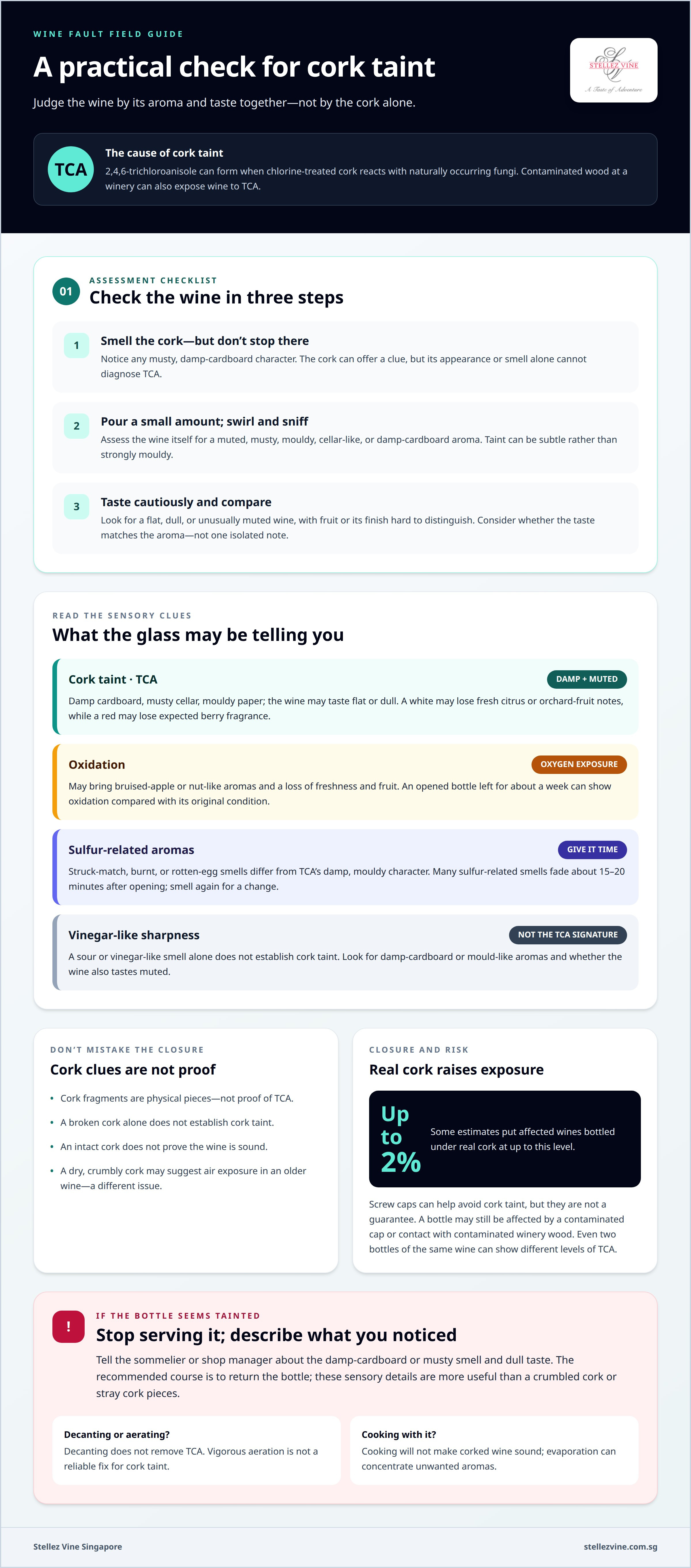
Real cork closures carry the clearest risk of TCA contamination. Some estimates put affected wines bottled under real cork at up to 2%. TCA, or 2,4,6-trichloroanisole, can form when chlorine-treated cork reacts with naturally occurring fungi. Contaminated wood at the winery can also expose wine to the compound. A cork fragment in a bottle is different: it’s a physical piece, not proof of TCA. A broken cork alone doesn’t establish cork taint either.
The wine’s smell offers a stronger clue than the cork’s appearance. Does corked wine smell like wet cardboard, mould, or vinegar? Damp-cardboard and musty, mould-like aromas are common signs; vinegar isn’t characteristic of cork taint. The wine may also seem muted rather than strongly mouldy. Smell the wine itself, not just the removed cork, then taste a small pour to see whether its flavour seems dull.
Wine sealed with real cork is more exposed to this particular fault, but the closure type is no guarantee. Two bottles of the same wine can show different levels of TCA, even after sharing a journey and cellar conditions. Screw caps can help avoid cork taint, yet a screw-cap bottle can still be affected if the cap is contaminated or the wine contacts contaminated wood at the winery. Don’t decide based on the closure alone.
Can decanting or aerating remove cork taint? No. Pouring wine into a decanter doesn’t remove TCA. Vigorous aeration can sometimes help with excessive reduction, a different fault, but it isn’t a reliable fix for cork taint. Cooking with corked wine won’t make it sound either; evaporation can concentrate its unwanted aromas.
If the wine seems cork-tainted, stop serving it and raise the issue with the sommelier or shop manager. The recommended course is to return the bottle. Describe its damp-cardboard or musty smell and dull taste, rather than relying on a crumbled cork or stray cork pieces. Those details help distinguish a tainted bottle from a simple cork mishap.
Common smells and tastes of corked wine
TCA, short for 2,4,6-trichloroanisole, causes cork taint. It can form when chlorine-treated cork meets naturally occurring fungi. The resulting smell may recall damp cardboard, a musty cellar, or mouldy paper. These aromas can be subtle, so assess the wine itself rather than treating the cork’s appearance as a verdict.
When you open the bottle, bring the glass to your nose and look for muted, musty aromas that mask the wine’s usual fruit or floral character. A corked white wine may seem stripped of fresh citrus or orchard-fruit notes; a red may lose its expected berry fragrance. These are examples, not a checklist: wine style affects its natural aromas, and taint can vary in intensity.
The taste can be less dramatic than the smell. Instead of an obvious mould flavour, the wine may seem flat, dull, or unusually muted, with its fruit and finish difficult to distinguish. Vinegar isn’t the defining smell of cork taint; a sharp, sour impression alone doesn’t establish TCA. Compare what you taste with what you smelled, then consider whether both point to a damp, musty character.
What causes wine to become corked? TCA contamination is the cause; it can originate in a cork or enter through contact with contaminated materials at the winery. Cork taint is chiefly a sensory fault that makes wine unpleasant to smell or taste. If it seems tainted, stop drinking it. Describe the aromas and taste to the sommelier or shop manager and ask about returning the bottle.
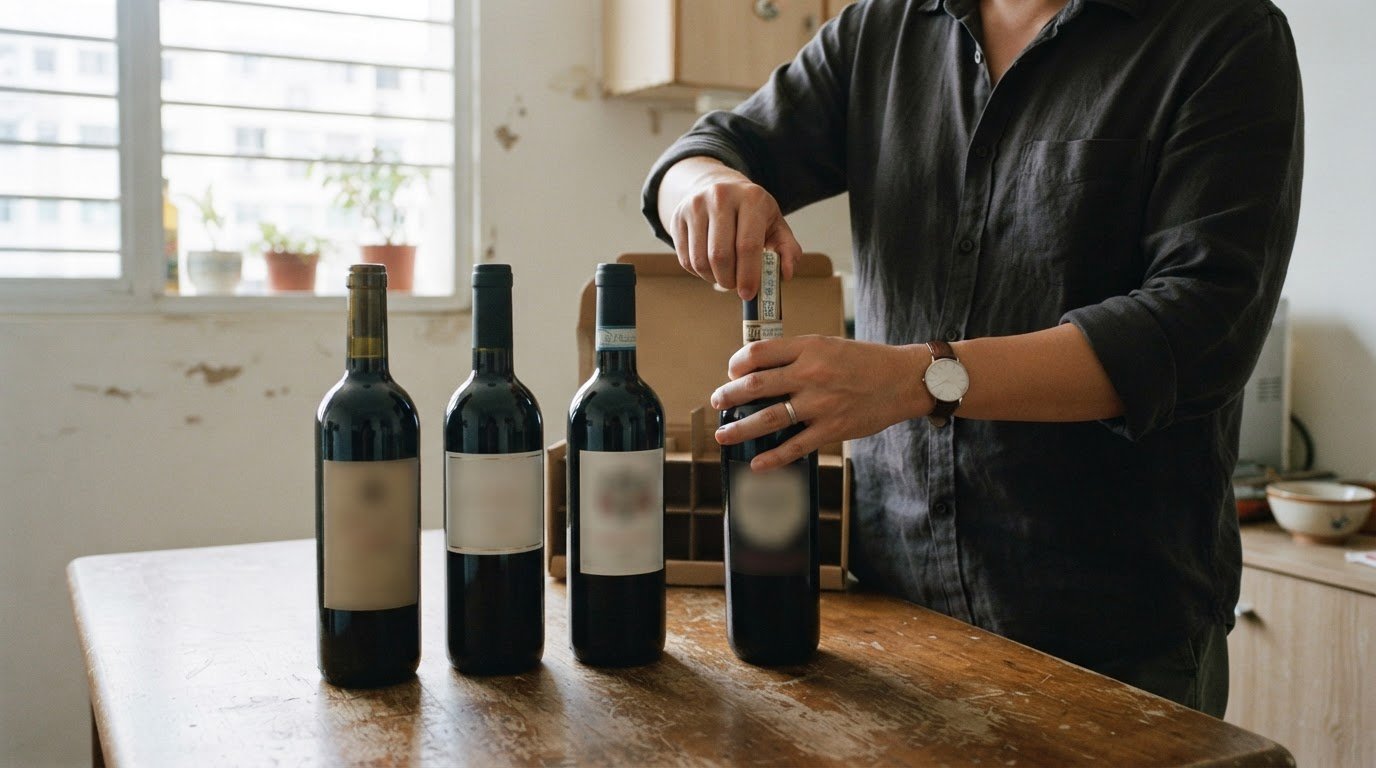
Smell the cork, pour a little wine into a glass, then swirl, sniff and taste it. 55 degrees is the commonly accepted best cellar temperature for wine storage.
Other compounds associated with wine faults
A musty, cardboard-like smell can suggest cork taint, but other faults create different sensory clues. Compare the aroma and flavour, then consider how the bottle was handled. Oxidation, sulfur-related aromas, and vinegar-like sharpness each point to different changes. One unusual smell alone doesn’t identify the cause; look for a pattern across the glass.
Oxidation develops when wine has too much contact with oxygen. An opened bottle left for about a week can show oxidation compared with its original condition. The wine may lose freshness and fruit, with aromas resembling bruised apple or nuts. Cork taint is more closely associated with damp cardboard and mustiness. Both faults can mute a wine, so notice the smell’s character, not just its intensity.
Sulfur-related aromas can resemble struck matches, burnt notes, or rotten eggs. These smells differ from the damp, mouldy character associated with TCA. Most sulfur-related smells burn off about 15-20 minutes after opening. Give the wine time in the glass, then smell again. If the aroma fades, that change offers a useful clue, though it doesn’t identify every possible fault.
A sharp, vinegar-like smell also differs from cork taint’s familiar musty profile. Don’t label a wine corked just because it smells sour. Check for cardboard or mould-like aromas and whether the wine tastes muted. Compare those impressions with the wine’s other characteristics before deciding what you’re sensing.
How can you tell cork taint from oxidation or other wine faults? Focus on the defining aroma and how it changes: damp cardboard suggests TCA, bruised-apple notes can indicate oxidation, and sulfur smells may fade after opening. If a glass remains unpleasant or unclear, assess its aroma and taste together rather than relying on one isolated note.
Identifying corked wine
Assess the wine’s aroma and taste together; the cork’s condition alone cannot diagnose TCA. A dry, crumbly cork may suggest an older wine was exposed to air, but that differs from cork taint. Likewise, an intact cork doesn’t prove the wine is sound. Treat the closure as one clue, not the verdict.
Assess a questionable bottle in sequence:
Smell the cork. Look for a musty, damp-cardboard character, but don’t rely on the cork alone.
Pour a small amount. Swirl it gently in a clean glass, then sniff for muted fruit or a mouldy, cellar-like aroma.
Taste cautiously. Notice whether the wine seems dull or stripped of its usual character, rather than judging from one flavour note.
This sequence matters because TCA can be subtle. A bottle may not smell strongly mouldy, yet its aroma and taste can feel unusually muted. Other faults can also alter a wine’s character, so compare the glass’s smell with its flavour. Damp cardboard alongside a dull taste supports suspicion of cork taint more than a damaged cork alone.
People don’t experience taint identically. Someone highly sensitive to TCA may find even one sip of slightly tainted wine difficult to drink. Another person might notice only that the wine lacks its expected fruit. If the bottle is being served at a restaurant, describe the aroma and taste to the sommelier. A clear description helps distinguish sensory concerns from loose cork pieces or a crumbly stopper.
Keep the key takeaway simple: judge the wine in the glass, not the cork in isolation. If you’re ready to choose another bottle for your table, explore a curated selection of wines.
Stellez Vine Singapore
Stellez Vine Singapore helps you continue exploring wine after learning to recognise cork taint. If a bottle disappoints, use the aromas and flavours you noticed to guide your next selection, rather than assuming every wine with a cork is at risk. Discover wines from South Africa alongside other carefully curated choices, and explore wine storage options when you want to keep bottles in suitable conditions. Kadeka Wine Chillers, Eurocave Wine Fridges, and LIEBHErr Wine Cabinets are available for wine storage needs. These offerings support different parts of the experience: choosing wines to enjoy and selecting storage for your collection. For questions about wine choices or storage options, contact Stellez Vine Singapore.
Make Your Next Glass Count
Let each bottle build your confidence as a wine drinker. Knowing how to identify corked wine is useful, but so is paying attention to what you enjoy: the aromas that draw you in, the styles you return to, and the conditions that help you savour a bottle at home. These preferences can guide more thoughtful choices over time.
When you’re ready to explore wines or storage options for your table or collection, Stellez Vine offers a curated range of both. Browse the selection and choose your next bottle with curiosity, making room for discoveries that reflect your taste.
Contact Stellez Vine Singapore to discuss your wine interests. Here’s to opening your next bottle with confidence and enjoying the experience, whatever it reveals.
Frequently Asked Questions
What Is Corked Wine?
Corked wine is wine tainted by TCA, a compound that can spoil its aroma and flavour. The term describes a fault in the wine, not cork fragments floating in the glass. Cork crumbs don’t prove contamination, and a clean-looking bottle can still be affected. The closure is a clue about how the bottle was sealed, not a verdict on its contents.
What does corked wine smell and taste like?
Cork-tainted wine can have a damp-cardboard or musty aroma, while its flavour may seem muted or dull. The intensity varies: some bottles smell unmistakably musty, while others mainly seem to lack their expected fruit. Assess aroma and taste together. One unexpected note, especially without a matching musty character, isn’t enough by itself to establish cork taint.
Can corked wine be identified by looking at the cork or wine?
No. Cork fragments, a broken stopper, or a wine’s appearance don’t confirm cork taint. A dry, crumbly cork can indicate that an older wine was exposed to air, which differs from TCA contamination. Rather than relying on visual signs, pour a small amount and assess its smell and taste. Appearance alone can’t settle the question.
What should you do if a restaurant serves corked wine?
Pause before drinking more and calmly tell the sommelier or restaurant manager what you noticed. Describe the wine’s aroma and taste, such as a musty smell or unusually muted flavour, rather than pointing only to cork pieces. Ask about returning the bottle. A clear, specific description gives staff a practical basis for assessing your concern.
How common is cork taint in wines with natural cork versus screw caps?
Some estimates put TCA-affected wine bottled under real cork at as high as 2%. Screw caps can help avoid cork taint, but they don’t make a bottle immune: contamination can still come from a tainted cap or contact with contaminated wood at the winery. The available estimate applies to real-cork bottles, not a direct rate comparison between closures.


Comments