
The Essential Benefits of a Wine Cooler in Singapore: A Collector’s Guide

In Singapore's relentless humidity, your kitchen counter isn't a display shelf; it's a slow-cooker for your most prized vintages. You've likely spent years handpicking exceptional labels like Savage or Matias Riccitelli, only to worry that a single tropical afternoon might strip them of their character. It's a common frustration to realize that a standard kitchen fridge, with its fluctuating temperatures and lack of humidity control, is actually the enemy of aging. Understanding the specific benefits of a wine cooler in Singapore is no longer a luxury for the casual drinker; it's the only way to protect your liquid investment from the local climate.
This guide reveals how professional storage transforms your collection from a fragile asset into a flourishing heritage. We'll explore the critical science of climate stability, the pitfalls of domestic appliances, and how benchmark brands like Eurocave and Kadeka safeguard both the flavor and the financial value of every bottle you own. Discover how to elevate your tasting experience while ensuring your collection matures exactly as the winemaker intended. It's time to move beyond guesswork and embrace the precision of professional curation.
Table of Contents
The Tropical Challenge: Why Singapore’s Climate Demands Specialized Storage
The Science of Preservation: How Controlled Cooling Protects Your Investment
Mastering Humidity and Vibration: The Invisible Enemies of Fine Wine
Lifestyle and Economics: Is a Wine Cooler Worth It in Singapore?
Selecting Your Benchmark: Matching Storage to Your Collection Goals
The Tropical Challenge: Why Singapore’s Climate Demands Specialized Storage
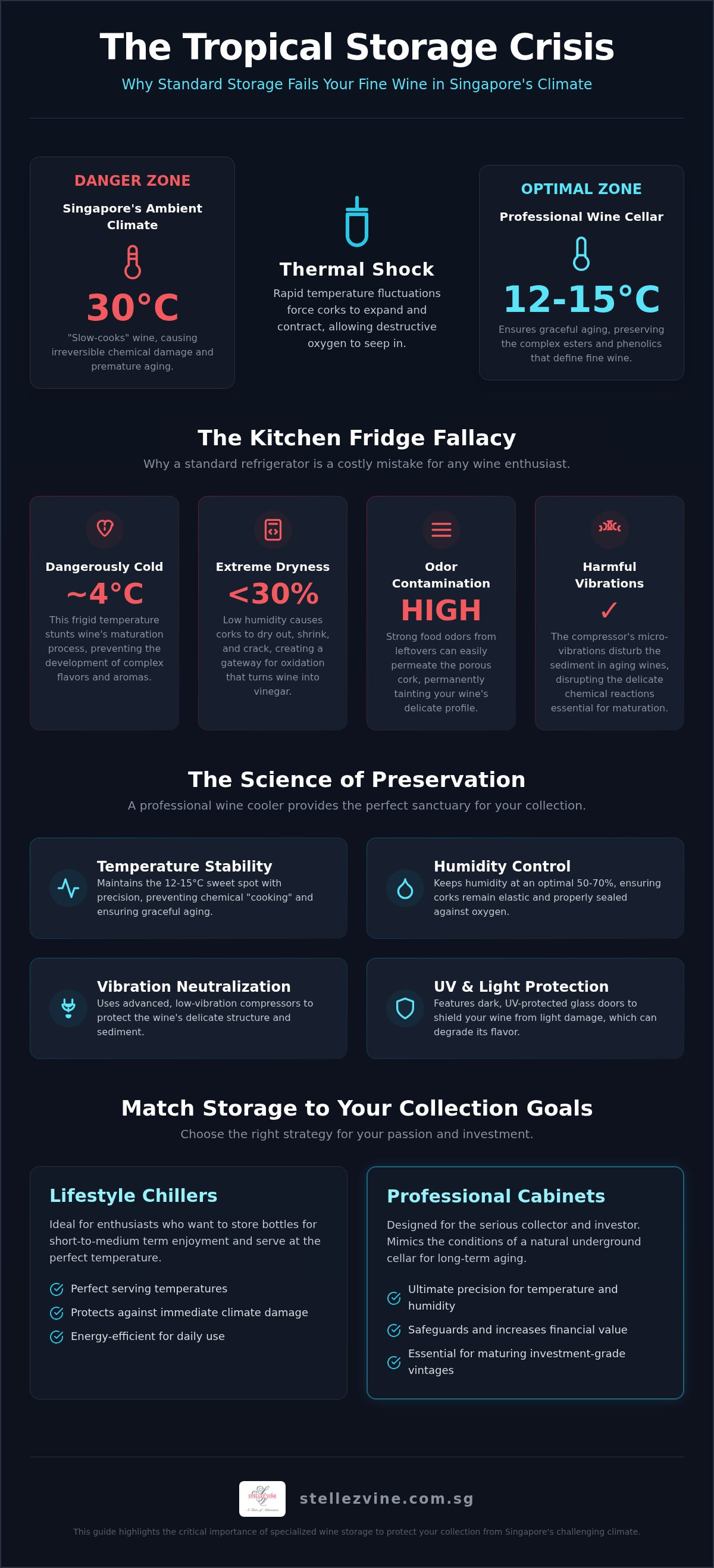
Living in Singapore means navigating a climate that never sleeps. While we enjoy the tropical sun, your wine collection suffers under its intensity. A consistent 30°C ambient temperature is effectively a slow-cooker for delicate vintages. This is the "Tropical Storage Crisis." Without intervention, the complex esters and phenolics in a handpicked bottle of Savage or Matias Riccitelli begin to break down prematurely. One of the primary benefits of a wine cooler in Singapore is the prevention of thermal shock. In apartments without 24/7 air conditioning, the mercury swings wildly between mid-day heat and evening cooling. These rapid fluctuations cause the liquid to expand and contract; this forces the cork to move like a piston and invites oxygen to destroy the wine's profile.
The Temperature Delta: Ambient vs. Optimal
Most collectors aim for the 12°C to 15°C "sweet spot" to ensure balanced aging and flavor development. Achieving these optimal conditions for wine storage is impossible in a standard cupboard or a decorative rack. Thermal inertia is the physical property that allows a wine's mass to resist external temperature changes, though it cannot indefinitely shield a bottle from the persistent tropical heat. While Singapore’s high humidity might keep your labels looking pristine, it doesn't protect the liquid inside if the temperature is too high. You need a dedicated environment that separates external moisture from internal thermal stability. A professional chiller provides this sanctuary, ensuring that your investment matures with the grace it deserves.
Beyond the Kitchen Fridge
The common "kitchen fridge fallacy" suggests that if it keeps milk fresh, it will work for wine. This is a costly mistake for any serious enthusiast. A standard refrigerator operates at roughly 4°C, a temperature that's far too cold and dry for long-term health. Consider these critical failures of domestic appliances:
Cork Desiccation: Low humidity in domestic fridges causes corks to lose elasticity and shrink, creating a gateway for oxidation.
Cross-Contamination: Food odors are a silent killer; strong scents from aromatics or leftovers can permeate porous corks and permanently taint a refined French or South African vintage.
Lack of Precision: Standard thermostats aren't designed for the 0.5-degree accuracy required for fine wine preservation.
For those serious about their collection, investing in long term wine storage Singapore solutions is the only way to ensure your wine tastes as the maker intended. It's about moving beyond mere refrigeration and embracing a tailored climate that respects the craftsmanship of the bottle.
The Science of Preservation: How Controlled Cooling Protects Your Investment
Heat acts as a biological accelerator. For a bottle of wine, high ambient temperatures trigger irreversible chemical reactions that strip away the very nuances the winemaker fought to capture. When wine is "cooked," its vibrant fruit notes disappear; they are replaced by a flat, stewed flavor profile that lacks life. This biochemical degradation is why the benefits of a wine cooler in Singapore extend far beyond simple comfort. Without precise control, the "Refined Adventure" of discovering a new vintage is cut short by a liquid that has aged a decade in a single summer. A professional chiller acts as a shield, slowing these reactions to a crawl so the wine can develop at its own natural pace.
Oxidation is the second major threat to your collection. When heat causes the air inside a bottle to expand, it can compromise the seal of the cork. Once oxygen enters in uncontrolled amounts, it begins a relentless process of turning fine wine into vinegar. From a financial perspective, a single heat-damaged bottle can ruin the provenance and resale value of an entire case. Collectors understand that maintaining "drinkability" and market value requires a commitment to stable, professional-grade cooling. It's the difference between owning a valuable asset and a shelf full of spoiled inventory.
Preventing Premature Oxidation
Stable cooling is the primary defense against the browning of white wines and the "port-like" degradation of reds. Consistent temperatures ensure that the delicate balance of tannins and acidity remains intact over several years. For instance, robust reds like a South African Pinotage or a concentrated Argentinian Malbec require years of slow maturation to soften their structure. If the environment is too warm, these chemical elements fail to integrate properly. The result is a wine that feels disjointed and harsh on the palate rather than elegant and evolved. By maintaining a steady thermal environment, you allow these complex components to weave together into a harmonious final product.
The Maturation Curve
There is a profound difference between simply "storing" a bottle and allowing it to age with intention. Storage is survival; aging is an art. A wine cooler provides the steady environment necessary for a bottle to reach its true "peak" rather than merely surviving the trip from the vineyard to your glass. This is especially true for high-altitude gems like Matias Riccitelli wine Singapore enthusiasts prize for their precision and terroir-driven character. To truly savor these masterpieces, you must respect the timeline of the grape. If you're ready to protect your collection, consider exploring our range of professional wine cabinets to secure your investment today.
Mastering Humidity and Vibration: The Invisible Enemies of Fine Wine
While heat is the most obvious adversary, the invisible threats of humidity and vibration are equally destructive in a high-rise Singaporean environment. Living in a vertical city means your collection often sits near structural vibrations or within sun-drenched layouts that compromise liquid health. Understanding these subtle factors is one of the key benefits of a wine cooler in Singapore. Standard household appliances focus on cooling, but they ignore the kinetic energy that disrupts a wine's delicate sediment. At Stellez Vine, we prioritize the "Stellez Standard," curating units with low-vibration compressors that allow a vintage to rest in true silence.
The 65% Humidity Rule
Many collectors fall for the "Humidity Paradox." They assume Singapore’s 80% external humidity naturally protects their wine. In reality, an air-conditioned room or a standard closet often becomes too dry, causing corks to lose their elasticity and shrink. To maintain a perfect seal, you must sustain an internal humidity level between 55% and 75%. Professional systems like Eurocave manage this through sophisticated condensation cycles, recycling moisture to keep the environment stable. This precision prevents the two extremes of tropical storage: desiccated corks that invite oxidation and stagnant mold growth that ruins labels. Unlike a DIY cupboard, premium chillers utilize active carbon filters to ensure the air remains fresh and free of fungal spores.
Vibration and Light Shielding
Kinetic energy is a silent thief of flavor. Subtle vibrations from a standard fridge motor constantly agitate the wine, preventing sediment from settling and disrupting the biochemical maturation process. This agitation destroys the "finesse" of older, more fragile vintages. Protect your collection by choosing units designed with vibration-dampening technology. Equally critical is shielding your wine from light-strike. UV rays are particularly aggressive in Singaporean apartments with floor-to-ceiling windows. These rays break down amino acids and delicate compounds, especially in sparkling and white wines.
Consider your long-term goals when selecting a door style. While triple-glazed, UV-resistant glass offers a beautiful display, solid doors provide the ultimate protection for serious aging. This total darkness mimics the conditions of a traditional underground cellar, ensuring that even the most light-sensitive bottles remain untouched by the tropical sun. By mastering these invisible elements, you realize the true benefits of a wine cooler in Singapore, transforming your storage from a simple appliance into a professional sanctuary for your collection.
Lifestyle and Economics: Is a Wine Cooler Worth It in Singapore?
Investing in professional storage is as much about your daily lifestyle as it is about long-term preservation. One of the most immediate benefits of a wine cooler in Singapore is the "Perfect Serve." Instead of waiting for a bottle to reach the right temperature in a standard fridge or risking the "shock" of an ice bucket, your collection is always ready at its varietal-specific peak. Whether it is a crisp white from GranMonte or a structured red from Casa Vinicola Caldirola, having your wine held at the correct serving temperature ensures that every glass delivers its full aromatic potential. This elevates the home hosting experience, transforming a simple dinner into a curated event.
Modern technology has also changed the economic equation for collectors. As we move through 2026, the latest inverter technology in professional units has significantly reduced the energy required for 24/7 cooling. These systems are designed to maintain precision with minimal power draw, making the cost of protection far lower than the potential loss of a heat-damaged collection. Beyond the grape, these cabinets offer a versatile sanctuary for other luxury items. Premium chocolates, which often bloom or lose texture in Singapore's humidity, find an ideal home in the stable, odor-free environment of a professional chiller. Even your fine glassware can be stored within, ensuring your stems are at the same temperature as the wine they hold.
Cost vs. Value Calculation
When evaluating the investment, consider the math of your cellar. A single spoiled "Grand Cru" bottle or a rare vintage can often cost more than a high-quality Kadeka chiller. While a standard appliance might seem like a saving, it is a liability for a serious collection. A professional wine cooler is a one-time investment that protects thousands of dollars in liquid assets over its lifespan. It shifts the narrative from "buying a fridge" to "securing an insurance policy" for your palate. To dive deeper into the financial logic of professional storage, read our guide on is a wine fridge worth it Singapore enthusiasts rely on for clarity.
The Connoisseur’s Lifestyle
A dedicated cabinet brings a sense of order to the "Refined Adventure" of collecting. Specialized shelving allows for better inventory management, helping you track the maturation of different vintages without disturbing the rest of the collection. There is a profound psychological benefit to this organization; you gain the peace of mind that your Savage Wines or exclusive French labels are maturing perfectly in a tailored climate. There is an unmatched sensory joy in the crisp resonance of a cork being pulled from a bottle that has been held at a steady, professional chill, releasing aromatics that have been perfectly preserved for years. If you are ready to upgrade your home experience, explore our curated selection of professional wine fridges today.
Selecting Your Benchmark: Matching Storage to Your Collection Goals
Choosing a storage solution requires a strategic approach that aligns with your long-term collecting vision. You aren't simply purchasing an appliance; you're selecting a partner to safeguard your liquid assets. One of the most significant benefits of a wine cooler in Singapore is the ability to tailor the environment to your specific inventory. Whether you're housing robust South African reds or delicate French whites, the right unit ensures each bottle reaches its full potential. A common pitfall for new collectors is underestimating their own passion. We always recommend planning for a capacity that is at least 20% larger than your current collection to allow for the inevitable growth of your cellar.
Deciding between dual-zone and single-zone units depends on your lifestyle needs. If you value the flexibility of having a crisp white ready for a spontaneous toast while simultaneously aging a heavy red, a dual-zone system is essential. However, for those focused exclusively on long-term maturation, a single-zone cabinet often provides the unmatched thermal stability required for investment-grade bottles. This specialized focus is what separates a professional chiller from a standard refrigerator, ensuring that your collection remains a source of pride rather than a risk.
Brand Deep-Dive: Eurocave, Liebherr, and Kadeka
The market offers several benchmarks for quality, each catering to different collector profiles. Eurocave stands as the gold standard, recognized as the pioneer of the wine cabinet. Their units offer unmatched climate precision, mimicking the conditions of a natural underground cave. For those who prioritize technical durability and German engineering, Liebherr provides cabinets that excel in technical specifications and long-term reliability. If you are looking for a reliable partner for a modern apartment, Kadeka offers exceptional efficiency and sleek designs that integrate perfectly into built-in kitchen solutions. Each brand represents a different facet of the professional storage world, allowing you to choose the level of sophistication your collection demands.
Tailoring to Your Collection
Effective storage goes beyond just turning on the power; it involves the thoughtful arrangement of your bottles. Heavier reds, such as a South African Pinotage or a bold Argentinian Malbec, should ideally be placed on the lower shelves where temperatures are most consistent. Delicate French whites or sparkling wines like those from GranMonte benefit from being positioned where they are easily accessible for serving. To maintain the integrity of your collection, follow these basic arrangement rules:
Promote Airflow: Never overpack your shelves; consistent air circulation is vital for preventing hot spots and ensuring even cooling.
Minimize Movement: Keep your long-term aging bottles toward the back to reduce the disturbance caused by daily access.
Label Protection: Ensure bottles aren't touching the back wall to prevent moisture from damaging the labels of your premium vintages.
Securing the future of your collection starts with a professional foundation. If you're ready to protect your investment with a tailored solution, discover our curated wine storage solutions and find the benchmark that matches your goals.
Secure Your Liquid Heritage
Protecting a fine wine collection in the tropics requires more than just a cool room; it demands a dedicated sanctuary. By mastering the science of thermal stability and vibration control, you ensure that every bottle of Savage or Matias Riccitelli reaches its intended peak. The long-term benefits of a wine cooler in Singapore are clear: you preserve the structural integrity of the cork while shielding delicate aromatics from the relentless local heat. This isn't just about refrigeration; it's about honoring the craftsmanship of the winemaker and securing the financial value of your liquid assets.
Since 2009, Stellez Vine has served as a trusted partner for collectors across the island. As an authorized distributor of benchmark brands like Eurocave, Liebherr, and Kadeka, we combine technical expertise with an expertly curated selection of wines from the Cape to the Andes. Whether you're a seasoned connoisseur or just beginning your refined adventure, the right storage solution transforms your home into a professional cellar. Elevate your collection with Stellez Vine’s professional wine storage and savor the peace of mind that comes with unmatched preservation. Start your journey toward a perfectly aged collection today.
Frequently Asked Questions
Can I just use a normal fridge to store my wine in Singapore?
You should avoid using a standard kitchen refrigerator for long-term storage. These appliances typically maintain a temperature of 4°C; this is far too cold and stunts the natural development of fine wine. Additionally, the lack of humidity control causes corks to shrink and crack. Unlike professional units, domestic fridges don't have active carbon filters to block food odors or vibration-dampening compressors to protect the liquid's structural finesse.
How much electricity does a wine cooler use in a tropical climate?
Modern units are remarkably efficient even in our relentless tropical heat. While electricity tariffs in Singapore reached 31.91 cents per kWh in late 2026, premium cabinets from brands like Eurocave or Liebherr utilize advanced inverter technology to minimize power draw. These systems only consume a fraction of the energy used by a standard air conditioning unit. Investing in an energy-efficient chiller ensures that protecting your collection remains an affordable, sustainable part of your lifestyle.
What is the ideal temperature for a wine fridge in Singapore?
The "sweet spot" for aging all varieties is between 12°C and 15°C. This range provides the thermal stability required for complex chemical reactions to occur at a balanced pace. While some collectors prefer to keep a separate zone at 7°C for serving whites, the primary benefits of a wine cooler in Singapore come from maintaining a steady aging environment. Avoid setting temperatures too low, as this can stunt the wine's maturation and dry out the cork.
Is humidity a problem for wine coolers in Singapore?
Humidity management is a critical feature of any professional storage solution. While Singapore’s exterior humidity is often above 80%, the interior of a non-specialized cooling unit can become dangerously dry. A professional cabinet maintains an internal level between 55% and 75% to keep corks elastic. This prevents oxidation and ensures your premium labels from producers like Chateau Canon Chaigneau don't suffer from cork desiccation or label damage due to stagnant moisture.
Do I need a dual-zone wine cooler?
Your choice depends on whether you value serving flexibility or aging capacity. A dual-zone cooler is ideal if you want one section at serving temperature for immediate enjoyment and another for long-term cellaring. However, if your goal is strictly aging a large collection of South African Pinotage or Argentinian Malbec, a single-zone unit often provides superior thermal consistency. We recommend evaluating your daily drinking habits before choosing between lifestyle versatility and specialized aging stability.
How long can wine last in a wine cooler compared to a cupboard?
In a tropical cupboard, a fine wine might begin to degrade within six months due to heat and fluctuations. Conversely, a professional wine cooler allows the same bottle to age gracefully for decades. By neutralizing thermal shock and vibration, a chiller extends the life of your investment significantly. One of the greatest benefits of a wine cooler in Singapore is transforming a fragile bottle into a legacy that reaches its peak maturity years later.
Should I buy a built-in or freestanding wine fridge for my apartment?
This decision hinges on your apartment's layout and your collection goals. Built-in models from Kadeka are designed to vent from the front, making them perfect for seamless integration into kitchen cabinetry. Freestanding units offer more flexibility and are often available in larger capacities for serious collectors. Ensure you leave adequate space for ventilation if you choose a freestanding model. This prevents the compressor from overworking in our warm climate.
Does vibration really affect the taste of wine?
Vibration is a silent enemy that disrupts the delicate biochemical maturation of aging wine. Constant agitation from a standard motor prevents sediment from settling and can lead to a disjointed flavor profile. Premium cabinets use low-vibration compressors and shock-absorbing shelves to ensure your wine rests in total stillness. This protection is essential for maintaining the refined finesse of high-altitude wines like those from Matias Riccitelli or the delicate structure of French vintages.

Comments