
How to Taste Wine at Home and Assess What’s in Your Glass

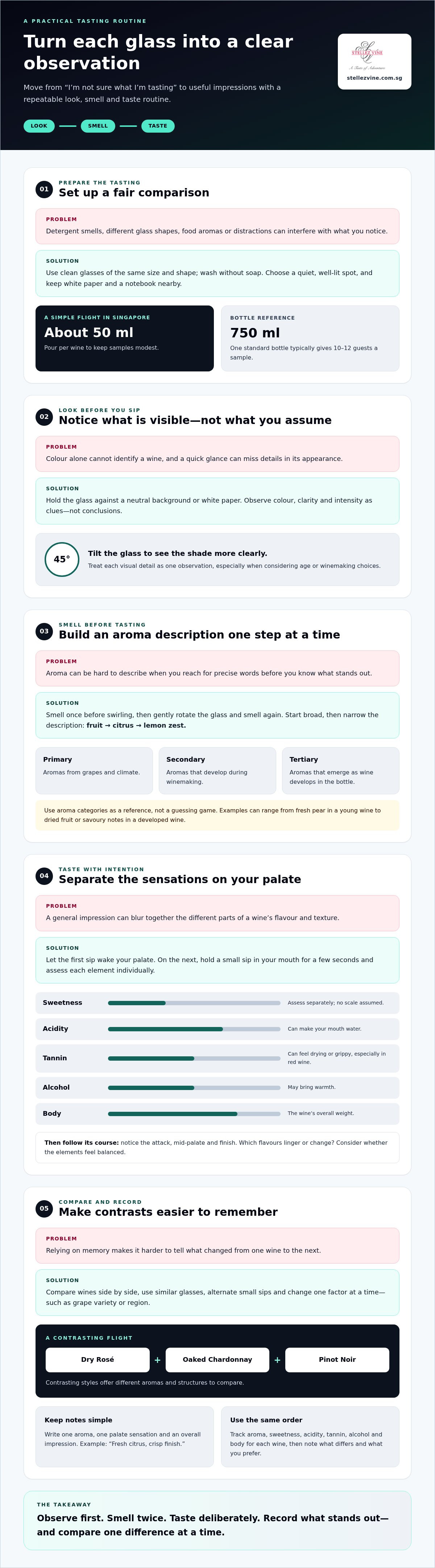
Learning to taste wine at home starts with three steps: look, smell and taste. Observe the wine against a neutral background, notice its aromas before sipping, then assess what you experience on the palate. Compare wines side by side to discover how their character differs.
Wine can be difficult to describe when you’re unsure what to look for. You don’t need elaborate equipment or specialist vocabulary to begin: a clean glass, focused attention and a willingness to compare are enough to make each tasting more revealing.
This guide shows you how to assess appearance, sweetness, acidity, tannin, alcohol and body, then record your impressions in clear, useful notes. You’ll also learn how to compare varieties, regions, climates and vintages, so each glass can sharpen your palate and help you discover what you enjoy.
Table of Contents
Developing personal tasting skills through practice
Build your tasting skills with a repeatable routine: prepare your space, pay attention, record your impressions, then compare the wines. Small, deliberate observations help turn sensory impressions into useful descriptions.
Prepare a Suitable Home Tasting EnvironmentSet out clean glasses of the same size and shape, a sheet of white paper and a notebook. Wash glasses without soap, as lingering detergent can interfere with a wine’s aromas. Choose a quiet, well-lit spot where food smells, strong fragrances and distractions won’t dominate your attention.For a simple flight in Singapore, pour about 50 ml per wine. One standard 750 ml bottle typically gives 10-12 guests a sample. Keep portions modest and use the same glasses for each wine, so differences come from the wine rather than the setup.
Slow Down and Pay Attention While TastingPause between pouring and sipping. Smell the wine immediately, before swirling, then gently rotate the glass and smell again. The first sip wakes your palate; use the next to taste with intention. Hold a small sip in your mouth for a few seconds and notice what changes.Which wines are best for learning to taste wine at home? Choose contrasting styles, such as a dry Rosé, an oaked Chardonnay and a Pinot Noir. Their different aromas and structures give you plenty to compare, while wines made from different grapes can show how variety shapes each glass.
Take Tasting Notes and Build Wine VocabularyWrite a short note after tasting each wine, using plain language before reaching for specialist terms. Describe one aroma, one sensation on the palate and your overall impression. “Fresh citrus, crisp finish” is more useful than a string of uncertain descriptors.How can you compare wines and take useful tasting notes? Record observations in the same order for each glass, then note what differs. A simple table can track aroma, sweetness, acidity, tannin, alcohol and body. Add a personal preference, such as “more refreshing” or “softer texture,” to make your notes useful later.
Compare Wines and Make Useful NotesCompare two wines side by side, changing one factor at a time. Taste the same grape variety from different regions, for example, or compare different grapes from the same region. Use similar glasses and alternate small sips; this makes contrasts easier to spot than relying on memory.What basic wine tasting equipment do you need at home? Start with clean, matching glasses, white paper for observing colour, and a pen or notebook. For a budget-friendly flight in Singapore, share a 750 ml bottle among tasters and pour sample-sized servings instead of full glasses.
Keep the tasting responsible.How should you approach health and safety while tasting? Keep pours small, drink slowly, and don’t treat tasting as a reason to finish every sample. The National Cancer Institute recommends women drink no more than one 5 oz glass of wine per day, and men no more than two glasses per day.What are typical beginner tasting bottle prices in Singapore? Bottle prices vary with factors such as producer, region, grape variety and vintage. Compare options within your chosen budget, then focus your flight on contrasting styles rather than buying several similar wines.
Why taste a wine ?
Tasting gives you a structured way to notice how a wine’s aromas, flavours and texture work together. Follow sight, smell and taste, then compare a focused flight in a considered order.
Observe the Wine by SightBegin with the glass against a neutral background, such as white paper, and observe before smelling. Note the wine’s colour, clarity and intensity; these details can offer clues, especially about age and winemaking choices. Tilt the glass at a 45° angle to see its shade more clearly. Colour won’t identify a wine by itself, so treat each visual impression as one observation, not a conclusion.
Smell and Describe the AromasSmell the wine before tasting, first without swirling, then after gently rotating the glass. Start with broad categories such as fruit, flowers, herbs, spice or earth. Then narrow the description: move from “fruit” to “citrus” to “lemon zest,” for example. This builds precise language without forcing a descriptor that doesn’t match your senses.Sort aromas by origin: primary aromas come from grapes and climate, secondary aromas develop during winemaking, and tertiary aromas emerge as wine develops in the bottle. A young wine might suggest fresh pear, while a developed wine may bring dried fruit or savoury notes. Use these categories as a reference, not a guessing game.
Taste and Evaluate the WineTake a small sip and assess flavour, acidity, tannin, alcohol and body individually. Acidity can make your mouth water; tannin can feel drying or grippy, especially in red wine. Alcohol may bring warmth, while body describes the wine’s overall weight. Notice the attack, mid-palate and finish, then consider whether these elements feel balanced.Use the finish as another clue: note which flavours linger and whether they change. A wine may begin with bright citrus, for instance, then leave a softer, herbal impression. Smell contributes strongly to wine analysis, so compare the aromas you noticed with the flavours that appear after sipping.
Choose a focused flight and build aroma memory. There’s no fixed number of wines for every session. Choose a flight you can assess attentively, serving dry wines before sweet, light-bodied before full-bodied, whites before reds, and younger before older. Record an aroma, texture and finish for each wine, using concrete references such as “blackberry” or “baking spice.”Revisit your notes later and compare them with new tastings. Repeated encounters can turn “something fruity” into a more useful description, while discussion reveals how another taster interprets the same glass. For a regional comparison, taste South African wines alongside an example from another region and note the differences you actually smell and taste.
Assessing sweetness, acidity, tannin, alcohol and body
Assess each element separately before deciding how the wine feels as a whole. A consistent sequence helps you describe its style and judge whether its components work in balance.
Check sweetness and alcohol. Start by noticing whether the wine tastes dry, off-dry or sweet; fruit flavours alone don’t prove that a wine contains noticeable sweetness. Most wines are dry, with residual sugar below 4 g/L. Wines with 5-9 g/L are off-dry, while 10-45 g/L falls into medium-dry to medium-sweet; above 45 g/L is sweet.Then note alcohol’s effect on flavour and texture. Wines below 11% ABV are described as low alcohol, while 13%-14% ABV is medium and above 14% ABV is high. Above 14.5% ABV, alcohol can create warmth in the mouth. Treat these ranges as descriptors, then record the sensation you actually perceive.
Use Terms for Acidity, Tannin, Body, and FinishDescribe acidity by how fresh or mouth-watering the wine feels, and tannin by its drying grip on your gums. Body is the wine’s overall weight in your mouth, from light to full. For the finish, notice how long flavours linger; aromatic persistence can be measured in seconds, a unit called caudalies.Use a concrete description instead of a string of labels. For example, write “bright acidity, firm tannin, medium body, lingering finish.” This captures four distinct sensations and makes styles easier to compare later.
Consider the Balance of Acidity, Alcohol, and TanninsAssess how acidity, alcohol and tannins interact rather than scoring each in isolation. Acidity can keep a wine lively, alcohol adds weight and warmth, and tannins provide structure, especially in red wine. In a balanced wine, these elements support one another instead of letting one sensation dominate.A red wine may feel harsh if drying tannins overwhelm its fruit, or heavy if alcohol dominates its freshness. Write down which element leads and whether the others provide enough support. Balance helps describe a wine’s quality, but it isn’t the same as personal preference.
Compare body with alcohol, not colour alone. A 12% Pinot Grigio will feel much lighter-bodied than a 15% Zinfandel. Taste both and notice their weight, warmth and structure; grape variety and winemaking also shape texture, so alcohol is a clue rather than the entire explanation.Finish by recording one observation for each element: sweetness, acidity, tannin, alcohol, body and finish. For example, “dry, brisk acidity, soft tannin, warming alcohol, full body, short finish” creates a compact profile. Revisit it when comparing another bottle, adjusting the language to match what you taste.
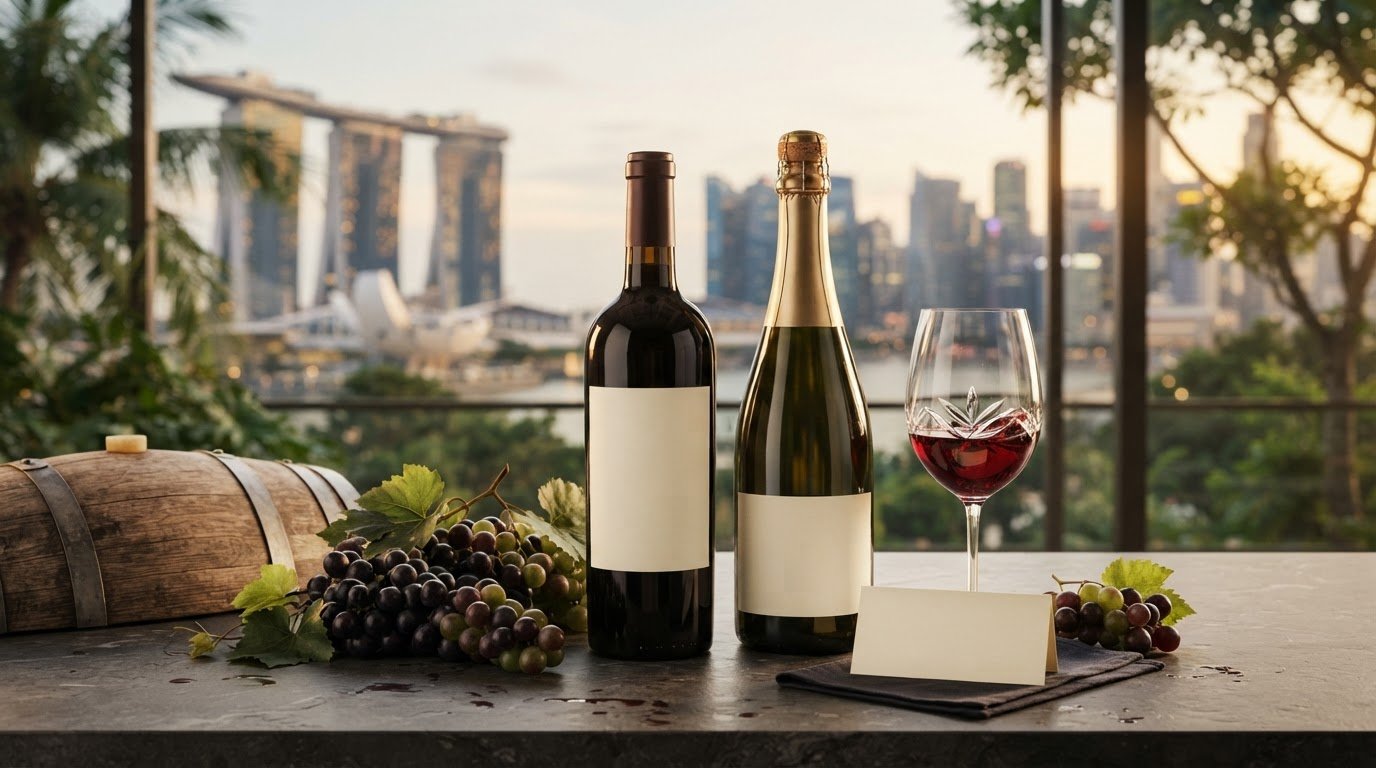
Visual assessment of colour, clarity and legs
Use the glass as your first source of information, not a verdict on quality. Observe colour, clarity, bubbles and movement, then connect those clues with the wine’s aroma and palate.
Set the glass against a neutral background. Place white paper beside the glass and tilt it at a 45° angle. Look at both the wine’s intensity and its shade, noting whether the centre appears deeper than the rim. A pale lemon-white wine and a deep ruby-red wine offer different visual profiles, but colour alone cannot identify the grape or determine quality.Record a clear description, such as “pale gold” or “deep garnet,” before interpreting it. Colour can offer clues, especially about age, while clarity and brilliance may hint at winemaking choices such as extraction and filtration. Treat these observations as clues to compare with what you discover through smell and taste.
Check clarity and any visible fizz. Observe whether the wine looks clear and bright or appears hazy. Clarity can reflect winemaking choices, including filtration, so describe what you see without assuming one appearance automatically signals better wine. In sparkling wine, look for bubbles rising through the glass and note whether they remain visible as you observe.For example, write “clear, pale straw, with visible bubbles” rather than simply “looks good.” That specific description gives you a useful reference when comparing another glass. If the wine looks different from what you expected, keep that observation separate from your judgement of its aromas, flavours and structure.
Watch the legs after swirling. Gently rotate the glass, then observe the wine tears sliding down its sides. These legs can offer a visual clue to the wine’s texture, but they should not be treated as a quality score. Note whether the trails appear slow or quick, but don’t treat them as a quality score.Prominent legs don’t automatically mean a richer or better wine. Compare the visual impression with the wine’s body and alcohol on the palate instead. This helps connect what your eyes notice with the texture you experience, rather than treating one visual feature as proof.
Use appearance as context for readiness and structure. Colour may offer clues about a wine’s age, but it can’t establish on its own whether a bottle is ready to drink or suitable for further ageing. Combine visual evidence with aroma and flavour: freshness, development and balance across the glass provide a fuller assessment than shade alone.During tasting, track the attack, mid-palate and finish in order. The attack is the first impression; the mid-palate shows how flavours and structure develop; the finish is what lingers after swallowing. For example, note “bright first impression, fuller middle, short finish.” This links appearance with the palate and builds a more precise vocabulary.
Comparing wine varieties, regions, climates and vintages
Compare wines systematically by changing one factor at a time. This reveals how grape variety, region, climate, winemaking and development in the bottle shape a wine’s character.
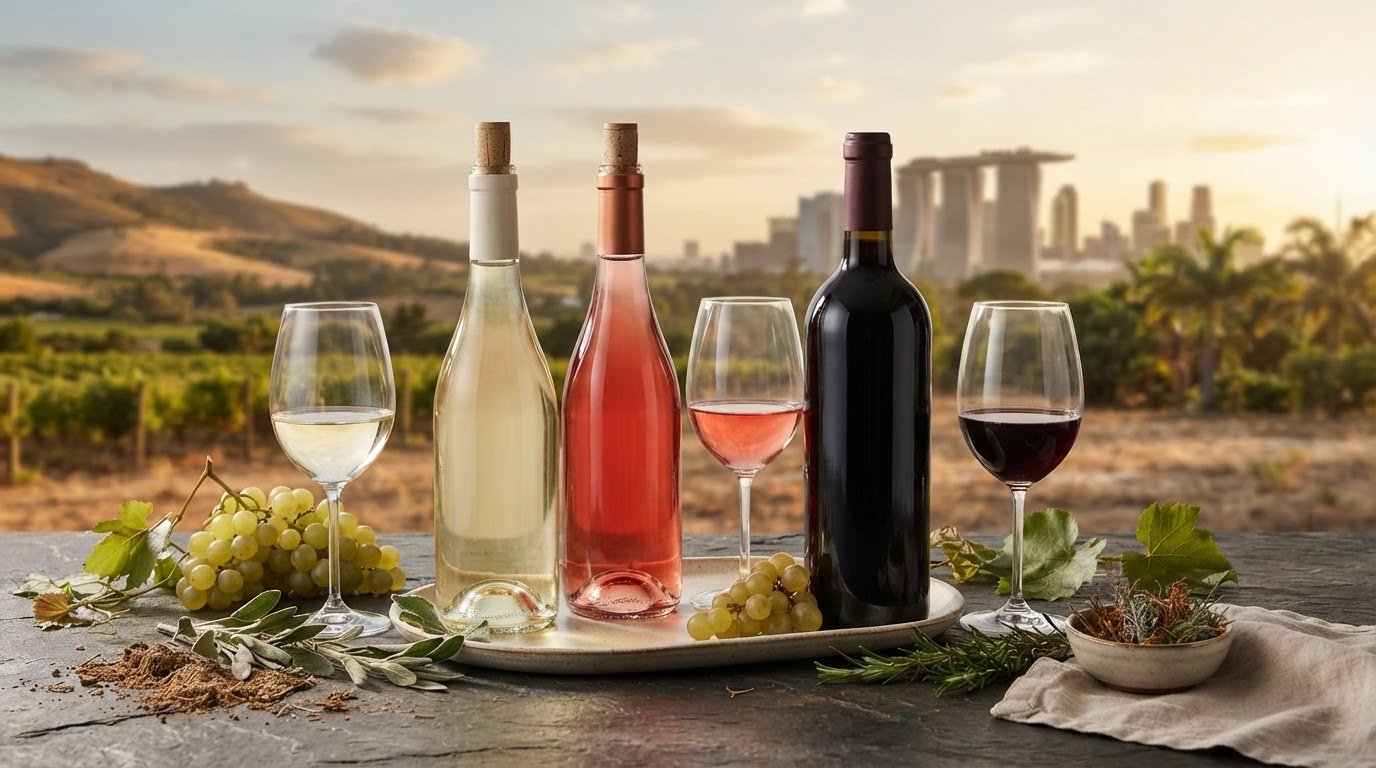
Compare grape varieties from a shared context. Choose wines from the same region and vintage, but made from different grapes. For example, compare Chardonnay with Pinot Noir to notice how their aromas, structure and intensity differ. Record specific impressions, such as citrus, cherry or floral notes, rather than deciding which is “better.” The aim is to identify each wine’s character.Wine aromas come from four sources: grape variety, growing climate, winemaking choices and development in the bottle. Keeping region and vintage similar helps focus your comparison on the grape, although winemaking still shapes the result. Note what stands out in each glass, then compare your notes instead of relying on memory.
Explore regional and climate contrasts. Taste the same grape from two regions, keeping the vintage and style as similar as possible. For instance, compare Chardonnay from a cooler climate with one from a warmer climate. Look for differences in freshness, fruit character and perceived intensity, without assuming climate alone explains every contrast.Use a simple table: list the grape, region, vintage, aroma and palate impression for each bottle. Then mark the clearest contrast. A note such as “more citrus and freshness” is more useful than “different,” because it captures what your senses actually detected.
Compare vintages with the other variables held steady. Select two single-varietal wines made from the same grape and region, with vintages 7-15 years apart. This creates an age comparison while reducing differences from variety and place. Look for changes in fruit intensity, freshness and developed aromas, then taste to see whether the palate reflects those visual and aromatic impressions.Cover each bottle’s label if you want a blind comparison. First write down what you perceive, then reveal the vintage. This helps prevent the date or producer’s reputation from shaping your first impressions.
Build a flight around one question. Decide whether you’re comparing variety, region, climate or vintage before opening bottles. Arrange the wines so the chosen contrast is easy to follow, and write one observation for each glass. A regional flight could compare the same grape from different places, while a vintage flight keeps the grape and region consistent.For your next comparison, explore wines for a tasting flight and choose bottles that let one meaningful difference take centre stage.
Try a new contrast while keeping the tasting setup steady. Using glasses of the same size and shape makes comparisons between wines more consistent. Regular tasting, comparison, discussion and curiosity can help you improve your tasting skills.
Stellez Vine Singapore: South African Wines
Stellez Vine Singapore offers South African wines for readers ready to put their tasting notes into practice. Choose a bottle to explore how its grape, region and vintage shape its aromas, structure and character, then compare your observations with wines from other places.
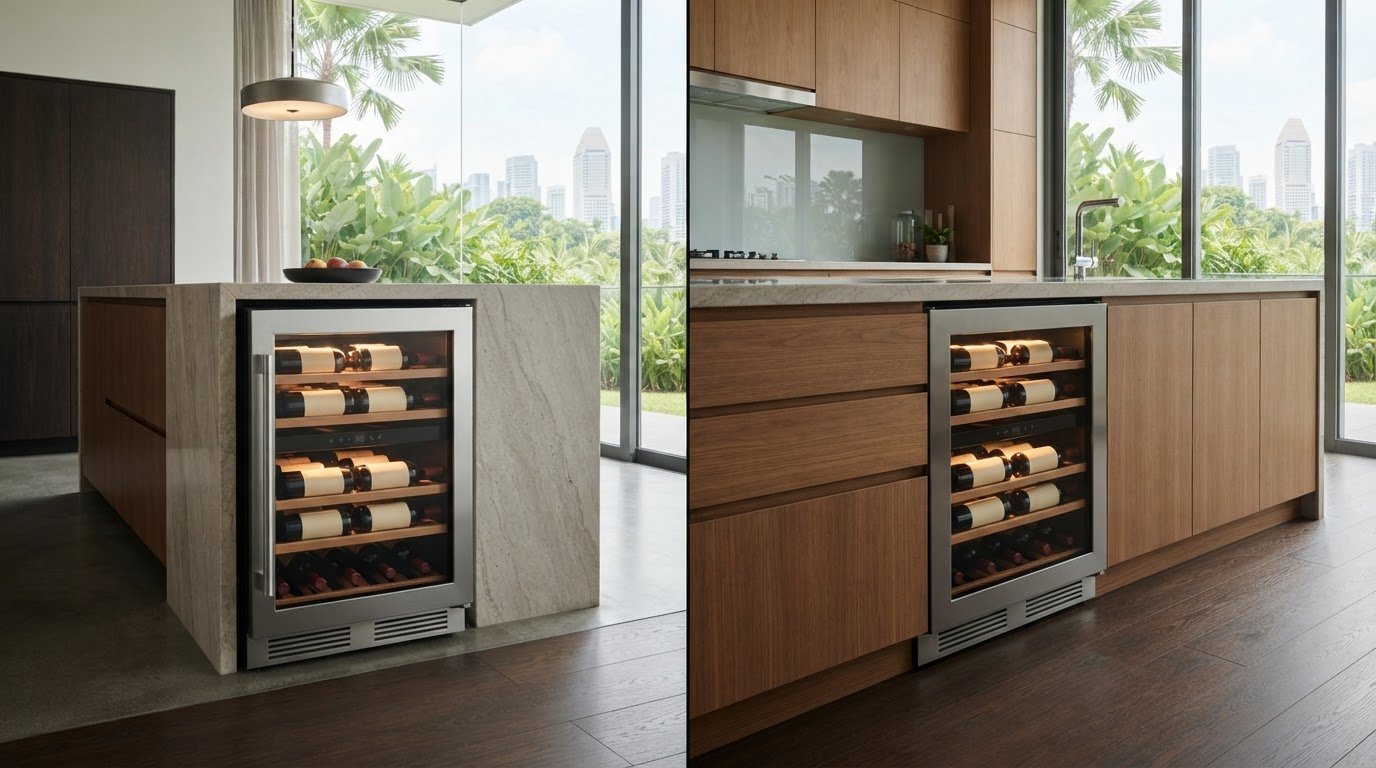
As home tastings become part of your routine, wine storage may be worth considering too. Stellez Vine Singapore offers Kadeka Wine Chillers, Eurocave Wine Fridges and Liebherr Wine Cabinets alongside its wines. Explore these options as you build a collection for future comparisons.
Explore South African wines and wine storage options, or visit stellezvine.com.sg.
Make Your Next Glass a New Discovery
Let curiosity guide your next tasting. Choose a wine that challenges your usual preferences, write down your first impressions, and revisit them on another occasion. That simple habit turns learning to taste wine at home into a personal exploration shaped by the flavours and styles you genuinely enjoy.
If you’re ready to choose a bottle for your next tasting, Stellez Vine Singapore offers South African wines to explore. And as your collection grows, Kadeka Wine Chillers and Eurocave Wine Fridges are available as wine-storage options. Select a direction for your next comparison, then let your palate lead.
Contact Stellez Vine Singapore to continue your wine discovery. Every glass offers a fresh opportunity to notice something new.
Frequently Asked Questions
What should you look for?
Look for how the wine’s aroma, flavour, texture and finish come together, then decide what stands out most. For a practical check, ask whether one sensation dominates: does alcohol feel warming, does acidity keep the wine lively, or do tannins feel drying? Note one personal preference too, such as preferring a softer finish. Separating observation from preference makes your tasting notes more useful.
How can beginners identify common wine aromas and flavours?
Use familiar scent references before reaching for specialist vocabulary. Smell lemon peel, a ripe pear, fresh herbs or black pepper, then compare those impressions with the wine. Start with a broad family, such as citrus or spice, and narrow it only when a specific aroma feels clear. Keep a short list of recurring impressions; revisiting it helps you recognise patterns across different bottles.
How should wine be served and stored for a home tasting?
Serve red wine around 16-20°C and white wine around 9-13°C. If red wine has been kept at room temperature, chill it in the refrigerator for about 20 minutes before serving; let refrigerator-cold white wine sit out for about 20 minutes to warm slightly. Store bottles away from direct sunlight and heat, with a stable temperature. A wine fridge or cabinet can provide dedicated storage.
Comments