
Freestanding vs Integrated Wine Coolers: Which Fits Your Home

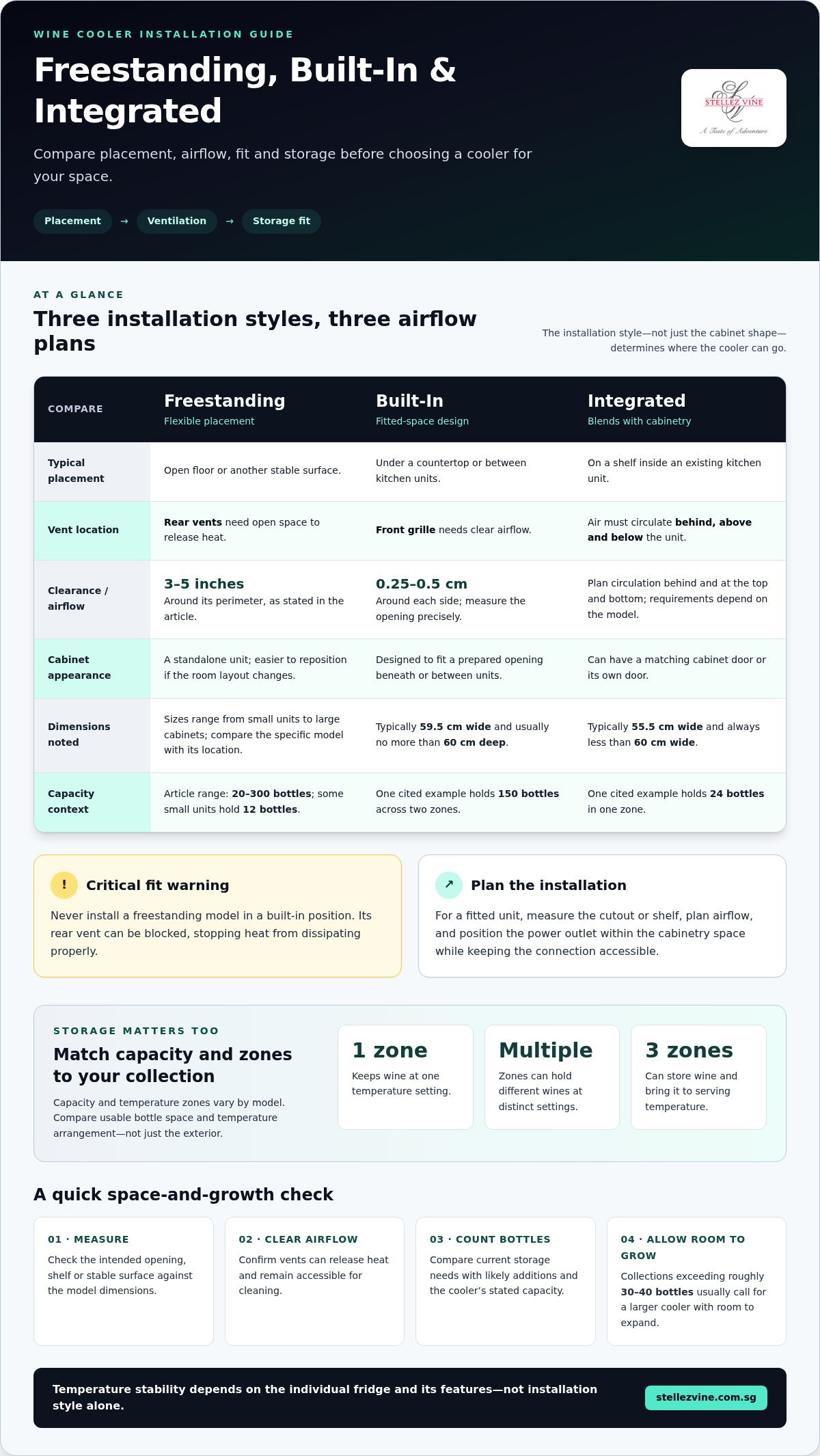
A seamless fit can mean less flexibility in placement. When comparing a freestanding vs integrated wine cooler, choose freestanding for flexible placement and integrated for a unit designed to fit within kitchen cabinetry. Ventilation is the key distinction: freestanding models need clear space around them, while integrated models require airflow planned into the cabinetry.
Both styles keep wine close at hand, but the right choice depends on your home, storage plans and preferred look. A cooler that appears to fit neatly under a counter may not be suitable there if its vents cannot release heat properly.
Compare installation, placement, ventilation and storage, then use these practical criteria to match a cooler to your space. Whether you are planning cabinetry or considering a standalone unit, understand the requirements before choosing a functional addition to your home.
Table of Contents
Built-in and integrated wine coolers - what is the difference?
These terms describe different installation styles, not interchangeable cabinet shapes. In a freestanding vs integrated wine cooler comparison, the available space and ventilation requirements determine which design fits.
Built-In Installation and Ventilation
A built-in wine fridge fits under a countertop or between kitchen units, often in a smaller space. Built-in wine coolers generally rely on clear airflow through their front vents to release heat. Allow 0.25cm to 0.5cm around each side, and measure the opening precisely before installation.
An integrated cooler sits on a shelf inside an existing kitchen unit. It needs air circulation behind it, plus space at the top and bottom. Depending on the model, it can have a matching cabinet door or its own door. A freestanding fridge differs: rear vents need clearance, with 3-5 inches around its perimeter.
Never install a freestanding model in a built-in position. Its rear vent can become blocked, preventing heat from dissipating properly. For a built-in design, plan the power outlet within the cabinetry cutout before installation. Keep the connection accessible within the intended space.
Temperature Stability and Wine Storage
Neither installation style alone guarantees steadier temperatures. Performance depends on the individual fridge and its features. Both freestanding and built-in models may offer temperature zones, UV-protected glass doors and vibration reduction. A single-temperature cooler keeps wine at one temperature, while multiple zones can hold different wines at distinct settings.
Choose storage to suit your collection and serving plans. A single-temperature unit, for example, suits someone keeping red, white or rosé ready to drink. An integrated model creates a built-in look, while a freestanding unit offers more flexibility if the room layout changes. Compare temperature controls and storage layout, not just the exterior.
Integrated Cooler Costs, Warranty, and Maintenance
In Singapore, integrated installation cost depends on the cabinetry work, the available space and the required airflow design. Requirements include a correctly measured shelf or cutout, circulation behind and above and below the unit, and a planned power outlet. Compare warranty coverage, duration and exclusions, along with maintenance instructions and access to ventilation areas.
Both built-in and freestanding models need unobstructed ventilation. Before choosing, review the cleaning instructions for the specific fridge and make sure its grille will remain accessible after installation. Match the cooler’s storage features to your collection and the airflow the space can provide.
Built-In vs Freestanding Wine Fridge: Which Should You Buy?
Match bottle capacity to your available space and storage plans. A freestanding wine fridge offers flexible placement, while an integrated design makes use of kitchen cabinetry.
Freestanding Cooler Capacity
Freestanding wine coolers range from compact options to large cabinets, with capacities from 20 to 300 bottles. A small freestanding fridge may hold around 50 bottles, while a larger model can accommodate over a hundred or even hundreds.
That range suits different buying needs: a compact unit can serve a modest collection, while a larger cabinet gives room for varied bottles. Check the stated capacity against your collection rather than assuming that a cooler’s exterior size tells the whole story.
Capacity and Temperature Zones
Temperature zones affect how a cooler organises wine, not simply how many bottles it holds. A single-temperature wine fridge keeps red, white or rosé at one setting. A multi-zone model separates wines at different temperatures; a three-temperature wine fridge can also store wine and bring it to serving temperature.
Capacity and zone count vary by model. For context, one integrated cooler example holds 24 bottles in one zone, while a built-in example holds 150 bottles across two zones. These examples show why buying decisions should weigh both usable bottle space and the temperature arrangement.
Dimensions and Room to Grow
Built-in wine coolers are typically 59.5 cm wide and usually no more than 60 cm deep. Integrated models are typically 55.5 cm wide and always less than 60 cm wide. Freestanding options include small 12-bottle units and cabinets holding hundreds, so compare dimensions with the chosen location.
Plan for growth, too. Collections exceeding roughly 30 to 40 bottles usually call for a larger wine fridge with room to expand. A fitted cooler may be harder to replace or enlarge as your collection grows; a freestanding model can offer more placement flexibility, provided there’s a suitable stable surface and power outlet.
Before buying, list your current bottle count, likely additions and the space available. Then compare capacity, dimensions and zones together, rather than selecting by appearance alone. For a fitted storage option, explore Eurocave Wine Fridges and compare their configurations with your available space.
Freestanding cooler placement and installation
A freestanding wine cooler needs a stable surface, nearby power and open ventilation space. In a Singapore kitchen, map those requirements before choosing between a countertop area, a cabinet opening or another location.
Freestanding Cooler Placement
Unlike an under-counter model, a freestanding cooler can sit on a stable floor or surface wherever adequate ventilation and a power outlet are available. Reserve at least 5 cm of free air space on all sides, and keep the rear vents unobstructed. This clearance lets heat dissipate instead of collecting around the appliance.
Choose the position before delivery, then measure the cooler and the route into the room. A dining area may suit a standalone cabinet better than a compact kitchen, while an open corner can keep bottles accessible without taking up counter space. Do not place a freestanding fridge inside cabinetry or under an island, where ventilation could be blocked.
Floor Space and Cabinetry Cutouts
A freestanding wine fridge occupies visible floor space, while an under-counter cooler uses a planned opening below the kitchen worktop. Fitted installation needs precise measurements: check the cutout’s width, height and depth against the appliance, then account for the required airflow.
Plan the electrical outlet inside the built-in fridge’s cabinetry cutout before installing the cabinets. This sequence puts the power connection in the intended space and avoids redesigning finished cabinetry. A 24-inch base cabinet is a common under-counter opening example, but the appliance’s actual dimensions determine whether it fits.
The installation style also affects future flexibility. A freestanding unit can move when your layout changes, while an integrated model depends on its dedicated opening. If you are adapting a kitchen, plan the cutout and counter space before committing to a fixed position.
Use this installation sequence to prepare the space before positioning the cooler:
Measure the location, access route and appliance footprint.
Confirm the outlet and ventilation space suit the model.
For cabinetry, prepare the cutout and outlet before cabinet installation.
Humidity matters for wine storage, but it doesn’t replace ventilation around the appliance. Wine generally ages best at around 50 to 70 percent relative humidity. Keep that storage condition distinct from the open air needed around a freestanding cooler’s vents; one concerns the wine environment, the other the appliance’s heat release.
For an under-counter installation, match the cooler’s vent design to the opening rather than relying on appearance alone. A freestanding cabinet, by contrast, needs its own clear space and stable base. These differences help determine whether your kitchen can accommodate a fitted appliance or benefits from a movable unit.
Freestanding wine cooler characteristics
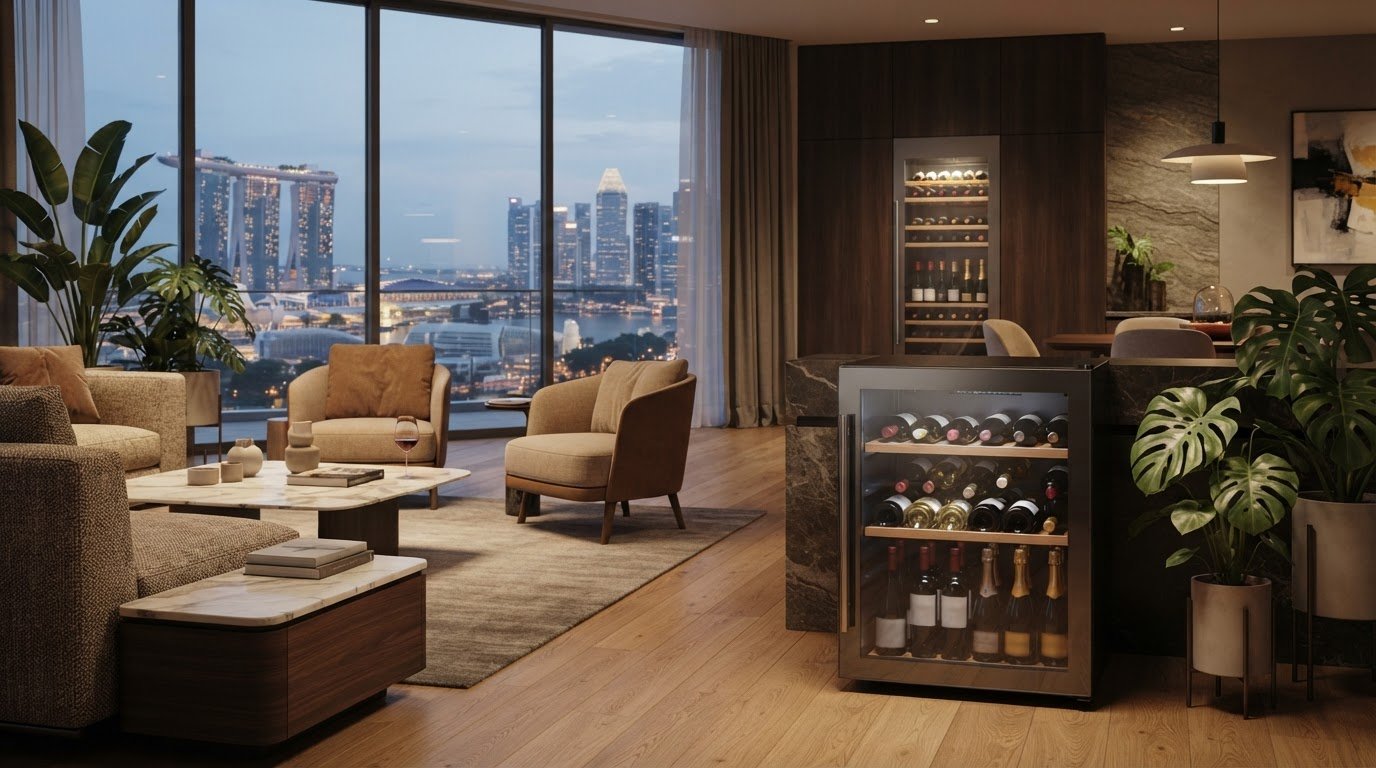
A freestanding cooler is a self-contained appliance, giving a wine collection more placement flexibility than a cabinet-dependent model. Its advantages go beyond the aesthetic: portability, cooling choice and capacity all shape how it suits a home.
Because it stands independently, this refrigerator can be placed on a stable surface wherever its ventilation and power needs are met. That can suit a dining room, kitchen corner or another practical spot without a dedicated cabinet opening. The trade-off is visible floor space, so consider how the cooler will sit alongside other appliances and everyday movement through the room.
Portability is a defining difference. A freestanding unit can be moved when the household layout changes, taken to a new home or sold separately. For example, someone planning a kitchen renovation can keep the cooler outside the work area, then reposition it after the cabinetry changes. An integrated model remains tied to its fitted location.
Freestanding wine fridges are available with compressor or thermoelectric cooling. These are distinct cooling approaches, so compare the specifications of each model rather than assuming that every freestanding appliance works the same way. Your choice should reflect the cooler’s stated capacity and features, alongside the space where it will operate.
Capacity varies widely, from compact 12-bottle units to large cabinets holding hundreds of bottles. A small freestanding cooler can hold around 50 bottles, while a large model can accommodate over a hundred. Match that range to your current wine collection, then consider whether you want extra room for future bottles.
Budget matters, but compare the whole fit rather than the purchase alone. Freestanding wine coolers are generally more affordable initially than built-in models, which can require installation or custom cabinetry. That makes a standalone design worth considering when you want wine storage without adapting a kitchen cabinet. It still needs a suitable location, and the surrounding space must keep ventilation clear.
Cooling features also vary between models. Both freestanding and built-in wine fridges may offer temperature zones, UV-protected glass doors and vibration reduction. A freestanding model might be single-temperature, keeping red, white or rosé ready to drink at one setting. Check its actual controls and layout against the wines you store, rather than relying on its aesthetic or bottle count.
Choose freestanding when you value a movable appliance, a broad range of capacities and placement beyond fixed cabinetry. Choose a fitted design when the kitchen’s built-in appearance takes priority. Before buying, compare the cooler’s dimensions, capacity, cooling type and ventilation requirements with your room and wine collection.
What are the typical dimensions and capacities of freestanding and integrated wine coolers?
Dimensions vary by installation style, and capacity depends on a cooler’s height, width and internal layout. Use measurements as a starting point, then compare the appliance’s exact dimensions with your available space and installation requirements.
Built-in wine coolers are typically 59.5 cm wide and usually no more than 60 cm deep. Integrated models are typically 55.5 cm wide and always less than 60 cm wide. Those differences matter in Singapore kitchens, where a few centimetres can determine whether a unit fits a cabinet opening or needs another position.
The examples show why width alone doesn’t predict bottle count. A 15 cm undercounter model holds 7 bottles, while a 60 cm model holds 46. Interior configuration and overall height also shape usable storage, so compare capacity alongside all three external dimensions.
Column formats make height especially important. A 45 cm in-column cooler holds 24 bottles, while an 88 cm model holds 55. A 179 cm in-column model can hold up to 89 bottles. These examples help distinguish a compact built-in option from a taller cabinet designed for a larger collection.
Freestanding formats span from small 12-bottle appliances to larger models holding hundreds. Their capacity range gives buyers more size choices, but the unit uses floor or counter space rather than fitting into a planned cabinet opening. Measure the proposed location and ventilation clearance together, not just the cooler’s body.
Before selecting a model, record the opening’s width, height and depth, then compare those measurements with the appliance and required airflow. Match the bottle capacity to your collection and room to grow. Explore wine fridge options and compare formats for your home.
Stellez Vine Singapore: South African Wines
Stellez Vine Singapore offers South African wines and wine storage options for your home. Once you have identified the space, ventilation requirements and capacity that suit your collection, explore Kadeka Wine Chillers, Eurocave Wine Fridges and LIEBHERR Wine Cabinets.
When you are ready to pair a considered wine selection with suitable storage, explore Stellez Vine Singapore’s South African wines, wine fridges and cabinets. Use your installation requirements to guide your choice, so the wine and storage fit your collection and space.
Visit stellezvine.com.sg to explore the selection.
Make Space for Your Next Great Bottle
Let your freestanding vs integrated wine cooler choice suit more than your current room layout. Consider how your collection may change and the occasions you want to enjoy, from a quiet dinner at home to sharing a new region with guests. Storage that fits your habits makes it easier to keep bottles organised and ready to enjoy.
Stellez Vine Singapore brings together South African wines and storage options, including Kadeka Wine Chillers and Eurocave Wine Fridges. Explore the range and choose a cooler style that meets your home’s installation requirements and fits your space.
Ready to explore your options? Contact Stellez Vine Singapore and discover a considered selection for your home. Choose with confidence, then look forward to the next bottle you’ll savor.
Frequently Asked Questions
Want to learn more about wine storage?
Start by deciding whether you mainly serve bottles soon or keep them for longer-term enjoyment. That helps define the storage conditions and capacity you need. Organise bottles by drinking occasion or style, leaving space for new discoveries. For wines you plan to age, consider the storage environment, not just the cooler’s appearance.
Where do you put a freestanding wine cooler?
Place it on a stable surface with a nearby power outlet, away from direct sunlight, heat sources and hot or humid areas. Keep at least 5 cm of clearance on all sides, including space above the appliance. Don’t put a freestanding unit inside a cabinet or under an island, and don’t completely enclose it. A shaded dining-room corner can work if airflow remains clear.
Why opt for a free-standing wine fridge?
Choose a freestanding wine fridge if you want storage that can move with changing household needs. For example, it can shift from a dining area to another suitable room without redesigning fitted cabinetry. That flexibility can help renters or homeowners planning a kitchen renovation. Check the chosen location’s power supply and clearances first, then consider whether the appliance’s visible finish suits the room.
What is the difference between a freestanding and integrated wine cooler?
A freestanding cooler is a standalone appliance; an integrated cooler sits within kitchen cabinetry and needs planned airflow around its installation. The freestanding vs integrated wine cooler decision often comes down to whether you prefer movable placement or a fitted appearance. For a kitchen renovation, plan the integrated unit’s cutout and ventilation alongside the cabinet design, rather than treating it like a standard refrigerator.
Can a freestanding wine cooler be installed under a counter?
No. A freestanding cooler should not be placed inside cabinets or under kitchen islands, where its ventilation can be obstructed. Choose a model designed for built-in installation if you want a fitted position. Before preparing cabinetry, compare the opening with the appliance’s installation requirements and keep its ventilation path clear.
What ventilation clearance does an integrated wine cooler need?
Allow at least 5 cm of clearance on all sides, and provide the airflow required behind, above and below the integrated unit. The space must not be completely enclosed, even when a cabinet door gives the appliance a seamless appearance. Plan the ventilation openings with the cabinetry, and keep the power outlet accessible within the designated cutout. These steps help preserve the cooler’s airflow.
How do freestanding and integrated wine coolers compare in price in Singapore?
Compare the appliance and installation components separately. An integrated setup may involve cabinetry preparation and a suitable cutout, while a freestanding unit uses its own space without a custom cabinet opening. The final amount depends on the selected cooler and any kitchen work involved. For a useful comparison, assess the complete setup you need, not just the appliance category or exterior style.
Which type of wine cooler is more energy efficient and quieter?
Neither installation style is automatically more energy-efficient or quieter. Those qualities depend on the specific model, its cooling system and its installation. Compare the product’s stated energy information and noise level, and ensure ventilation remains unobstructed. Noise may matter more near a living area, while airflow is essential in a fitted kitchen.


Comments