
The Connoisseur’s Guide to Wine Fridge Maintenance: Preserving Your Investment in 2026

A premium wine fridge in Singapore isn't just an appliance; it's a high-stakes defense system against a climate that wants to destroy your collection. You have spent years handpicking the perfect South African reds and delicate European whites, so it's natural to feel a pang of anxiety when you spot condensation beaded on the glass door. We understand that a high-end cabinet from Eurocave or Liebherr is more than a luxury; it is a commitment to quality that requires proactive care to survive our tropical humidity.
By mastering these professional wine fridge maintenance tips, you can eliminate the fear of mold growth and unexpected mechanical failures that ruin expensive vintages. We agree that your focus should be on the joy of the pour, not the stress of a failing compressor. This guide provides a methodical cleaning schedule and specialized humidity defense strategies tailored for the local environment. We will explore how to protect your labels, maintain your seals, and ensure your investment remains a benchmark of taste for years to come.
Table of Contents
Why Professional Wine Fridge Maintenance is Non-Negotiable in Tropical Climates
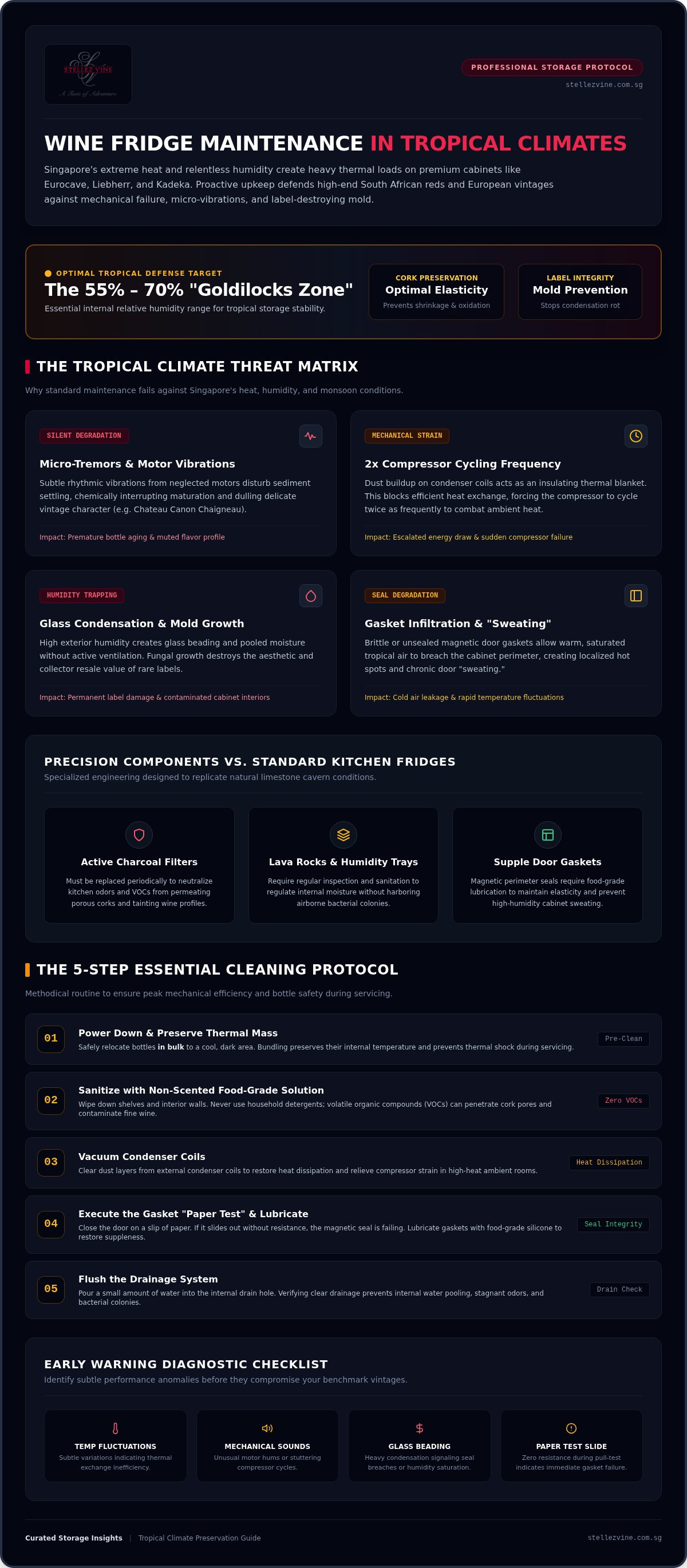
In Singapore, the air is thick with moisture and heat. This isn't just a lifestyle challenge; it's a direct threat to the mechanical integrity of your Kadeka or Eurocave unit. High ambient humidity forces your compressor to cycle relentlessly, which drives up energy consumption and accelerates the degradation of internal components. Protecting your investment requires a shift in perspective. These units are precision instruments designed to replicate the ideal wine storage conditions of a natural limestone cavern, and they require specialized care to perform in a tropical environment.
Neglecting your unit leads to more than just a higher utility bill. A poorly maintained motor often develops subtle, rhythmic vibrations. These micro-tremors are the silent killers of fine wine, particularly for aged South African reds or a delicate Chateau Canon Chaigneau. Following these wine fridge maintenance tips is essential for anyone serious about long-term aging. Vibration disturbs the natural settling of sediment, chemically interrupting the wine's maturation and dulling its character. When you compare the modest effort of routine care against the heartbreaking cost of replacing a spoiled collection of benchmark vintages, the choice is clear.
The Science of Tropical Storage
Singapore’s relentless heat creates a heavy thermal load that your chiller must constantly fight. Dust is the primary accomplice here. When it accumulates on condenser coils, it acts as an insulator, preventing efficient heat exchange. The system then cycles twice as frequently as intended, leading to premature mechanical failure. Beyond the mechanics, humidity-induced mold is the primary enemy of rare labels. Without active ventilation and clean seals, moisture traps against the glass, encouraging fungal growth that can ruin the aesthetic and resale value of your handpicked bottles.
Defining the Maintenance Standard
Premium storage solutions from Liebherr or Eurocave are fundamentally different from standard kitchen refrigerators. They utilize specialized components that demand specific attention to remain effective:
Active Charcoal Filters: These must be replaced to prevent kitchen odors from permeating the cork and tainting the wine.
Lava Rocks or Humidity Trays: These require regular inspection to ensure they are managing moisture levels rather than harboring bacteria.
Seal Integrity: Gaskets must be kept supple to prevent the "sweating" effect common in high-humidity zones.
Adopting professional wine fridge maintenance tips transforms you from a casual owner into a dedicated curator. A proactive schedule ensures your appliance remains a reliable partner in your pursuit of the perfect pour. Don't wait for a cooling failure to act; the integrity of your collection depends on the consistency of your care.
Essential Cleaning Protocols: A Step-by-Step Upkeep Routine
Maintaining the purity of your storage environment requires more than a casual wipe-down. A methodical approach ensures your appliance operates at peak efficiency while your collection remains untainted. Start by powering down the unit and safely relocating your bottles. This preservation of thermal mass is vital; keep your bottles together in a cool, dark area to minimize temperature shock during the transition. Moving your collection in bulk helps maintain their internal temperature while you work.
Once empty, sanitize the interior with a non-scented, food-grade solution. Standard household detergents often contain volatile organic compounds that can permeate porous corks and ruin the profile of a fine vintage. Transition next to the mechanical heart of the unit. Vacuum the condenser coils to ensure optimal heat dissipation. In our humid climate, a layer of dust on these coils acts as a thermal blanket, forcing the compressor to work harder than necessary. This simple step in your wine fridge maintenance tips routine prevents the overheating that leads to costly mechanical failures.
Finish the process by inspecting the magnetic door gaskets. Use the "paper test" by closing the door on a slip of paper; if it slides out without resistance, your seal is failing and leaking cold air. Lubricate these seals with a food-grade silicone to keep them supple and airtight. Finally, test the drainage system by pouring a small amount of water into the internal drain hole. This prevents water pooling, which is a primary cause of internal mold growth and stagnant odors.
Internal Sanitization and Odor Control
Shelving materials dictate your cleaning strategy. While stainless steel is easily wiped, wooden shelves require a gentle touch to avoid warping or excessive moisture absorption. Ensure the drain hole and drip tray are free of blockages. A clogged drain leads to stagnant water, creating an environment where odors and bacteria thrive. For those looking to upgrade their storage, exploring the curated selection of wine chillers at Stellez Vine provides a benchmark for quality and engineering.
Mechanical Upkeep: Coils and Seals
Locating the coils on premium Kadeka and Eurocave units is usually straightforward. They are typically found at the rear or behind a bottom kickplate. Use a soft brush attachment on your vacuum to remove dust without bending the sensitive cooling fins. Integrating these wine fridge maintenance tips into your quarterly schedule can extend the lifespan of your compressor by years. A clean system runs quieter, uses less energy, and provides the unwavering stability your collection deserves.
Mastering Humidity and Temperature Stability: Combating Singapore’s Condensation
Preserving the integrity of a premium collection requires more than just a set temperature. You must maintain the 'Goldilocks Zone' of 55% to 70% humidity to ensure cork elasticity. In Singapore’s tropical environment, this balance is constantly under siege. If the air inside becomes too dry, corks shrink and allow oxygen to seep in, oxidizing your rare South African reds. Conversely, excessive moisture leads to mold. These wine fridge maintenance tips focus on creating a stable sanctuary where your labels stay pristine and your wine matures at a graceful pace.
Never trust a digital display blindly. Utilize an external hygrometer to verify that your internal environment matches the reading on the screen. It is a small investment that provides immense peace of mind. Additionally, ensure your unit has adequate ventilation clearance, particularly for under-counter installations. Without space for heat to escape, the internal temperature will fluctuate, stressing the compressor and endangering your most prized bottles. Proactive monitoring is the hallmark of a true connoisseur.
Managing Condensation on Glass Doors
Condensation is a common sight during the monsoon season, especially if your unit is located in a non-air-conditioned space. While it looks like a minor aesthetic issue, persistent 'fogging' can lead to moisture pooling near the base of the door. Kadeka’s heated glass technology is a benchmark feature for tropical climates, actively evaporating external moisture. If your unit lacks this, consider simple adjustments. Move the fridge away from direct sunlight or humid entryways. Keeping the ambient room temperature stable reduces the thermal shock that causes glass to sweat.
Filter Replacement and Air Quality
Air quality is the silent guardian of your wine's flavor profile. Most premium units from Eurocave and Liebherr utilize active charcoal filters to neutralize odors. We recommend a strict 12-month replacement rule to ensure peak performance. Over time, these filters become saturated and lose their ability to block kitchen smells or musty scents from permeating the cork. For units struggling with stability, adding lava rocks or specialized humidity packs can provide an extra layer of regulation. These wine fridge maintenance tips ensure that the only thing you taste is the craftsmanship of the winemaker, not the environment of your kitchen.
Troubleshooting Common Issues: Recognizing Warning Signs Early
A premium wine fridge is a silent partner in your collection's aging process. When that silence is broken, you must act with precision. Recognizing the difference between normal operation and a mechanical cry for help is a skill every connoisseur should possess. While modern inverter technology in brands like Kadeka and Liebherr creates a distinct, variable hum, certain sounds indicate a deeper struggle. A rhythmic hum is the heartbeat of a healthy compressor; a metallic grinding or persistent rattling sound is a warning that your motor is under duress. These wine fridge maintenance tips help you intervene before a minor glitch becomes a catastrophic failure.
Temperature stability is the ultimate benchmark of storage quality. When your digital display shows a consistent 2-degree deviation from your target, it is no longer a minor fluctuation; it is a systemic problem. This shift often points to a failing sensor or a compromised cooling circuit. Similarly, ice build-up on the back wall or around the internal fans is a critical warning. This usually indicates a sensor failure or a blocked fan that has been physically obstructed by a bottle. If you notice 'E' codes appearing on your Eurocave or Liebherr display, reference your manual immediately to identify the specific diagnostic path required.
Noise and Vibration Analysis
Vibration is the enemy of sediment. Your first step in troubleshooting any new noise is to ensure the unit is perfectly level. Even a slight tilt can cause the compressor to rattle against the frame, sending micro-tremors through your bottles. If the unit is level and the vibration persists, the motor mounts may have degraded. This requires professional intervention to prevent the physical disturbance of your vintages. Understanding these nuances is essential for anyone following professional wine fridge maintenance tips to protect their investment.
Temperature and Power Alerts
Singapore’s power grid is reliable, but tropical storms can cause subtle surges that damage sensitive digital thermostats. You should never use an extension cord for high-end wine cabinets; the resulting voltage drop can starve the compressor and cause it to overheat. If a 'high temperature' alarm sounds, do not panic and open the door repeatedly. This only accelerates the warming. Keep the door sealed to preserve the existing thermal mass while you consult the experts at Stellez Vine for technical support or to explore more resilient storage upgrades. Acting quickly on these alerts ensures that a temporary power issue doesn't result in a spoiled collection.
Elevating Your Storage Experience with Stellez Vine
Curated storage is the final step in the fine wine journey. You have mastered the essential wine fridge maintenance tips to protect your investment, but the foundation of a world-class collection begins with the right hardware. Stellez Vine acts as an expert curator, handpicking only benchmark storage brands like Eurocave, Kadeka, and Liebherr. We simplify luxury for the consumer by providing a knowledgeable filter that identifies the best technology for our specific environmental needs. Your focus should remain on the pleasure of the pour while we ensure your appliance performs with unwavering reliability.
A proactive stance on care transforms your home into a professional-grade cellar. By following the protocols established in this guide, you ensure that every bottle, from a robust South African red to a delicate European white, reaches its full potential. We believe that quality is a standard for living well. Our role is to provide the technical education and premium tools necessary to maintain that standard in a climate that demands nothing less than perfection.
Choosing the Right Cabinet for Your Collection
Selecting a unit requires matching professional-grade precision with your specific aging goals. Eurocave remains the benchmark for those seeking unmatched temperature stability for long-term cellaring. These cabinets provide the sanctuary required for delicate vintages like Chateau Canon Chaigneau to mature gracefully. Meanwhile, Kadeka wine chillers deliver high-energy efficiency and modern aesthetics for urban residences. To ensure you make an informed investment, read our guide on is a wine fridge worth it in Singapore to refine your storage strategy and understand the benefits of dedicated climate control.
The Stellez Vine Advantage
We pride ourselves on being a reliable partner through every step of your journey. This includes providing expert advice on long term wine storage in Singapore to help you navigate the complexities of a tropical climate. Our service model prioritizes dependability, offering seamless delivery and attentive after-sales support for all premium brands. Once your wine fridge maintenance tips are put into practice, you can transition from upkeep to pure enjoyment. Savor the results of your care by exploring our online wine shop Singapore, where you'll find a handpicked selection of exceptional labels ready to be paired with our premium glassware.
Secure Your Legacy of Taste
Mastering these wine fridge maintenance tips ensures your handpicked collection matures exactly as the winemaker intended. By defending against Singapore’s relentless humidity and maintaining mechanical precision, you transform a premium appliance into a professional-grade cellar. We have explored the necessity of clean condenser coils, the importance of supple door seals, and the delicate balance of the 'Goldilocks Zone' for humidity. These proactive steps protect your rare labels from mold and your vintages from the silent threat of vibration.
Stellez Vine stands as your trusted partner, providing the technical expertise required for tropical climate wine preservation. As an authorized retailer for Eurocave, Kadeka, and Liebherr, we offer a curated selection of benchmark storage solutions alongside world-class wines and glassware. Elevate your collection with premium storage solutions from Stellez Vine to ensure your investment remains a source of pride and pleasure. Your commitment to maintenance today guarantees a perfect pour tomorrow. Savor the results of your dedication to the craft of fine living.
Frequently Asked Questions
How often should I clean my wine fridge condenser coils?
You should clean your wine fridge condenser coils at least every six to twelve months to maintain peak efficiency. In Singapore’s urban environment, dust accumulates quickly on these components, acting as an insulator that traps heat. This forces the compressor to work harder, increasing energy costs and shortening the lifespan of your unit. Use a soft brush or a vacuum with a narrow attachment to gently remove debris without bending the sensitive cooling fins.
Why is there water pooling at the bottom of my wine chiller?
Water pooling is usually caused by a blocked drainage hole or excessive condensation from the tropical humidity. Most premium wine chillers have a small drain at the back to channel moisture into a drip tray. If this hole becomes clogged with dust or debris, water will back up and pool inside the cabinet. Inspect the drain quarterly and use a pipe cleaner or a small amount of warm water to ensure it remains clear.
Can I use standard glass cleaner on my Eurocave or Kadeka door?
You should avoid using standard household glass cleaners that contain ammonia or harsh chemicals on your Eurocave or Kadeka door. These substances can damage the specialized coatings on the glass and degrade the rubber gaskets over time. Instead, use a soft microfiber cloth dampened with a mixture of mild, non-scented dish soap and warm water. This maintains the clarity of the glass while protecting the integrity of the door seals and surrounding finishes.
How do I prevent mold from growing on my wine labels in Singapore?
Preventing mold requires maintaining a stable humidity level between 55% and 70% and ensuring proper air circulation. In Singapore’s high-humidity climate, moisture can easily become trapped against bottles, especially if the cabinet is overfilled. Ensure your unit’s active charcoal filter is functional and avoid leaning bottles directly against the back wall. Utilizing these wine fridge maintenance tips will help keep your handpicked labels dry and pristine while the wine matures gracefully inside.
When should I replace the charcoal filter in my wine cabinet?
You must replace the active charcoal filter in your wine cabinet every 12 months to ensure optimal air quality. These filters are the primary defense against volatile organic compounds and kitchen odors that can permeate the cork and spoil your wine. In a tropical setting, the filter works harder to manage air exchange. Marking your calendar for an annual replacement is a simple way to maintain the benchmark storage standards required for your premium labels.
Is it normal for my wine fridge to run constantly in hot weather?
It's common for modern wine fridges with inverter technology to run for long periods during hot weather to maintain a steady internal temperature. However, if the compressor never cycles off, it may indicate a failing door seal or dirty condenser coils. Ensure your unit has at least 5 to 10 centimeters of clearance for ventilation. If the ambient room temperature exceeds 30 degrees Celsius, the system will naturally work harder to compensate for the heat.
What temperature should I set my wine fridge for long-term aging?
Set your cabinet to a consistent temperature between 12 and 14 degrees Celsius for the successful long-term aging of all wine varieties. While white wines are often served colder, the aging process requires a stable, moderate environment to allow complex flavors to develop without chemical interruption. Avoid frequent adjustments to the thermostat. Consistency is more important than the exact degree, as rapid fluctuations can cause the wine to expand and contract, potentially compromising the cork’s seal.
How do I fix a wine fridge door seal that isn't closing properly?
Start by cleaning the gasket with warm, soapy water to remove any sticky residue that's preventing a tight seal. If the rubber has become stiff or warped, you can sometimes restore its shape by gently heating it with a hair dryer on a low setting. This makes the material more pliable, allowing it to conform back to the frame. Integrating this into your wine fridge maintenance tips schedule prevents cold air leaks that cause internal frost.

Comments