
Small Wine Chiller Guide 2026: The Urban Collector’s Essential

In Singapore, a premium Pinot Noir is effectively a ticking time bomb if it's sitting on a kitchen counter or tucked into a standard cupboard. You've likely spent years handpicking exceptional labels from South Africa or Argentina, but the city's relentless humidity and high ambient heat are silent thieves of flavor. Finding the right small wine chiller isn't just about convenience; it's about defending the integrity of every bottle you've carefully curated.
We understand the hesitation that comes with choosing new technology for a compact home. You want a storage solution that's whisper-quiet and vibration-free, yet powerful enough to combat a tropical climate without cluttering your living space. This guide promises to simplify your search by comparing the precision engineering of benchmark brands like Eurocave, Liebherr, and Kadeka. We'll explore the critical differences between compressor and thermoelectric systems, evaluate energy efficiency for 2026, and help you select a sleek unit that safeguards your investment while enhancing your modern aesthetic. Discover how to protect, store, and savor your collection exactly as the winemaker intended.
Table of Contents
Why a Small Wine Chiller is Essential for Singaporean Urban Living
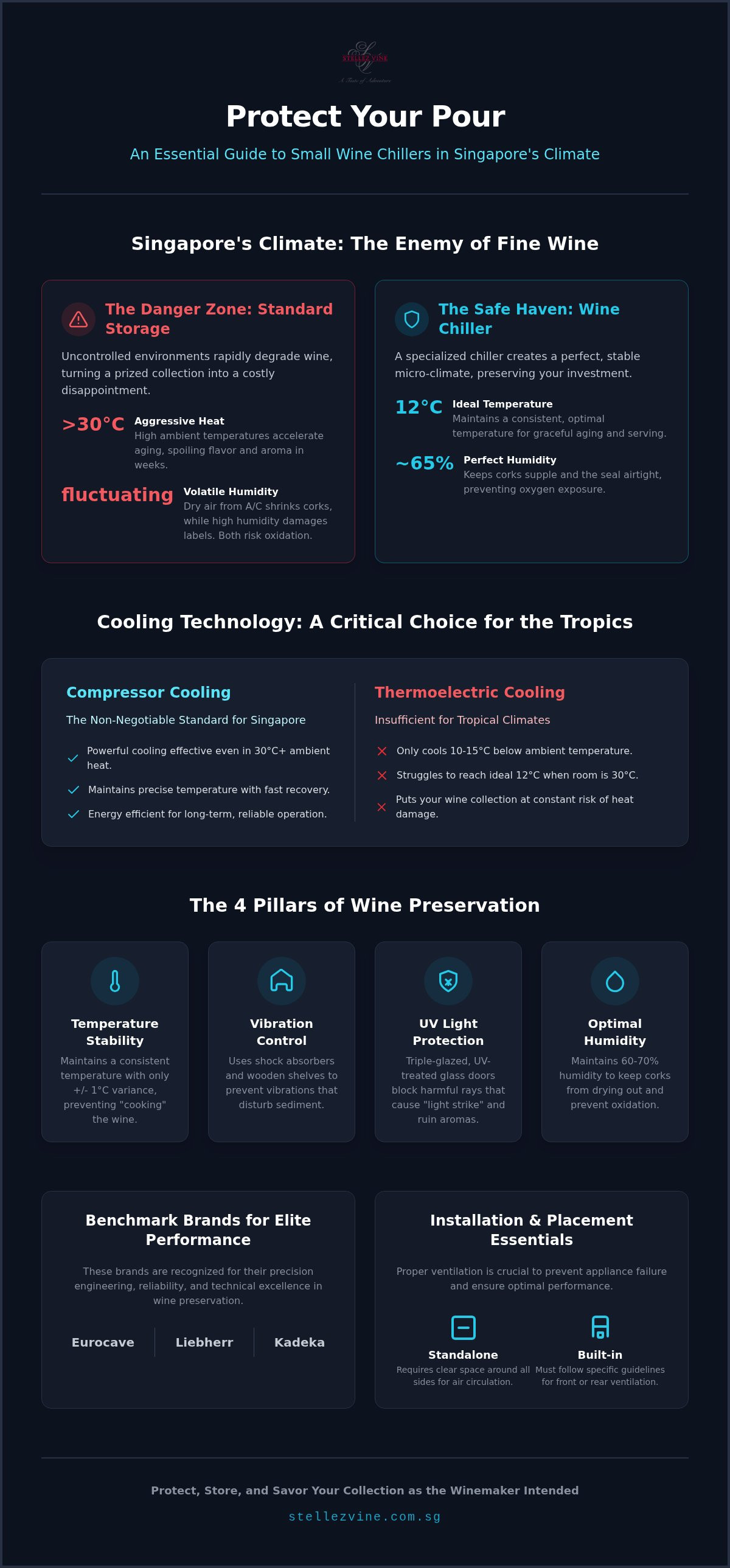
Singapore’s climate is the natural enemy of fine wine. Ambient temperatures across the island frequently exceed 30°C, a threshold that aggressively accelerates chemical reactions within the bottle. Instead of maturing gracefully over years, a premium label stored in a pantry or cupboard can spoil in just a few weeks. This thermal volatility makes a dedicated small wine chiller a mandatory investment for anyone serious about their collection. It acts as a protective barrier, ensuring that the vibrant character of a South African Syrah or the delicate structure of a French Pinot Noir remains intact.
Many collectors mistakenly rely on the standard kitchen refrigerator, but it's a choice that often leads to disappointment. Kitchen fridges are engineered for food preservation at roughly 4°C, a temperature far too cold for wine storage. The lack of humidity control in these appliances causes corks to shrink and crack, which allows oxygen to seep in and oxidize the liquid. Constant vibrations from the heavy-duty compressor and the presence of pungent food odors further degrade the profile of your handpicked bottles. A specialized chiller eliminates these risks by providing a stable, vibration-free environment designed specifically for viticulture.
A true urban storage solution must respect the constraints of high-density living. We define the modern small wine chiller as a precision instrument with a footprint of less than 0.5 square meters. These units, typically holding between 12 and 50 bottles, provide the technical rigor of a professional cellar while fitting seamlessly into a high-rise floor plan. It's the perfect bridge between a growing passion and the spatial reality of city life.
Combatting Singapore's Heat and Humidity
Passive storage in a tropical environment is a gamble you'll eventually lose. High heat causes the wine to expand and contract, which can compromise the cork's seal. Humidity is equally vital. In many air-conditioned apartments, the air becomes too dry for organic materials. A specialized chiller maintains a consistent 60% to 70% humidity level, ensuring the cork remains supple and the seal remains airtight. Without this balance, even the most prestigious Savage or Groot Constantia labels are at risk of premature aging.
Aesthetic Integration for Modern Interiors
Modern collectors demand more than just utility; they want an appliance that acts as a sophisticated focal point. Slimline designs now offer seamless integration into minimalist kitchen cabinetry or serve as a standalone feature in a curated living area. UV-treated smoked glass doors protect your wine from light damage while elegantly showcasing your labels. Choosing a high-quality unit transforms your storage into an essential wine accessory that elevates your home's aesthetic. It ensures your bottles are always serving-ready, allowing you to host with the confidence of an expert curator.
Technical Foundations: Selecting Superior Storage in Compact Form
Protecting a collection in the tropics requires more than just a cool box. To properly store wine at home, you must address the triad of temperature stability, vibration control, and light protection. A high-quality small wine chiller acts as a precision vault, maintaining a consistent +/- 1°C variance despite the external heat of a Singaporean afternoon.
Aged reds are particularly sensitive to environmental stressors. Even micro-vibrations can stir up sediment and disrupt the delicate chemical evolution of the wine, leading to a gritty texture and muted flavors. Superior units incorporate rubber shock absorbers and wooden shelving to neutralize these movements. Simultaneously, light protection is non-negotiable. Triple-glazed, UV-treated glass doors are essential to block harmful rays that cause "light strike." This photochemical reaction can ruin a wine's aroma and color in mere hours, turning a vibrant South African Chenin Blanc into something flat and unappealing.
The Compressor Advantage in Tropical Climates
In the context of Singapore, the mechanical choice is definitive. Thermoelectric units rely on the Peltier effect, which generally only cools about 10°C to 15°C below the ambient temperature. When your living room hits 30°C or higher, these units struggle to reach the ideal 12°C storage mark, putting your investment at risk. Compressor systems possess the raw cooling power and recovery speed needed for the tropics. By 2026, benchmark models from brands like Kadeka and Eurocave have achieved unmatched efficiency. These units offer several advantages:
Superior temperature recovery after frequent door openings.
Reliable performance in high-ambient environments above 25°C.
Whisper-quiet operation that won't disrupt your apartment's tranquility.
Humidity Control and Anti-Condensation Technology
High humidity in Singapore often leads to unsightly condensation on glass surfaces. Premium chillers utilize heated glass doors to maintain a crystal-clear view of your labels without fogging. Internal fans are equally vital; they circulate air to prevent stagnant pockets where mold could flourish on your handpicked labels. Hygrometry is the measurement of water vapor in the air, and maintaining it between 60% and 70% is essential to keep corks from drying out during long-term cellaring. Explore our curated range of storage solutions to find the technical match for your specific collection needs.
The Benchmark Brands: Eurocave, Kadeka, and Liebherr Compared
Selecting a small wine chiller in 2026 requires more than a glance at a spec sheet. It's about matching a brand's engineering philosophy to your specific lifestyle. While many retailers focus solely on price, we evaluate these units based on their ability to either "cellar" wine for long-term maturation or "serve" it at the perfect temperature. Eurocave, Kadeka, and Liebherr represent the pinnacle of this industry, each offering a distinct approach to compact storage.
Capacity and flexibility are the primary considerations for the urban collector. These benchmark brands offer units ranging from 12 to 45 bottles, utilizing clever shelf configurations to maximize every square centimeter. Whether you're housing a vertical of South African reds or a diverse mix of global whites, the internal layout must adapt to your needs without compromising airflow. Let's look at how these manufacturers define excellence in a smaller footprint.
Eurocave: Professional Cellaring in a Small Footprint
Eurocave remains the undisputed gold standard for collectors who prioritize the long-term health of high-value labels. Their La Première and Compact series are engineered to mimic the exact conditions of a natural limestone cellar. Unlike standard appliances, these units feature precision hygrometry systems and active carbon filters to ensure air purity. If your collection includes investment-grade French wines that require years of undisturbed rest, Eurocave is the logical choice. It's a professional-grade vault that fits comfortably into a modern apartment, providing the steady environment necessary for complex chemical evolution.
Kadeka and Liebherr: Versatility and Value
For many Singaporean homes, the priority is a blend of aesthetic elegance and daily functionality. Kadeka has pioneered this space with its Signature series. These units utilize advanced inverter compressor technology, which provides exceptional energy efficiency and silent operation. Their seamless, flush-fit designs are a favorite for minimalist interiors. They offer a refined look that disappears into your cabinetry while keeping your favorite bottles protected from the tropical heat.
Liebherr brings world-class German engineering to the table, particularly with their Vinidor range. This is the go-to brand if you require dual-zone flexibility. The Vinidor models allow you to maintain two separate temperature zones within one compact unit, meaning your reds can cellar at 12°C while your whites remain chilled at 7°C for immediate serving. Their "built-under" models are specifically designed for kitchen integration, featuring front-venting mechanics that prevent the burnout common in less sophisticated units. Choose Liebherr when you want unmatched versatility and a sleek, under-counter presence that complements a high-end kitchen renovation.
Seamless Integration: Placement, Ventilation, and Aesthetics
Integrating a small wine chiller into a Singaporean apartment requires a strategic balance between aesthetic desire and mechanical necessity. While it's tempting to tuck your unit into the nearest available corner, improper placement is the leading cause of premature compressor failure. You must prioritize ventilation to ensure the heat extracted from the interior has a clear path of escape. Airflow is essential.
The distinction between built-in and standalone units is critical. Built-in models are engineered with front-venting kickplates, allowing them to be encased in cabinetry without risk. Conversely, standalone units typically vent from the rear or sides. If you encase a rear-venting model without sufficient clearance, heat becomes trapped. This forces the motor to work overtime, leading to burnout in a matter of months. Don't let a design choice ruin your investment.
Placement etiquette is equally vital. Avoid positioning your chiller next to heat-generating appliances like ovens or dishwashers. Direct sunlight is another hazard; even UV-treated glass can't fully repel the thermal energy of the afternoon sun hitting the cabinet. Maintain a cool, shaded environment for the best results.
The Importance of Proper Ventilation
Rear-venting units require at least 5cm to 10cm of "breathing room" on all sides to function efficiently. If you notice an increase in operational noise or fluctuating internal temperatures, your chiller is likely struggling to dissipate heat. These are the first signs of thermal stress. Ensure your chosen location allows for consistent airflow to maintain the precision stability your collection demands.
Curation and Organization Strategies
Efficient storage goes beyond simply filling shelves. You must organize your bottles to facilitate optimal internal airflow. Avoid overstuffing the unit. Air needs to circulate around each bottle to maintain a uniform temperature. We recommend zoning your collection: place everyday drinkers near the front for easy access and tuck your age-worthy treasures toward the back where they can rest undisturbed.
Applying proven long term wine storage Singapore principles to a compact unit ensures your premium labels mature correctly. To minimize temperature spikes, maintain a digital inventory of your bottles. This allows you to locate a specific Savage or Matias Riccitelli label without keeping the door open for extended periods. Ready to upgrade your home's wine experience? Browse our curated range of wine chillers to find a unit that fits your space and your standards.
Curating Your Compact Collection with Stellez Vine
Investing in a premium small wine chiller is the definitive first step toward building a serious collection, but the true art lies in what you choose to put behind the glass. In a compact unit, every bottle must earn its place. You're no longer just buying wine; you're curating a portfolio of experiences. At Stellez Vine, we act as your expert gatekeeper, helping you balance high-value investment pieces with exceptional everyday labels that thrive in a temperature-controlled environment.
Your collection should reflect a sense of refined adventure. We recommend starting with the unmatched craftsmanship of South African stars like Savage and Groot Constantia. These labels offer a complexity that rivals the traditional Old World, yet they provide a unique narrative of terroir that stands out in any tasting. To ground your collection in heritage, select a few bottles of Chateau Canon Chaigneau. This French benchmark provides the perfect age-worthy red, evolving beautifully over several years when protected by the precision cooling of a high-end cabinet.
The Essential 24-Bottle Starter List
A 24-bottle capacity is the sweet spot for the modern urban collector. It encourages a focus on quality over quantity, forcing you to select only the most exceptional benchmark labels. We suggest a balanced 8-8-8 split to ensure you're prepared for any occasion. Dedicate eight slots to age-worthy reds that will benefit from long-term rest, eight to crisp whites and rosés for immediate enjoyment, and eight to modern, high-altitude favorites. Incorporating Matias Riccitelli wine Singapore collectors adore will add a layer of Argentine innovation to your rotation, ensuring your small wine chiller remains a vibrant and diverse showcase of global viticulture.
Sourcing and Support from Stellez Vine
The Stellez Vine advantage is our holistic approach to your wine lifestyle. We don't just sell the hardware; we provide the expert guidance needed to fill it. Our team offers personalized consultations to help you match your storage needs with a curated selection of South African, French, and Argentine gems. By utilizing our online wine shop Singapore service, you can secure door-to-door delivery of exclusive labels that aren't available in mass-market retail outlets. Savor the experience of discovery while resting easy knowing your investment is shielded from the tropical heat. Protect your passion, elevate your home aesthetic, and start your journey with a partner who understands the value of every pour.
Savor the Selection: Securing Your Liquid Legacy
Your journey into the world of fine wine deserves a safeguard that matches your ambition. We've explored how Singapore's tropical climate demands the mechanical power of a compressor system and why precision humidity control is non-negotiable for long-term cellaring. From the French excellence of Eurocave to the German precision of Liebherr, the right hardware transforms a simple apartment into a professional-grade sanctuary for your bottles.
Choosing the right small wine chiller is the ultimate commitment to quality over quantity. It allows you to curate a handpicked portfolio of South African stars and Argentine innovators with total confidence. As an authorized retailer for Eurocave, Kadeka, and Liebherr, Stellez Vine provides more than just an appliance. We offer expert Singapore-wide delivery and a curated selection of world-class wines to fill your shelves from day one. It's time to elevate your hosting experience and protect the integrity of every pour.
Explore our curated selection of Kadeka and Eurocave small wine chillers at Stellez Vine and begin your refined adventure today. Your collection is ready for its new home.
Expert Answers for Urban Collectors
Is a small wine chiller better than a standard refrigerator for wine?
A dedicated small wine chiller is vastly superior to a standard refrigerator for preserving your collection. Kitchen fridges are designed for food at 4°C, which is too cold for wine and lacks the humidity to keep corks supple. They also generate constant micro-vibrations and house food odors that can permeate a cork. A specialized unit provides a stable, vibration-free environment with controlled hygrometry to ensure your labels age gracefully.
What is the ideal temperature setting for a small wine fridge in Singapore?
The benchmark temperature for long-term cellaring in Singapore is 12°C. While many collectors adjust settings for serving, 12°C is the universal sweet spot that allows both reds and whites to mature without chemical stress. In our tropical climate, maintaining this consistency is vital. If you're using a single-zone unit, keep it at this level to protect the integrity and flavor profile of your investment-grade bottles.
Can I use a small wine chiller for both red and white wines?
You certainly can, provided you choose the right configuration. Dual-zone models from brands like Liebherr allow you to maintain separate temperatures for whites and reds within the same footprint. If you have a single-zone small wine chiller, set it to 12°C for storage. Simply remove your whites 20 minutes before serving to chill further in an ice bucket, or let reds breathe to reach room temperature.
How much energy does a small wine fridge consume annually?
Modern units are engineered for high efficiency, typically consuming between 100kWh and 200kWh annually depending on the model. Compressor-based systems in 2026 are significantly more energy-efficient than older thermoelectric units. To minimize costs, ensure your small wine chiller has proper ventilation and is kept away from direct sunlight. This prevents the motor from overworking in Singapore's consistent ambient heat and reduces your overall carbon footprint.
Do small wine chillers require regular maintenance or servicing?
Basic maintenance is essential to ensure longevity and consistent performance. You should vacuum the condenser coils every six months to prevent dust buildup and check the drainage hole for blockages. If your unit features an active carbon filter, such as those in Eurocave models, replace it annually to maintain air purity. These simple steps prevent the compressor from straining and keep the internal environment pristine for your collection.
What happens if my wine chiller loses power in Singapore's heat?
High-quality cabinets are built with superior insulation that can maintain safe temperatures for several hours during a blackout. If the power fails, it's vital to keep the door closed to preserve the internal thermal mass. The thick walls and specialized seals are designed to slow the heat transfer, giving you a buffer against Singapore's humidity until the power is restored and the cooling cycle resumes.
Should I choose a glass door or a solid door for my small wine cabinet?
The choice depends on your storage goals and aesthetic preferences. Solid doors offer the best insulation and total protection from light, making them ideal for long-term aging. However, most urban collectors prefer UV-treated, triple-glazed glass doors. These provide a sophisticated display for your collection while effectively shielding the wine from harmful light strike. It's a balance of visual elegance and the technical protection your labels require.
How do I prevent condensation from forming on the outside of the glass?
Condensation is a common challenge in Singapore's 80% humidity. To prevent "fogging" or water droplets, select a unit equipped with heated glass technology or anti-condensation treated doors. Brands like Kadeka and Eurocave specialize in these features, ensuring your glass remains crystal clear. Proper ventilation around the unit also helps maintain a consistent external temperature, reducing the likelihood of moisture buildup on the surface during the humid months.

Comments