
Signs of Heat Damaged Wine: How to Spot Them and What to Do

What if a bottle that looks simply mature has actually been stressed by heat? The signs of heat damaged wine can include a cork pushed above the bottle’s rim, sticky seepage, or aromas and flavours of stewed fruit. None of these clues should be judged in isolation: normal ageing and bottle variation can create changes that raise similar questions.
If you’ve ever hesitated before opening a suspicious bottle, that uncertainty is understandable. Warm conditions, a sunlit shelf or an unpredictable journey can make you wonder whether the wine will still be enjoyable. The key is to weigh the bottle’s exposure history alongside its appearance and, finally, what you notice when you open and taste it.
This guide shows you how to assess possible heat damage without jumping to conclusions, distinguish heat-related changes from normal variation, and decide what to do next. You’ll also find practical ways to reduce future exposure, including why stable storage matters and how temperature-controlled wine storage can help protect the bottles you’re saving to savour.
Table of Contents
What Are the Signs of Heat Damaged Wine?
Heat damage is a change in a wine’s quality caused by excessive or prolonged exposure to warmth. Heat can speed chemical reactions in the bottle, diminishing fresh fruit and floral aromas and leaving the wine less lively or balanced. In more pronounced cases, the wine may develop cooked-fruit or oxidised character. These changes are sometimes discussed as maderization, one of the faults covered in Wine fault.
There’s no universal temperature or exposure time that diagnoses every bottle. A brief spell in warm conditions isn’t automatically proof of damage; prolonged heat or repeated temperature swings are greater concerns. The outcome can also depend on the wine’s style, its closure, the bottle’s condition and its exposure history. A warm delivery, by itself, doesn’t mean the wine is ruined.
For a considered assessment, bring three kinds of evidence together: what you know about the bottle’s exposure, any clues on its packaging, and the wine’s condition once opened. Record delivery or storage details promptly, while they’re fresh, and inspect the bottle before relying on assumptions.
How heat exposure can affect a bottle
Wine develops through gradual chemical change, but excessive warmth can accelerate that process and mute delicate aromas and freshness. The result may seem prematurely aged, dull or out of balance. Brief warmth and sustained or repeated exposure aren’t equivalent, and no single rule applies to every bottle. Consider the circumstances alongside the wine and its closure.
Why one warning sign is not a verdict
A bottle’s history is often incomplete: you may know when it arrived but not how it was stored or transported beforehand. While purchasing through dedicated independent wine merchants such as Mosse and Mosse helps ensure careful provenance and storage, older or gifted bottles often lack clear records. Cork movement or seepage can be consistent with heat-related pressure, but closure variation, handling or other storage conditions can also play a part. A damaged capsule may reflect handling rather than heat. Treat these details as clues, not proof.
Several consistent clues are more persuasive than one isolated sign. A shifted cork matters more when there’s also residue around the neck and the wine smells or tastes unusually cooked or flat. If the packaging looks intact but the wine seems muted, it still deserves a thoughtful check. Compare the clues rather than letting any single one decide the verdict.
How Heat Damages Wine: Exposure, Pressure, and Change
Heat affects wine by speeding up the chemical reactions that shape its development. As those reactions accelerate, a wine can lose freshness and aromatic detail sooner than expected. Fruit may seem less bright, and the wine’s balance can feel flatter or less integrated. The change isn’t always immediate or obvious; the amount of heat, how long it lasts and whether it happens repeatedly all matter.
Heat doesn’t simply warm wine; it can accelerate the changes that take away its freshness. A brief period of warmth isn’t automatically equivalent to prolonged exposure, and no single temperature or time limit diagnoses every bottle. Treat exact thresholds cautiously rather than as a universal pass-or-fail rule.
Heat, oxidation, and changing aromas
Oxidation occurs when wine reacts with oxygen. In excess, it can dull fresh fruit and alter aromas and flavours, sometimes making a wine seem tired or overly developed. Heat can contribute to unwanted change, including by placing pressure on a closure, but oxidation is not proof of heat exposure. It can also arise from closure problems or the wine’s history.
Ageing can naturally soften a wine and shift its aromas over time. The distinction is often one of pace and character: expected development unfolds as the wine matures, while heat stress can make it seem prematurely tired, cooked or unbalanced. Read those impressions in context, not as a stand-alone diagnosis.
Why bottles respond differently
Duration, intensity and repetition shape the risk. A short warm spell differs from sustained heat, while repeated swings can place more stress on a bottle over time. As the liquid warms and expands, pressure may build against the closure. A sound closure may hold; a compromised one may allow seepage or more oxygen contact. Handling can also affect cork position or damage a capsule, so packaging clues need context.
Wine style, closure condition, bottle handling and individual history all influence how a bottle responds. Two bottles exposed to similar conditions may not show the same changes, so signs of heat damaged wine should be assessed case by case. For home storage, focus on a cool, stable environment and follow the operating guidance supplied with any temperature-controlled appliance.
Stable storage helps limit avoidable temperature stress. If you’re creating a more controlled environment for your collection, explore temperature-controlled wine storage.
Which Signs of Heat Damaged Wine Are Strong, and Which Are Ambiguous?
The most useful clues are the ones that agree. A raised cork or sticky residue deserves attention, but neither proves the wine is damaged. Compare the packaging with the wine’s aroma, flavour and appearance, then weigh all of it against what you know about storage and delivery.
Bottle clues: pushed corks, seepage, and residue
A cork that sits noticeably higher than expected can suggest pressure inside the bottle, including pressure caused by warming. Seepage or sticky residue around the cork or bottle neck is a reason to inspect it closely. But cork position and leakage can also be affected by closure condition, handling or other storage issues. Capsule damage may simply come from rough handling, so treat it as context, not a verdict.
Wine clues: aroma, flavour, and appearance
Once opened, notice whether the wine seems unusually muted, cooked, stewed or flat. These can be sensory signs of heat stress, particularly when they appear alongside packaging clues and a credible history of warm exposure. Oxidation-like aromas, however, can have causes beyond heat, including closure problems or normal development. Don’t use one smell as a diagnosis.
Appearance needs the same care. A mature red may develop a brick-like hue, while white wine can deepen in colour with age. Sediment can also be a normal feature of some wines, particularly as they mature; it doesn’t by itself signal heat damage. Colour becomes more informative when it changes alongside unexpected aromas, diminished freshness or evidence of seepage.
In practice, the signs of heat damaged wine become more persuasive when several independent clues point in the same direction. A darkened wine with sediment may simply reflect its style or age. Add a raised cork, residue and unexpectedly cooked aromas, and there’s more reason for concern. Assess the bottle as a whole before deciding whether it’s enjoyable to drink.
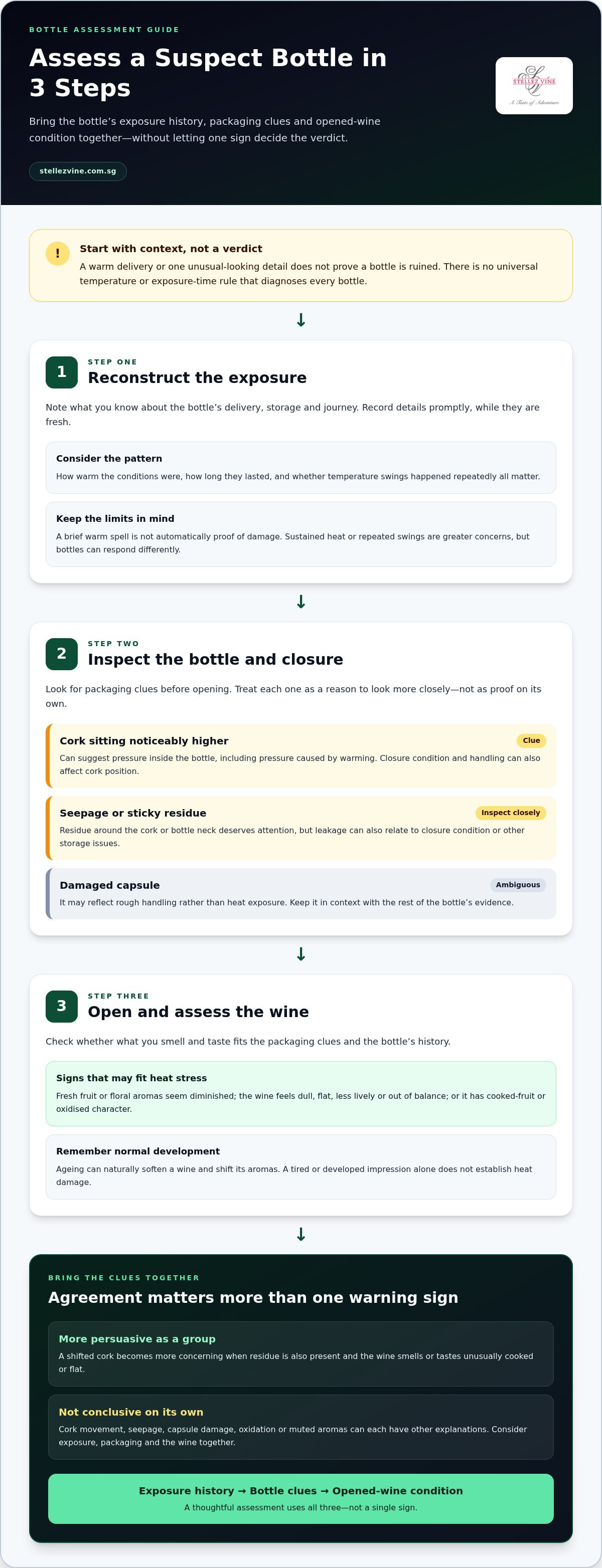
How to Assess a Suspect Bottle Without Rushing to a Verdict
A calm, consistent check is more useful than reacting to one worrying clue. Work through the bottle’s history, its condition and the wine itself, then decide whether the evidence points to heat damage or ordinary variation.
Record the exposure. Note when and where the bottle may have encountered warmth, if you know. Was it a brief event, prolonged storage, repeated temperature changes, or is the history uncertain? Save relevant delivery details while they’re clear, but don’t assume one journey tells you how the bottle was stored beforehand.
Inspect the bottle. Before opening, look at the cork, capsule, glass and bottle neck. Check for a raised cork, seepage, sticky residue, cracks or other damage. Photograph anything unusual and record what you observe; these details help you compare evidence without relying on memory.
Assess the wine. Open it carefully and pour a small amount into clean glassware. Smell first, then taste only if you’re comfortable doing so. Consider whether the aromas and flavours fit the wine’s expected style and age, especially if you’ve tasted it before.
Start with the bottle’s exposure history
Keep the account factual: where the bottle was kept, what circumstances might have exposed it to heat, and whether the exposure was brief, sustained, repeated or unknown. Avoid guessing at exact temperatures or duration if you can’t verify them. A warm delivery can be a relevant clue, but it doesn’t establish the bottle’s full storage history or prove the wine was harmed.
Inspect, open, and assess with care
Look for clues before removing the closure, then compare them with what you notice in the glass. A sound assessment combines bottle inspection with sensory evidence. Muted fruit, cooked aromas or an unusually flat finish may support concern, but none should be interpreted alone. If the wine seems clearly compromised and is no longer enjoyable, stop serving it rather than trying to talk yourself into the experience.
For prevention beyond this single bottle, read the long-term wine storage guide for practical context on protecting a collection in a tropical climate. For a more controlled home setup, explore wine storage appliances.
Prevent Heat Damage with Thoughtful Wine Storage
Good storage reduces avoidable heat stress and helps preserve a wine’s freshness over time. Aim for a cool, dark place where conditions stay as steady as possible. A kitchen shelf, sunny window or spot beside an oven can expose bottles to unwanted warmth, while frequent shifts between warmer and cooler conditions add further stress.
Choose storage that limits heat and fluctuation
Consistency matters as much as choosing a suitable storage temperature. A wine fridge can provide a more controlled environment for a home collection than a location affected by daily household heat, helping limit temperature swings. It supports careful storage, but no appliance can guarantee that every bottle will remain unaffected under every circumstance.
Stellez Vine Singapore offers wine-storage appliances from Eurocave, Kadeka and Liebherr. Read this wine fridge storage guide to consider how dedicated refrigeration can fit into your home setup.
Make prevention part of your wine routine
Build a few simple checks into your routine:
Store bottles away from direct sunlight and household heat sources such as ovens and other warm appliances.
Choose a location with steady conditions, rather than one that warms and cools repeatedly.
Check the storage environment periodically, and inspect long-held bottles for changes to the closure or signs of seepage.
These habits won’t erase a bottle’s past exposure, but they can help reduce future risk. If you’re reviewing the signs of heat damaged wine after discovering a suspect bottle, use that experience to improve where and how the rest of your collection is stored.
Explore wine storage solutions to find temperature-controlled options for your collection.
Protect Your Collection, Pour with Confidence
One clue rarely tells the whole story. To assess the signs of heat damaged wine, weigh the bottle’s exposure history, packaging condition and sensory character together, then avoid mistaking normal ageing or variation for heat damage. A careful inspection and a small, thoughtful taste can help you decide whether the bottle is still enjoyable.
For the bottles you’re saving, focus on cool, dark, stable storage and keep them away from sunlight and household heat sources. Temperature-controlled storage can help reduce exposure to fluctuating conditions, though no appliance can promise perfect protection in every circumstance.
Stellez Vine brings together a curated international wine selection and storage appliances from Eurocave, Kadeka and Liebherr, with online delivery in Singapore. Explore Stellez Vine’s wine storage solutions and choose an option suited to your collection. With a thoughtful approach to assessment and storage, you can protect your bottles and look forward to opening them with greater confidence.
Frequently Asked Questions
Is a pushed cork always a sign of heat-damaged wine?
No. A raised cork is one of the possible signs of heat damaged wine, especially if you also find seepage, sticky residue or unusual aromas. On its own, though, it doesn’t prove heat damage. Closure variation, handling or other storage conditions may also affect cork position. Consider the bottle’s history and compare several clues before deciding whether the wine has been affected.
Can heat damage wine without changing the cork?
Yes. Heat can affect a wine’s aroma, flavour or freshness without visibly moving its cork. A normal-looking closure therefore doesn’t rule out exposure or quality changes. Consider what you know about the bottle’s storage or delivery alongside its sensory condition after opening. Look for a pattern of clues rather than treating a visual inspection, however reassuring, as a definitive diagnosis.
What does heat-damaged wine smell or taste like?
Possible clues include muted fruit, cooked or stewed aromas, and a flatter taste than you’d expect from that wine. These characteristics aren’t exclusive to heat damage: age, oxidation and bottle variation can also change a wine’s profile. Compare what you smell and taste with the wine’s expected style and age, then consider the bottle’s condition and exposure history before drawing a conclusion.
Can you drink wine that may have been exposed to heat?
Possible heat exposure doesn’t automatically mean a bottle is no longer enjoyable. Inspect it for several warning signs, then pour a small amount and assess its aroma and flavour. Appearance alone can’t tell you how the wine will taste. If it seems clearly compromised or unpleasant, don’t serve it. Avoid assuming that every bottle exposed to warmth has experienced the same outcome.
How long does wine have to be exposed to heat before it is damaged?
There’s no single exposure duration that guarantees damage or safety for every bottle. Risk depends on the temperature reached, how long it lasted, whether exposure happened repeatedly, and the wine’s condition and closure. If the bottle’s history is unclear, weigh its physical and sensory clues together. Treat precise time or temperature thresholds cautiously unless they’re supported by reliable technical evidence relevant to the conditions.
Does a darkened wine colour mean the bottle is heat damaged?
Not necessarily. Wine can change colour as it matures, and normal appearance varies with style and age. A darker hue is more concerning when it appears alongside other clues, such as seepage, a displaced cork or unusually cooked, muted aromas. Consider the wine as a whole rather than relying on colour alone. Sediment, too, may be a normal feature of some wines.
How can I protect wine from heat at home?
Store bottles in a cool, dark place where conditions remain as steady as possible, away from direct sunlight, ovens and other household heat sources. Minimise repeated temperature changes. In a warm climate, a temperature-controlled wine fridge or cabinet can support more consistent home storage, though it can’t guarantee perfect protection. Choose an appliance suited to your collection and follow its manufacturer’s guidance for use.


Comments