
Chenin Blanc from South Africa: A Buyer’s Guide to Finding Your Style

What if the best way to choose chenin blanc from South Africa is to start with your taste and dinner plans, not the grape name? Chenin Blanc can be crisp and dry, rounded with oak or distinctly sweet. One bottle may feel closer to Sauvignon Blanc, while another offers the richness you might expect from Chardonnay.
If that range makes choosing feel uncertain, you’re not alone. Growing conditions, grape ripeness and winemaking choices all shape the wine. Learn the flavour cues that distinguish the main styles, how a wine’s origin and production can influence its character, and which dishes complement each style.
Use this guide to compare Chenin Blanc with familiar white wines, match a bottle to a meal or occasion, and choose with confidence, whether you prefer bright citrus and freshness or ripe fruit and a fuller texture. Then explore South African wines through Stellez Vine Singapore’s curated selection, with online shopping and delivery within Singapore.
Key Takeaways
Learn why chenin blanc from South Africa can range from bright and crisp to richer, textured styles.
See how growing conditions and winemaking choices can offer clues to a wine’s character.
Compare Chenin Blanc with Sauvignon Blanc and Chardonnay using flavour, texture and occasion as your guide.
Use a simple three-step approach to choose a style that complements your meal and suits the moment.
Read producer descriptions for useful clues, while treating tasting notes as guidance rather than a guarantee.
Table of Contents
What makes Chenin Blanc from South Africa distinctive?
Chenin Blanc is a white grape with an unusually broad stylistic range. Depending on where it grows and how the winemaker handles it, the same variety can produce a bright, dry wine, a softly rounded off-dry pour or a lusciously sweet expression. South Africa has a distinctive place in Chenin’s modern story: the grape has long been known locally as Steen, and producers use it to make wines that show both freshness and depth. For background on the grape’s history and South African character, explore Chenin Blanc in South Africa.
South African Chenin Blanc is a white wine shaped by its South African origins, with styles that range from crisp and fruit-led to rich, textured or sweet. The grape name alone can’t tell you exactly what’s in the glass. Sweetness, acidity, fruit ripeness and winemaking all contribute to the final impression.
Is South African Chenin Blanc always dry?
No. Chenin Blanc can be made dry, off-dry or sweet. The variety name identifies the grape, not the wine’s sweetness level, so don’t assume every bottle will taste crisp and dry. Look for clear label terms such as “dry,” “off-dry” or “sweet,” and read the producer’s description for clues about fruitiness and balance. If the label doesn’t state sweetness plainly, those details can help set expectations, though tasting notes aren’t a guarantee.
Why does Chenin Blanc have such a broad style range?
Start with acidity, the mouth-watering freshness that keeps a wine lively. In a crisp, fruit-led Chenin, acidity can sharpen citrus and orchard-fruit flavours. In a fuller style, it can balance ripe fruit and a broader, more textured feel. Vineyard conditions influence how grapes ripen, while harvest timing and winemaking decisions shape the balance, body and flavour in the glass.
Some expressions are made to highlight clean fruit and freshness. Others may gain weight and texture through fermentation or ageing in oak, or contact with lees, the yeast cells left after fermentation. These techniques don’t make every wine taste alike, but they help explain why Chenin Blanc can work as a lively aperitif or a layered dinner-table white. Use the style clues, rather than the grape name alone, to choose a bottle that suits your preference.
How South African regions and winemaking shape Chenin Blanc
South African wine regions are useful to recognise when exploring chenin blanc from South Africa. They point to a wine’s origin, but a region name alone can’t predict the exact flavour or texture in your glass. Vineyard site, seasonal conditions, harvest timing and cellar decisions all help shape the finished wine.
Region provides a sense of place, while vineyard conditions and winemaking choices determine how that place may show in Chenin Blanc’s flavour and texture. South Africa’s Wine of Origin scheme can add context: on a certified wine, “WO” means all the grapes come from the named area. Treat that information as an origin clue, not a tasting promise. For a broader introduction to the country’s wine regions, see this South African wine guide.
What regional cues should Chenin Blanc buyers look for?
Use the region as a starting point, then look for more specific details on the label or in the producer description, such as vineyard site and growing conditions. Wines from the same named area can still differ because of site, vintage and harvest choices. Research into the quality and value of South African Chenin Blanc, including research on the grape’s potential, reflects the attention given to the variety. For readers in Singapore, regional clues can help narrow your preferences as you explore a curated selection of South African wines.
How do winemaking choices change the glass?
Fermentation is the process that turns grape sugars into alcohol. The vessel and fermentation approach can influence how fruit character and texture come across. Lees contact, which means leaving the wine in contact with spent yeast cells, may contribute a softer, rounder or more savoury impression. These choices affect feel and complexity, not just aroma.
Oak can also shape texture. Depending on how it’s used, it may add a subtle sense of weight or roundness without making the wine taste overtly woody. More noticeable oak flavours are possible, but not inevitable. Read producer notes for clues about fermentation, lees and oak, then weigh them alongside origin and your own preferences. Treat tasting descriptions as guidance rather than guarantees: the best choice comes from combining the clues, not relying on one label detail.
South African Chenin Blanc compared with Sauvignon Blanc and Chardonnay
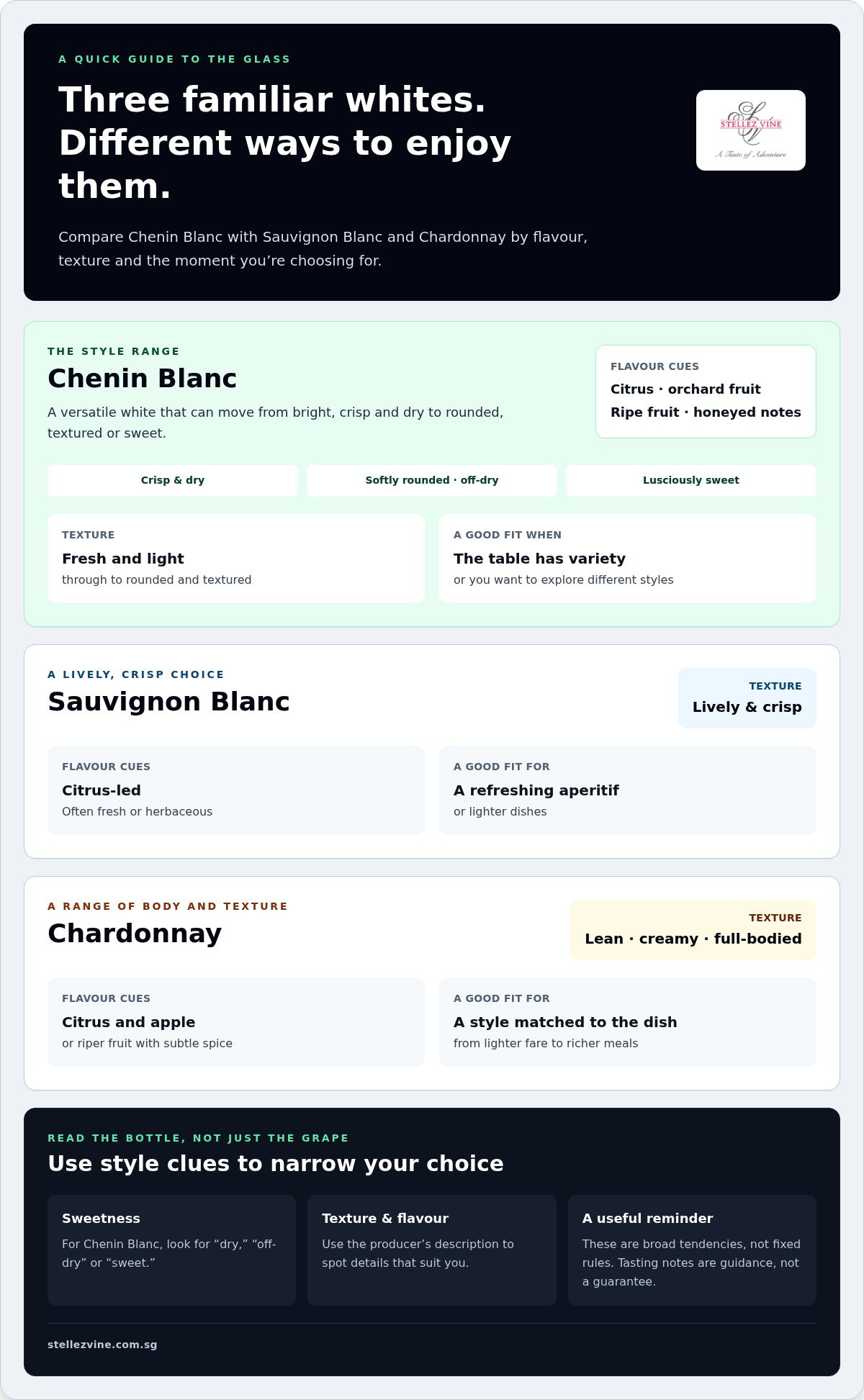
Choosing between these whites is easier if you focus on what you enjoy in the glass, rather than treating a grape name as a guarantee. Chenin Blanc, Sauvignon Blanc and Chardonnay can all vary in body, sweetness and winemaking style. Use these common tendencies as a starting point, then read the bottle description for details that matter to you.
These are broad cues, not fixed rules. Sweetness and body vary within each variety, and decisions in the vineyard and cellar can shift the result. The Chenin Blanc Association offers further background on the grape’s South African styles. Let your preferred acidity, fruit character and food pairing guide your choice, rather than assumptions about prestige.
Chenin Blanc or Sauvignon Blanc: which style suits you?
Reach for Sauvignon Blanc if you usually enjoy a brisk, citrus-forward white with herbal or green-fruit notes. Choose Chenin Blanc if you’d like a similarly fresh option but want to explore a broader range, from crisp fruit to a more rounded feel. Quick rule: for a reliably zesty impression, start with a Sauvignon Blanc description; for more choice in texture and fruit expression, compare Chenin Blanc labels.
Chenin Blanc or Chardonnay: what is the difference?
Chardonnay can move from lean and citrusy to generous and creamy, with some styles showing oak-derived spice or toast. Chenin can also be made with oak influence, though its texture may become rounder without overt wood flavours. If you prefer a lighter, brighter white, look for descriptions that stress freshness; for more body, seek cues such as creamy, layered or textured. A curated South African wine selection is a useful place to explore Chenin Blanc alongside other styles.
How to choose South African Chenin Blanc for a meal or occasion
Choose the bottle around the experience you want, then use the meal and label to refine your pick. This three-step method makes it easier to select chenin blanc from South Africa for a relaxed lunch, a dinner with friends or a special occasion.
Start with your taste. Prefer bright, lively whites? Look for descriptions that emphasise freshness, citrus or crisp fruit. If you enjoy a broader, softer feel, seek cues such as ripe fruit, rounded or textured.
Consider the food and moment. Match the wine’s intensity to the dish. Fresher styles can complement delicate seafood, salads and simply prepared vegetables; fuller expressions can hold their own with roast poultry, richer sauces or more substantial vegetarian dishes.
Read the label and producer notes. Look for sweetness cues, flavour descriptions and details about texture or oak. Use them to set expectations, not as a promise that every palate will experience the wine in exactly the same way.
Which foods pair well with Chenin Blanc?
Chenin’s range makes it a flexible food wine. A crisp, high-acid style can refresh the palate alongside grilled fish, prawns, fresh herbs or vegetable dishes with a squeeze of citrus. A slightly sweeter expression may balance gentle chilli heat or a sweet-and-sour sauce, while a fuller, more textured wine can suit roast chicken, creamy preparations or vegetables with browned, savoury flavours.
Think beyond the main ingredient. A sharp dressing, buttery sauce, chilli or smoky seasoning can change the match, so consider the whole dish and how strongly it’s flavoured. Choose a wine that appeals to you, too: pairing suggestions are useful starting points, not rules.
How should you serve and store Chenin Blanc in Singapore?
Serve white Chenin Blanc cool so its freshness stays lively, but avoid letting it become so cold that its aromas are muted. If the bottle warms as you dine, return it to the fridge or an ice bucket briefly. After opening, recork it and keep it chilled to help preserve its character.
Singapore’s warm, humid climate also makes stable storage important, especially for bottles you plan to keep. For practical advice beyond serving an open bottle, read the long-term wine storage guide for Singapore.
Ready to put your preferences into practice? Explore South African wines through Stellez Vine’s curated selection, with online shopping and delivery within Singapore.
Find your South African Chenin Blanc with a confident buying checklist
A confident choice starts with your own preferences, not a promise on the label. Before selecting chenin blanc from South Africa, use this quick checklist to connect the wine’s likely style with the meal, occasion and flavours you enjoy.
Sweetness: Look for terms such as dry, off-dry or sweet if they’re provided. Don’t rely on the grape name alone.
Acidity: Descriptions that mention freshness or crispness can suggest a lively, palate-cleansing style.
Texture: Words such as light, rounded or full-bodied offer clues to how the wine may feel.
Origin: Note the region or vineyard information as useful context, not a guarantee of a particular taste.
Occasion and pairing: Consider whether you’re choosing for an aperitif, a shared meal or a gift, and match the wine’s apparent weight to the food.
Use the checklist as a set of clues, not a scorecard. If you enjoy bright whites and are serving delicate dishes, freshness may be a priority. For richer food or a more leisurely dinner, a description suggesting greater texture may appeal. The right bottle is the one that fits your preference and the moment, rather than the one with the most impressive-sounding language.
What should you check on a Chenin Blanc label?
Look for the grape, origin, producer and vintage when those details are shown. Then read the producer’s notes for cues about sweetness, acidity, fruit character and texture. These descriptions help narrow your options, but tasting words aren’t guarantees: each person may experience the same wine differently. Use the details to shortlist bottles that suit your palate and planned meal.
Where can you explore South African wines in Singapore?
Stellez Vine curates premium wines, including South African wines, giving you a straightforward way to continue exploring after you’ve identified the style you like. Browse the South African wine selection online, with delivery within Singapore. Use your checklist to explore the range and let your taste preferences guide your next discovery.
Choose your style, then savour the discovery
Choosing chenin blanc from South Africa becomes simpler when you look beyond the grape name. Sweetness, acidity and texture offer clues to the style, while origin and winemaking add context rather than guaranteeing a particular taste. Pair the wine with the meal and occasion, then use label details and producer notes to narrow your options.
Whether you’re drawn to a crisp, fruit-led pour or a more rounded expression, let your own palate lead. Stellez Vine makes it easy to continue exploring, with South African wines as a priority and a curated range of premium wines from international regions. Shop online and enjoy delivery within Singapore.
Explore Stellez Vine’s curated South African wines and choose a bottle that suits your table, your taste and the moment. Your next favourite could be a style you haven’t tried yet.
Frequently Asked Questions
What does South African Chenin Blanc taste like?
South African Chenin Blanc can taste crisp and citrusy, with notes of apple or pear, or show riper fruit and a fuller, more textured character. Some expressions are made with sweetness or oak influence, while others focus on freshness. The grape’s versatility means there isn’t one signature flavour to expect from every bottle. Check the producer’s description for clues about fruit, texture and style.
Is Chenin Blanc from South Africa dry or sweet?
Chenin Blanc from South Africa can be dry, off-dry or sweet. The grape name alone doesn’t tell you how much sweetness to expect, and ripe fruit aromas don’t necessarily mean the wine tastes sweet. Look for a sweetness description on the label or in the producer’s notes. If sweetness isn’t stated, terms describing freshness, fruit and balance can help you form an expectation.
How is South African Chenin Blanc different from French Chenin Blanc?
Both countries produce Chenin Blanc in a range of styles, so national origin alone can’t define the difference. France is closely associated with the grape, while South African Chenin reflects its own growing regions and winemaking choices. Bottles from either country may be dry, sweet, crisp or more textured. Compare the stated origin and producer notes rather than assuming every wine from one country tastes alike.
What food goes well with South African Chenin Blanc?
Pair it with the wine’s style and the dish’s seasoning. Fresher, lively Chenin can complement grilled fish, prawns, salads and simply prepared vegetables. Fuller styles can work with roast poultry, creamy sauces or richer vegetable dishes. A touch of sweetness may balance gentle chilli heat or sweet-and-sour flavours. Consider the sauce and preparation as well as the main ingredient, and let personal preference guide the final match.
How should Chenin Blanc be served?
Serve Chenin Blanc cool to preserve its freshness, but avoid chilling it so much that its aromas become muted. If it warms during the meal, return the bottle to the fridge or an ice bucket briefly. After opening, recork the bottle and keep it chilled. These simple steps help the wine stay enjoyable as you serve it, whether it’s accompanying a meal or poured as an aperitif.
Can South African Chenin Blanc age well?
Some South African Chenin Blanc can develop with age, but ageing potential depends on the wine’s structure, production and storage. Don’t assume every bottle is intended for keeping. Use the producer’s guidance as your first clue, and store bottles you plan to age in a cool, dark place with stable conditions. If you’re unsure of a bottle’s intended drinking window, enjoying it sooner is a sensible choice.
How do I choose a South African Chenin Blanc for a first purchase?
Begin with the style you enjoy: crisp and fresh, or rounder and more textured. Then consider the meal or occasion, and check the label or producer description for sweetness, fruit, origin and winemaking clues. Treat tasting notes as guidance, not a promise of exact flavours. For a first bottle, choose a description that matches familiar preferences, or pick a different style next time to explore Chenin’s range.


Comments