
Proper Wine Aeration Techniques: How to Bring Out a Wine’s Best

More air isn’t always better. The best approach is to use the gentlest method that helps a wine open up without letting its aromas and flavour fade. If you’re unsure which bottles need aeration or whether to decant, swirl, or simply wait, proper wine aeration techniques are easier to apply than they may seem.
It’s natural to worry that the wrong method or timing could dull a special bottle. In practice, aeration is about observation, not following a fixed rule. Young, tannic reds may welcome more air, while older, delicate wines call for a lighter touch. Decanting is one way to aerate wine, but it isn’t the only option. Simply opening a bottle and leaving it to stand won’t have the same effect as pouring the wine into a glass.
This guide explains what aeration can change and when it may help, then compares simple methods you can try with everyday glassware. You’ll learn to taste as a wine opens, adjust your approach to the bottle in front of you, and stop when its character is at its best.
Table of Contents
What Proper Wine Aeration Does, and What It Does Not
Can a little air change the wine in your glass? Yes, sometimes. Wine aeration is the exposure of wine to air to encourage changes in its aromas and perceived taste. Those changes depend on the wine and how it’s handled; air isn’t a guaranteed upgrade. The aim is to see whether the wine becomes more expressive, not to make every bottle taste the same.
Understanding that distinction makes proper wine aeration techniques easier to choose. Aeration describes exposure to air, while decanting means transferring wine from its bottle to another vessel. Decanting can increase air contact, but it can also help keep sediment in the bottle. The terms are related, but they don’t mean the same thing.
What happens when wine meets air?
Oxygen exposure can affect volatile compounds, the molecules that contribute to a wine’s aromas. As those compounds shift or dissipate, a wine’s bouquet may seem more open, less pronounced, or simply different. A tightly wound aroma might become easier to recognise, while a delicate one could lose some nuance with too much exposure.
Air can also change how a wine feels and tastes. Tannins may seem less prominent in some wines, and the texture or balance may appear to shift as aromas develop. But oxygen doesn’t automatically soften every wine or reveal hidden complexity. Some bottles show little change; others become less vivid. Treat the first pour as your reference point, then judge the wine in your glass instead of assuming more air must be better.
Aerating, decanting, and letting wine breathe
Aerating means exposing wine to air. Decanting means pouring it into another vessel, often to provide air contact, separate it from sediment, or both. Letting wine breathe usually means opening the bottle and leaving it to stand. These practices can overlap, but each describes a different action or purpose.
Opening a bottle alone exposes only a small surface area of wine to air, so it generally has less effect than pouring wine into a glass or decanter. Pouring creates more contact, while a decanter gives wine a broader surface in the vessel. If a bottle contains sediment, decanting slowly can help leave that deposit behind. Aeration, by contrast, doesn’t itself remove sediment.
Choose a method based on what you want to do, then taste and reassess. You don’t need to decant simply to explore how air changes a wine, and you don’t need to aerate a wine just because it’s been decanted. Let the wine in your glass guide you.
Which Wines Benefit from Aeration, and What Should You Notice?
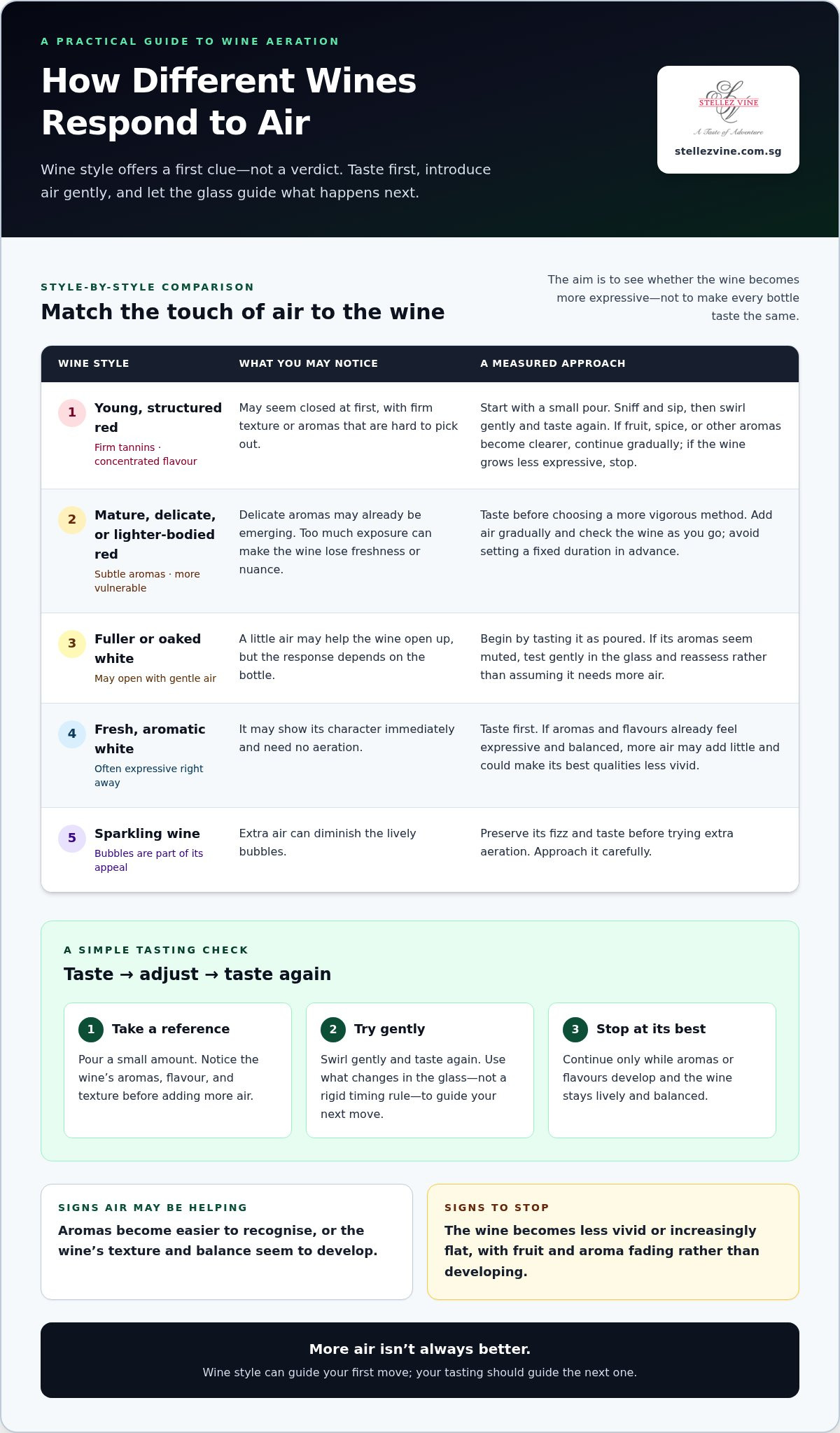
Wine style offers a useful first clue, not a verdict. Young, structured reds with firm tannins can sometimes seem closed at first, while older or lighter-bodied wines may be more vulnerable to losing delicate aromas. Some full-bodied or oaked whites can also benefit from a little air. Approach sparkling wines carefully, since extra air can diminish the lively bubbles that are part of their appeal.
Don’t decide whether to aerate by grape colour alone; the wine’s structure, age, condition, and aromas in your glass matter more. Look for muted aromas or flavours that seem tightly wound, then test gently. If the wine already smells expressive and its flavours feel balanced, more air may add little and could make its best qualities less vivid. The chemistry of aeration can influence tannins and aromatic compounds, as described in Understanding Oxygen's Interplay with Wine, but your own tasting is the practical guide.
When a young, structured red may welcome air
A young red with noticeable tannin and concentrated flavour may initially feel firm, with aromas that are hard to pick out. Pour a small amount into a glass, take a first sniff and sip, then swirl gently and taste again. This comparison helps you decide whether to expose more wine to air. Some South African reds may fit this style, but their origin alone doesn’t mean they need aeration.
Notice what changes, not just whether the wine seems “softer.” Fruit, spice, and other aromas may become easier to distinguish, or the texture may feel more integrated. If the wine grows less expressive, stop adding air. A broad description such as “full-bodied red” can guide your first move, but the first taste should guide the next one.
Delicate reds can be less forgiving. Age and condition matter: a mature bottle may have subtle aromas that are already emerging, while a lighter-bodied red may lose freshness if left exposed for too long. Taste before choosing a more vigorous method, then introduce air gradually and return to the glass to check its progress. Avoid setting a fixed duration before you know how the wine responds.
Why delicate bottles call for a lighter touch
Positive evolution means new aromas or flavours become clearer while the wine remains lively and balanced. If a wine seems increasingly flat, with fruit and aroma fading rather than developing, it may be past its best expression. That change alone doesn’t identify a fault, but it’s a reason to stop aerating. Keep tasting in small steps and let the bottle show you its pace.
Whites deserve the same attention. A fuller, oaked white may open up with gentle air, while a fresh, aromatic white may show its character immediately and need none. For sparkling wine, preserve its fizz and taste before trying extra aeration. To explore different styles side by side, browse Stellez Vine Singapore's curated wine selection and let each bottle’s character shape your approach.
Four Proper Wine Aeration Techniques Compared
The right method is the one that lets you observe the wine’s response and stop when it tastes as you prefer. Begin with a glass; no gadget is essential. Use the table to match the method to how much control you want, how you’re serving, and whether you need to handle sediment.
These are practical differences, not a ranking. Proper wine aeration techniques aren’t defined by a particular tool: a glass can be enough to discover whether more air helps. The wine’s aroma, flavour, and texture in your glass matter more than the equipment.
Start simply with a glass or a careful pour
Pour a small amount into a glass and taste it before doing anything else. Swirling spreads the wine across the inside of the bowl, increasing its contact with air. Start with a gentle movement, then pause to smell and sip. A careful pour into the glass is another modest first step. Keep the rest of the bottle untouched while you compare how the sample develops.
Use the same glass to track changes: notice whether aromas become clearer, flavours seem more open, or the wine loses freshness. Small pours make it easier to adjust without exposing the whole bottle at once. Suitable glassware can make tasting more comfortable, but specialist glassware isn’t required to begin.
Choose a decanter or aerator with intention
A decanter suits a meal or gathering where you’re serving wine over time, and it can help separate wine from sediment when poured carefully. A pour-through aerator increases air exposure as wine enters the glass. Because these methods expose wine differently, neither guarantees a particular result. Test a small serving first, then decide whether to use the same approach for the rest.
Choose based on the bottle and the occasion, not the assumption that equipment delivers a better glass. If you’re exploring wines from different regions, Stellez Vine’s curated wine selection offers a starting point for tasting how different bottles respond to air.
Does Every Bottle Need Aeration? Avoid These Common Mistakes
No. Aeration is optional, and more air isn’t automatically better. A wine that already smells expressive and tastes balanced may need nothing beyond a pour. Others may change quickly once exposed. The bottle’s age, style, and condition all shape its response, so treat fixed timings as rough suggestions rather than instructions. Taste periodically and stop when the wine is showing well.
A common mistake is to leave wine in a decanter or open bottle unattended, expecting it to improve on its own. It may evolve while you’re away, and you could miss the point when its aromas and flavours are most vivid. Check it as you serve, especially if it’s older, delicate, or already expressive. The same care applies when choosing proper wine aeration techniques: match the amount of air to what you notice, not to a timer.
Signs you may be giving a wine too much air
Pay attention if the wine’s aromas begin to fade or its flavours seem less vivid over time. If possible, compare it with a fresh pour from the bottle. That side-by-side taste can help you tell whether air has brought out more detail or whether the wine seems to be losing its lift. Stop exposing it if the fresh sample is more appealing.
One cue alone can’t diagnose a fault. A muted aroma might reflect the wine’s style or serving conditions; an unusual smell doesn’t prove spoilage by itself. Consider the overall picture, including aroma, flavour, and how the wine changes in the glass. Aeration is a serving choice, not a reliable test for whether a bottle is sound.
Common aeration myths to leave behind
Myth: every red needs decanting. Red wines vary widely, and plenty are ready to enjoy straight from the bottle. Decant when it suits the wine or helps you serve it, not simply because it’s red. Myth: opening a bottle early guarantees aeration. With little wine surface exposed through the neck, opening alone doesn’t create the same contact as pouring into a glass or decanter.
Most importantly, air can’t restore a wine that’s faulty or past its best. Cork taint, spoilage, or faded condition calls for a different judgement, not more time in a decanter. Don’t confuse serving with storage, either: aeration concerns wine you’re preparing to drink, while storage is about preserving bottles over time. Stellez Vine offers wine storage appliances, including wine fridges from Eurocave, Kadeka, and Liebherr, for customers considering a dedicated storage solution.
Keep the approach simple: taste first, add air only if the wine seems to benefit, and check again rather than walking away. Ready to put that measured approach into practice? Explore Stellez Vine’s curated wines and discover a bottle to savour.
A Simple Three-Step Routine for Aerating Wine with Confidence
Make the glass your guide, not a stopwatch. This routine keeps the decision in your hands: assess the wine, introduce air gradually, then taste again. It works with a glass and a small pour, so you can learn how a bottle responds before choosing a more intensive method. The best result is the point at which you enjoy the wine, not a prescribed number of minutes.
Step one: assess the wine before choosing a method
Pour a small sample and notice its aroma, flavour, and overall impression. Does it seem closed or tightly wound, or are its fruit and other aromas already easy to recognise? Consider the style, too. A structured wine may invite a gentle experiment; a delicate or already expressive one calls for restraint. Choose the least intensive method that could address what you actually notice.
Step two: aerate gradually
Start with a gentle swirl in the glass, or let the small pour sit briefly while you pay attention to its aroma. Avoid treating the first sniff as a final verdict. If the wine still seems restrained, swirl again or pour another small sample with a little more movement. Move to a decanter or aerator only if tasting suggests that a stronger approach may help. You’re adjusting exposure, not following a mandatory sequence of tools.
Step three: taste again and serve
Return to the glass and compare it with your first impression. Look for aromas that have become clearer, flavours that feel more expressive, or a texture you find more enjoyable. If the wine seems flatter or less vivid, stop. Serve it when it’s showing at its best for you, whether that’s immediately or after a little air. There’s no universal finish line.
Keep a short note if you’re trying an unfamiliar style: record the wine, the method, and what changed. The next time you open a similar bottle, your own observations offer a better starting point than a fixed timer. For a dinner party, choose a wine that suits the food and guests first; aeration is a serving adjustment, not a substitute for a thoughtful bottle choice.
These proper wine aeration techniques are meant to build confidence through tasting, not turn serving into a formal exercise. Explore Stellez Vine’s curated wines from around the world and discover a bottle to enjoy at your next table.
Make Your Next Glass a Discovery
Let your next bottle be an invitation to notice something new. Try a small pour before changing anything, and pay attention to the aromas and flavours you enjoy. Over time, those observations will help proper wine aeration techniques feel less like rules and more like confident choices tailored to the wine and occasion.
Begin with a wine that sparks your curiosity. Stellez Vine’s curated selection brings together wines from established regions including South Africa, Thailand, Italy, France, and Argentina, with wine glassware available alongside the bottles. Choose a style you haven’t explored, serve a small taste, and see what the glass reveals.
Explore Stellez Vine’s curated wine selection and find a bottle for your next meal or gathering. Taste with curiosity, trust your own palate, and enjoy discovering where each wine takes you.
Frequently Asked Questions
How long should you aerate wine before drinking it?
There’s no set duration that suits every bottle. Pour a small taste, then check again as you prepare to serve rather than leaving the wine unattended to meet a timer. A young, firmly structured red may change as it sits in a glass, while a delicate bottle could lose its appeal sooner. Use proper wine aeration techniques to guide tasting, not as a countdown to follow.
Can you aerate white wine?
Yes. A fuller-bodied or oaked white may become more expressive after a little air, though plenty of whites are ready to enjoy as poured. Try a small sample at its usual serving temperature, then swirl gently and compare. If the aromas become clearer and the palate remains lively, continue with that light approach. If the wine already shows fresh fruit, citrus, or floral notes distinctly, extra aeration may not add anything you want.
Is decanting the same as aerating wine?
No. Aerating means exposing wine to air, while decanting means transferring it from its bottle into another vessel. Decanting can aerate wine as it’s poured, but it can also serve another purpose: separating the liquid from sediment. For example, if an older red has a deposit, careful pouring into a decanter can leave much of it behind. A wine can be aerated without being decanted, and decanting doesn’t guarantee a better taste.
Can you aerate wine without a decanter?
Yes. Pour a small serving into a glass and gently swirl it, or pour between clean glasses if you want to expose it to more air. Start with a modest amount so you can compare it with wine that hasn’t been handled the same way. This simple test needs no special equipment. If the aroma or flavour becomes less appealing, stop rather than aerating the rest of the bottle.
Can you aerate sparkling wine?
You can expose sparkling wine to air, but it’s usually best to avoid vigorous aeration because the bubbles are part of its character and can dissipate. Open and pour gently, then taste before trying anything further. If you want to assess its aromas, let a small pour rest in the glass briefly instead of shaking, splashing, or transferring the bottle to a broad vessel. Keep the wine chilled as you serve it.
What happens if you aerate wine for too long?
Too much air can leave a wine’s aromas less vivid and its flavours flatter, reducing the freshness or detail you enjoyed at first. The change may be easier to notice if you kept a small sample aside before aerating. Compare the two, but don’t treat a single muted aroma as proof of a fault. Wine style, serving temperature, and condition can all affect what you perceive.
Does aerating wine make it taste better?
Not necessarily. Aeration may help a wine’s aromas or flavours become more noticeable, but improvement depends on the bottle and your own palate. A wine that already tastes balanced may be more enjoyable without extra exposure, while another may benefit from a gentle swirl. Compare a fresh pour with a sample that has had air, and choose the one you prefer. Aeration changes the experience; it doesn’t guarantee a better wine.


Comments