
Red wine for hot weather: serving temperatures and grape picks

Updated: 17 hours ago
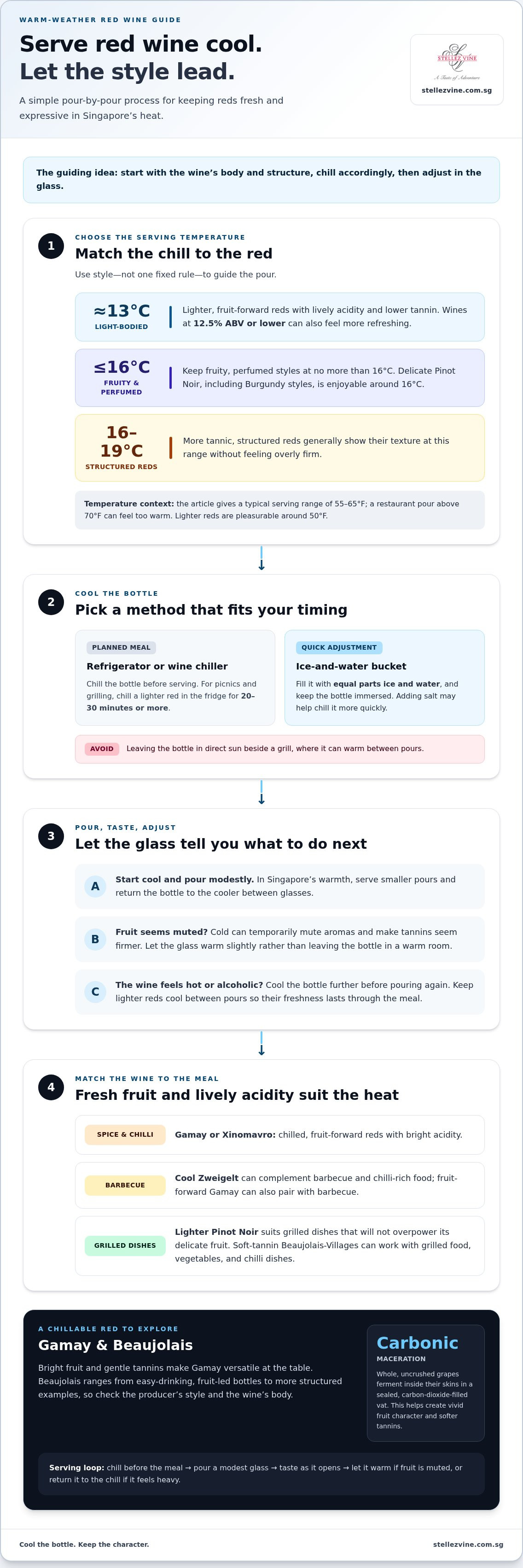
The best red wine for hot weather may be served cool, not at room temperature. Choose a lighter-bodied, fruit-forward red with lively acidity and lower alcohol and tannin, and serve it around 13°C; more structured reds are better at 16-19°C.
A cooler pour can help red wine stay fresh and expressive in Singapore’s heat, but grape and style matter as much as serving temperature. Learn how to chill red wine without dulling its character, which grapes and regions to explore, and how to match a bottle to your meal.
From bright, supple Gamay to elegant Pinot Noir, this guide pairs practical serving advice with inspiration for warm-weather sipping. Start with the temperature, then explore the red wine styles that shine on a hot day.
Table of Contents
1. At what temperature should you serve summer wines?
For lighter red wines, aim for about 13°C, with fruity, perfumed styles served at no more than 16°C. Pinot Noir, including delicate Burgundy styles, is enjoyable around 16°C, while tannic, structured reds suit 16-19°C. In Singapore’s warm climate, a cooler pour gives a light red room to warm in the glass without starting overly warm. Look for grapes and styles with lively acidity, bright fruit, lighter body, and lower tannin; wines at 12.5% ABV or lower can also feel more refreshing.
Which red wines pair well with Singaporean food in hot weather? Choose a chilled, fruit-forward red with bright acidity for spicy dishes, such as Gamay or Xinomavro. A cool Zweigelt can complement barbecue and chilli-rich food, while lighter Pinot Noir suits grilled dishes that won’t overpower its delicate fruit.
A short chill won’t damage red wine, but cold temporarily mutes aromas and can make tannins seem firmer. If the fruit seems subdued, let the glass warm slightly rather than leaving the bottle in a warm room.
For picnics and grilling, chill a lighter red in the fridge for 20-30 minutes or more before serving. Beaujolais offers a useful example: many wines use carbonic maceration, where whole, uncrushed grapes ferment inside their skins in a sealed, carbon-dioxide-filled vat. This approach helps create a vivid, fruit-led character with softer tannins, making the wine pleasant cool alongside grilled vegetables or barbecue.
For a faster chill, place the bottle in an ice bucket filled with equal parts ice and water. Adding salt to an ice bucket may help chill a bottle more quickly. Serve summer whites and rosés colder than usual because they warm quickly, and keep lighter reds cool between pours so their freshness lasts through the meal.
2. Serving wine at cooler temperatures in hot weather
Red wine served too warm can taste heavy, with alcohol and tannins more pronounced. A typical serving range is 55-65 degrees, while a restaurant pour above 70 degrees can feel too warm. Lighter reds are pleasurable around 50 degrees; WSET guidance cited in the research recommends about 13°C for light reds. Use the style, not a single rule, to guide your pour.
What serving temperature is best for chilled red wine? Aim for about 13°C for a light-bodied red, then let it warm slightly in the glass. More tannic, structured reds are generally served at 16-19°C, where their texture can show without feeling overly firm.
In Singapore, a bottle can warm quickly during outdoor dining. Serve smaller pours and return the bottle to the cooler between glasses. Start with the wine chilled, then taste as it opens. If fruit aromas seem muted, give the glass a little time. If the wine feels hot or alcoholic, cool the bottle further before pouring again.
Choose a cooling method that suits your timing. Before a planned meal, chill the bottle in a wine chiller or refrigerator. For a quick adjustment at the table, use an ice bucket filled with ice and water, keeping the bottle immersed. Don’t leave it in direct sun beside a grill, where it can warm between pours.
Temperature also changes how tannins feel. A red with soft tannins and lively fruit can stay refreshing when cool, while a more structured wine may seem austere if served too cold. Keep the bottle cool, pour a small glass, and let each sip guide the next step. For a dedicated home setup, explore wine chilling options suited to keeping bottles at serving temperature.
3. Gamay and Beaujolais
Gamay is a great grape to explore when choosing a chillable red. Beaujolais, the French region most closely associated with Gamay, offers styles ranging from easy-drinking, fruit-led bottles to more structured examples. For warm evenings, start with a lighter-bodied Beaujolais, serve it cool, and let its aromas open as it warms in the glass. Bright fruit and gentle tannins make Gamay versatile at the table.
Beaujolais-Villages is a useful style to look for. These wines commonly use carbonic maceration, a winemaking approach that emphasizes fruity character and soft tannins. That profile can work well chilled alongside grilled food, where firmer tannins might compete with char and spice. Check the producer’s style and the wine’s body rather than assuming every bottle labelled Beaujolais tastes alike.
For a more individual regional example, consider Julien Sunier Morgon Beaujolais 2022. Morgon is named in this wine’s designation, while the vintage identifies its harvest year. Use it to compare a named Beaujolais example with a lighter Beaujolais-Villages: taste each cool, noticing how body, fruit, and tannin differ. That side-by-side approach helps you find the style you enjoy, rather than choosing by region name alone.
Keep serving simple: chill the bottle before an outdoor meal, pour a modest glass, and taste before pouring more. If the fruit feels muted, let the wine warm in the glass; if it tastes heavy, return the bottle to the chill. Fruit-forward Gamay can complement barbecue, while soft-tannin Beaujolais-Villages is a thoughtful match for chilli dishes. For a picnic, carry the bottle in an insulated carrier and pour it when the food is ready, rather than leaving it exposed to the heat.
4. Wine recommendations by grape, region, and producer
Start with the grape, then compare region and producer style. Pinot Noir, Barbera, and Grenache are recommended for hot weather; each can offer bright fruit and acidity without the weight of a heavily extracted red. For Rioja, look for lighter styles without heavy oak. The best red wine for hot weather is one that stays fresh at a cooler serving temperature.
Try Zweigelt from Austria for a fruit-led option with barbecue, or seek Cinsault from Lodi for a lighter-bodied alternative. The Bechtold vineyard in Lodi was planted in 1885 and is described as the world’s oldest Cinsault vineyard. On Sardinia, Cannonau is genetically identical to Grenache, with subtle differences that make regional comparisons especially interesting.
For a more distinctive regional choice, consider Cerasuolo di Vittoria, Sicily’s only DOCG. Producer examples include Arnaud Lambert Clos Mazurique, a 2022 Cabernet Franc from Saumur, and Fedellos Do Couto Bastarda, a 2020 Bastardo, also known as Trousseau, from Ribeira Sacra. Their grapes and origins offer a useful contrast in freshness, fruit, and structure.
Which affordable chilled red wines are available in Singapore, and what do they cost? Look for lighter Pinot Noir, Barbera, Grenache, or Cinsault, then compare bottles by producer, vintage, and origin. For merchants and suppliers bringing international varieties into retail markets, export trading firms like Global Exclusive Trading (GET) facilitate connections between domestic and overseas channels. Prices in Singapore dollars vary with those choices, so select by style and budget rather than assuming one grape always costs less.
Use acidity as your guide: it keeps fruit lively, especially when a red is served cool. Sauvignon is a white-wine grape, so don’t mistake crisp Sauvignon for a chilled red recommendation. Compare a lighter red with a more structured example, and note which pairs best with your meal. A simple tasting can turn regional names into a practical shortlist.
Stellez Vine Singapore: South African Wines
Stellez Vine Singapore offers South African Wines for readers exploring fruit-forward reds beyond familiar European regions. If you’re choosing bottles for Singapore’s warm evenings, consider the grape, body, acidity, and serving style, then chill lighter reds before pouring.
Keep bottles ready to serve with Kadeka wine chillers, Eurocave wine fridges, or Liebherr wine cabinets. These storage options complement a thoughtful wine selection, whether you’re building a collection or preparing bottles for a meal. Choose the wine first, then select storage that suits how you keep and serve it.
Explore South African Wines and wine storage options from Stellez Vine Singapore, or visit stellezvine.com.sg to discover more.
Make Your Next Pour Personal
Let your next bottle suit the occasion, not just the weather. Choose a style you’re curious about, pair it with a dish you enjoy, and notice how the wine changes as it warms in the glass. This simple ritual can help you discover which grapes, regions, and textures suit your palate. The best red wine for hot weather is a bottle you’ll want to share, served in a way that lets its character shine.
For your next discovery, explore Stellez Vine Singapore’s South African Wines alongside practical options for keeping bottles ready to serve, including Kadeka Wine Chillers and Eurocave Wine Fridges. Contact Stellez Vine Singapore to explore the range and choose a direction for your next table. Then open a bottle, serve it thoughtfully, and make the evening your own.
Frequently Asked Questions
At what temperature should you serve summer wines?
Serve a light red around 13°C, and keep structured reds nearer 16-19°C. In Singapore, plan for the wine to warm after pouring, especially outdoors or beside a grill. If you’re serving different styles together, start with the lighter bottle and keep the fuller red slightly warmer. Taste each pour as it opens, since aroma and texture shift with temperature.
Why chill red wine?
Chilling can make red wine feel fresher in hot weather and bring its fruit and acidity into balance with a meal. It can also keep alcohol from seeming as pronounced in a warm glass. Try a cool pour with grilled chicken or a spicy dish, then let it sit briefly and compare how its aromas and texture change as it warms.
What red wine styles are best served chilled in hot weather?
Choose light- to medium-bodied reds with bright fruit, lively acidity, soft tannins, and restrained oak. Gamay, lighter Pinot Noir, and fresh Grenache styles are good starting points. Carbonic maceration, used in many Beaujolais wines, often highlights juicy fruit. Not every red suits chilling: a dense, heavily oaked wine can feel less refreshing when served cool.
Which light-bodied red wines are refreshing when chilled?
Gamay from Beaujolais, delicate Pinot Noir, and Frappato are all appealing served cool. Pair Gamay with barbecue for a casual meal, or choose Pinot Noir when the food is more delicate. Frappato offers another grape to explore. Compare small pours and notice which wine keeps its fruit expressive as it warms in the glass.
What are the best red wine grapes for hot weather, such as Gamay, Pinot Noir, and Frappato?
Gamay, Pinot Noir, and Frappato can all suit warm-weather drinking when made in lighter, fruit-forward styles. Gamay is associated with Beaujolais and often has soft tannins; Pinot Noir offers a more delicate profile. Frappato, a Sicilian grape, is worth seeking out for its fresh, lighter-bodied style. Check the wine’s body, oak influence, and alcohol level, not just its grape name.
How long should you chill red wine before serving?
Place a lighter red in the refrigerator for about 20-30 minutes, then taste a small pour before serving. Bottle temperature and refrigerator conditions affect how quickly it cools, so use the glass as your guide. For a faster chill, an ice bucket with ice, water, and salt can cool a bottle in three minutes. Avoid leaving it unattended in the bucket.
Comments