
Natural Wine and How It Differs From Organic and Biodynamic Wine

Natural wine is a winemaking approach, not a universally accepted category with one set of production standards. To understand what natural wine is, look for wines made with minimal intervention, often using native yeasts and little or no added sulphur dioxide. They may also be bottled unfined and unfiltered, which can leave a wine cloudy or with harmless sediment.
That hands-off approach can make natural wine expressive and distinctive, but it doesn’t automatically make it organic, biodynamic or suited to long ageing. It’s easy to see why the terms get blurred: they all point to choices in the vineyard or winery, yet they describe different things. This guide explains how natural wine differs from organic and biodynamic wine, what clues to look for, and how to think about its ageing potential. You’ll also learn why some bottles are best enjoyed young, while others can develop over time, so you can choose with greater confidence for a Singapore table or cellar.
Table of Contents
Natural vs Organic vs Biodynamic: What's the Difference?
These terms describe different decisions, not a single quality scale. Organic and biodynamic refer mainly to vineyard practices; natural winemaking also emphasizes choices in the cellar.
Organic Grape Growing and Certification
Organic grape growing follows farming practices that avoid synthetic pesticides and herbicides, while certification verifies compliance with a defined standard. It gives buyers documented information about how the grapes were grown, but doesn’t determine how the wine is fermented, treated, clarified or filtered. An organically certified wine may still use commercial yeast or cellar treatments, so vineyard credentials alone don’t tell you how the finished wine was made.
Indigenous Yeast and Handpicked Grapes
Indigenous yeast occurs naturally on grapes and in the winery, and can start fermentation without selected commercial yeast. Producers may also handpick grapes to sort bunches and avoid rough machine handling. These choices can shape fermentation and preserve variation in the fruit. They offer clues about the winemaker’s approach, but neither practice alone makes a wine natural or guarantees a particular taste.
Biodynamic grape growing is a form of organic viticulture that adds a connected farming calendar and preparations. Practices can include compost, herbal sprays and applications timed to lunar cycles. The approach treats the vineyard as an interacting system rather than focusing only on individual treatments. Biodynamic certification can signal a defined farming method, while cellar choices still influence the wine’s final character.
Indigenous grape varieties are not the same as indigenous yeast: one describes the vine, the other the organism that ferments the wine. A producer may use local grapes in natural winemaking, but a native variety alone doesn’t reveal how the wine was made. Techniques can include skin contact for white grapes, which produces an orange-style wine, or fermentation and ageing in amphorae. Look for clues such as “unfined” or “unfiltered,” and consider the farming and cellar methods together.
What is natural wine?
Natural wine has no universally accepted definition; the term generally refers to wine made with minimal intervention in the vineyard and cellar. It hasn’t been established as healthier than conventional wine. Lower sulphite levels may reduce reactions for some sensitive people, but evidence doesn’t show that natural wine causes less severe hangovers.
Defining Natural Wine
In its simplest form, natural wine is fermented grape juice with no additives. Because producers don’t follow one universal standard, the term can describe different choices in farming and winemaking. One winemaker’s definition requires organically grown grapes, no added yeast enzymes, acid, tannins or fining agents, less than 30 ppm total sulphur, and no filtration. Those details help readers understand what a particular producer means by “natural.”
Natural Winemaking Methods
Natural winemaking often begins with grapes grown without synthetic pesticides or herbicides, followed by spontaneous fermentation with native yeast. Producers may avoid commercial yeast, limit sulphur dioxide, and bottle the wine without fining or filtration. These choices can preserve texture and aroma, but also affect appearance: an unfined, unfiltered wine may look cloudy or contain harmless sediment. A still wine may also develop a slight fizz.
Cellar choices can extend beyond fermentation. Some winemakers use amphorae, clay vessels traditionally associated with wine production, or concrete eggs for fermentation and ageing. Others use skin contact with white grapes to make orange wine. These methods shape texture and flavour, but no single vessel or technique defines every natural wine. Label terms such as “minimal intervention” or “unfined/unfiltered” can offer useful clues.
Georgia’s traditions have a distinct place in the discussion. A 2026 amendment to its law on “Vine and Wine” defines natural wine as wine made through spontaneous fermentation of organically grown grape must. Some legal definitions may set limits on sulphur dioxide levels. This gives readers a specific national definition to compare with the broader, varied use of “natural” elsewhere.
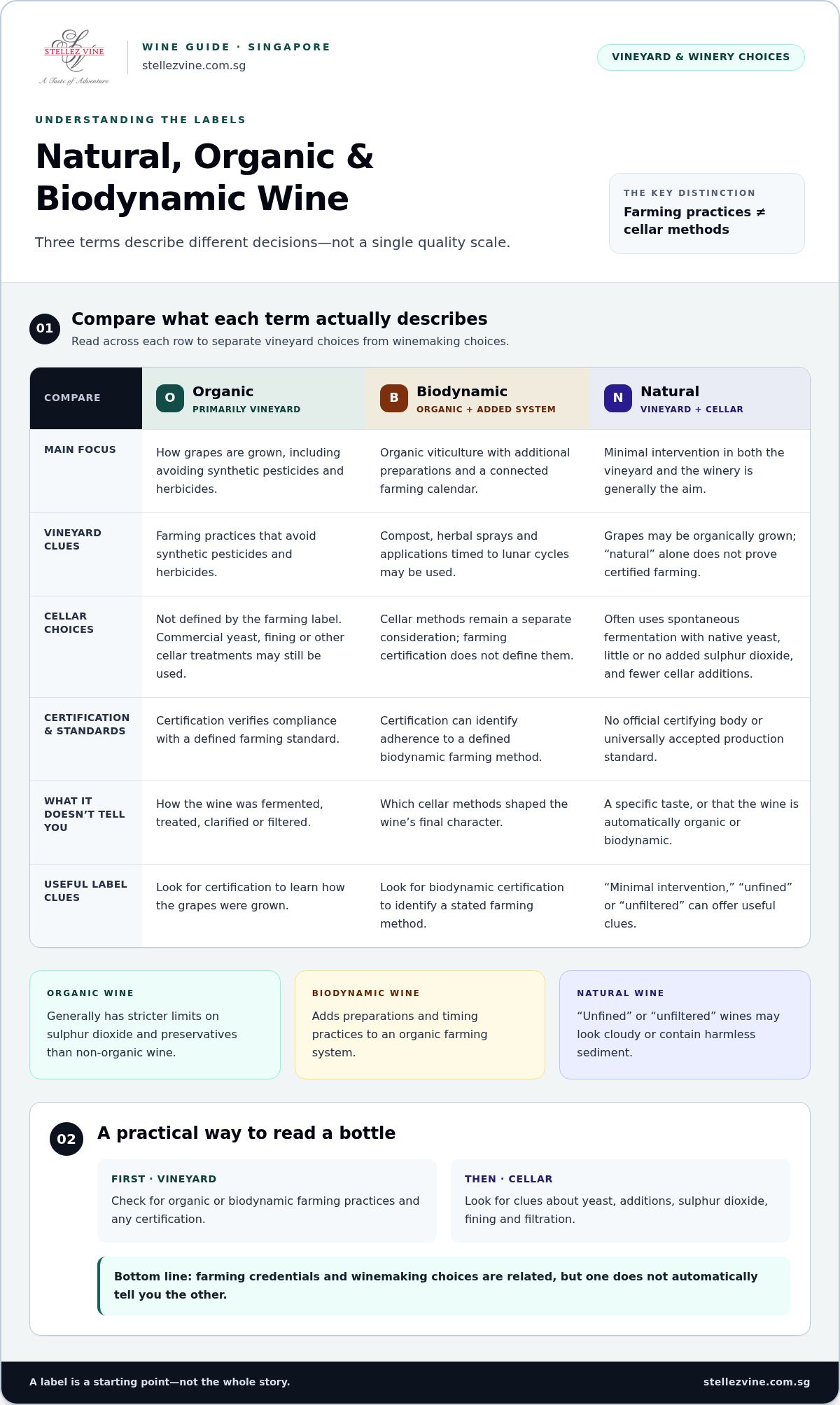
Differences between natural, organic and biodynamic wine
Compare vineyard practices and winery methods separately: organic and biodynamic describe farming systems, while natural winemaking usually includes cellar decisions. This distinction explains why an organic wine can still be made with additives, and why “natural” doesn’t automatically mean certified organic.
Organic: Organic certification focuses on how grapes are grown, including restrictions on synthetic chemicals. It doesn’t dictate every step inside the winery. Organic grape growing alone can’t prevent commercial yeast, fining agents or other winemaking additions. Organic wine generally has stricter limits on sulphur dioxide and preservatives than non-organic wine.
Biodynamic: Biodynamic wine comes from vineyards farmed through an organic system with additional preparations and timing practices. Producers use compost and herbal sprays, with applications scheduled according to lunar cycles. The approach draws on ideas Rudolf Steiner presented in the early 20th century. Preparation 502, for example, is made in stags’ bladders. Certification can identify adherence to a biodynamic standard, while cellar methods remain a separate consideration.
Natural: Natural wine has no official certifying body or universally accepted production standard. Producers generally aim for minimal intervention in both vineyard and winery, with little or no added sulphur dioxide and fewer cellar additions. An organic or biodynamic vineyard may supply grapes for natural winemaking, but farming certification alone doesn’t prove that the wine was made with minimal intervention.
Use the label as a starting point, not the whole story. “Organic” points to farming; “biodynamic” signals a specific farming philosophy and practices; phrases such as “minimal intervention” or “unfined/unfiltered” offer clues about cellar choices. A bottle may combine these approaches, such as biodynamic farming with spontaneous fermentation, or certified organic grapes with conventional cellar techniques. For Singapore shoppers, separating vineyard credentials from winery methods makes comparisons clearer and helps match a bottle’s production choices to personal preferences.
Natural wine ageing potential
Natural wines don’t share one ageing timeline. Some can develop for years, while many are made to be enjoyed early. Minimal intervention can leave more active yeast or bacteria in the bottle, which may affect stability. Ageing potential depends on the wine’s balance and condition, not simply on whether it is natural.
Start with the winemaking choices. Minimal clarification and filtration can leave a wine less stable, while active yeast or bacteria may trigger secondary fermentation in the bottle. This can create unexpected fizz or off-flavours. Cloudiness or sediment alone doesn’t mean a wine has spoiled, but changes in aroma and taste may signal that its character has shifted.
Consider how the producer handles the wine and the style it is meant to have. A carefully made, stable bottle may evolve over time, developing different aromas and textures. Natural wines from less careful producers are usually best enjoyed young. Little or no added sulphur dioxide can mean less protection against oxidation, so bottling practices and the wine’s condition matter alongside grape variety.
Storage also affects the result. Keep bottles away from heat, light and sharp temperature changes, which can accelerate unwanted changes. A wine fridge can help maintain a more controlled environment than a warm kitchen or sunlit shelf. For a bottle intended for ageing, stable storage matters more than simply leaving it untouched for longer.
Vineyard practices, such as avoiding synthetic pesticides, tell you about grape growing, not how long the finished wine will mature. Likewise, “natural” on a label isn’t an ageing recommendation. Read producer notes for clues about style, then choose whether to open the bottle young or hold it. Explore South African wines as you consider bottles for your table or collection.
Stellez Vine Singapore: South African Wines
Stellez Vine Singapore offers South African Wines for readers ready to explore distinctive bottles after learning how natural, organic and biodynamic methods differ. Use the vineyard and cellar details on a wine’s label to guide your choice, then consider when and how you plan to enjoy or store it.
If you’re building a collection, storage is part of the experience. Stellez Vine Singapore also offers Kadeka Wine Chillers, Eurocave Wine Fridges and LIEBHErr Wine Cabinets for keeping bottles in a dedicated storage environment.
Explore South African Wines and wine storage options from Stellez Vine Singapore to continue your discovery.
Choose Your Next Bottle with Confidence
Now that you understand what natural wine is, let curiosity guide your next choice. Start with a bottle whose style appeals to you, then explore its origin, grape and producer. If you’re considering South African Wines for your table or looking for storage for your collection, Stellez Vine Singapore offers South African Wines, Kadeka Wine Chillers and Eurocave Wine Fridges.
Let your preferences lead: choose a lively bottle to enjoy soon, or create a dedicated place for wines you plan to keep. The pleasure lies in discovering what suits your palate and the moments you want to savour.
Contact Stellez Vine Singapore to explore your next wine choice. Make room for a new favourite and enjoy the discovery.
Frequently Asked Questions
So what do natural wines look and taste like?
Natural wines vary in appearance and flavour because producers use different grapes and cellar methods. A bottle may be clear or cloudy, with harmless sediment at the bottom; a still wine can also have a slight spritz. Flavours may be bright, savoury, earthy or fruit-led. Pour gently if sediment is present, and judge the wine by its aroma and taste, not clarity alone.
What does “natty” in natty wine stand for?
“Natty” is an informal shortening of “natural” used in conversation about natural wine. It doesn’t refer to a separate production method or certification. A wine bar might describe a bottle as natty, while its label may instead say “minimal intervention” or “unfined.” Treat the nickname as a style cue, then look for details about grape growing and winemaking to understand the bottle.
How is natural wine made?
Natural wine is generally made by fermenting grape juice with minimal additions and handling. Producers may start with grapes grown without synthetic pesticides or herbicides, let native yeast begin fermentation and limit cellar treatments. Some avoid fining and filtration before bottling. The exact methods vary, so two wines described as natural can differ in texture, clarity and flavour.
What ingredients and additives are allowed in natural wine?
There’s no universal natural-wine standard listing one set of permitted ingredients or additives. Many producers aim to use few or none, and some avoid commercial yeast, fining agents, acidifiers and powdered tannins. Sulphur dioxide occurs naturally during fermentation and may also be added as a preservative. Producers set their own criteria: one may use a low sulphur limit, while another follows different practices.
What are the rules or certification standards for natural wine?
Natural wine has no single official certifying body or universal production standard. Private groups and producer associations set voluntary criteria. For example, France’s Vin Méthode Nature designation, introduced in 2020, includes vineyard and cellar requirements, with a final sulphite level no higher than 30 mg/l. That designation is one framework, not a global definition, so label wording and the producer’s stated practices remain useful clues.
How does natural wine differ from organic and biodynamic wine?
Organic describes grape-growing requirements, while biodynamic farming adds a system of preparations and calendar-based practices. Natural wine usually refers to a broader low-intervention approach that includes cellar decisions such as fermentation and filtration. A wine can combine these approaches, but organic or biodynamic certification doesn’t establish how it was made in the winery. Compare the vineyard credentials with the producer’s description of cellar methods.



Comments