
How to Know When a Wine Is Ready to Drink by Taste

A wine’s peak is a window, not a deadline. To know when a wine is ready to drink, taste for balance: its aromas should be expressive, its flavours developed and its finish in harmony with its structure. Learning how to know when a wine is ready to drink means noticing whether the fruit feels muted and tannins grip tightly, or whether the wine has begun to fade.
It’s natural to wonder whether to open a bottle now or save it for a special occasion. Start by tasting its flavour balance and considering how its style and storage shape its development. Notice whether evolving tannins suggest a red is opening up or still feels closed, then decide whether to savour the bottle now or hold it under suitable conditions.
Table of Contents
How do you know when a wine is ready to drink?
A ready wine brings its aromas, flavours and finish into balance. Taste also reveals whether the bottle needs time or has begun to fade.
Signs of Readiness and Aging
A wine is ready when its fruit, developed flavours and finish feel harmonious. Everyday wines often drink well within three to five years of vintage, while firm structure and muted aromas can signal youth. A wine past its prime may have little flavour left, with aromas that outlast its short, fading finish.
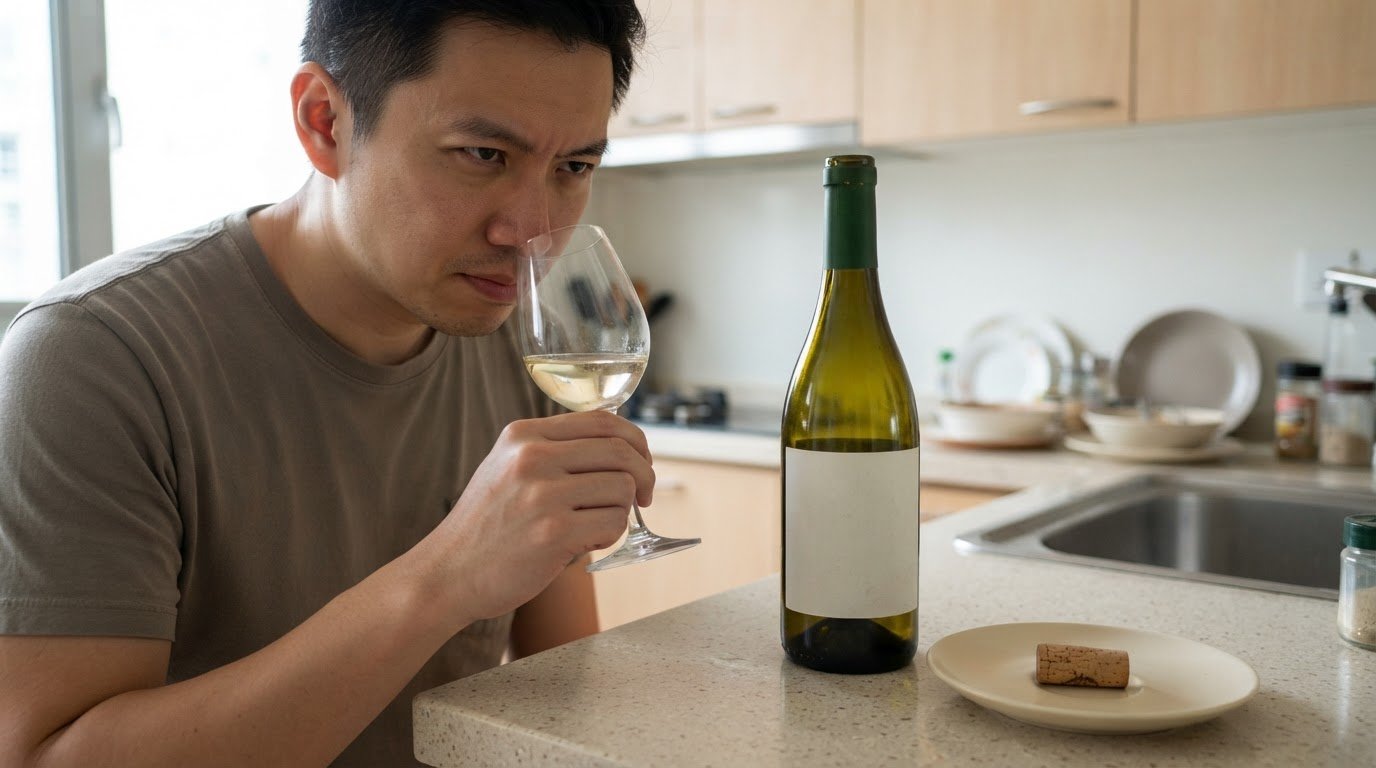
After opening, reseal the bottle and refrigerate it to slow oxidation; how long it remains enjoyable varies with style and air exposure. Cork taint can smell musty or like damp cardboard, while oxidation can bring bruised-apple notes and dulled fruit.
Finding a Wine’s Drinking Window
A drinking window is a period for enjoying a wine, not a single deadline. Look for the producer’s technical sheet, which may describe the ideal tasting period, and use the label’s vintage to interpret that guidance. Use the harvest year, not the year you bought the bottle, when estimating its age.
Factors That Shape Drinking Readiness
Grape variety, region, vintage and winemaking all shape how quickly a wine develops. Light, aromatic Sauvignon Blanc is generally best within one to two years, while oaked Chardonnay can develop for five to ten years. Climate, ripeness and choices such as oak ageing influence structure and longevity, so bottles of the same variety can mature differently.
Decanting and Letting Wine Breathe
Decanting exposes wine to air and can help a young, firm red open up; it can also separate sediment from an older bottle. There’s no universal breathing time: pour a small taste, then reassess periodically. Delicate mature wines may lose aromas quickly, so serve them soon after opening rather than leaving them in a decanter.
Balancing primary and tertiary flavours
Primary flavours come from the grape, while tertiary flavours emerge as wine develops in the bottle. Recognising both helps you judge whether youthful character still dominates or has integrated with more mature notes.
Primary aromas often suggest fresh fruit, flowers or herbs. For example, a young Sauvignon Blanc may show citrus and green-herb notes. As some wines develop, they gain tertiary aromas such as dried fruit, earth, leather or savoury spice. These qualities add layers; they don’t automatically mean a wine is past its best.
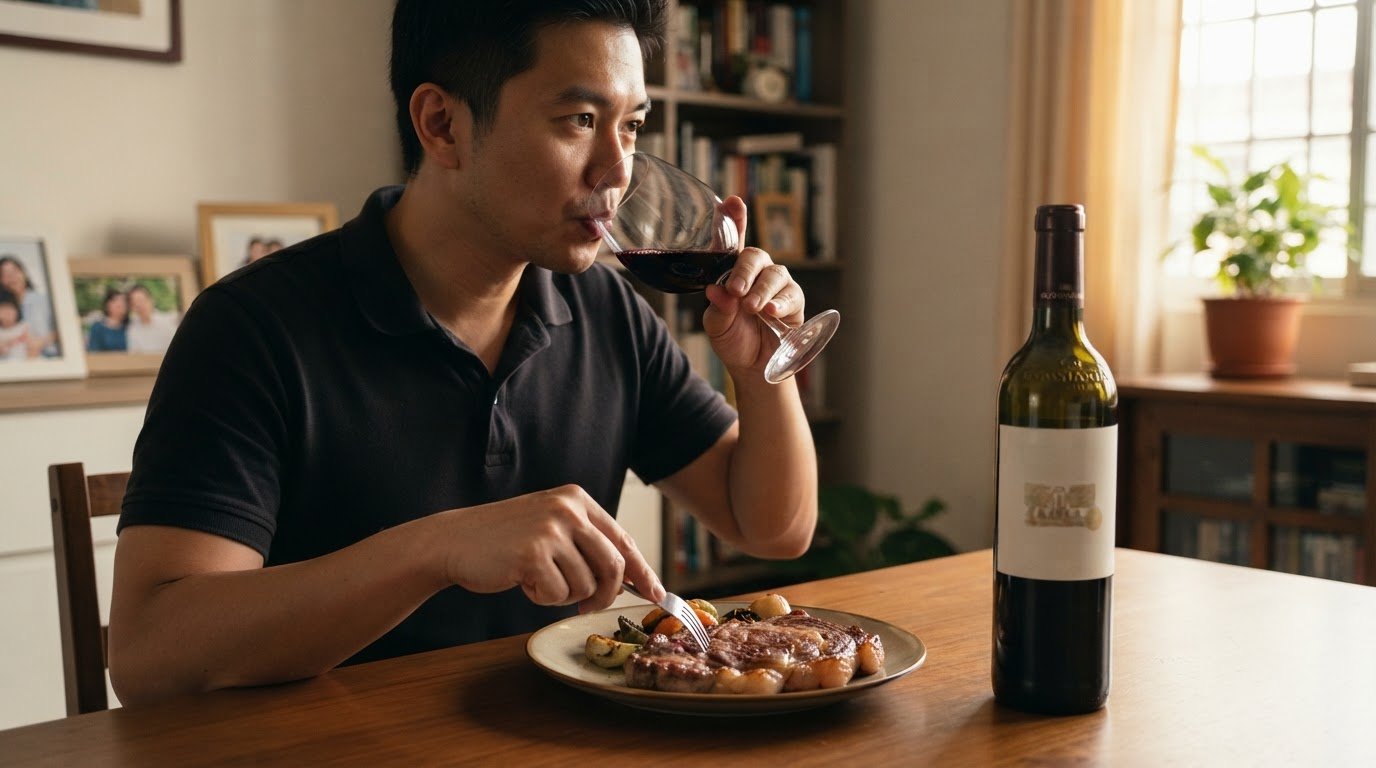
Look for balance rather than a particular aroma. Smell the wine, take a sip, then notice whether its fruit, evolved flavours and finish work together. A wine is mid-mature when its aroma, flavour development and finish are in harmony. If the first impression is vivid fruit but the palate feels thin, those elements may not yet be aligned.
White wines can show the same transition. A young white may lead with crisp citrus or orchard fruit; as it develops in the bottle, its aromas can become less overtly fresh and more layered. Judge whether those changes add complexity while the wine retains flavour and a satisfying finish. Faded fruit without compensating depth suggests the balance is slipping.
Assess the wine over more than one sip. Let it settle in the glass, then revisit its aromas and finish. Ask whether its primary notes remain clear, whether tertiary notes complement them, and whether either element overwhelms the other. This simple tasting sequence turns “mature” from a label into a sensory judgement.
Explore South African wines as a way to experience how different bottles express fruit, savoury development and balance. Compare the aromas and finish in your glass, rather than relying on age alone to decide whether a wine is at its best.
How tannins evolve in red wine
Tannins create the drying, gripping sensation familiar in young Cabernet Sauvignon or Nebbiolo. In a structured red, that firmness can initially overshadow fruit and make each sip feel angular. As the wine develops in the bottle, tannins often feel more integrated with fruit, acidity and other flavours. They don’t disappear entirely, so judge their texture and balance rather than expecting a completely smooth wine.
Take a measured taste: notice how strongly the wine dries your gums, then check whether fruit and flavour remain present. A young wine that feels tight, strongly tannic or less complex may be tasted before its drinking window opens. Drinking it early doesn’t damage the wine, but it may conceal the layered character that further development could bring.
Timeframes depend on the wine’s structure and style. Nebbiolo wines such as Barolo and Barbaresco often need ten to twenty years or more before firm tannins fully resolve. Red Bordeaux wines made in the 1980s could require 20 years of ageing before their tannins softened enough to become palatable. These examples show why a red’s grape and origin matter more than age alone.
Look for changing texture, not just reduced grip. If tannins feel less harsh and the wine’s fruit and savoury notes remain vivid, it may be entering a more expressive stage. If the structure still dominates, holding a suitable bottle can allow further development. But tannins aren’t a clock: storage conditions affect how predictably a wine ages, and maturity doesn’t mean every red will become soft or improve indefinitely.
Deciding whether to drink or hold a wine
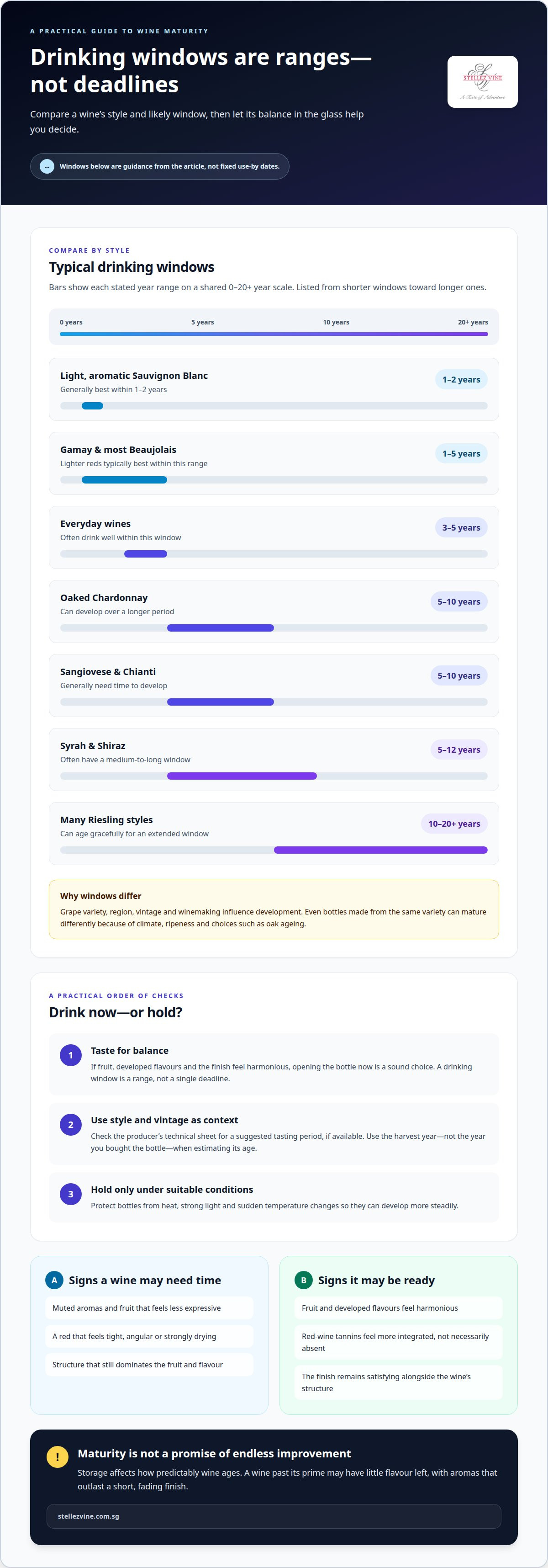
Use the vintage as a starting point, then weigh style, tasting condition and storage. A drinking window is a range, not a use-by date, and wines of similar ages can reach their best at different times. If the wine tastes balanced now, opening it is a sound choice; cellaring only helps when the bottle has room to develop and suitable conditions.
Compare the wine’s style with its likely window. Lighter reds, including Gamay and most Beaujolais, are typically best within one to five years. Syrah and Shiraz often have a five-to-twelve-year window, while Sangiovese and Chianti generally need five to ten years. Oaked Chardonnay can develop for five to ten years, and many Riesling styles can age gracefully for ten to twenty years or more.
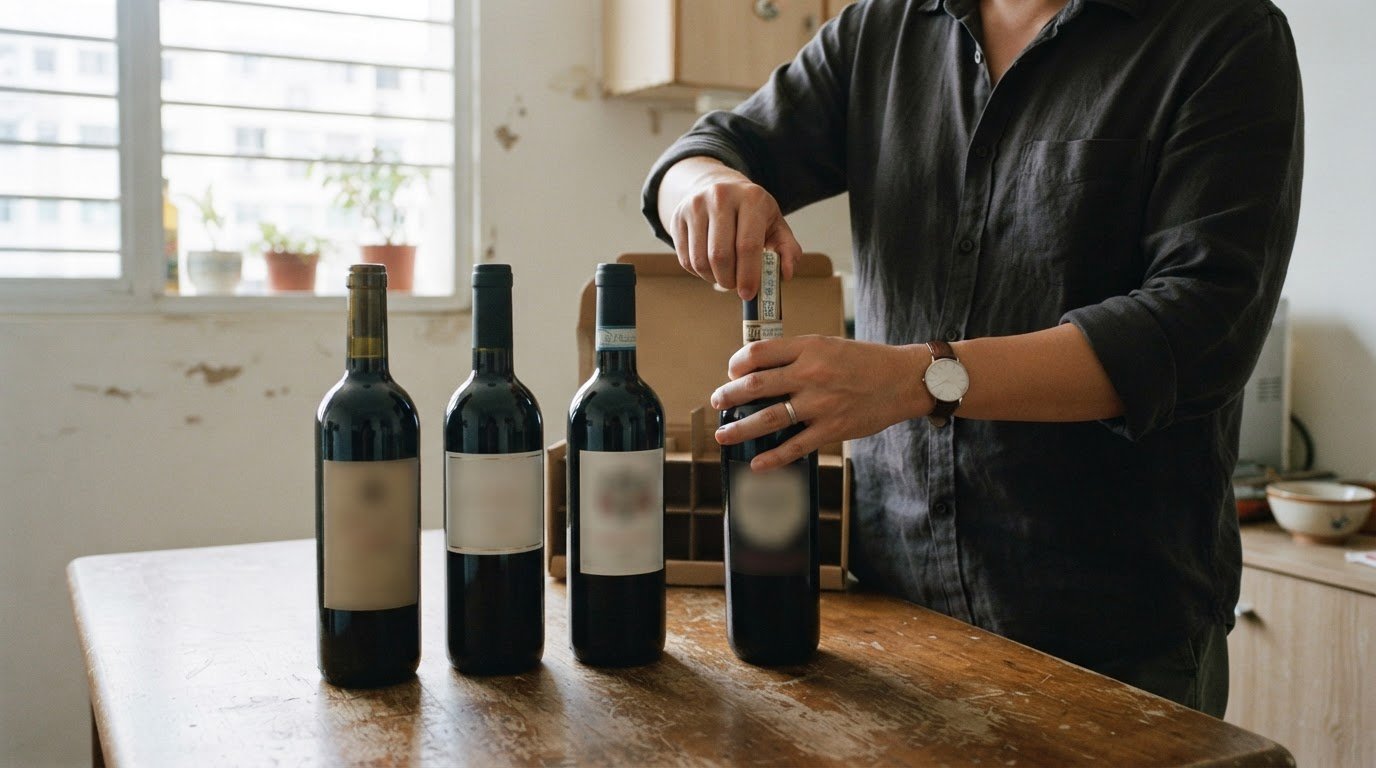
Sweet wines such as Sauternes can keep longer than dry wines because sugar favours preservation. A mature wine that has stopped gaining complexity is best opened rather than held indefinitely. If you taste one bottle from a case, its condition can guide when to open the others, though each bottle may have developed differently.
Storage matters as much as the vintage. Keep bottles intended for ageing in a cool, stable place, away from strong light, direct sunlight, heat sources and sudden temperature changes. In Singapore, avoid leaving wine for long periods in a kitchen or beside a window, where heat and fluctuating temperatures can make ageing less predictable. If you can’t store a bottle suitably, enjoy it sooner instead of planning on years of cellaring.
Choose a drinking moment based on the wine in your glass, not age alone. To explore bottles suited to different drinking plans, discover wines for your cellar.
Stellez Vine Singapore
Stellez Vine brings together fine wines and storage options for deciding whether to enjoy a bottle now or keep it for later. Explore its South African Wines to discover bottles with distinct styles and ageing potential, then use the taste cues in this guide to decide when to open them. For bottles you plan to store, explore Kadeka Wine Chillers, Eurocave Wine Fridges and Liebherr Wine Cabinets.
Choose a wine for the occasion, or consider a storage option when your plans call for holding bottles. The right decision starts with the wine’s character and the conditions in which you’ll keep it. For help exploring the available wines and storage options, contact Stellez Vine Singapore.
Make Your Next Bottle a Discovery
Let your next bottle be an invitation to explore, not a test with one correct answer. A practical way to approach how to know when a wine is ready to drink is to taste with curiosity, notice what the bottle offers today, and choose the moment that suits you. Keep a brief note of the vintage, aromas and finish; over time, those impressions can help shape your own sense of when to open similar wines.
Stellez Vine Singapore offers South African Wines for your next tasting, alongside Kadeka Wine Chillers and Eurocave Wine Fridges for storing bottles. Choose the wine that catches your interest, then let your palate guide the occasion. For help exploring the range, contact Stellez Vine Singapore. Open a bottle, savour the experience and enjoy discovering what comes next.
Frequently Asked Questions
Can an App Tell Me When to Drink a Bottle?
An app can estimate a drinking window using details such as grape, region and vintage, but it can’t taste your individual bottle. Enter the harvest year, not the year you purchased it, for a more relevant estimate. Treat the result as a planning aid: storage conditions and the bottle’s current condition can shift how it tastes compared with the app’s general prediction.
Does Storage Affect When a Wine Is Ready?
Yes. Unstable or excessive heat can speed a wine’s development and make its peak arrive earlier or less predictably. For example, a bottle kept near a sunny window may evolve differently from one stored in a cool, stable place. If you’re holding a wine, avoid direct light, heat sources and repeated temperature changes; good storage supports ageing but can’t improve every wine.
How Long Can You Age Different Wines?
Ageing potential varies by style and producer. Light, aromatic whites such as Sauvignon Blanc, Pinot Grigio and most rosé are generally best within one to two years of vintage. Non-vintage Champagne and most Prosecco or Cava are usually best within two to three years. Structured Cabernet Sauvignon and Merlot from established producers can need five to fifteen years; sweet wines may keep longer than dry wines.
How Can I Tell If My Wine Is at Its Peak?
A wine is near its peak when its aromas, developed flavours and finish feel expressive and connected, without fading fruit or overly firm structure. Taste it again after a short pause: if the second sip still feels lively and complete, enjoy it rather than saving it indefinitely. A ten-year-old bottle could be at its peak or past it, so age alone can’t decide.
How Can You Tell If a Wine Is Ready to Drink by Its Taste, Aroma, and Appearance?
Smell first, then taste: look for clear aromas, developed flavours and a finish that doesn’t outlast the wine’s aroma. Appearance can offer context, but colour alone doesn’t establish readiness; compare it with the wine’s expected style. If the bottle tastes muted, sharply structured or hollow, give it time only if its style and storage history support further ageing.
How Long Should Red, White, Rosé, Sparkling, and Dessert Wines Age Before Drinking?
There’s no single ageing period for each colour or style. Many everyday wines are ready within three to five years of vintage, while most rosé is ready to drink. Unoaked Chardonnay typically drinks best within two to three years. Vintage Champagne from a strong year can develop for a decade or longer, and sweet Sauternes can keep longer than dry wines. Check the specific wine’s guidance.
Comments