
Cellaring potential of South African wines by grape variety

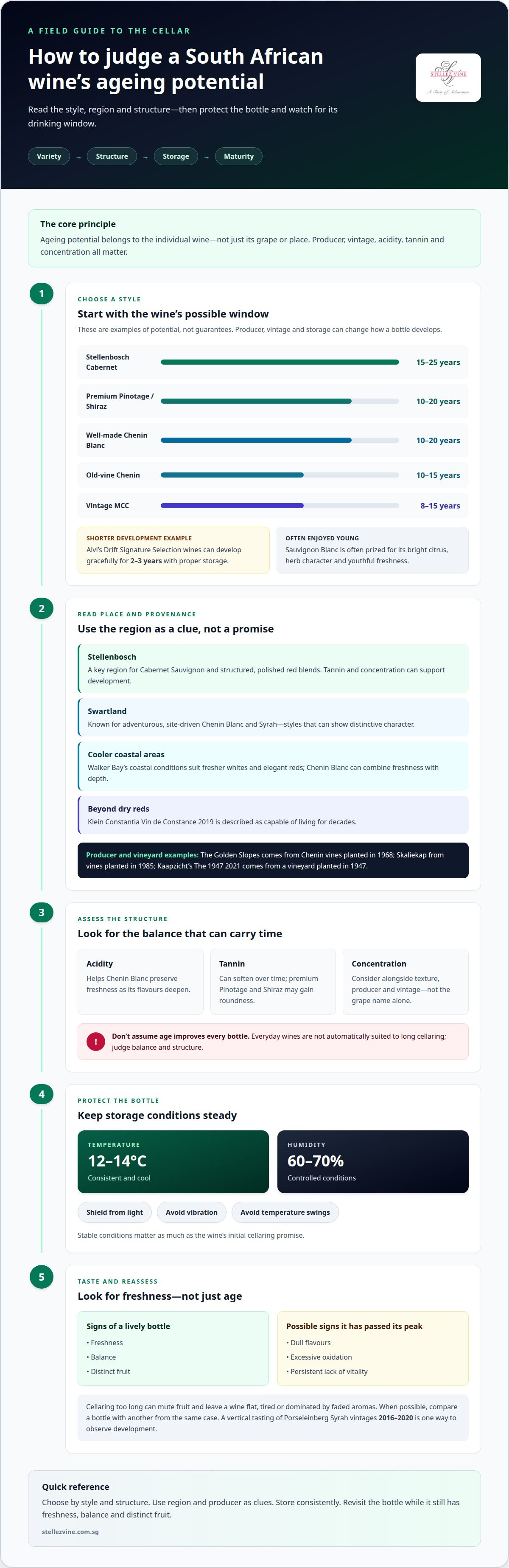
South African wines can reward patience, but age-worthiness depends on the grape, region and structure in the bottle. The cellaring potential of South African wines ranges from well-made Chenin Blanc that can develop for ten to twenty years to top Stellenbosch Cabernet Sauvignon that can age for 15-25 years. The key is knowing which styles are made to evolve, and which are best enjoyed young.
If you’ve wondered whether Chenin Blanc’s lively freshness can stand up to time in the cellar, the answer is yes: acidity and structure can help it stay vibrant as its flavours deepen. This guide explores South African styles and regions to consider, from Swartland Chenin Blanc and Syrah to polished Stellenbosch reds. You’ll also learn how freshness, tannin and careful storage shape a wine’s journey from its first pour to a more layered expression.
Table of Contents
Ageing potential by South African grape variety
For recognised cellaring reputations, consider Stellenbosch Cabernet Sauvignon and Swartland Syrah. The 2020 Porseleinberg Syrah is noted for ageing potential, while Sadie Family’s Columella 2020 is described as best after 2025, as its tannins soften. These examples show how producer, vintage and structure shape a bottle’s evolution.
Top Stellenbosch Cabernet Sauvignon can age for 15-25 years. Premium South African Pinotage and Shiraz can develop over 10-20 years, gaining roundness as their tannins soften. Pinotage’s dark-fruited character and Shiraz’s savoury, peppery notes can become more integrated with time. By contrast, Sauvignon Blanc’s bright citrus and herb profile is often prized for youthful freshness.
Everyday wines aren’t automatically suited to long cellaring. Alvi’s Drift Signature Selection wines can develop gracefully for two to three years with proper storage, while its Cabernet Sauvignon, Pinotage and Shiraz may gain roundness and complexity. For a modestly priced bottle, assess its balance and structure rather than assuming age will improve it. A vineyard or grape name alone doesn’t guarantee longevity.
There’s no simple country-wide ranking against France, Australia or Chile. Ageing potential depends on the individual wine’s acidity, tannin, concentration, producer and vintage, so compare wines by style and structure rather than nationality alone. A South African Cabernet and a French Cabernet, for example, may have different drinking windows.
For long-term storage, keep bottles at a consistent 12-14°C and 60-70% humidity. Shield wine from light, vibration and temperature swings; a cooler, dark storage space protects its development. Stable conditions matter as much as the wine’s initial cellaring promise.
Cellaring a wine for too long can mute its fruit, leaving it flat, tired or dominated by faded aromas. When you open a bottle, look for freshness, balance and distinct fruit. Dull flavours, excessive oxidation or a persistent lack of vitality suggest it may have passed its peak. If possible, compare it with another bottle from the same case.
New-wave wines also deserve attention, but style and vintage still matter. A vertical tasting of Porseleinberg Syrah covered vintages from 2016 through 2020, offering a way to observe how the wine develops. Mature Chenin Blanc, Cabernet and Pinotage can reward patience, while many Sauvignon wines are best enjoyed for their lively character. Treat each bottle as an individual expression of its vineyard and vintage.
Cellaring potential of Chenin Blanc
South African Chenin Blanc spans styles from crisp and citrusy to textured and layered. Well-made examples can age for ten to twenty years, while Sauvignon Blanc and Chardonnay depend on their structure, acidity and producer.
Old-Vine Chenin Blanc
Old-vine Chenin Blanc comes from mature vineyards whose fruit can bring greater complexity to the wine. For drinkers choosing bottles to cellar, this layered character can provide more to discover as the wine evolves. Old-vine examples can age for 10-15 years, though producer and vintage still shape the drinking window.
South Africa offers distinctive examples: A.A. Badenhorst’s The Golden Slopes comes from vines planted in 1968, while David & Nadia’s Skaliekap Single Vineyard Wine comes from vines planted in 1985. Kaapzicht’s The 1947 2021 is made from a vineyard planted in 1947 and is described as having good ageing potential. These names and vineyard histories offer useful reference points when comparing Chenin Blanc.
Chenin Blanc Styles and Ageing
Chenin Blanc ranges from lively, citrus-led wines to fuller expressions with stone-fruit, honey and wax notes. The distinction matters: vibrant acidity helps preserve freshness, while texture and layered flavours can make a wine more rewarding to revisit. Consider style, producer and vintage together instead of relying on the grape name alone.
Walker Bay’s cooler coastal conditions suit fresher whites and elegant reds, with ocean influence contributing to their character. Chenin Blanc from this area can appeal to drinkers seeking freshness alongside depth. In Swartland, Mullineux’s Olerasay 3 solera project began in 2008 and produces 2,000 to 3,000 bottles each year, showing another distinctive expression of the grape.
For Sauvignon Blanc and Chardonnay, assess acidity, concentration and winemaking style; fresh, citrus-led examples are often enjoyed for their youthful character, while more structured wines may develop complexity. Discover South African wines to explore regional styles and find Chenin Blanc for the table or cellar.
Age-worthy South African grape varieties and regions
Read the grape, region and vintage together when assessing a South African wine for ageing. The Wine of Origin system uses four designation categories: geographical units, regions, districts and wards. These place names indicate where the wine comes from, while its grape and winemaking style help explain its structure. A regional name is a useful starting point, not a guarantee of longevity.
Stellenbosch is a key region to explore for Cabernet Sauvignon and structured, polished red blends. Their tannins and concentration can support development, while the vintage influences how those qualities show in the glass. Bordeaux-style blends offer another route to cellar-worthy reds, bringing classic varieties together in a style shaped by South African winemakers. Look beyond the grape name to assess balance and texture.
For a different expression, consider Constantia’s Klein Constantia Vin de Constance Natural Sweet Wine. The 2019 vintage is described as capable of living for decades, making it a notable example of age-worthy South African wine beyond dry reds. Traditional-method sparkling wines, labelled Methode Cap Classique, also have ageing potential: vintage MCC can age for 8-15 years.
Swartland is known for adventurous, site-driven Chenin Blanc and Syrah, while Walker Bay and other cooler coastal areas suit fresher whites and elegant reds. These regional contrasts can help you choose a style, from savoury Syrah to lively coastal Chardonnay. Then consider the winemaking and whether the wine’s acidity, tannins and fruit are in balance.
Use the label as a practical clue, not a drinking-date promise. Under South Africa’s voluntary Wine & Spirit Board certification programme, vintage-dated wine must contain at least 85% grapes harvested in that vintage year. Varietal wine must contain at least 85% of its listed grape variety. That information helps clarify what’s in the bottle, while the producer, region and vintage together inform its cellaring prospects.
Freshness and structure in South African wines
The cellaring potential of South African wines depends on balance, not richness alone. Acidity, tannin, fruit concentration and vintage conditions all shape how a bottle develops.
Acidity, Tannin, and Vintage Conditions
Acidity gives a wine lift, while tannins provide grip and a framework for evolution. Their balance with fruit helps determine whether the wine stays vivid as it matures. Vintage conditions influence grape ripeness and the resulting wine’s structure, so bottlings from the same producer can differ from harvest to harvest. Consider these elements together when deciding whether to drink or hold a bottle.
For example, a Syrah with fresh fruit, fine tannins and savoury depth has a different ageing profile from a soft, fruit-forward style. Understanding the cellaring potential of South African wines means weighing that balance alongside the vintage, rather than treating acidity or tannin as a guarantee on its own. A structured blend can also evolve as its component varieties integrate.
Identifying Wines for Long-Term Cellaring
A South African wine label can help you identify its producer, region, grape variety and vintage. Read those details alongside tasting notes describing acidity, firm tannins, concentrated fruit or layered flavours. These clues help distinguish a wine built for development from one intended for early enjoyment, especially when a familiar grape variety appears in several styles.
Use tasting notes to set expectations, not to choose a fixed drinking date. Compare descriptions of different vintages from the same producer, paying attention to changes in fruit, texture and finish. Comparing bottles this way helps reveal the cellaring potential of South African wines, particularly the difference between youthful freshness and the deeper character that develops in bottle.
Explore South African wines with these markers in mind, and choose a bottle that suits your preferred style and drinking plans.
Stellez Vine Singapore: South African Wines
Stellez Vine Singapore offers South African wines for readers choosing bottles to enjoy now or set aside for later. Use the grape, region, vintage and tasting notes discussed above to match a wine’s style with your plans, whether you’re drawn to structured Cabernet Sauvignon, expressive Chenin Blanc or savoury Syrah.
For bottles intended to develop over time, consistent storage matters. Kadeka Wine Chillers, Eurocave Wine Fridges and Liebherr Wine Cabinets offer dedicated wine-storage options for a home collection. Choose a model that suits your space and the bottles you want to keep close at hand.
Explore Stellez Vine’s South African wines and wine-storage options, and contact the team to discuss your selection.
Shape Your Next Cellar Chapter
Make your collection a record of discovery, not just a row of bottles waiting for a special occasion. Keep a short cellar journal with each wine’s vintage, storage location and opening date, then note how its aromas, texture and finish change. Over time, these impressions can help you recognise the styles you most enjoy revisiting and make more considered choices.
The cellaring potential of South African wines becomes more meaningful when you connect each bottle to your own taste. Stellez Vine Singapore offers South African Wines, Kadeka Wine Chillers and Eurocave Wine Fridges, bringing together bottles to explore and dedicated storage options for a home collection. Start with a wine that interests you, savour it at the right moment, and let the experience shape what you choose next.
Contact Stellez Vine Singapore to take the next step in building a collection that reflects your palate.
Frequently Asked Questions
Which SA Wines Age Well?
Structured Cabernet Sauvignon, premium Pinotage and Syrah, old-vine Chenin Blanc, and selected vintage sparkling wines can all reward cellaring. For a producer-led example, the 2020 Porseleinberg Syrah is recognised for its ageing potential. Choose wines with balance and concentration, rather than relying on grape variety alone, and remember that storage conditions influence how the bottle develops.
Which South African wine regions and varieties produce the best age-worthy wines?
Stellenbosch is a strong place to explore Cabernet Sauvignon and structured red blends, while Swartland is known for site-driven Chenin Blanc and Syrah. Constantia offers another distinctive option: Klein Constantia’s 2019 Vin de Constance is described as capable of living for decades. These regional styles help narrow your choices, but producer and vintage still matter.
How long can South African Cabernet Sauvignon, Pinotage, Syrah, and Bordeaux blends cellar?
Top Stellenbosch Cabernet Sauvignon can age for 15-25 years, while premium Pinotage and Shiraz can develop for 10-20 years. Syrah’s prospects depend on the individual wine’s structure and vintage; the 2020 Porseleinberg is noted for its ageing potential. Bordeaux blends vary by composition and balance, so use the producer’s style and the wine’s tannins as guides.
How much do age-worthy South African wines cost, and are they available from Singapore retailers or importers?
Prices vary by producer, vintage and bottle, so there isn’t one useful price for every age-worthy South African wine. Stellez Vine Singapore offers South African wines, giving customers nationwide access to a trusted retail option for exploring the category. Check each wine’s current listing for its price and details, and consider its intended drinking window before choosing bottles to keep.

Comments