
AA Badenhorst Wine Singapore: A Resource Guide to Swartland’s Cult Pioneer
- Stellez Vine

- Jul 29
- 11 min read
The belief that South African viticulture is just a budget alternative to European classics is a myth that the Swartland Revolution has thoroughly dismantled. If you're exhausted by the predictable profiles of generic supermarket bottles, it's time to explore the raw, unfiltered artistry of AA Badenhorst. As a definitive benchmark for Swartland wine Singapore collectors now seek, these bottles represent a shift toward low-intervention winemaking that prioritizes heritage over mass production.
You likely agree that finding a wine that maintains its complexity in our tropical heat can feel like a gamble, particularly with artisanal, low-sulfur styles. This guide promises to reveal why the Badenhorst family is considered the pioneer of this movement, offering you a clear path through their most iconic labels. You will learn the history of their Kalmoesfontein estate, discover which bottles to add to your collection first, and gain expert tips on serving these vibrant wines at their peak. Prepare to elevate your palate with a producer that defines the modern South African spirit.
Table of Contents
The Swartland Revolution and the Rise of AA Badenhorst in Singapore
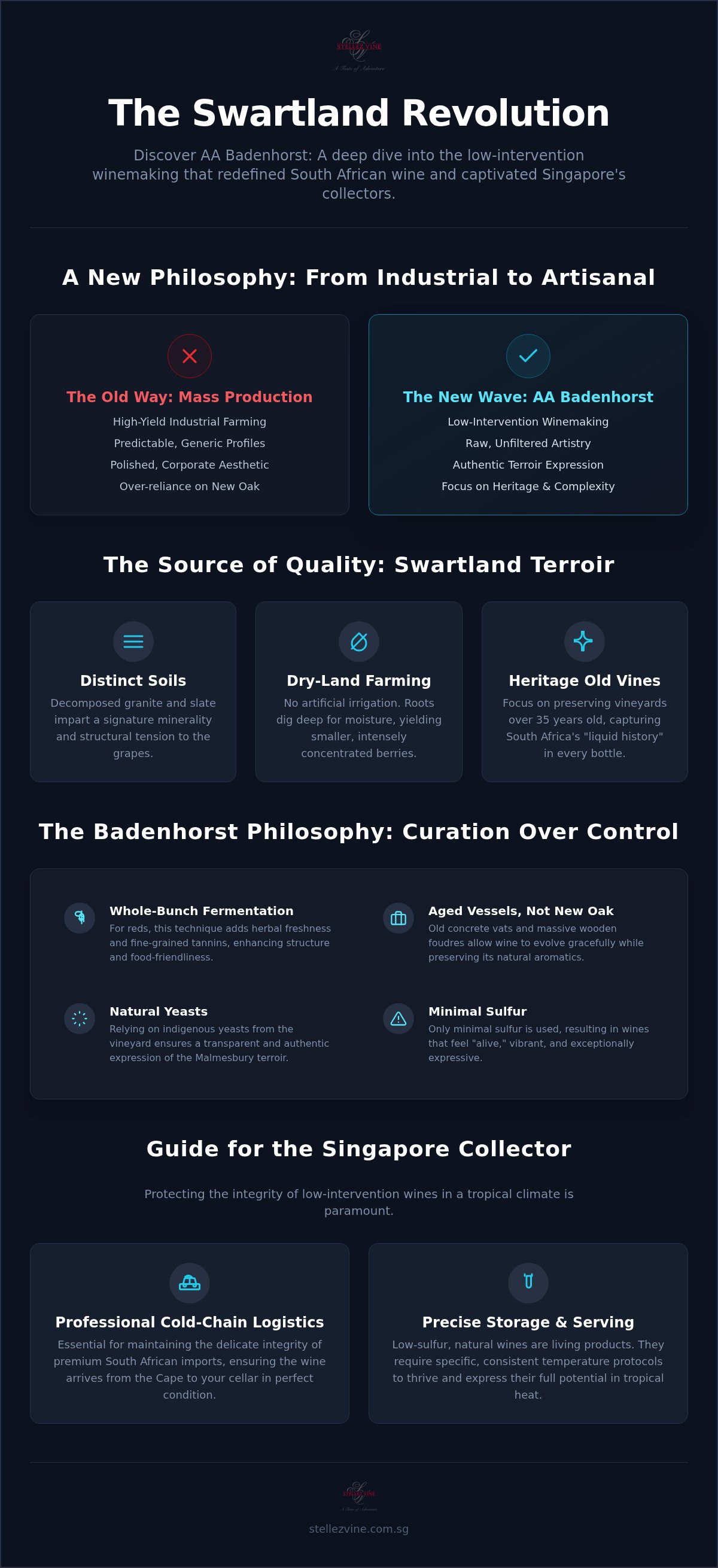
The global wine landscape underwent a seismic shift in the early 2000s, centered in a rugged, sun-drenched corner of South Africa. This movement, famously known as the Swartland Revolution, replaced industrial, high-yield production with a radical commitment to dry-land farming and the preservation of ancient vines. For those seeking the specific profile of Swartland wine Singapore collectors now prize as a benchmark of quality, AA Badenhorst stands as the ultimate pioneer of this transition. Collectors in the city state are increasingly turning to these 'New Wave' wines because they offer a rare combination of raw heritage and sophisticated, world-class execution.
At the heart of this narrative is the Kalmoesfontein farm, located in the Malmesbury region. This estate isn't just a production site; it's a sanctuary for "Old Vines" that have survived decades of harsh, unirrigated conditions. By focusing on these established vineyards, the Badenhorst family captures a sense of place that is impossible to replicate in younger, mass-produced plantations. This dedication to the land ensures that every bottle tells a story of resilience and terroir.
Adi Badenhorst: The Man Behind the Movement
Adi Badenhorst is a third-generation winemaker who famously traded a high-profile career at large, established estates for the grit and glory of boutique production. His non-conformist approach defines the estate's identity. He rejects the polished, corporate aesthetic of modern wine in favor of raw, artisanal techniques that allow the vintage to speak for itself. You can see this personality in every bottle, from the hand-drawn, evocative labels to the complex liquid inside that refuses to fit into a standard category. It's this authentic, rebellious spirit that resonates with local enthusiasts looking for wines with a genuine narrative and unmatched character.
Why Swartland Terroir Matters
To understand the exceptional quality of The Swartland wine region, you must look at the ground beneath the vines. The area is dominated by decomposed granite and slate soils, which impart a distinct minerality and structural tension to the grapes. Because these vines are dry-farmed, meaning they receive no artificial irrigation, the roots must dive deep into the earth to find moisture. This struggle results in smaller, more concentrated berries that yield wines of immense depth and flavor.
The Old Vines Initiative has been crucial in this process. By protecting vineyards that are over 35 years old, producers like Badenhorst ensure that South Africa’s liquid history remains intact. When you pour a glass of Swartland wine Singapore specialists like Stellez Vine have handpicked, you aren't just tasting fermented fruit. You're experiencing the refined adventure of a landscape mastered through patience, minimal intervention, and a deep respect for the craft.
Kalmoesfontein Heritage: The Winemaking Philosophy
At Kalmoesfontein, winemaking isn't about control; it's about curation. The estate's philosophy centers on a low-intervention approach that allows the character of the soil and the purity of the fruit to take center stage. When you experience Swartland wine Singapore enthusiasts often describe as "alive," you're tasting the result of a process that rejects modern shortcuts in favor of time-honored techniques. This meticulous profile of Adi Badenhorst illustrates how his cellar practices prioritize the soul of the vintage over industrial consistency.
The cellar at Kalmoesfontein is a testament to this heritage. Instead of the aggressive vanilla and spice notes of new oak, the team utilizes old concrete vats and massive wooden foudres. These vessels are breathable, allowing the wine to evolve gracefully while preserving its natural aromatics. To further enhance the structural integrity of the reds, whole-bunch fermentation is frequently employed. This method adds a distinctive herbal freshness and fine-grained tannins that make the wines exceptionally food-friendly. Every bottle is crafted using natural yeasts and minimal sulfur, ensuring a transparent expression of the Malmesbury terroir.
The Art of the Blend
Swartland’s climate is perfectly suited for Mediterranean-style blends. By co-fermenting multiple varieties, Adi achieves a level of complexity and harmony that single-varietal wines often lack. This 'Liquid History' approach sometimes even incorporates multi-vintage blending, creating a depth of flavor that evolves beautifully in the glass. If you're ready to explore these curated South African selections, you'll find that these blends offer a sophisticated alternative to more traditional regions.
Sustainability and Biodiversity
Farming at Kalmoesfontein is a holistic endeavor. The estate functions as a complete ecosystem where biodiversity is encouraged rather than suppressed. By minimizing chemical inputs, the team ensures the long-term health of the vines and the purity of the final product. For those sourcing Swartland wine Singapore, these sustainable practices translate into a cleaner palate, characterized by vibrant acidity and a lack of heavy, artificial manipulation. It's a proactive stance on viticulture that honors the land while delivering an unmatched sensory experience.
A Resource Guide to AA Badenhorst’s Signature Labels
Deciphering the hierarchy of the AA Badenhorst portfolio is essential for any collector seeking the best Swartland wine Singapore has to offer. While the labels often feature whimsical, hand-drawn illustrations, the liquid inside is profoundly serious. Every bottle from this estate shares a recognizable DNA; expect a specific textural grip, vibrant acidity, and a distinct earthy undertone that reflects the Malmesbury granite. Chenin Blanc remains the undisputed flagship white variety, providing the structural backbone for most blends, while the reds challenge the local dominance of Cabernet Sauvignon with elegant, Shiraz-led compositions.
The Secateurs Range: Accessible Excellence
The Secateurs range serves as the definitive entry point for Singaporean wine explorers. These wines prioritize freshness and immediate drinkability without sacrificing the estate's low-intervention character. They're perfect for those who want to experience the Swartland style at a more accessible level.
Secateurs Chenin Blanc 2025: This bottle is a benchmark for the region. It offers a rich texture derived from extended time on the lees, balanced by the bright, flinty acidity typical of old-vine fruit.
Secateurs Red Blend: A versatile, fruit-forward wine that typically leans on Shiraz and Cinsault. It's an ideal companion for Singapore’s diverse culinary scene, pairing as easily with grilled meats as it does with spicy local dishes.
Vibrant Versatility: Because these wines don't rely on heavy new oak, they maintain a lift and energy that makes them incredibly refreshing in a tropical climate.
The Family Wines: The Collector’s Choice
For those looking to deepen their collection, the Family Wines represent the pinnacle of Adi’s blending expertise. These are investment-grade bottles designed for longevity and complex evolution. The AA Badenhorst Family White 2021 is a masterclass in complexity, often blending up to 10 different varieties to create a wine that's simultaneously powerful and ethereal. Its red counterpart, the Family Red, is a Shiraz-based powerhouse that rewards several years of careful cellaring.
Serious enthusiasts should also seek out the 'Single Vineyard' series. Labels like the Golden Slopes Steen 2022 or the Sout van die Aarde Palomino 2022 allow you to explore specific micro-terroirs of the farm. These limited-production releases offer a focused look at how different soil types, such as pure granite or slate, influence the final profile of the wine. If you're hunting for rarity, the Sk'windjiesvlei Tinta Barocca 2022 provides a unique, savory experience that stands apart from more conventional red varieties. Discovering these labels is a refined adventure that reveals the true depth of Swartland wine Singapore enthusiasts have come to admire.
Storing and Serving Swartland Wines in Singapore
Mastering the art of storage is the first step in protecting your investment. Because AA Badenhorst wines are crafted with low intervention and minimal sulfur, they are particularly sensitive to environmental fluctuations. Singapore’s relentless humidity and heat can quickly degrade the delicate aromatics of a Swartland wine Singapore collectors have spent years sourcing. To ensure every bottle performs at its peak, you must look beyond the kitchen fridge and consider a professional environment.
Serving temperatures are equally critical. Forget the European concept of "room temperature," which in our tropical climate is far too warm for any fine wine. Aim for these specific ranges to capture the true profile of the liquid:
White Blends and Chenin Blanc: Serve at 10 to 12°C to preserve the flinty acidity and textural weight.
Red Blends: Target 14 to 16°C. A slight chill prevents the alcohol from overpowering the nuanced herbal notes.
Decanting: While the Secateurs range is ready to pour, the Family Red and Single Vineyard labels benefit from 30 to 60 minutes of air to soften their structure.
To enhance the aromatic complexity of these blends, choose glassware with a generous bowl. A larger surface area allows the intricate layers of stone fruit in the Chenin and the savory earthiness of the Rhone-style reds to breathe and evolve in the glass. This simple adjustment transforms a standard drink into a sensory exploration.
Temperature-Controlled Storage: A Necessity
A dedicated wine fridge isn't a luxury; it’s a prerequisite for quality. Standard household refrigerators are designed for food, meaning they are too cold, too dry, and prone to vibrations that disturb the sediment in unfiltered wines. Utilizing specialized units like Kadeka wine chillers provides the stable, vibration-free environment required for long-term aging. This proactive approach ensures that the "liquid history" inside the bottle remains intact until you’re ready to savor it.
Pairing Swartland with Singaporean Flavours
The high natural acidity of Swartland Chenin Blanc makes it an exceptional partner for the complex heat of local cuisine. Its textural grip stands up to the richness of Laksa or Sambal Stingray without being overshadowed. For a more sophisticated alternative to traditional pairings, try the Family Red with grilled Wagyu or charcoal-fired satay. If you're feeling adventurous, the Secateurs Rosé offers a surprising and refined match for the subtle ginger and garlic notes of Hainanese Chicken Rice. To find the perfect bottle for your next dinner, browse our curated selection of South African wines today.
Discovering AA Badenhorst Through Stellez Vine
Securing the finest Swartland wine Singapore has to offer requires more than just a standard transaction; it demands a partner who understands the delicate journey from the Cape to your cellar. Stellez Vine acts as this essential bridge, serving as a direct importer and specialist distributor of the AA Badenhorst portfolio. Because these are low-intervention, artisanal products, their integrity relies heavily on professional handling. We maintain a strict cold-chain logistics protocol, ensuring that every bottle is protected from temperature spikes during its transit from South Africa to our climate-controlled facilities in Singapore. This commitment to provenance means that the vibrant acidity and complex textures Adi Badenhorst intended are preserved perfectly for your enjoyment.
Starting your collection is a refined adventure that we have simplified for the modern enthusiast. You don't need to be an expert to appreciate the craftsmanship of the Malmesbury terroir when you have a trusted gatekeeper filtering the global market for you. We provide the authoritative expertise you need to navigate these 'New Wave' wines with confidence, ensuring that every purchase is an exceptional addition to your lifestyle.
The Stellez Vine Curation
Our approach to curation is both rigorous and personal. We don't simply list every bottle available; we handpick labels that represent the absolute benchmark of South African quality. This tailored selection includes everything from the accessible Secateurs range to exclusive, limited-release single vineyard wines that are rarely found outside of the estate’s private cellar. We invite you to explore our South African wine collection to discover the current depth of our offerings and secure your own piece of liquid history.
Seamless Delivery and Service
Building a collection or selecting the perfect gift should be an effortless experience. Our team provides expert advice for those looking to build a private cellar or arrange sophisticated corporate gifting. We emphasize a three-step process for every client: expert selection, secure climate-controlled storage, and efficient fulfillment. We prioritize the safety of your purchase through premium wine delivery Singapore collectors can depend on for speed and reliability. By choosing a specialist, you ensure that your Swartland wine Singapore arrives in the same pristine condition it left the farm, ready to be decanted, shared, and savored at its peak.
Elevate Your Collection with Swartland’s Finest
The journey through the rugged vineyards of Kalmoesfontein reveals a winemaking philosophy that prioritizes soul over scale. You now understand how Adi Badenhorst’s commitment to ancient vines and low-intervention techniques has redefined South African viticulture. By selecting the right labels and adhering to strict temperature-controlled storage, you ensure that these vibrant, textured wines perform beautifully in a tropical climate. Stellez Vine stands as the premier authority and direct importer of Swartland wine Singapore collectors rely on for authenticity and impeccable provenance.
We invite you to explore our curated AA Badenhorst collection at Stellez Vine and discover the unmatched depth of the Swartland Revolution. Our specialized logistics and expertise in boutique South African estates guarantee that every bottle arrives at your door in pristine condition. Don't settle for the predictable; embrace a refined adventure that brings the heritage of the Cape directly to your glass. Your next exceptional tasting experience is just a few clicks away.
Frequently Asked Questions
What is the 'Secateurs' range by AA Badenhorst?
The Secateurs range is the estate's accessible entry point, designed to offer immediate drinkability and vibrant fruit character. These wines are sourced from older vineyards on the Kalmoesfontein farm and surrounding areas, emphasizing the raw energy of the region. They provide an excellent introduction to the house style without the need for long-term cellaring, making them a favorite for casual gatherings and everyday enjoyment.
Is AA Badenhorst wine considered natural or organic?
AA Badenhorst follows a low-intervention winemaking philosophy that aligns closely with natural wine principles. While not always certified organic, the estate uses natural yeasts, avoids commercial additives, and applies minimal sulfur during the bottling process. This approach ensures the final product is a transparent reflection of the soil and climate rather than a manipulated industrial beverage, resulting in wines that feel alive and authentic.
How long can I age AA Badenhorst Family Wines?
The Family Red and Family White labels are built for longevity, often reaching their peak between 8 to 15 years after the vintage. Their structural integrity comes from old-vine concentration and careful maturation in large foudres. If you're cellaring Swartland wine Singapore collectors recommend using professional storage to ensure these complex blends evolve gracefully over a decade or more without being compromised by heat.
Which AA Badenhorst wine is best for a beginner?
The Secateurs Chenin Blanc is the ideal starting point for those new to the portfolio. It offers a perfect balance of rich texture from extended lees aging and a bright, flinty finish that isn't too intimidating. It showcases the versatility of the variety and provides a clear window into the estate’s artisanal craftsmanship at a very approachable level before you move into the more complex Family range.
Does AA Badenhorst make a Pinotage?
AA Badenhorst does not typically produce a standalone Pinotage, as the estate focuses primarily on Mediterranean and Rhone-style blends. Instead, you'll find exceptional expressions of Shiraz, Grenache, and Cinsault in their red labels. For those interested in unique South African varieties, their Sk'windjiesvlei Tinta Barocca offers a savory, structural alternative that thrives in the dry Swartland heat and provides a distinct tasting experience.
Where can I buy AA Badenhorst wine in Singapore?
You can purchase the full range of AA Badenhorst labels directly through Stellez Vine, the specialist distributor for premium South African estates. As a direct importer, they ensure the wines are handled through a strict cold-chain process from the Cape to the warehouse. This guarantees that every bottle of Swartland wine Singapore enthusiasts buy is authentic and has been stored in optimal, temperature-controlled conditions.
What makes Swartland different from Stellenbosch?
Swartland is defined by its rugged landscape and reliance on dry-land farming, whereas Stellenbosch often features more traditional, maritime-influenced estates. While Stellenbosch is famous for its classic Cabernet Sauvignon and Chardonnay, Swartland is the epicenter of the "New Wave" movement. It's known for ancient vines, granite-rich soils, and a focus on Mediterranean varieties that can handle intense heat and lack of irrigation.
What temperature should I serve AA Badenhorst Chenin Blanc?
Aim to serve the Chenin Blanc at approximately 10 to 12°C to fully appreciate its aromatic complexity and weight. Serving it too cold will mask the delicate stone fruit and mineral notes, while serving it too warm can make the wine feel heavy on the palate. A slight chill allows the natural acidity to remain crisp and refreshing, which is essential in Singapore’s humid environment.


Comments