
Wine Pairing with Singaporean Food, from Chilled Reds to Rosé

Big reds aren’t the default for wine pairing with Singaporean food. Light-bodied, fruity reds served slightly chilled, dry rosé and crisp Pinot Grigio are more versatile starting points. Pinot Grigio suits delicate Hainanese chicken rice, while rosé and wines with a touch of sweetness can complement spicier hawker dishes. Match freshness and sweetness to the chilli, richness and savoury intensity on the plate.
Singapore’s hawker favourites bring chilli, coconut milk, aromatic spices and smoky char to the table, so familiar European pairing rules don’t always apply. The right bottle can refresh the palate or soften heat without overwhelming the dish. The wrong one may make spice feel sharper or delicate flavours disappear.
Explore practical pairings for chicken rice, laksa, roti prata, satay and more. Learn when to pour a chilled red, reach for dry rosé or choose Pinot Grigio, with simple cues to match wine to each dish.
Table of Contents
1. Light-bodied fruity reds served slightly chilled
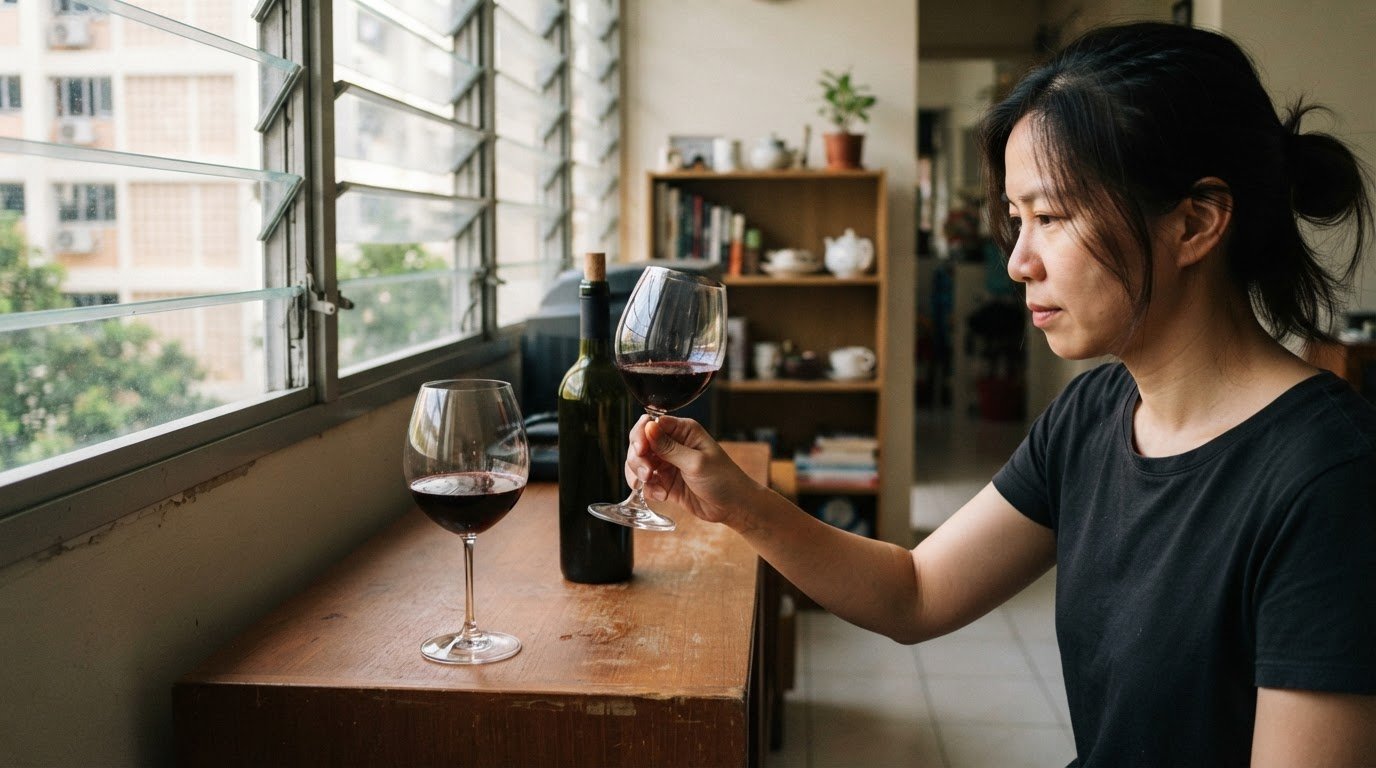
Choose a light-bodied red with juicy fruit, bright acidity and gentle tannins for savoury Singaporean dishes. Serve it slightly chilled: the cooler temperature keeps the wine lively alongside rich flavours, while red-fruit notes complement grilled or roasted ingredients. A heavy, tannic red can dominate lighter food, so look for freshness rather than sheer weight. With mee goreng, a fruit-forward red with a hint of sweetness can complement the noodles’ spice without flattening their savoury character.
For chilli crab, focus on the sauce as much as the crab. Its sweet tomato and chilli flavours call for a wine with some body, low tannin and a touch of sweetness. This combination can soften the chilli heat while letting the crab’s delicate sweetness come through. A bold, tannic red is a poor match: chilli can make its tannins feel harsher, and the wine may taste flat or bitter beside the sauce.
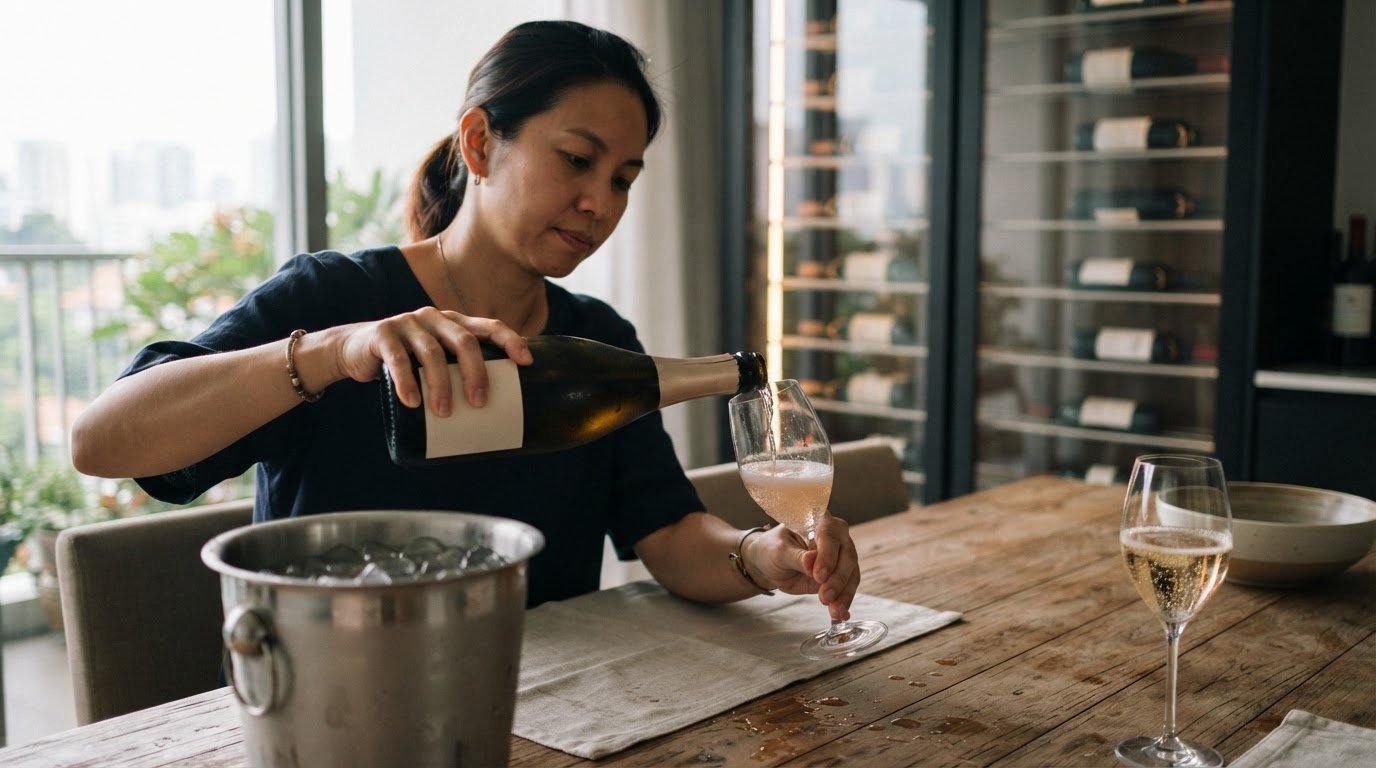
Sparkling rosé offers another option with chilli crab. Its lively bubbles and fruit-forward profile bring freshness to the rich, spicy sauce. Gewürztraminer provides a contrast, with floral aromas and gentle sweetness that can temper heat and highlight the crab’s natural sweetness. Choose based on the experience you want: sparkling rosé feels brisk and refreshing, while Gewürztraminer brings aromatic lift and a softer impression of spice.
Try a simple tasting sequence at the table. Take a small sip of wine, taste the chilli crab, then try the wine again. If the chilli overwhelms the fruit, switch to a sweeter, lower-tannin style. If the sauce feels rich, sparkling rosé can refresh the palate. Apply the same principle to other hawker dishes: match sweetness to chilli and keep tannins gentle. This flexible approach makes wine pairing with Singaporean food responsive to the actual sauce and seasoning, rather than the dish name alone.
2. Dry rosé with lighter and moderately spiced dishes
Dry rosé brings bright acidity and subtle red-berry notes to lighter Singaporean dishes. Its crisp, dry finish suits grilled fish, fresh vegetables and mildly spiced noodles without masking their seasoning. With moderate chilli, rosé’s freshness helps reset the palate between bites. Choose a fruitier style if the dish has a touch of sweetness. Match the wine’s intensity to the food, keeping delicate flavours alongside a lighter pour.
Are Riesling, Gewürztraminer or sparkling wine good choices for Singaporean cuisine? Yes. Off-dry Riesling can soften chilli heat, aromatic Gewürztraminer complements spice, and sparkling wine refreshes the palate alongside rich or spicy dishes.
For laksa, choose dry Gewürztraminer or another aromatic white with enough acidity. Floral, gently spicy notes echo the dish’s aromatics, while acidity cuts through coconut-milk richness and chilli paste. A very oaky or heavy wine can obscure the prawns and fragrant broth, so prioritise freshness.
What affordable wines in Singapore pair well with local food, and what do they cost? Dry rosé and off-dry Riesling are practical styles to compare for hawker meals; bottle costs vary by label and retailer, so there’s no single price for either style. Focus on the taste profile rather than assuming a higher price guarantees a better match.
For spicy dishes without alcohol, try chilled water or unsweetened iced tea. Their clean, restrained flavours let chilli, herbs and aromatic sauces remain central. At the table, serve the drink cold and take a sip between bites to refresh your palate.
For lighter and moderately spiced dishes, start with dry rosé; for coconut-rich laksa, reach for an aromatic white. Explore wine selections for food pairing to find a bottle suited to the flavours on your table.
3. Hainanese chicken rice and Pinot Grigio
Hainanese chicken rice calls for a wine that respects its delicate flavours. A crisp, unoaked white such as Pinot Grigio keeps the pairing light, complementing rather than overwhelming the chicken and fragrant rice. Bright acidity refreshes the palate, while a clean finish lets the dish remain the focus. It’s a classic match when you want wine to complement, not compete.
Choose Pinot Grigio for its fresh, restrained profile. Crisp citrus and gentle pear notes add lift without masking the chicken’s mild savouriness. Serve it well chilled, then taste it alongside a bite of rice and chicken. If the wine’s acidity feels sharp against the dish, take another bite before sipping; the rice softens the contrast.
Pinot Gris offers another option for chicken rice. Pinot Grigio and Pinot Gris are related styles of white wine, and both can work when fresh and not heavily oaked. Sauvignon Blanc is another crisp, unoaked option. Compare the wine with the dish itself: choose a subtler style when the chicken tastes especially delicate.
Use the accompanying sauces to fine-tune your choice. A chilli-forward dip pairs more comfortably with a softer, fruitier white than with a very tart wine. If ginger or savoury seasoning leads, Pinot Grigio’s citrus and pear character can provide a bright counterpoint. Taste the sauce with the chicken, not on its own, before deciding which flavour dominates.
For a simple pairing test, take a bite of chicken, a little rice, then a sip of Pinot Grigio. Notice whether the wine refreshes your mouth and leaves the chicken’s flavour clear. If the rice disappears behind the wine, choose a lighter, less forceful white. Keep the wine cool and pour modestly so the glass stays fresh through the meal. This approach also helps you compare Pinot Gris or Sauvignon Blanc without relying on the grape name alone.
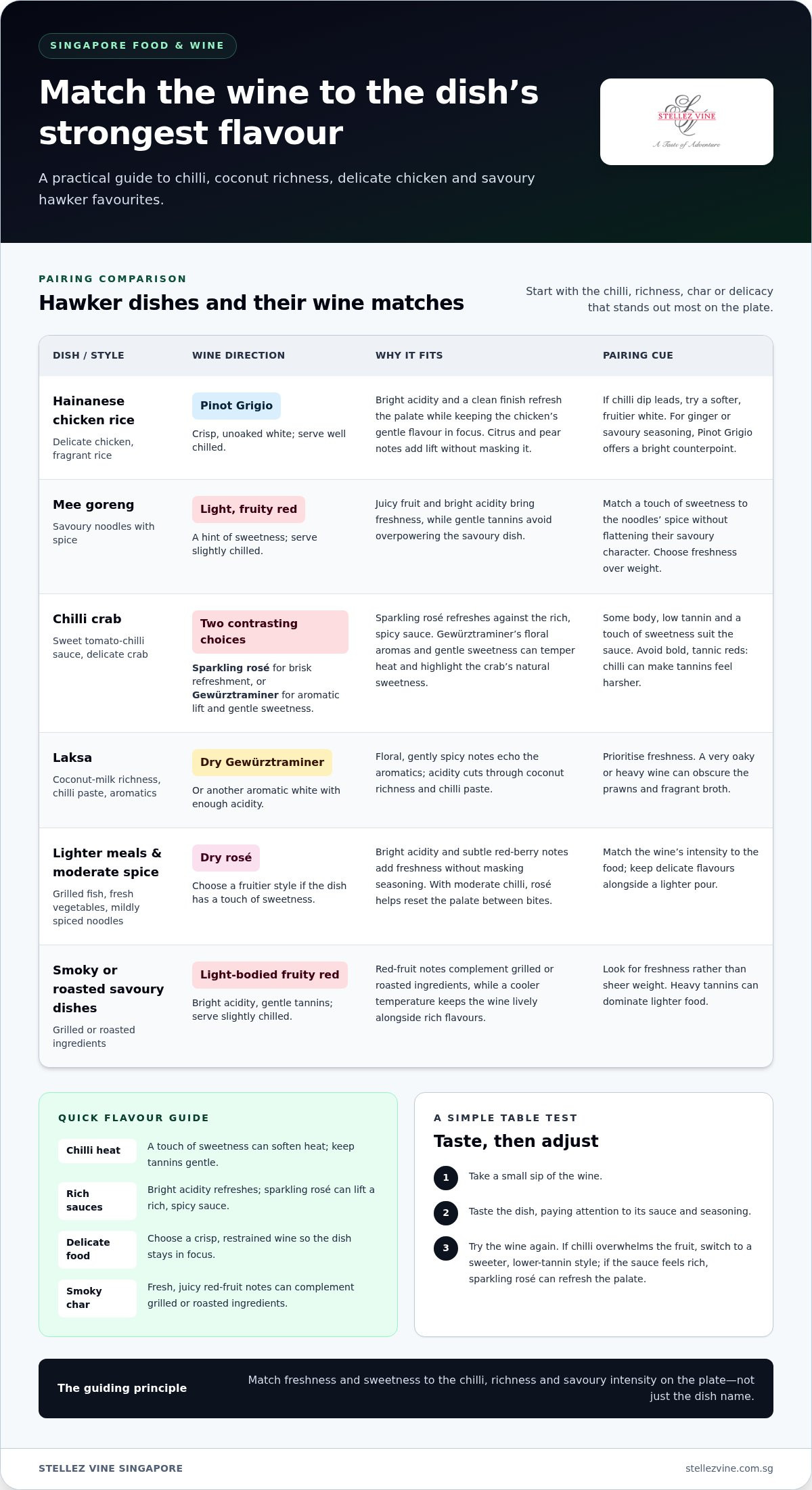
4. Wine pairings for Singapore hawker food
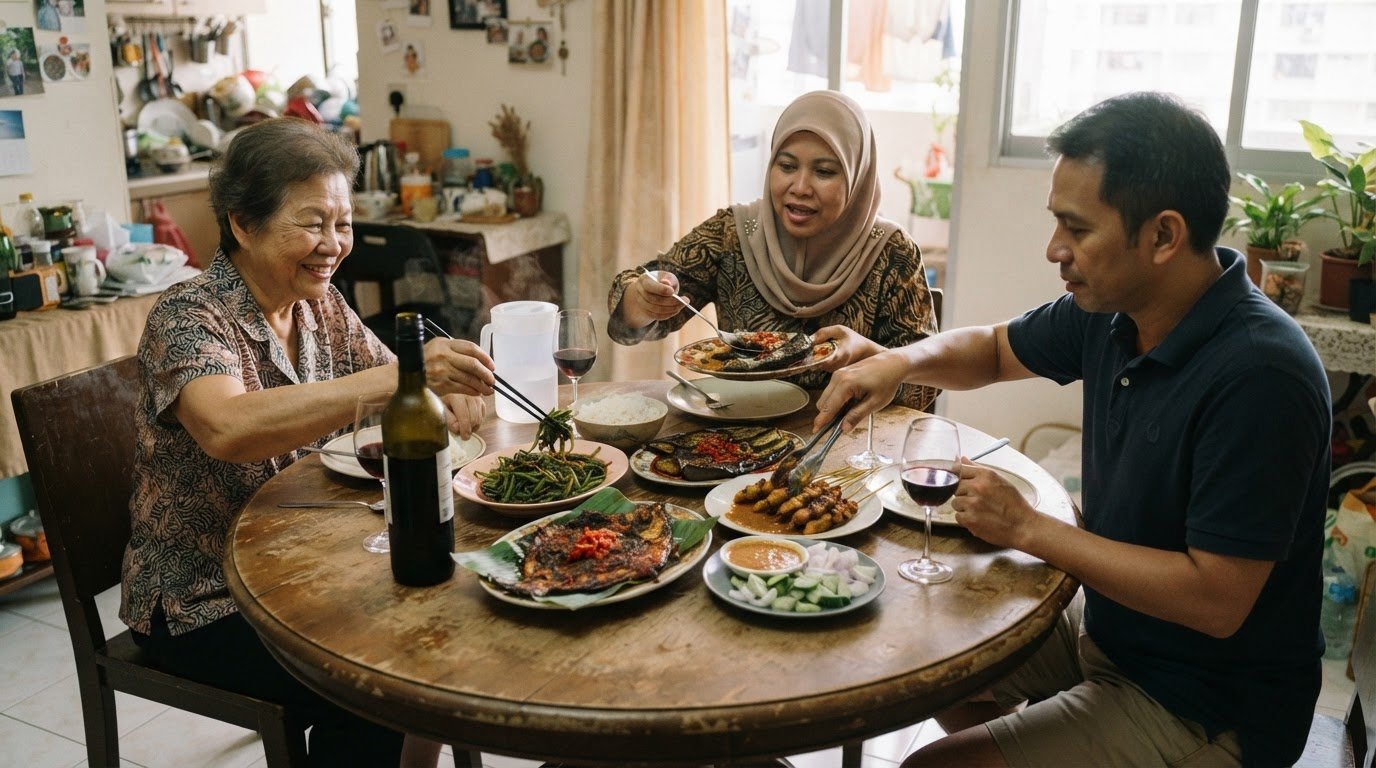
Hawker food calls for a flexible selection, not one bottle for every stall. Start with the strongest flavour on the plate: chilli, coconut richness, smoky char or aromatic ginger. Match that element first, then consider the dish’s texture. Bright acidity helps balance oily sauces, while natural sweetness can soften chilli heat without erasing savoury depth.
For satay, look to the contrast between charred meat and slightly sweet peanut sauce. A medium-bodied red such as Primitivo or Negroamaro can complement the smoky flavours without feeling too delicate. Grenache is another option. Keep the wine fruit-led, so its ripe character works with the sauce and grilled edges.
Roti prata with curry brings spice, richness and flaky texture together. Gewürztraminer can suit this combination through lychee, rose and spice notes, with gentle sweetness to mellow the heat. A pairing example is Joseph Cattin Gewürztraminer 2021. Taste the curry with the prata first; the sauce, rather than the plain bread, guides the wine choice.
For char siu, try an off-dry white or a lighter red with soft tannins, such as Pinot Noir or fruit-driven Chianti. The sweet glaze and savoury meat can make firm tannins feel astringent. A softer wine keeps the caramelised surface and seasoned interior in balance. For beef rendang, a fruit-forward red can stand up to its concentrated spice and richness.
Use this quick method at a hawker meal: identify the dominant sauce, judge its heat and richness, then choose sweetness or acidity to balance it. Ginger-heavy dishes often suit aromatic wines, while oily noodles benefit from freshness. Taste the wine with a seasoned bite, not a plain ingredient, for a more accurate match.
Build your next hawker pairing around the dish’s defining flavour, then explore wines for your table.
Stellez Vine Singapore: South African Wines
Stellez Vine Singapore offers South African wines to explore alongside Singaporean dishes. Let the dish’s spice, richness and dominant flavours guide your selection, then choose a wine style to complement them. South African wines offer another region to discover as you build pairings for hawker favourites and home-cooked meals.
Serving temperature matters, especially for lighter wines. Kadeka Wine Chillers, Eurocave Wine Fridges and Liebherr Wine Cabinets provide storage options for organising a wine collection at home. Choose a solution that suits your storage needs, and keep serving choices in mind when planning meals.
Explore South African wines and wine storage options at stellezvine.com.sg, or contact Stellez Vine Singapore.
Make the Next Pairing Your Own
Let your next meal be a chance to refine your palate. Notice which flavours you enjoy together, then use that preference to guide future choices. A brief note about the dish, its sauce and the wine’s character can make your next wine pairing with Singaporean food more personal and considered. The aim isn’t to follow a rigid rule, but to discover combinations you’ll want to return to.
For your next bottle, explore the South African wines offered by Stellez Vine Singapore. If you’re building a home collection, Kadeka Wine Chillers and Eurocave Wine Fridges are among its storage options. Choose a direction that suits your table, whether you’re planning a relaxed hawker-inspired meal or a more curated dinner at home.
Contact Stellez Vine Singapore to explore its wines and storage options. Keep tasting, trust your palate and enjoy the discoveries ahead.
Frequently Asked Questions
What wines pair well with Singaporean dishes like chilli crab, laksa, and Hainanese chicken rice?
Choose wine by the dish’s dominant flavour: off-dry Riesling for chilli crab, an aromatic white for laksa, and Pinot Grigio for chicken rice. For a shared meal with several dishes, serve versatile dry rosé alongside milder plates, then pour a sweeter or more aromatic style with spicy sauces. Keep chilli dips separate so diners can adjust each bite.
What wine pairs best with Singapore chilli crab and its spicy, sweet sauce?
Off-dry Riesling is a strong choice for chilli crab because its sweetness can ease the sauce’s chilli heat. Sparkling rosé offers a livelier contrast, especially if you want bubbles alongside the rich sauce. Choose based on the sauce’s balance: more sweetness may suit Riesling, while a particularly rich mouthfeel may make sparkling rosé feel refreshing.
What wine goes with Hainanese chicken rice, kaya toast, and other mild dishes?
Pair Hainanese chicken rice with fresh Pinot Grigio or Pinot Gris, and try Moscato d’Asti with kaya toast. The chicken rice pairing keeps the meal’s gentle savoury flavours in focus. Kaya toast’s coconut-milk jam brings sweetness, making a lightly sweet, aromatic wine a fitting contrast. For other mild dishes, choose a restrained wine that won’t overpower subtle seasoning.
What wines pair with satay, sambal, and other spicy Singaporean foods?
For satay, try a fruit-forward, medium-bodied red to complement grilled meat and peanut sauce. With sambal-heavy dishes, choose an off-dry white such as Riesling to soften the chilli’s impact. If a meal includes both, taste the wine with the spiciest sauce first. This helps reveal whether the wine’s sweetness and fruit remain present alongside the heat.
How do sweetness, acidity, tannins, and alcohol affect wine pairings with chilli and spice?
Sweetness can temper chilli’s burn, while acidity refreshes the palate after oily or rich bites. Tannins can feel more pronounced alongside spicy food, so bold, heavily tannic reds often make a less comfortable match. Higher alcohol can also intensify the sensation of heat. For sambal or curry, prioritise moderate alcohol, bright acidity and a touch of sweetness.
Where can you buy or order wine in Singapore to pair with hawker food?
Stellez Vine Singapore sells wines through its online storefront, with delivery within Singapore. Browse the selection and choose a style suited to your meal, such as a crisp white for a lighter dish or a fruit-forward wine for grilled food. The business also offers wine storage appliances, but you don’t need one to choose a bottle for a hawker meal.
Comments