
Set the Serving Temperature for Vintage, Rosé and Special Champagne

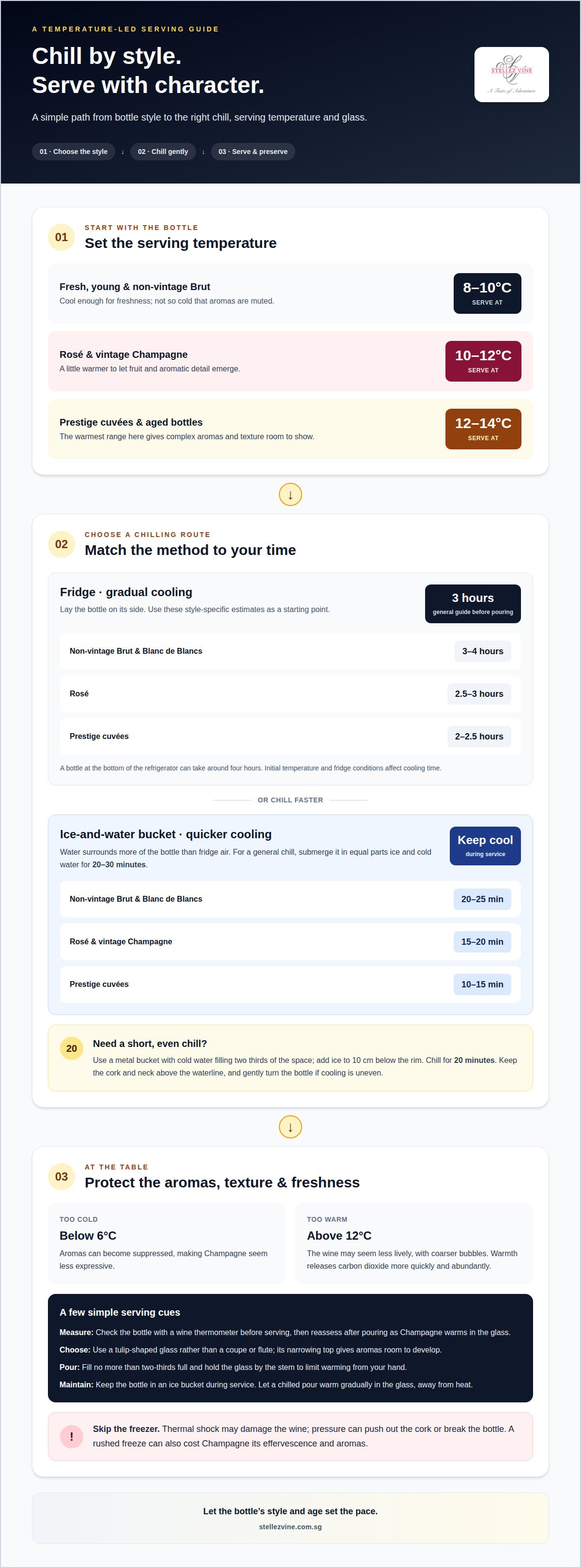
Serving Champagne at the right temperature isn’t simply a matter of making it cold. Fresh, young Champagne is best served at 8-10°C, while vintage and rosé styles benefit from a warmer 10-12°C; prestige cuvées and aged bottles can be served at 12-14°C. Too much chill can mute the aromas that make each style distinctive. For serving champagne at the right temperature, start with the bottle’s style and age.
Older and special Champagnes reward a thoughtful approach. Learn how long to chill each bottle in the fridge or an ice bucket, when rosé and vintage styles benefit from warmer service, and why prestige cuvées call for a gentler touch. Serving champagne at the right temperature helps reveal each pour’s character and makes the experience more expressive.
Table of Contents
How long should I chill Champagne in the fridge?
Plan the chill around the bottle’s style and serving time. For gradual cooling, lay Champagne on its side in the fridge about three hours before pouring.
Refrigerator Chilling and Service Storage
Refrigerator chilling cools Champagne gradually, while an ice bucket during service helps maintain its temperature. Allow 3-4 hours for non-vintage Brut and Blanc de Blancs, 2.5-3 hours for rosé, and 2-2.5 hours for prestige cuvées. These estimates give you a style-specific starting point, though the bottle’s initial temperature and fridge conditions affect how quickly it cools.
A bottle lying down at the bottom of the refrigerator can take around four hours to chill. Use the timing as a guide, then keep it in an ice bucket once it reaches serving temperature. This is especially useful when guests are pouring throughout a long meal.
Ice-and-Water Bucket Chilling
An ice-and-water bucket chills Champagne faster than a fridge because water surrounds more of the bottle. For a general chill, submerge the bottle in equal parts ice and cold water for 20-30 minutes. Keep it in the bucket during service to help hold its temperature, rather than leaving it on the table to warm.
Style changes the timing: the quick-reference estimate is 20-25 minutes for non-vintage Brut and Blanc de Blancs, 15-20 minutes for rosé and vintage Champagne, and 10-15 minutes for prestige cuvées. Remove the bottle when ready, as overchilling can mute delicate character and flavours.
Ice Water Bath Chilling
For a faster ice water bath, place the bottle in a metal bucket with cold water filling two thirds of the space; add ice to 10 cm below the rim. Chill for 20 minutes. The water bath cools the glass evenly, making it a practical option when Champagne needs chilling shortly before serving.
Keep the cork and neck above the waterline, and turn the bottle gently if the bath cools unevenly. A Blanc de Blancs bottle, for example, can use this method when there’s only 20 minutes before guests arrive.
Skip the freezer: thermal shock may damage the wine, while pressure can push out the cork or break the bottle. A rushed freeze can also cost Champagne its effervescence and aromas, so use the 20-minute water bath instead.
What is the best temperature to serve Champagne?
Serve fresh, young Champagne at 8-10°C. That range lets its aromas and flavours emerge without sacrificing freshness.
Temperature Effects on Aroma and Flavour
Serving temperature changes how readily Champagne’s aromatic compounds reach your nose, shaping its perceived flavour. Below 6°C, aromas can become suppressed, making the bottle seem less expressive.
At 8-10°C, a young Champagne can show its freshness alongside more of its character. A bottle served at 20°C may seem heavy and unbalanced, so avoid letting it sit warm for too long.
Temperature Effects on Texture and Bubbles
Temperature affects the feel and pace of Champagne’s bubbles, changing how lively each sip seems. Champagne served too cold can feel muted, while warmth releases carbon dioxide more quickly and abundantly.
Above 12°C, the wine may seem less lively and its bubbles coarser. Let a chilled bottle warm gradually in the glass rather than leaving it near a heat source; that preserves a more composed texture.
Temperature Effects on Acidity and Sweetness
Temperature influences how Champagne’s elements balance on the palate, including its acidity and sweetness. At 8-10°C, fresh, young styles retain a crisp impression while their aromas begin to open.
At 10°C, Champagne’s freshness and liveliness suit oysters, seafood or fish carpaccio. At 12°C, aromatic expression becomes more prominent, making the wine a natural match for sashimi, scallop tartare or smoked salmon. These examples show how a small shift can change the pairing’s overall impression.
Measuring Champagne Serving Temperature
A wine thermometer gives you a direct way to measure Champagne’s temperature. Check the bottle before serving, then reassess after pouring, since Champagne warms in the glass.
Choose a tulip-shaped wine glass, which narrows toward the top, rather than a coupe or flute. Fill it no more than two-thirds full, and hold it by the stem to limit warming from your hand. The right glass helps maintain the wine’s temperature and gives its aromas room to develop.
Adjusting temperature for vintage, rosé and prestige cuvées
Champagne’s ideal temperature depends on its style and age. Adjust the chilling time before pouring to reveal each bottle’s distinctive character.
Temperature for Vintage and Prestige Champagne
Serve vintage Champagne at 10-12°C, and prestige cuvées or aged Champagne at 12-14°C. These warmer ranges give complex wines room to express their aromas and texture, rather than masking them with excessive chill.
Vintage Champagne is produced only in years when conditions are right, so take time to notice its individual character. Start within its recommended range, then let the wine warm slightly in the glass. Avoid serving it too cold, as this can suppress its aromatic detail.
Temperature for Non-Vintage Brut
Non-vintage Brut is best served at 8-10°C. Its cooler range preserves a fresh, lively impression, making it a versatile choice before a meal or alongside lighter dishes.
When moving a bottle from the refrigerator to the table, consider when it will be poured and how quickly it may warm. Keep it cool during service, then let each glass open gradually. This balances freshness with the wine’s developing aromas.
Rosé Champagne sits between these styles at 10-12°C. This range allows its fruit and aromatic character to show while preserving a refreshing feel. Match the temperature to the occasion: rosé pairs well with duck, game and Chinese food, especially dishes with sweet-and-sour elements.
For vintage Champagne at a meal, 10-12°C is a useful serving range. Pair it with the dish’s richness and intensity, so neither the wine nor food overwhelms the other. A slightly warmer pour can help its flavours emerge across the meal.
Use these ranges as guides for specific styles, not as a single rule for every bottle. Gentle chilling and small adjustments during service help each cuvée show its character while retaining freshness.
Serving temperatures for older and special champagnes
Older and special Champagnes reward a more considered pour than a standard aperitif. For aged Champagne and prestige cuvées, aim for 12-14°C; this warmer range helps reveal complexity without serving the wine too warm.
At 12°C, Champagne can balance liveliness with aromatic expression. As it approaches 14°C, it can show greater roundness and aromatic complexity. For tasting, pour a small amount first and let it open in the glass. This gradual change gives you a chance to notice how the wine develops, rather than judging it from its first, cooler sip.
Age and style matter together. A vintage Champagne is generally served at 10-12°C, while older bottles and prestige cuvées are recommended at 12-14°C. Use the bottle’s style as your starting point, then consider the meal: a richer dish can suit a warmer pour, while a delicate pairing may benefit from cooler service.
Temperature also changes the impression of bubbles and freshness. Above 12°C, Champagne may seem less lively, with coarser-feeling bubbles; at 16°C, it can show opulence and depth alongside game or refined, spicy dishes. That doesn’t make 16°C the ideal serving temperature for every older bottle. Treat it as a distinctive tasting point, not a default target. At 20°C, Champagne may seem heavy and unbalanced, so avoid leaving an open bottle in a warm room.
For a special bottle, begin within its style’s range, pour gently, and taste again as it warms. That simple progression can reveal changes in aroma, texture and complexity. If you’re creating a dedicated home setting for wine, explore Eurocave Wine Fridges as one storage option.
Stellez Vine Singapore
Stellez Vine Singapore helps you bring thoughtful wine choices and storage options together for your home or table. If you’re planning how to store bottles between occasions, explore Kadeka Wine Chillers, Eurocave Wine Fridges and LIEBHErr Wine Cabinets. The right storage choice can complement the care you take when preparing Champagne for service.
For a different discovery, browse South African Wines and consider how wine style suits the occasion. Pair your selection with the serving guidance above, from gradual chilling to a style-specific pour, for a more considered experience.
Contact Stellez Vine Singapore to discuss your wine and storage interests.
Make Your Next Pour More Personal
Let the occasion shape the experience. A quiet dinner, a celebratory toast and a long meal each invite a different pace of pouring and tasting. Serving Champagne at the right temperature makes the moment feel considered, leaving you free to enjoy the company rather than make last-minute adjustments.
Your next step could be discovering a bottle that suits an upcoming gathering or planning how wine fits into your home. Stellez Vine Singapore brings together wines and storage options for those choices, including South African Wines, Kadeka Wine Chillers and Eurocave Wine Fridges. Thoughtful storage can support your plans for serving Champagne at the right temperature, and a suitable glass can help shape the experience. Explore what suits your plans and make the occasion your own.
Contact Stellez Vine Singapore to start a conversation about your wine interests. Here’s to serving Champagne at the right temperature and enjoying a memorable occasion.
Frequently Asked Questions
Can Champagne Be Too Cold?
Yes. Champagne served below 6°C may have suppressed aromas, making its character harder to appreciate. If a bottle feels too cold, let it stand briefly before pouring, then taste again as it warms. Avoid trying to correct the temperature with heat; gradual warming gives you a clearer sense of how the wine’s aromas and flavours develop in the glass.
How to refresh champagne?
To cool a bottle that has warmed, place it in an ice-and-water bucket rather than the freezer. The water cools the bottle evenly around its surface, while the ice keeps the bath cold. Leave the bottle in the bucket between pours if the meal is taking time. Don’t put ice cubes directly into Champagne, as they dilute the wine and disrupt its aromatic balance.
What's the ideal temperature?
For fresh, young Champagne, use 8-10°C as your starting range. The ideal point within it depends on the style and how you plan to serve the wine. For an aperitif, a cooler pour can emphasise freshness; with a meal, a little more warmth can help its aromas emerge. Let the first glass guide your pace rather than chilling every bottle equally.
What is the ideal serving temperature for Champagne?
Fresh, young Champagne is best served at 8-10°C, while the broader range for Champagne depends on style and food pairing. Avoid a warm room or direct heat while serving, as warmth can make the wine seem less lively. Pour a small amount first and let the glass rest briefly; the changing aromas can help you judge whether the bottle is ready to enjoy.
Should vintage and non-vintage Champagne be served at different temperatures?
Yes. Non-vintage Brut is generally served at 8-10°C, while vintage Champagne is served at 10-12°C. A vintage bottle is made only in years when conditions are right, so a slightly warmer pour can help its individual character show. For a tasting, compare the first sip with a later one as the wine opens, rather than serving both styles at one temperature.
What is the ideal temperature for Champagne rosé and prestige cuvée?
Serve rosé Champagne at 10-12°C and prestige cuvées at 12-14°C. Rosé works well with duck, game and Chinese dishes, especially those with sweet-and-sour notes. A prestige cuvée benefits from enough warmth to reveal aromatic complexity. Keep each bottle cool between pours, then give the wine time in the glass to express its style alongside the food.
Comments