
Wine Glassware Singapore: The Connoisseur’s Guide to Elevating Every Pour

Updated: Sep 24
Pouring a benchmark Savage Wines Syrah into a thick-rimmed water tumbler isn't just a missed opportunity; it's a disservice to the winemaker's craft. You've likely felt that familiar hesitation when hosting guests, wondering if a Burgundy glass actually matters or if your fragile crystal will survive the next dinner party. It's a common struggle for enthusiasts navigating limited storage in modern apartments while trying to maintain premium collections in a tropical climate. We agree that your glassware should be a precision instrument, not a source of stress or clutter.
This guide empowers you to master wine glassware Singapore by revealing how specific bowl shapes unlock complex aromatics and balance acidity. You'll discover how to curate a professional-grade collection that maximizes flavor while respecting your space. We'll walk through the essential pairings for every pour, provide practical tips for maintaining delicate stems in high humidity, and show you how to elevate your home tasting experience with effortless confidence. It's time to stop guessing and start savoring every drop with the clarity and elegance your cellar deserves.
Table of Contents
The Science of Savoring: Why Glassware Matters in Singapore
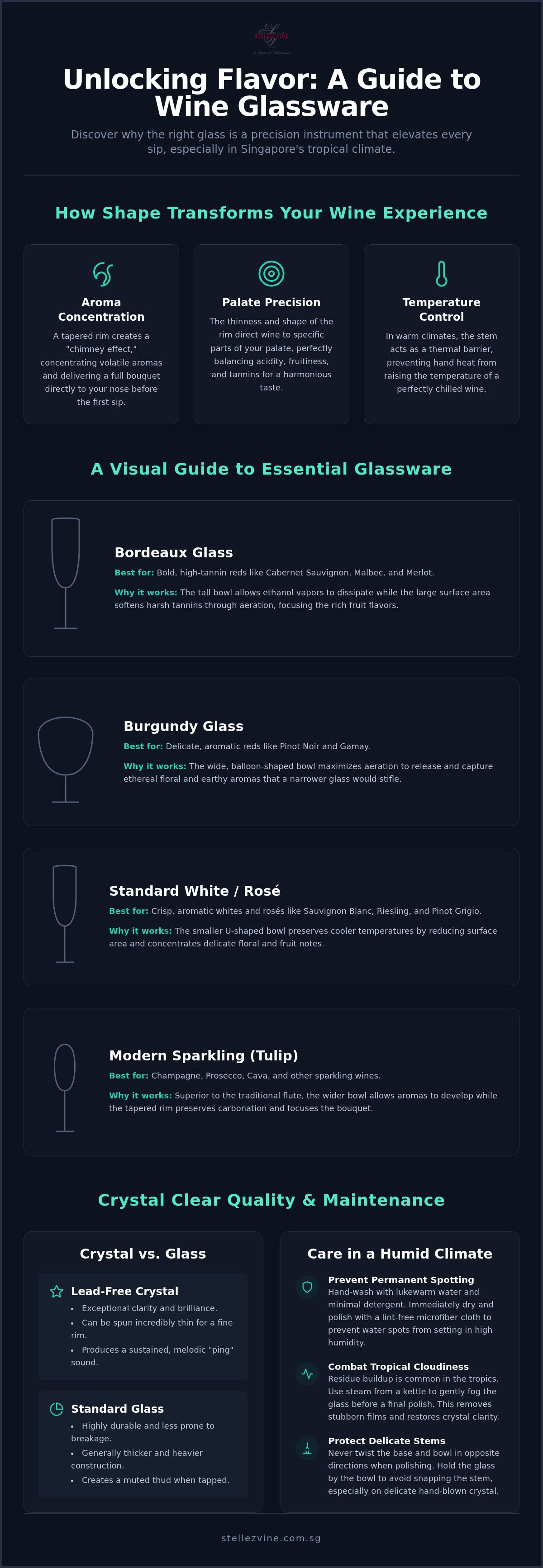
Selecting the right wine glassware Singapore enthusiasts use is far from a mere aesthetic choice; it's an exercise in sensory engineering. Every curve and angle of a glass serves to translate the liquid's chemical profile into a human experience. By understanding the composition of a wine glass, you can manipulate how aromatic molecules hit your olfactory receptors and how the liquid lands on your palate. A wide bowl provides the necessary space for complex reds to breathe, while a tapered rim directs the wine to specific zones of the tongue to highlight fruitiness or temper acidity.
Aeration is the intentional expansion of a wine's surface area to facilitate oxygen contact, which effectively softens harsh tannins and liberates volatile aromatic compounds. In Singapore's tropical climate, the stem plays a vital role beyond elegance. It acts as a thermal barrier, preventing the heat from your palm from warming a perfectly chilled pour. This is especially critical when enjoying a crisp South African Chenin Blanc or a delicate Thai GranMonte, where temperature precision is paramount.
Aroma Release and the Olfactory Experience
Think of the glass bowl as a staging ground for scent. The "chimney" effect of a tapered rim concentrates volatile compounds at the top of the glass, ensuring your nose captures the full bouquet before the first sip. A generous bowl depth allows for a vigorous swirl without risk of spills, increasing the wine's surface area and coating the sides of the glass to release more aroma. For delicate white wines, a narrower rim is essential to preserve subtle floral notes that might otherwise dissipate in a wide-mouthed vessel.
The Impact of Glass Thinness on Palate Perception
Precision craftsmanship defines the transition from bottle to glass. A laser-cut edge allows the wine to flow seamlessly onto the tongue, whereas a thick, "rolled rim" creates a physical bump that disrupts the liquid's path and alters your perception of texture. Premium, weightless stemware removes the psychological barrier of the vessel, making the tasting feel more direct and immersive. High clarity in lead-free crystal is equally functional; it allows you to observe the wine’s hue and the "legs" that indicate alcohol content and viscosity with unmatched precision. This visual clarity is the first step in a curated tasting journey, providing a benchmark for the quality that follows.
Decoding the Shapes: Matching Glassware to Your Wine Varietals
Your choice of wine glassware Singapore determines how effectively a wine's character reaches your senses. While a single glass might seem convenient, specific bowl geometries are engineered to highlight the unique chemistry of different grapes. Understanding the key differences between crystal and glass is the first step, but the second is mastering the silhouettes that define your collection.
Red Wine Vessels: Space to Breathe
Bordeaux glasses feature tall bowls designed for bold, high-tannin reds. The height creates distance between the wine and your nose, allowing ethanol vapors to dissipate while focusing the fruit aromatics. This is the benchmark choice for a robust Cabernet Sauvignon or a structured Malbec from Matias Riccitelli. Conversely, Burgundy glasses boast a wider, balloon-shaped bowl. This maximizes surface area for delicate, aromatic reds like Pinot Noir, capturing the ethereal floral notes that a narrower glass would stifle. These expansive shapes are particularly effective at managing the "ethanol burn" often found in high-alcohol New World wines, ensuring the heat doesn't overshadow the fruit.
White and Rosé Glasses: Preserving Crispness
Maintaining a cooler serving temperature is a constant battle in Singapore’s tropical humidity. Smaller bowls are the standard for white and rosé wines because they reduce the surface area exposed to warm air, keeping your pour crisp for longer. A classic U-shaped bowl is ideal for retaining the vibrant, floral profiles of Riesling or Sauvignon Blanc. However, rules change for oaked Chardonnay. These fuller-bodied whites require a wider bowl, similar to a red wine glass, to allow the complex secondary aromas from barrel aging to unfurl. Selecting the right vessel is essential when exploring the best South African wine Singapore has to offer, from zesty Chenin Blancs to rich, buttery Chardonnays.
Sparkling wine service is also evolving. While the traditional flute is iconic, connoisseurs are shifting toward "tulip" shapes. These provide a wider mid-section to capture aromatics while tapering at the rim to preserve the bead and effervescence. If storage space is at a premium, a high-quality "Universal" glass can bridge the gap. It offers a compromise in bowl width and height that performs admirably across most varietals, though it may lack the precision of a dedicated shape for extreme profiles. To build your perfect set, explore our curated glassware collection and find the match for your next bottle.
Crystal vs. Glass: Evaluating Quality, Clarity, and Craftsmanship
The physical substance of your vessel dictates the clarity of your tasting. While standard glass is made from sand, soda ash, and limestone, premium wine glassware Singapore collectors favor lead-free crystal. This material replaces lead with minerals like zinc, titanium, or magnesium. These additives don't just ensure safety; they increase the glass's refractive index. High refractive index means the material bends light more effectively, making a vibrant South African Rosé or a deep Argentinian Malbec appear more brilliant and clear in the bowl. It's the difference between seeing your wine and truly observing its hue.
You can identify quality through the "Ping" test. Strike the rim gently with your fingernail. Standard glass produces a dull, short thud. High-quality crystal resonates with a long, musical ring. This sustained vibration signals a dense, mineral-rich structure that provides superior durability despite a thinner profile. This density is also why crystal feels heavier and more balanced in the hand than its cheaper counterparts.
The Advantages of Lead-Free Crystal
Lead-free crystal is prized for its microscopic surface roughness. While it feels smooth to the touch, this porosity helps "hold" the wine against the sides of the bowl during a swirl. This friction releases more aromatic compounds into the glass's chimney. Modern manufacturing has also debunked the myth that crystal is too fragile for the home. The inclusion of titanium or zirconium makes the material remarkably strong. It allows for laser-cut, paper-thin rims that don't chip easily. While many modern crystal sets are technically dishwasher safe, the high heat and mineral content of Singapore's water can eventually lead to etching. Hand-washing remains the gold standard for maintaining that benchmark sparkle.
Artisan Craftsmanship: The Hand-Blown Difference
The choice between hand-blown and machine-made glassware often comes down to the presence of seams. Machine-made stems usually have a faint vertical line where the molds met. Hand-blown pieces are seamless, pulled from a single molten globule for a fluid, organic feel. You'll notice unique variations, such as a tiny bubble in the base or a slight difference in stem thickness. These aren't flaws; they're the signature of a human touch. Sophisticated buyers at an online wine shop Singapore trust often prioritize these artisanal tools because they reflect the same level of craft found in boutique bottles. An artisanal glass feels weightless, removing the physical barrier between you and the vintage.
The Singapore Host’s Guide: Building and Maintaining Your Collection
Curating a collection of wine glassware Singapore hosts can rely on doesn't require a sprawling cellar or dozens of specialized SKUs. In modern apartments where storage space is a premium, focus on the "Essential Three." A tall Bordeaux glass for structured reds, a tapered white wine glass for crispness, and a tulip-shaped vessel for sparkling wines provide a versatile foundation. This trio handles the majority of varietals with professional precision. Beyond your personal bar, selecting high-quality stemware as corporate wine gifts Singapore executives value signals a sophisticated attention to detail, reinforcing your reputation as a knowledgeable and thoughtful connoisseur.
Cleaning and Polishing for Brilliant Results
Singapore’s mineral-rich tap water often leaves behind stubborn white spots on delicate crystal. To combat this, master the steam method. Hold the clean glass over a kettle of boiling water until a fine mist coats the bowl, then polish immediately. Always use a dedicated microfiber cloth rather than a traditional tea towel. Microfiber is lint-free and absorbs oils without scratching the surface, ensuring a benchmark sparkle every time. Avoid using heavy detergents; residual chemicals can leave "off" smells that interfere with the wine's bouquet. A simple rinse with hot water and a thorough steam polish is usually sufficient for maintaining exceptional clarity.
Smart Storage in Modern Homes
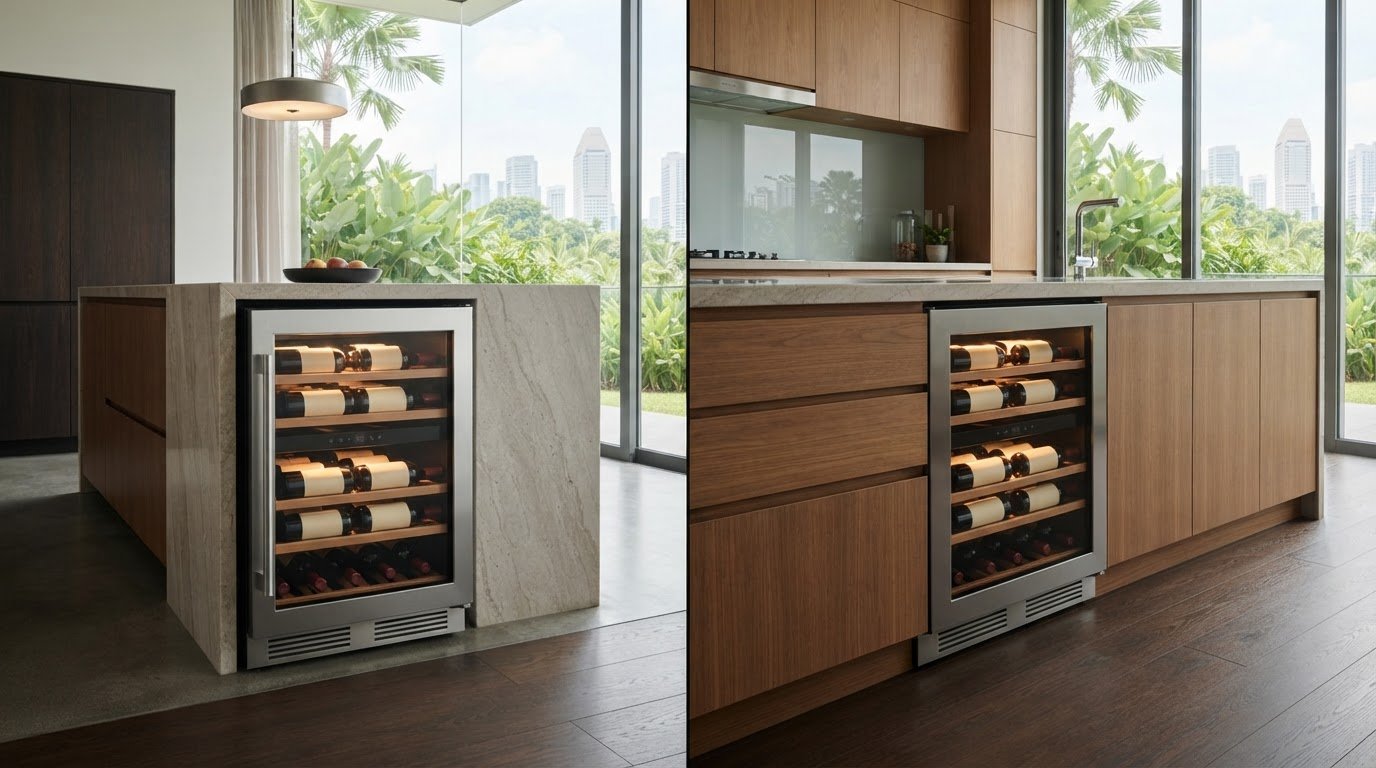
Store your glasses stem-up to prevent stale, cabinet-scented air from becoming trapped inside the bowl. This practice is vital in our humid climate, where stagnant air can lead to "cloudy" glass syndrome. This condition is often a result of moisture reacting with glass minerals, leading to permanent etching if left unchecked. If you utilize a Kadeka wine chiller, keep your glassware in a nearby dry cabinet rather than inside the unit. This prevents excessive condensation from forming on the glass when you pour. When moving your setup to a humid balcony for dinner, allow the glasses five minutes to acclimate. This small step prevents the wine from warming too quickly against cold glass.
Ready to upgrade your hosting kit? Browse our selection of professional-grade glassware to find the perfect match for your collection.
Elevate Your Experience: Curated Glassware and Fine Wines at Stellez Vine
A precision-engineered glass is only as effective as the vintage it holds. At Stellez Vine Singapore, we view wine glassware Singapore enthusiasts choose as the final, critical step in a wine's journey from the vineyard to the palate. We don't just sell stemware; we curate a sensory ecosystem where the vessel is handpicked to match the specific chemical profiles of our boutique portfolio. Whether you are pouring a high-altitude Argentinian Malbec or a complex South African Syrah, the synergy between the liquid and the lead-free crystal ensures that every nuanced aromatic is captured and every texture is refined.
Investing in a curated glass set is the most efficient way to upgrade a wine for dinner party Singapore hosts organize. It transforms a simple gathering into a benchmark tasting experience, allowing your guests to appreciate the true craftsmanship behind every bottle. Our selection process focuses on balance, clarity, and functional elegance, ensuring your home collection performs with the same authority as a professional tasting room.
Tailored Pairings for the Modern Collector
Matching a bold Matias Riccitelli wine Singapore collectors prize with the correct stemware is essential for balancing its intense fruit and structural tannins. These vibrant, high-altitude reds require a generous bowl to breathe, whereas our South African Chenin Blancs demand a narrower, more focused white wine bowl to preserve their signature acidity and zesty floral notes. If you are unsure which silhouette best suits your cellar, our experts provide tailored advice to help you build a collection that respects both your palate and your storage constraints. We believe in quality over quantity, guiding you toward the essential pieces that offer the most versatile performance.
The Complete Tasting Ecosystem
Our philosophy encompasses the entire life cycle of a fine wine. It begins with professional-grade storage in Eurocave or Kadeka units and concludes with the perfect pour into artisanal crystal. We understand the logistical challenges of acquiring premium stemware, which is why we prioritize fast, secure delivery across Singapore. Every piece is handled with extreme care to ensure it arrives in pristine condition, ready for your next event. By combining world-class boutique labels with the tools required to enjoy them, we simplify the path to a sophisticated lifestyle. Browse our curated collection of fine wines and glassware today to discover the difference that professional-grade curation makes to your every pour.
Master Your Home Tasting Experience
Mastering the nuances of wine glassware Singapore enthusiasts rely on isn't just about etiquette; it's about unlocking the full potential of your cellar. You now understand how bowl geometry directs aromatics and why lead-free crystal remains the benchmark for clarity. By curating a streamlined collection and mastering maintenance in our unique tropical climate, you can host every dinner party with effortless confidence. Precision in your stemware ensures that the craftsmanship of the winemaker is never lost in translation.
Stellez Vine has served as a trusted curator of boutique global wines since 2009. We believe the right vessel is the essential companion to an exceptional vintage. Our experts handpick every piece to ensure your journey from storage to sip is flawless, backed by fast and secure local delivery across the island. Don't let a sub-par glass compromise your next benchmark pour. It's time to treat your collection with the respect it deserves.
Explore our curated range of premium glassware and fine wines to find the perfect match for your collection. Elevate your lifestyle and savor every drop with the precision and elegance that only professional-grade tools can provide.
Expert Advice: Frequently Asked Questions
Is lead-free crystal better than leaded crystal for wine glasses?
Lead-free crystal is the modern standard for safety and durability. It uses minerals like zinc or titanium to achieve the same refractive brilliance as traditional leaded versions without the risk of chemical leaching. These glasses are often stronger and more resistant to chipping. This makes them a superior choice for a busy Singapore household where both elegance and longevity are essential for daily enjoyment.
How many wine glasses should a beginner start with in their collection?
A beginner should ideally start with a set of six to eight glasses. This number allows you to host a small dinner party while ensuring you have spares in case of accidental breakage. Choosing a high-quality universal shape is often the most efficient way to manage wine glassware Singapore collections in smaller modern apartments. It provides professional performance across most varietals without requiring excessive cupboard space or specialized racks. For hosts organizing larger functions or private celebrations, suppliers like Personalised Glasses Australia provide custom wine glassware tailored for events and hospitality gatherings.
While many modern crystal brands are labeled as dishwasher safe, hand-washing remains the gold standard for preservation. The high heat and abrasive detergents used in machines can cause permanent clouding or etching over time. This is particularly true given the mineral content in our local water supply. If you must use a machine, select a delicate cycle with low heat and ensure the glasses don't touch each other.
What is the difference between a wine glass and a wine goblet?
The primary difference lies in technical design and intent. A wine glass features a bowl shaped specifically to concentrate aromatics and direct the liquid to certain parts of the tongue. A goblet is generally thicker, heavier, and has a wider, more open mouth. While goblets are excellent for serving water or iced tea, they lack the precision required to truly savor the complex profiles of boutique global wines.
Why do some wine glasses have no stems (stemless), and are they good?
Stemless glasses are popular for their casual aesthetic and ease of storage in compact kitchens. However, they aren't ideal for technical tasting because your palm warms the liquid through the bowl. This temperature shift can quickly dull the crispness of a chilled white or sparkling wine. They are best reserved for informal red wine service where slight temperature fluctuations won't significantly compromise the drinking experience.
How do I remove cloudy stains from my old wine glassware?
Cloudy stains are usually mineral deposits from tap water or detergent residue. You can often remove them by soaking your glasses in a solution of warm water and white vinegar for ten minutes. This mild acid breaks down the fog without damaging the crystal. After soaking, rinse with distilled water and use the steam-polishing technique mentioned earlier to restore the benchmark brilliance your fine wine deserves.
Does the thickness of the glass rim really affect the taste?
Rim thickness significantly impacts your palate's perception of the wine's texture. A paper-thin, laser-cut rim allows the liquid to glide seamlessly onto your tongue, creating a more direct and refined experience. In contrast, a thick, rounded rim creates a physical bump that can make the wine feel heavier or more clumsy. This subtle difference is why connoisseurs invest in premium stemware to complement their high-end vintages.
Should I buy a universal wine glass or grape-specific glasses?
A universal glass is a fantastic, versatile investment for those who enjoy a wide variety of styles. It offers a balanced compromise for most reds and whites. However, if you frequently drink specific varietals, like bold Malbecs or aromatic Rieslings, grape-specific glasses provide a more tailored experience for wine glassware Singapore collectors. These specialized shapes are engineered to highlight unique aromatic compounds, making them a worthwhile upgrade for dedicated enthusiasts.


Comments