
Wine Fridge vs Regular Fridge for Storage: Which Protects Wine Better?

Updated: 20 hours ago
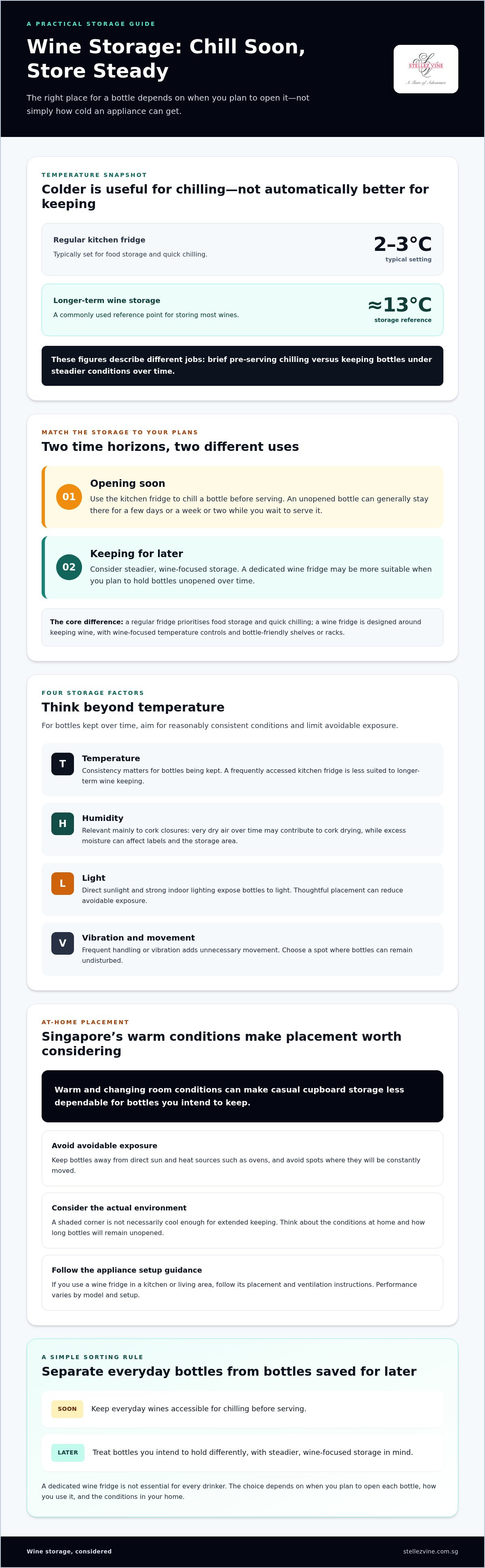
The coldest place in your home isn’t necessarily the best place to keep wine. If you’re weighing wine fridge vs regular fridge for storage, start with how long you plan to keep each bottle, not how cold you can make it. A kitchen fridge is convenient for chilling wine before dinner, but its typical 2-3°C setting is much colder than the roughly 13°C commonly used as a reference for longer-term storage.
An unopened bottle can generally stay in a regular fridge for a few days or a week or two while you wait to serve it. But in Singapore, warm and changing room conditions can make casual cupboard storage less dependable for bottles you intend to keep. A dedicated wine fridge isn’t essential for every drinker. It makes more sense when you want more stable, wine-focused storage over time.
This guide explains when a regular fridge is sufficient, when a wine fridge offers a practical advantage, and how to choose storage around your bottles and plans. You’ll learn how temperature, humidity, light and vibration affect storage, and which wine-fridge features to compare for a home setup, so you can make a considered choice without overbuying.
Table of Contents
Wine Fridge vs Regular Fridge: What Is Each Designed to Do?
These appliances are designed for different jobs. A regular refrigerator keeps food cold and chills drinks for everyday use. A wine fridge is designed to maintain conditions more suited to keeping wine, with wine-focused temperature control and a layout made for bottles. Neither is automatically right for every bottle. The wine fridge vs regular fridge for storage decision depends on when you plan to open the wine, how you use it and the conditions in your home.
Think of serving and storing as separate tasks. Chill a bottle you’ll open soon in the kitchen fridge before dinner. For an unopened bottle you plan to keep, consider the storage conditions over time. Temperature is only one factor: humidity, light and vibration also matter. This overview of wine storage conditions provides useful context for why an appliance’s purpose matters.
Is a regular fridge cold enough for wine storage?
A standard kitchen fridge typically runs at around 2-3°C, while around 13°C is a common reference point for storing most wines. The colder setting is useful for chilling a bottle before serving, but cold alone doesn’t make an appliance ideal for keeping wine over time. Stability matters too. Brief chilling and ongoing storage are different uses, so use the fridge for the first without assuming it’s the best place for the second.
What makes a wine fridge different?
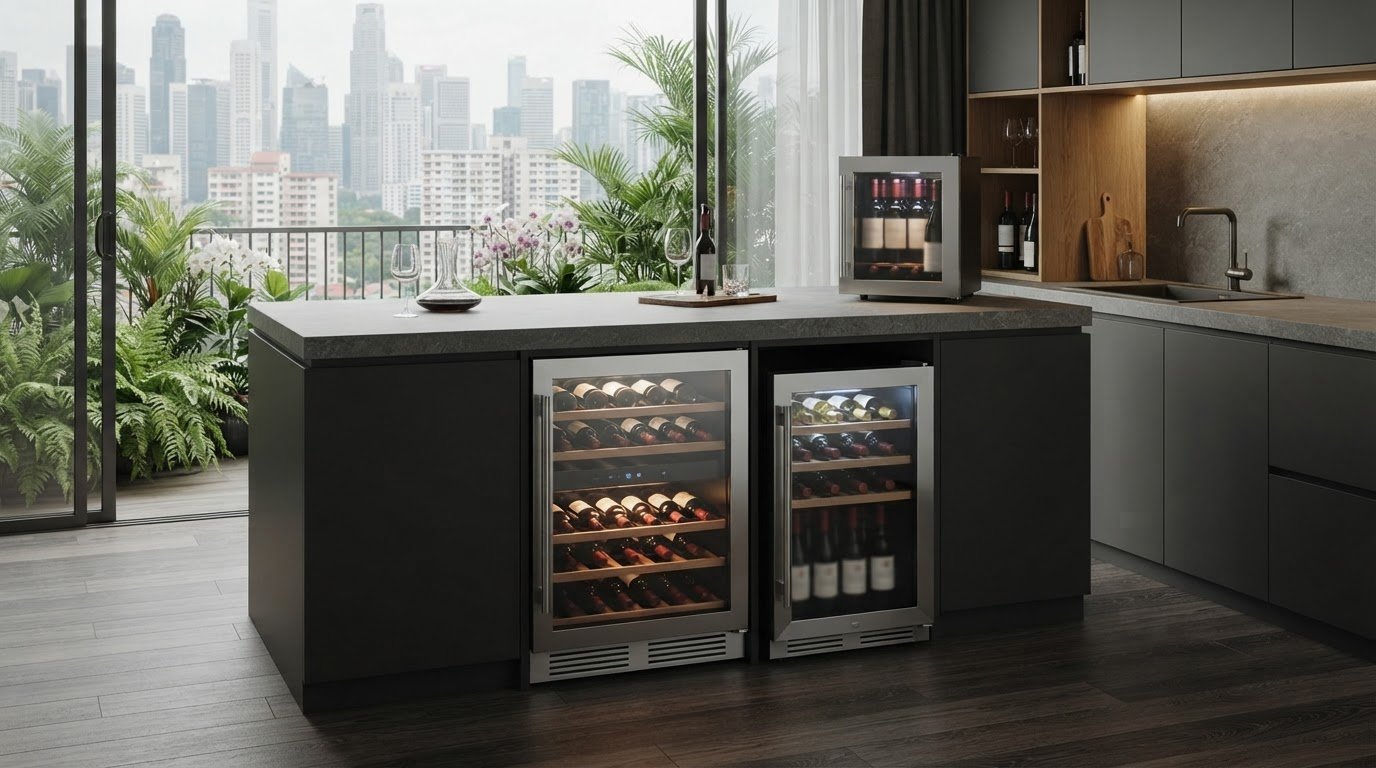
A wine fridge is designed around bottles rather than groceries. Its temperature controls are intended for wine storage, and its shelves or racks help keep bottles organised. That layout can make it easier to reach the bottle you want without shifting the rest. Features vary by appliance, so compare each model’s specifications rather than assuming every wine fridge offers identical settings or performance.
The core difference: a regular fridge prioritises food storage and quick chilling, while a wine fridge is designed to support the considered keeping of wine.
That distinction is especially useful in Singapore, where warm home conditions can make a room less dependable for bottles you plan to keep unopened. If you buy bottles to enjoy promptly, a regular fridge can handle pre-serving chilling. If you’re setting bottles aside for later, dedicated wine storage may provide a more suitable, controlled environment than leaving them in a warm room or using the kitchen fridge as permanent storage.
Before choosing, sort your bottles by purpose. Keep everyday wines you plan to serve soon accessible for chilling, and treat bottles you intend to hold differently. Consider how long they’ll remain unopened and where they’ll be stored at home. This helps you choose based on the wine’s purpose, not simply the coldest available space.
How Temperature, Humidity, Light, and Vibration Affect Wine
Wine responds to the environment around it, but no single factor guarantees that a bottle will improve or deteriorate. For bottles kept over time, aim for reasonably consistent conditions and limit avoidable exposure. In Singapore, warm, humid weather makes placement worth considering: a shelf beside a sunny window or heat-producing appliance may experience different conditions from a shaded, stable part of the home.
Why stable temperature matters more than extreme cold
A low setting isn’t the whole story. Temperature fluctuation means the storage environment repeatedly warms and cools instead of staying relatively steady. That matters more for a bottle being kept for later than for one you’re chilling before dinner. There isn’t one setting for every wine and purpose, so check the producer’s advice or a specialist wine-storage reference for precise guidance.
Opening a kitchen-fridge door lets warm air into the compartment, and the appliance then works to cool it again. That’s part of everyday food use, not proof that a bottle will be damaged each time the door opens. Still, repeated access and changing conditions make a busy refrigerator less suited to longer-term wine keeping. A dedicated unit can provide a more focused environment, though performance varies by model and setup.
Humidity, light, and movement in a home
Humidity is relevant mainly to cork closures. Very dry air over time may contribute to cork drying, while excess moisture can affect labels and the storage area. Neither outcome is automatic, and humidity alone doesn’t determine a wine’s condition. Direct sunlight and strong indoor lighting expose bottles to light, while frequent handling or vibration adds unnecessary movement. Thoughtful placement helps reduce these exposures without eliminating all risk.
Temperature affects consistency, humidity relates to cork condition, light adds exposure, and vibration increases movement. Manage each as a separate part of storage.
At home, keep bottles away from direct sun and heat sources such as ovens, and avoid spots where they’ll be constantly moved. In Singapore’s warm conditions, don’t assume a shaded corner is cool enough for extended keeping. Consider the actual environment and how long you plan to store the bottles. If you place a wine fridge in a kitchen or living area, follow its placement and ventilation instructions so it can operate as intended. A location away from busy walkways and frequent door opening can also make bottles easier to leave undisturbed.
These are practical considerations, not absolute rules. A bottle kept in a warm room isn’t automatically spoiled, just as a dedicated appliance doesn’t guarantee perfect ageing. Check the bottle’s condition, avoid unnecessary exposure, and choose a storage place that suits how long you expect to keep the wine.
Use these factors to guide your wine fridge vs regular fridge for storage choice: brief chilling prioritises convenience, while keeping bottles for later puts more weight on stable conditions and reduced exposure. If dedicated storage fits your routine, explore wine-storage appliances as one way to create a more considered place for your bottles.
Wine Fridge vs Regular Fridge: A Practical Side-by-Side Comparison
The practical difference comes down to purpose. A regular fridge makes it easy to chill a bottle for dinner and keep it close at hand. A wine fridge gives bottles a dedicated place when you’re keeping them beyond immediate serving plans. The wine fridge vs regular fridge for storage choice isn’t a contest over which appliance is colder. It’s about matching access, organisation and storage duration to the way you enjoy wine.
Use the table as a guide, not a guarantee of performance. Models differ, and neither appliance can compensate for poor placement or careless handling. A wine fridge supports more deliberate storage, but it doesn’t ensure that every wine will age perfectly. Keep it away from direct sun and heat, follow the appliance’s placement instructions, and avoid unnecessary movement.
When a regular fridge is a sensible choice
When a dedicated wine fridge earns its place
A wine fridge makes more sense if you regularly keep unopened bottles for later, want your collection organised, or prefer not to share bottle space with groceries. Wine-focused racks can make bottles easier to arrange and access. Storage layouts vary, so consider how you use your collection. For more context on keeping wine in Singapore’s tropical climate, explore this guide to long-term wine storage in Singapore.
Choose based on your habits. If you buy wine for the next occasion, brief chilling in the regular fridge may be all you need. If you’re building a selection to enjoy over time, a dedicated wine fridge can create a more considered storage setup. Placement still matters: keep bottles out of direct sunlight and away from heat sources, and use the appliance for the job it was designed to do.
How to Choose the Right Storage for Your Bottles at Home
Choose storage by starting with your drinking habits and then considering your home setup. A few bottles bought for upcoming meals have different needs from a selection you plan to keep unopened. Singapore’s warm, humid climate makes the storage location worth considering, but it doesn’t mean every household needs a wine fridge. Use this four-step check to choose for your bottles rather than buying an appliance by default.
Assess how you use each bottle. Separate wines you expect to serve soon from bottles you’re setting aside. The first group may only need chilling before serving; the second deserves more deliberate storage.
Estimate the storage duration. Consider whether bottles stay unopened for days, weeks or longer. The longer you intend to keep them, the more important it is to assess the stability of their storage environment.
Look at your home conditions. Check whether your usual storage spot is exposed to direct sunlight, nearby heat or regular temperature changes. In Singapore, a warm room can influence your decision, but conditions vary from home to home.
Measure the available space. Consider where an appliance could sit and how easily you can access it. Leave room to follow its manufacturer’s ventilation and placement guidance, which differs by model.
Match the appliance to how you drink and store wine
Consider how many bottles you keep, how often you open them, and whether you’re buying for immediate enjoyment or future occasions. Collection size alone doesn’t settle the question. A small group of bottles kept for later may benefit from dedicated storage, while a larger supply of wines you’ll serve soon may mainly need convenient chilling. The right choice follows your routine.
Check the space and conditions before deciding
Before choosing a wine fridge, picture its day-to-day location. A shaded spot away from ovens and direct sun is generally more sensible than a hot, exposed one. Check the appliance’s own instructions for ventilation and placement rather than relying on a generic clearance rule. Also consider whether frequent movement or a busy walkway could make bottles awkward to store and retrieve.
Compare your answers: if bottles are for prompt serving and your home has a suitable place for them, a regular fridge may be enough for short-term chilling. If you’re deliberately keeping wine for later and have a suitable location, a dedicated wine fridge may be a better fit. The wine fridge vs regular fridge for storage decision depends on intended use, duration and conditions together.
For more detail on arranging bottles in a cabinet, see this guide to organising a wine cabinet for better aging. Once your criteria are clear, explore wine storage solutions to find a setup that suits your home and the bottles you want to keep.
Explore Wine Fridges for More Considered Home Storage
A regular fridge is practical for briefly chilling a bottle you plan to serve soon. A dedicated wine fridge or cabinet is a more considered choice for bottles you intend to keep for later. Neither option guarantees ideal results on its own. Your decision should reflect storage purpose, available space, and the size and mix of your collection. In Singapore, consider too whether the chosen spot is exposed to heat or direct sunlight.
What to look for in a wine-storage appliance
Start with your routine, then compare the published specifications of the appliances you’re considering. Don’t choose by a feature list alone. The right balance depends on what you keep and how you plan to use it.
Temperature control: Check the stated control range and whether it suits the types of wine you plan to store. Don’t assume every appliance has the same settings or performance.
Bottle capacity: Think about your current collection and how many bottles you realistically expect to keep together. Leave room for the bottle shapes and formats you tend to buy.
Layout: Review how the shelves or racks are arranged. Consider whether bottles will be easy to organise and retrieve without rearranging the rest of your selection.
Intended placement: Decide where the appliance will sit, then use its specifications and manufacturer guidance to understand placement and ventilation needs. A suitable location matters in Singapore’s warm conditions, particularly if the area receives direct sun or heat.
These checks help you compare like with like. A compact collection kept for occasional dinners has different capacity and access needs from a varied selection you’re saving for future occasions. Prioritise features that support your actual habits rather than a specification simply because it sounds advanced.
Browse established wine-storage brands
Stellez Vine Singapore offers wine-storage appliances from Eurocave, Kadeka and Liebherr. Compare each appliance’s published details with your intended storage period, available space and preferred collection size. To explore the decision in a Singapore context, read this wine-fridge storage guide for Singapore.
Keep the choice proportionate. If your bottles are usually opened soon, a regular fridge may meet your short-term chilling needs. If you’re setting bottles aside and want them organised in a dedicated space, a wine fridge or cabinet may be worth considering. Match the appliance to the bottles you keep, not an imagined collection you may never build.
Explore wine storage appliances and compare the options for your home.
Make Room for the Wines You Want to Discover
Your storage choice can grow with your interest in wine. Start with the bottles you’re excited to keep, then choose a setup that fits your space and the way you want to enjoy them. A thoughtfully selected appliance can make it easier to build a collection over time, whether you’re exploring distinctive wines from international regions or setting aside favourites for a future meal.
The wine fridge vs regular fridge for storage decision doesn’t need to be permanent or complicated. Let your habits lead: chill bottles for near-term enjoyment, and consider dedicated storage as your collection and plans evolve. Choose the next step that makes caring for your bottles feel considered and convenient.
Explore wine storage appliances from Stellez Vine and find an option that suits your home. Here’s to choosing well and enjoying every bottle at its best.
Frequently Asked Questions
Can I store unopened wine in a regular fridge for a few days?
Yes. An unopened bottle can sit in a regular fridge for a few days while you wait to serve it. Keep it away from items that might knock it over, and avoid storing it in the door, where bottles can shift as it opens and closes. If you’re serving guests, take it out ahead of time so it can move toward its preferred serving temperature.
Is it bad to keep wine in the refrigerator after opening it?
No. Refrigerating leftover wine can help you keep it for another occasion. Reseal the bottle with its original cork or a suitable wine stopper, then store it upright to reduce the chance of leaks. Before pouring again, let the wine warm slightly if it tastes muted straight from the fridge. Its aroma and flavour can change after opening, so taste it before serving.
Can wine be stored upright in a regular fridge?
Yes, particularly if you’re chilling a bottle for near-term serving or keeping it upright after opening. Choose a stable shelf where it won’t roll or be knocked by groceries. For bottles you intend to keep unopened for longer, follow the wine’s storage guidance and consider how the closure and surrounding conditions affect your plan. A crowded door shelf is less secure than a flat interior shelf.
Does a wine fridge need to run all the time?
A wine fridge is designed to stay powered so it can maintain its set conditions. That doesn’t mean its cooling system runs continuously: depending on the appliance and surrounding conditions, it cycles as needed. Avoid switching it off routinely to save energy, since the interior may warm and fluctuate. Follow the manufacturer’s operating instructions, especially after moving the appliance or restoring power.
Can sparkling wine be stored in a wine fridge?
Yes. A wine fridge can hold sparkling wine, provided the bottle fits securely and the appliance’s settings suit your intended use. If you’re chilling a bottle for an upcoming celebration, plan around the serving temperature recommended for that wine. Keep sparkling bottles stable while handling them, and open them carefully, since pressure remains inside even when the wine is well chilled.
Does a wine fridge use more electricity than a regular fridge?
It depends on the appliances being compared. A wine fridge uses electricity, but consumption varies with its size, efficiency, settings, location and how often it’s opened. A compact wine fridge may use less than a full-size kitchen fridge, but that isn’t guaranteed across models. For the wine fridge vs regular fridge for storage comparison, use the energy information published for each specific appliance rather than assuming one always costs more to run.
What should I do if my wine has been stored in a warm room?
Move the bottle away from direct sunlight and heat, then place it somewhere with steadier conditions. Don’t try to compensate by chilling it abruptly in a freezer. A period in a warm room doesn’t automatically mean the wine is spoiled, especially if the bottle looks intact. Check for leakage, a pushed-up cork or an unusual smell when opening, then taste a small pour before serving.


Comments