
Wine Cellar Singapore: Premium Home Storage Solutions

Updated: Oct 1
Building an elaborate walk-in room is often viewed as the ultimate collector's ambition, yet in our tropical climate, it might be the riskiest way to store fine wine. Singapore's ambient humidity regularly exceeds 80%, while outdoor temperatures routinely climb past 30°C, turning minor thermal leaks into catastrophic condensation and mold. If you are seeking an effective wine cellar Singapore homes can depend on, you already recognize the danger. Subtle temperature swings and dry corks will quietly spoil an irreplaceable vintage before it reaches its prime.
You don't need destructive masonry or complex renovations to secure world-class preservation. Discover how advanced wine cabinets deliver genuine cellar performance to protect and age fine wine in Singapore with pinpoint precision. In this guide, we'll examine the critical distinctions between ordinary beverage coolers and authentic aging cabinets, helping you select a high-performance in-home sanctuary tailored for tropical living.
Table of Contents
What Defines an Authentic Wine Cellar in Singapore's Tropical Environment?
True maturation demands far more than basic refrigeration. Scientifically, an authentic wine cellar creates a hermetically stabilized microclimate shielded from destructive vibration, light infiltration, and thermal volatility. Standard food refrigerators and generic beverage coolers are engineered simply to drop temperatures quickly, which dries out ambient air and agitates fine sediment through frequent compressor cycling. To establish a dependable wine cellar Singapore collectors can trust, you must isolate your bottles inside an environment engineered specifically for gradual, graceful evolution.
The Reality of Singapore's Climate: Thermal Shock and Spoilage
Our equatorial climate is an unrelenting adversary to aging wine. With indoor ambient temperatures consistently hovering around 30°C, unprotected bottles suffer rapid liquid expansion. This thermal pressure forces the cork outward, compromising the seal and drawing in ambient oxygen. Once air enters, the wine oxidizes, stripping bright fruit character and leaving behind flat, stewed, and unpleasantly acidic profiles. Sustained temperatures above 20°C trigger irreversible thermal degradation in months, permanently flattening complex tertiary aromas before they ever develop.
Custom Built-In Cellar Rooms vs. Dedicated Wine Cabinets
Many collectors assume a walk-in room build-out represents the pinnacle of home storage. For a practical guide on how traditional underground builds are engineered, check out Rosehill Wine Cellars. In the tropics, however, masonry construction introduces immense operational vulnerabilities:
Vapor Barrier Breakdown: Singapore's persistent ambient moisture puts extreme hydrostatic pressure on insulated drywall. A single microscopic failure in the vapor seal pulls ambient humidity into wall cavities, fueling hidden mold colonies.
Thermal Leakage: Custom-framed glass doors and non-continuous insulation force heavy cooling systems to cycle endlessly, risking localized hot spots and soaring energy consumption.
Structural Disruption: Modifying residential carpentry and electrical lines requires intrusive renovations that offer zero portability if you relocate.
Factory-engineered luxury wine cabinets eliminate these architectural hazards entirely. With insulated thermal shells, calibrated compressors, and integrated airflow management, these standalone units serve as self-contained, turnkey cellars that drop seamlessly into modern residences. Consult our practical evaluation on whether is a wine fridge worth it in Singapore to see why dedicated cabinets outperform complex, high-risk room builds.
The Five Pillars of Long-Term Home Wine Storage
Transforming ordinary refrigeration into an authentic wine cellar Singapore enthusiasts can rely on requires mastering five uncompromising environmental criteria. When aging fine wine, minor oversights compound over years, turning celebrated vintages astringent or lifeless. Specialized cabinets replicate the subterranean stillness of historic European cellars through five engineering pillars:
Constant Temperature: Maintaining a steady range between 12°C and 14°C prevents thermal expansion and preserves gradual maturation.
Controlled Humidity: Sustaining relative humidity between 60% and 75% keeps corks supple and airtight.
Vibration Dampening: Eliminating micro-tremors protects delicate chemical compounds and structural tannins.
UV Ray Filtration: Blocking destructive light spectrums shields organic phenolic compounds from light-strike reactions.
Purified Airflow: Neutralizing volatile ambient compounds through continuous carbon filtration prevents external odors from penetrating the cork.
Thermal Stability and Humidity Regulation in the Tropics
Kitchen refrigerators actively strip moisture to prevent frost, driving internal humidity below 40%. In Singapore's climate, this rapid desiccation dries natural corks, causing shrinkage and immediate oxidation. Read our analysis of long term wine storage in Singapore to understand these preservation mechanics. Benchmark storage cabinets use embossed aluminum interior walls and porous volcanic lava stones to capture ambient condensation, steadily redistributing moisture back across your collection to maintain optimal humidity.
Protection from Kinetic Vibration and Light Degradation
Domestic appliances produce persistent kinetic vibrations. Even imperceptible compressor humming agitates microscopic bottle sediment, disrupting natural esterification and flattening delicate flavor compounds. Professional aging cabinets isolate mechanical components on silent-block shock mounts while cradling bottles on untreated beechwood shelving that absorbs ambient floor vibrations.
Simultaneously, prolonged light exposure breaks down delicate amino acids. Premium units feature double or triple-glazed, argon-filled glass doors with integrated UV filters, allowing you to showcase rare bottles without photochemical decay. To build an uncompromising sanctuary for your private collection, explore our handpicked range of fine storage solutions at Stellez Vine.
Leading Home Wine Cellar Brands: Eurocave, Liebherr, and Kadeka
Selecting the right hardware for a residential wine cellar Singapore setting means aligning manufacturer pedigree with your personal drinking habits. Storing collectible Grand Cru allocations for twenty years demands different engineering than keeping ready-to-pour bottles conditioned for weekend hosting. Review our curated guide on the best wine fridge Singapore collectors trust to explore side-by-side technical benchmarks.
Eurocave: The Heritage Benchmark for Aging Rare Vintages
Eurocave remains the historic benchmark for uncompromised maturation. Handcrafted in France, these cabinets replicate the atmospheric equilibrium of authentic subterranean limestone caves. The brand prioritizes dedicated long-term preservation, offering solid panel doors alongside high-filtration UV glass models. Inside, patented "Main du Sommelier" beechwood cradles adjust individually to bottle shapes, eliminating vibration transfer and maximizing cellaring safety for rare allocations.
Liebherr: German Engineering and Dynamic Multi-Zone Versatility
Liebherr brings precision refrigeration engineering into contemporary residences. For collectors who split inventory between long-term maturation and immediate consumption, Liebherr's dual-zone and triple-zone architectures offer unmatched flexibility. Explore the flagship innovations in our Liebherr wine cabinet Singapore guide. Independent electronic circuits let you age classified Bordeaux at 12°C in one compartment while holding crisp whites at 8°C in another, backed by easily replaceable active charcoal filters that guarantee interior purity.
Kadeka: Cutting-Edge Inverter Efficiency for Urban Living
Kadeka designs high-performance appliances specifically tailored for compact, high-humidity city residences. The brand pioneered inverter compressor systems in domestic wine storage, delivering steady cooling cycles with minimal energy draw and ultra-quiet acoustics. Here is how their engineering caters to modern spaces:
Label-Friendly Storage: Wider, patented shelf spacing comfortably holds broader Champagne and Burgundy bottles, preventing torn labels during retrieval.
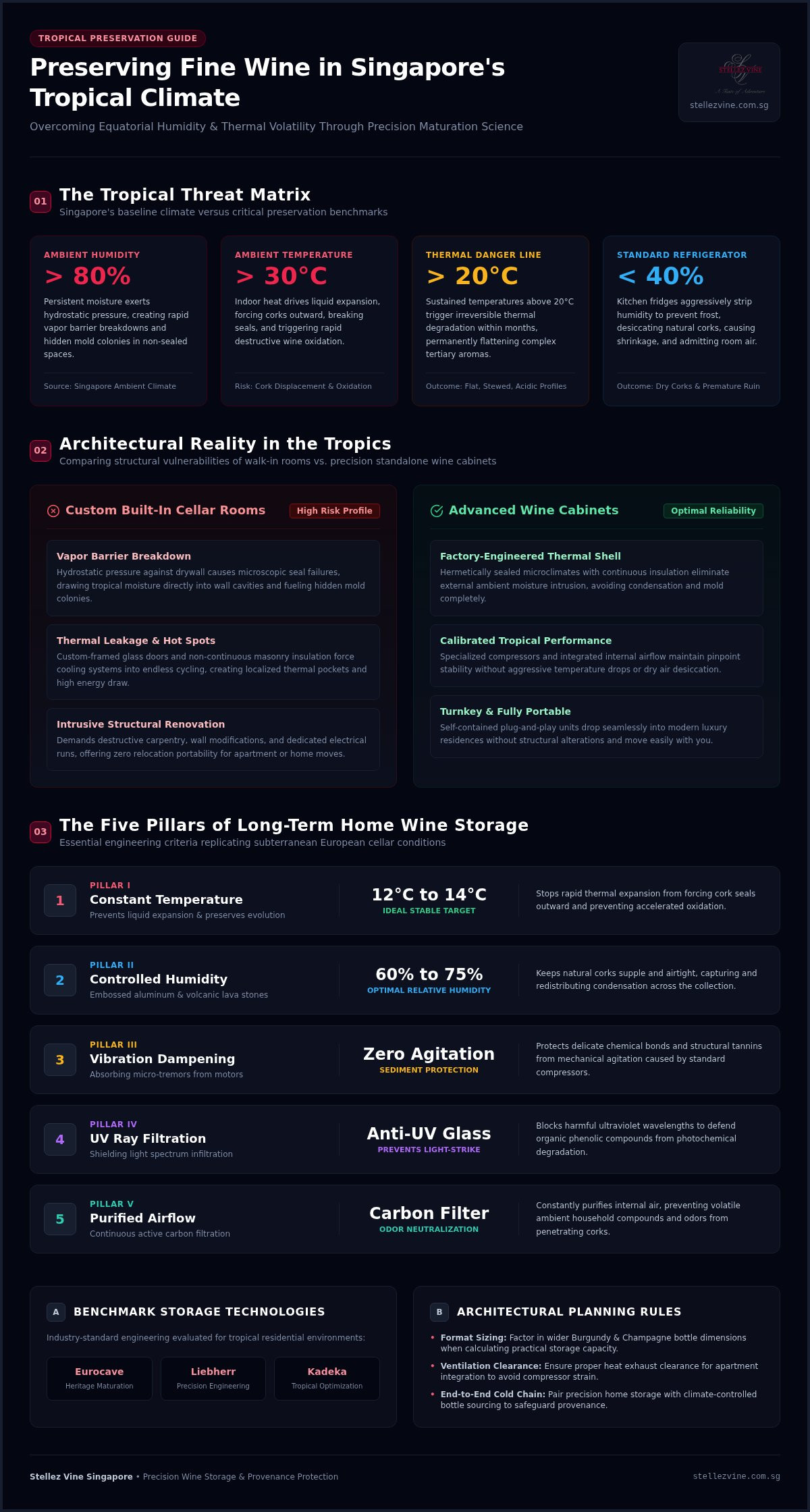
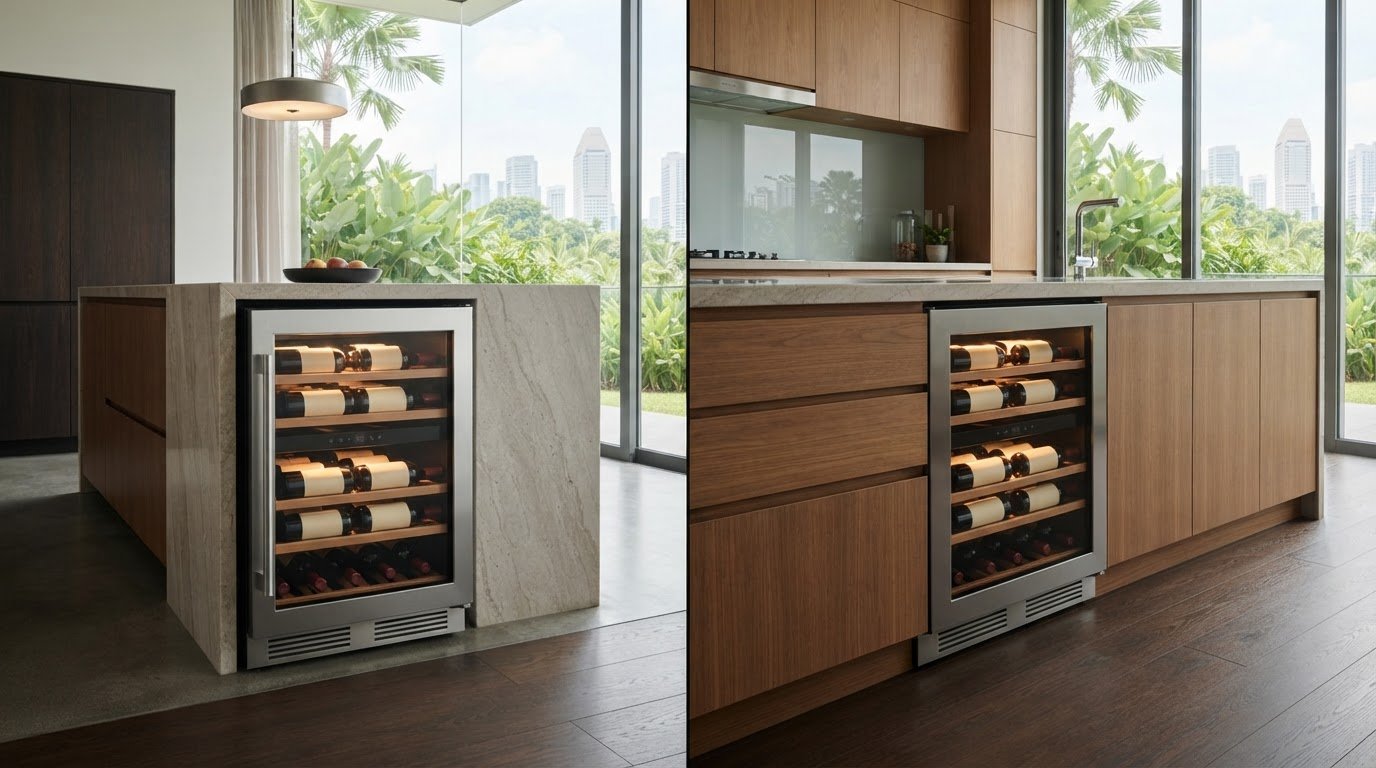
Architectural Integration: Front-venting designs and trim profiles allow seamless under-counter or built-in flush cabinetry installations.
Contemporary Aesthetics: Seamless stainless steel frames and soft rimless LED illumination complement modern kitchen environments.
Whether you require the traditional single-temperature focus of Eurocave, the multi-zone agility of Liebherr, or the urban integration of Kadeka, these benchmark units give your bottles museum-grade protection without structural renovations.
Architectural Planning: Sizing and Installing Your In-Home Cellar
Executing a flawless installation requires matching your architectural footprint with realistic collection growth. Even the most sophisticated refrigeration technology fails if shoehorned into an improperly vented alcove or crammed beyond its physical capacity. Planning your residential wine cellar Singapore configuration starts with a cold appraisal of bottle dimensions and spatial requirements.
Calculating Capacity: The 70/30 Collector Strategy
Manufacturer storage ratings universally assume slim, uniform 750ml Bordeaux silhouettes. If your cellar holds wider Burgundy bases, hefty Rhône bottles, or taller Champagne flutes, practical capacity drops by roughly 15% to 25%. Stacking broader formats on standard shelving risks label scuffs and blocked airflow. To balance lifestyle enjoyment with cellar preservation, adopt the 70/30 framework:
Reserve 70% for Maturation: Allocate the vast majority of internal shelf space to undisturbed, long-term aging bottles stored neck-to-base.
Dedicate 30% for Daily Pours: Keep readily accessible shelves free for everyday selections, whites, and sparkling wines ready for hosting.
Buffer for Acquisition: Always invest in roughly 30% more capacity than your current bottle inventory demands, giving you room to acquire new vintage releases without crowding your shelves.
For collectors maximizing high ceilings with floor-to-ceiling racking or stacked storage, accessing elevated compartments securely is an essential safety consideration. Dependable step systems and platform ladders from specialists such as Springwell Industries Pte Ltd offer sturdy, stable access to safely organize and retrieve top-tier bottles.
Ventilation and Electrical Safeguards for Tropical Residences
Singapore's ambient indoor heat means a wine cabinet works harder to disperse internal warmth into surrounding rooms. When choosing between freestanding placement and seamless cabinetry integration, mechanical ventilation dictates longevity. Freestanding units require a minimum rear and side clearance of 50mm to cycle exhaust air freely. Trapping heat against the compressor causes thermal back-pressure, leading to mechanical burnout within just a few years.
If you prefer an under-counter or flush-cabinet aesthetic, select an appliance specifically engineered with a front-venting plinth system that draws cool air in and discharges hot air through the bottom kick-plate. Additionally, always connect your cabinet to a dedicated, surge-protected wall socket. Tropical thunderstorms and occasional electrical voltage spikes can scorch delicate digital thermostats and inverter circuits without adequate grounding.
Plan your interior layout with intention and protect your investment from the ground up. To outfit your home with appliances built to endure Singapore's climate, browse premium wine storage solutions at Stellez Vine today.
Curate and Protect Your Collection with Stellez Vine Singapore
Establishing an exceptional wine cellar Singapore residences can sustain is about more than buying a cabinet; it is about marrying technical hardware with verified provenance. Generic department stores deliver a boxed appliance and walk away. Commercial warehouses lock your bottles away behind off-site logistics hurdles. Stellez Vine bridges this divide, combining technical mastery of industry-leading appliances with direct access to rare, world-class vineyard allocations.
White-Glove Appliance Logistics and Specialized Placement
Delicate compressor systems require specialized handling from warehouse to living room. Standard couriers often tilt or invert refrigeration units during transit, dislodging internal compressor oils and risking premature mechanical failure. Stellez Vine provides dedicated white-glove delivery across Singapore, ensuring your Eurocave, Liebherr, or Kadeka cabinet travels upright and settles under expert supervision.
Once inside your home, precise leveling is vital. Even a minor tilt prevents magnetic door gaskets from forming an airtight seal, inviting warm tropical humidity inside and causing condensation. Our team ensures proper surface balance and verifies required ventilation clearances before your unit powers up. Explore our curated selection of high-performance appliances through Stellez Vine Singapore.
Curating a World-Class Cellar: From Rare Bordeaux to Southern Stars
An authentic home cellar deserves exceptional liquid. Beyond supplying premium storage infrastructure, we import exclusive allocations directly from acclaimed estates, maintaining a rigorous, unbroken cold chain from cellar door to your home.
Fill your shelves with benchmark expressions tailored to your palate:
Classic Terroirs: Discover refined French elegance from Chateau Canon Chaigneau alongside storied Italian heritage from Casa Vinicola Caldirola.
Southern Hemisphere Icons: Elevate your reserve with high-altitude gems from Argentina's Matias Riccitelli and dynamic South African wines, including the artisanal expressions of Savage Wines.
Emerging Frontiers: Experience captivating bottles from Thailand's GranMonte estate and pioneering releases from China's Mystic Island.
Complete the ritual with collector-grade glassware crafted to let complex aromatics breathe. By uniting benchmark storage engineering with handpicked international bottles, your home becomes an intimate private sanctuary built to savor fine wine at its peak.
Elevate Your In-Home Cellaring Experience Today
Protecting investment-grade bottles against Singapore's equatorial climate doesn't require high-risk structural renovations or off-site warehouse lockups. By uniting strict thermal stability, active humidity regulation, and kinetic dampening, specialized storage cabinets bring genuine subterranean cellar conditions directly into your living space. Selecting the ideal wine cellar Singapore residence solution simply comes down to matching engineering pedigree with your entertaining lifestyle.
As an authorized distributor of benchmark brands Eurocave, Liebherr, and Kadeka, Stellez Vine delivers verified appliance performance paired with white-glove placement across Singapore. We complete the experience by importing rare estate allocations under unbroken climate-controlled logistics, ensuring every bottle rests under flawless conditions from vineyard to glass. Explore premium wine cabinets and curated allocations at Stellez Vine, and begin savoring your private collection at its absolute peak.
Frequently Asked Questions
Can a standard household refrigerator serve as a wine cellar in Singapore?
No, a standard household refrigerator cannot properly age wine. Food refrigerators operate at 3°C to 5°C, which is far too cold for maturation, and their active dehumidification drops relative humidity below 40%. This environment shrivels natural corks rapidly, introducing oxygen that spoils the bottle. Standard compressors also create persistent micro-vibrations, unlike a dedicated wine cellar Singapore residents install to maintain stable temperatures and cork elasticity.
What is the ideal temperature and humidity setting for a home wine cellar?
The ideal temperature setting is a constant 12°C to 14°C, paired with relative humidity between 60% and 75%. For an authentic wine cellar Singapore collectors rely on, this narrow temperature band allows gradual, balanced maturation while shielding bottles from tropical heat. Sustaining 60% to 75% relative humidity keeps natural corks plump and airtight without degrading paper labels.
How do I prevent mold from growing inside my wine storage unit?
Prevent mold by maintaining internal relative humidity below 80% and ensuring active, continuous air circulation. High ambient moisture in Singapore makes units susceptible if doors open frequently or seals loosen. Choose cabinets equipped with internal circulation fans and replaceable activated carbon filters, which neutralize organic airborne spores. Regularly inspect magnetic door gaskets to ensure warm, humid outside air cannot leak across the threshold.
What is the difference between single-zone and multi-zone wine cabinets?
Single-zone cabinets hold an identical temperature across the entire cavity, making them the gold standard for dedicated long-term vintage aging. Multi-zone cabinets feature distinct compartments separated by insulated baffles, allowing you to age collector reds at 12°C in one section while conditioning whites or Champagne at 7°C in another. Your choice depends on whether you prioritize singular maturation or versatile serving readiness.
Why is compressor vibration dangerous for long-term wine aging?
Persistent kinetic vibration disturbs the delicate sediment in older wines and accelerates harmful chemical reactions. Micro-tremors shake tartrates and tannins out of suspension, disrupting natural esterification and flattening complex aromatic compounds over time. Authentic aging cabinets solve this problem by mounting compressors on specialized rubber shock absorbers and utilizing untreated wooden shelves that absorb domestic mechanical hum.
How much clearance does a freestanding wine cabinet require for ventilation?
A freestanding wine cabinet typically requires at least 50mm of open space along the rear and sides, with roughly 100mm above the top panel. Adequate spacing allows the condenser to expel internal heat efficiently into the room. Trapping warm exhaust air against the chassis forces the motor to run continuously, degrading cooling performance and shortening the appliance's functional lifespan.
Can high-end wine cabinets accommodate Champagne and Burgundy bottles?
Yes, premium wine cabinets easily accommodate wider Burgundy, Rhône, and Champagne bottles through adjustable or specialized shelving. Standard capacities are calculated using slimmer Bordeaux shapes, so larger bottles take up additional vertical and horizontal room. Benchmark manufacturers like Kadeka and Eurocave design patented wide-spaced shelves and flexible cradle systems that protect thicker glass profiles and prevent torn labels.

Comments