
White Wine Storage Temperature: A Collector's Guide

In the relentless humidity of Singapore, your kitchen counter is effectively a slow cooker for a prized Chardonnay. Finding the best temperature for storing white wine is often the difference between a transformative tasting and a dull, "cooked" disappointment. You've likely felt that pang of anxiety when a heatwave hits, wondering if your handpicked South African labels are losing their vibrant character. It's a common struggle for collectors who value quality but find themselves caught between inconsistent domestic fridges and the demands of a tropical climate.
We're here to help you master the precise science of white wine storage to preserve those delicate aromatics and ensure every pour is exceptional. This guide provides a definitive look at why a stable 12°C environment is the gold standard for your collection. You'll learn to distinguish between storage and serving temperatures while discovering how professional cabinets from brands like Kadeka or Eurocave provide the sanctuary your bottles deserve. Prepare to elevate your home cellar and savor your wines exactly as the winemaker intended.
Table of Contents
The Ideal Storage Temperature for White Wine: Finding the 'Goldilocks' Zone
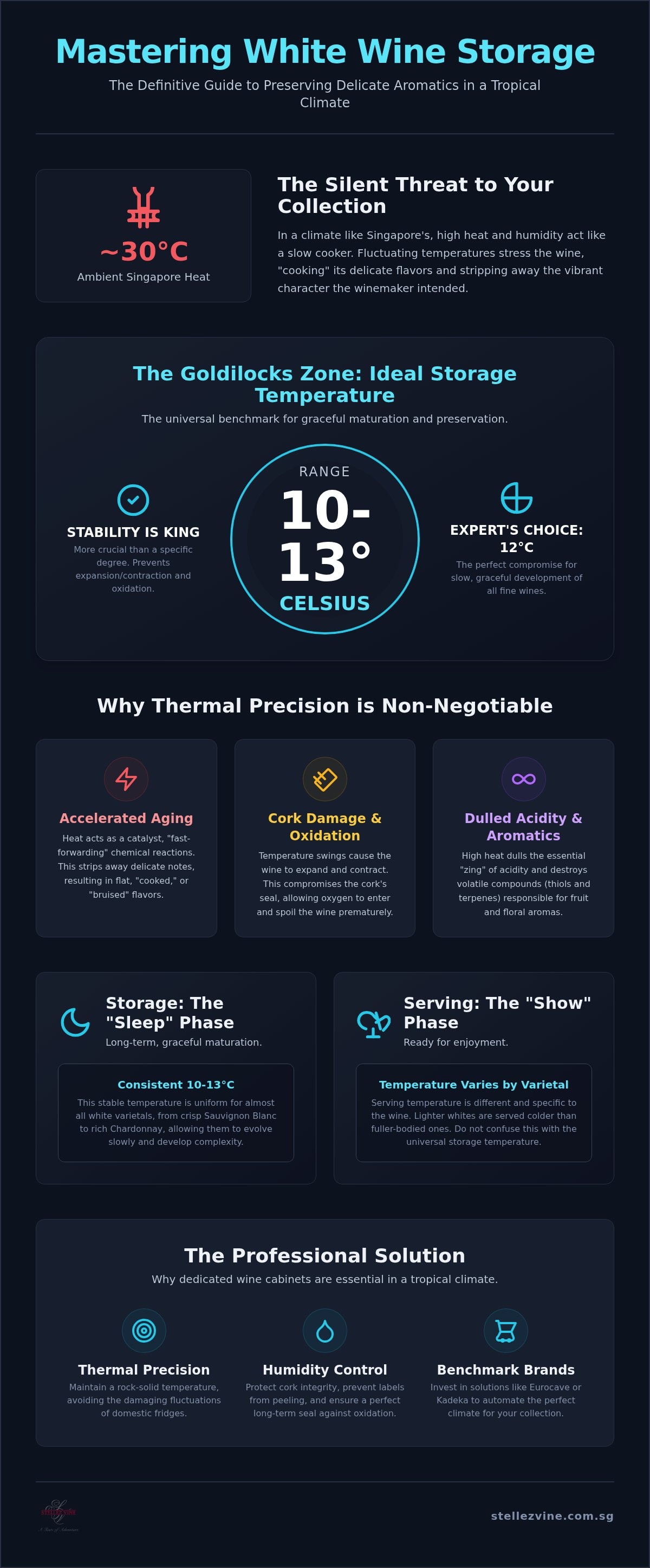
Achieving the perfect balance in your cellar isn't just about cooling; it's about stability. Many collectors mistakenly believe that white wines require near-freezing environments for long-term health. In reality, The Ideal Storage Temperature for White Wine sits comfortably between 10°C and 13°C. This range, often referred to as "cellar temperature," serves as the universal benchmark for maturation across almost all varietals. While serving temperatures vary wildly between a crisp Sauvignon Blanc and a rich Chardonnay, their storage needs remain remarkably uniform. Finding the best temperature for storing white wine means prioritizing a steady, vibration-free environment over a specific, freezing degree.
Consistency is king. In a climate like Singapore's, where ambient temperatures can swing significantly between midday heat and air-conditioned nights, wine faces constant stress. These fluctuations are more damaging than a slightly higher, but stable, temperature. A steady environment prevents the liquid from expanding and contracting, which preserves the integrity of the cork and prevents premature oxidation. When you maintain this thermal equilibrium, you're effectively protecting the winemaker's original vision.
Maturation vs. Preservation
Heat acts as a chemical catalyst. When temperatures rise, the kinetic energy inside the bottle increases, causing organic compounds to react at an unnatural pace. This "fast-forwarded" aging process is catastrophic for whites, as it strips away the delicate floral and citrus notes that define premium labels. While a robust red might withstand slight thermal shifts, white wines are notoriously sensitive to thermal shock. Proper thermal management ensures these chemical reactions occur at a glacial pace. This allows the wine to develop complex secondary flavors without losing the essential acidity that provides its characteristic "zing."
The 12-Degree Rule
If you're looking for a single, reliable setting on your wine cabinet, 12°C is the expert's choice. It represents the perfect compromise that facilitates slow, graceful development for both your everyday bottles and your investment-grade French or South African labels. The 'Goldilocks' zone for all fine wines is the 10-13°C range. At this level, the acidity remains bright, the fruit profiles stay fresh, and the wine has the time it needs to evolve. Storing your collection at this benchmark ensures you aren't just chilling your wine, but actively curating its future. It's the best temperature for storing white wine when you want to guarantee an exceptional tasting experience years down the line.
Why Thermal Precision is Non-Negotiable for White Varietals
Precision is the guardian of elegance. While red wines often rely on a robust tannic structure to weather environmental shifts, white wines are significantly more vulnerable to the elements. Understanding the best temperature for storing white wine is a matter of physical preservation. When temperatures climb, the liquid inside the bottle expands, exerting physical pressure against the cork and potentially compromising the airtight seal that keeps spoilage at bay. This process triggers a cycle of expansion and contraction that acts like a bellows, pulling oxygen into the bottle and accelerating the chemical reactions that lead to premature aging.
Heat acts as a thief. It steals the vibrant fruit profiles and replaces them with "cooked" or "bruised" flavors that lack the winemaker's intended clarity. For collectors in Singapore, where ambient temperatures often hover around 30°C, the risk of thermal damage is a daily reality. Without a dedicated environment, your investment can quickly turn from a crisp masterpiece into a flat, uninspiring liquid.
Acidity and Aromatics
Acidity provides the "zing" that makes a Riesling or Sauvignon Blanc refreshing. High heat dulls this essential brightness, making the wine feel heavy and flabby on the palate. Beyond taste, temperature dictates the stability of volatile compounds like thiols and terpenes. These delicate molecules are responsible for the grapefruit, passionfruit, and floral notes that define a wine's "nose."
Thiols: Responsible for tropical fruit notes; they degrade rapidly in warm environments.
Terpenes: The source of floral aromas in Muscat or Riesling; they are highly sensitive to thermal shock.
Consider the rapid decline of a premium white wine stored at a constant 25°C. Within just three to six months, the vibrant straw color often deepens into a dull gold or brown. The aromatic profile shifts from fresh citrus to honeyed, nutty notes that signal the wine is past its prime. Proper thermal management prevents this decline, keeping the wine’s character intact.
Cork Integrity and Oxidation
Thermal cycles are the enemy of the cork. As the bottle warms and cools, the cork loses its elasticity and its ability to maintain a perfect seal. Maintaining the best temperature for storing white wine ensures the cork remains seated and the seal intact. Because white wines lack the high levels of polyphenols found in reds, they have fewer natural defenses against oxidation. Once oxygen enters the bottle, it reacts with the wine's phenolic compounds, leading to browning and the loss of freshness. Protecting your curated selection of premium labels requires a storage solution that eliminates these thermal fluctuations entirely.
Storage vs. Serving: Mastering the Thermal Transition
One of the most common pitfalls for collectors is confusing the environment for maturation with the environment for enjoyment. Think of your wine's life in two distinct phases: the "Sleep" and the "Show." The "Sleep" refers to long-term storage, where a consistent 12°C environment protects the liquid's structural integrity. The "Show" is the brief window when you bring that wine to its specific serving temperature to unlock its full aromatic potential. While 12°C is the best temperature for storing white wine across the board, it is rarely the best temperature for drinking it.
Never store your collection at its serving temperature. If you keep a crisp Sauvignon Blanc at 7°C for several years, you effectively "stun" the wine. This extreme cold halts the subtle chemical evolutions necessary for a wine to develop complexity, leaving you with a bottle that tastes youthful but one-dimensional. Conversely, serving a wine directly from its 12°C storage spot often makes it feel heavy. As white wine warms, the perception of alcohol increases while the delicate fruit notes recede. Mastering the transition between these two states is what separates a casual drinker from a true connoisseur.
Adopt the "20-minute rule" to ensure a flawless experience. For lighter whites, move the bottle from your wine cabinet to a bucket of ice and water for 20 minutes before pouring. For richer, oaked varietals, simply letting the bottle sit on the table for 20 minutes allows it to rise slightly from cellar temperature to its expressive peak. This gentle thermal shift ensures the acidity remains bright without masking the wine's nuanced "nose."
Serving Chart by Varietal
Precision during the "Show" phase allows each varietal to shine. Use these ranges as your benchmark:
Crisp Whites (Sauvignon Blanc, Pinot Grigio): 6-8°C. This range emphasizes refreshing acidity and sharp citrus profiles.
Full-Bodied Whites (Oaked Chardonnay, Viognier): 10-12°C. Slightly warmer temperatures allow the creamy textures and toasted oak notes to expand on the palate.
Sweet and Sparkling Wines: 5-7°C. Intense chilling maintains maximum effervescence and balances the high sugar content in dessert wines.
The Risks of Over-Chilling
The standard kitchen refrigerator is a hostile environment for premium wine. Set at a typical 4°C, these appliances are designed for food preservation, not wine maturation. This temperature is far too cold; it effectively "mutes" the flavors of a high-quality Chardonnay, making it taste like little more than cold water. Additionally, the constant vibration of a domestic compressor and the lack of humidity control can ruin a cork over time. If you're serious about your collection, you might ask, Is a Wine Fridge Worth It in Singapore? Given the 30°C ambient heat outside your door, a dedicated professional unit isn't just a luxury. It's the only way to maintain the best temperature for storing white wine while ensuring your bottles are ready for their moment in the spotlight.
Storing White Wine in Tropical Climates: The Singapore Factor
In Singapore, the environment is your collection's greatest adversary. While collectors in temperate climates might rely on a stone basement or a cool pantry, the 30-degree reality of our tropical setting makes ambient storage impossible. A wine left in a dark cupboard in a local apartment will likely experience temperatures between 28°C and 32°C. This is more than double the best temperature for storing white wine. Without active intervention, the delicate aromatics of a French Chardonnay or a South African Chenin Blanc will evaporate, replaced by a flat, oxidized character. Success in this climate requires moving beyond passive storage and embracing active, precision cooling.
Reliable long term wine storage in Singapore is not just about fighting the heat; it's about managing the unique atmospheric pressures of the tropics. When you rely on air conditioning alone, you face massive thermal swings when the unit is turned off. These cycles are lethal for white varietals, as they lack the tannic "armor" of reds to survive such volatility. A dedicated wine cabinet ensures that your bottles remain in a steady state, regardless of the weather outside.
Humidity Management
Managing moisture is a delicate balancing act. The ideal range for cork health is between 65% and 75% humidity. If the environment is too dry, often a side effect of standard air conditioning, the cork shrinks and allows oxygen to enter the bottle. Conversely, Singapore's natural humidity often exceeds 80%, which can lead to unsightly mold growth on your exclusive labels. Professional wine cabinets, such as those from Kadeka or Eurocave, use specialized thermal systems to maintain this "Goldilocks" humidity level. This keeps the cork moist and the seal airtight without compromising the aesthetic value of your collection.
Light and Vibration Protection
White wines are particularly vulnerable to "light-strike," a chemical reaction caused by UV rays. Because many white varietals are bottled in clear or light-green glass, they have almost no protection against sunlight or harsh indoor lighting. This exposure can ruin the wine's "nose" in a matter of weeks. Additionally, the constant micro-vibrations from standard domestic appliances can disturb the wine's sediment and interfere with the slow, graceful aging process. Premium storage units feature anti-UV glass doors and vibration-dampening compressors to ensure your wine rests in total, undisturbed silence. To protect your investment from these tropical hazards, browse our range of professional wine chillers tailored for the Singapore market.
Professional Solutions: Curating the Perfect Environment
Transitioning from a casual enthusiast to a serious collector requires a shift in focus from the bottle to the environment. While understanding the best temperature for storing white wine is essential, achieving that stability in a tropical climate requires professional-grade hardware. Standard refrigerators simply lack the nuanced controls necessary to protect delicate varietals. By investing in a dedicated wine cabinet, you create a sanctuary where your handpicked South African and French labels can mature without the interference of external heat or humidity. At Stellez Vine Singapore, we guide collectors through this selection process to ensure their investment remains pristine.
Choosing between a single-zone and a dual-zone unit depends entirely on your lifestyle. If your primary goal is long-term maturation, a single-zone cabinet set to a constant 12°C is the most efficient choice. This provides a unified environment for all your whites to age gracefully. However, for those who host frequently, a dual-zone unit allows you to maintain the best temperature for storing white wine in one section while keeping a second compartment at a crisp 7°C for immediate service. This versatility ensures you are always prepared for a spontaneous tasting.
Eurocave and Liebherr: The Gold Standard
For the collector who views their wine as a legacy, Eurocave and Liebherr represent the pinnacle of preservation technology. These brands go beyond simple cooling; they offer advanced hygrometry controls to maintain the perfect 65-75% humidity level discussed earlier. One critical feature often overlooked by entry-level buyers is the inclusion of active charcoal filters. These filters purify the internal air, preventing kitchen odors from penetrating the cork and tainting the wine's "nose." These units are built with superior insulation and vibration-dampening systems, making them a benchmark-setting investment in your wine’s future.
Selecting the Right Unit
When selecting a cabinet, capacity planning is vital. We recommend purchasing a unit with at least 20% more space than your current collection requires. A growing collection often expands faster than anticipated, and a crowded fridge can impede airflow, leading to inconsistent thermal pockets. Professional cabinets from Kadeka offer a sophisticated balance of energy efficiency and modern aesthetics, fitting seamlessly into contemporary Singaporean homes. Whether you are looking for a compact chiller or a high-capacity vault, our Online Wine Shop Singapore provides access to the world's most trusted storage brands. Elevate your storage setup today and discover the peace of mind that comes with professional-grade thermal management.
Secure the Future of Your Cellar
Mastering the best temperature for storing white wine is an act of respect for the craftsmanship in every bottle. By maintaining a stable 12°C environment and respecting the transition between storage and serving, you ensure every glass captures the vibrant aromatics and crisp acidity intended by the winemaker. In Singapore's challenging climate, active cooling is the only way to shield your investment from the silent threats of heat and humidity.
Since 2009, Stellez Vine has served as Singapore's trusted partner for discerning collectors. As authorized distributors for Eurocave, Kadeka, and Liebherr, we provide the benchmark-setting hardware required to protect our curated selection of premium South African and French whites. Elevate your collection with our professional wine storage solutions and transform your home into a sanctuary for fine wine. Savor the confidence that comes with perfect thermal management and let every pour be an exceptional experience.
Common Questions Answered
Can I store white wine in a regular kitchen fridge?
Avoid using a standard kitchen fridge for anything beyond short-term chilling. These appliances typically run at 4°C, which is far too cold and can "stun" the wine, effectively halting its natural evolution. The constant vibration from the compressor and the presence of pungent food odors can also penetrate the cork, ruining the wine's profile. For the best temperature for storing white wine, a dedicated cabinet like a Kadeka or Eurocave is necessary.
What happens if white wine is stored at room temperature in Singapore?
Storing wine at ambient room temperature in Singapore is a recipe for rapid spoilage. With local temperatures frequently reaching 30°C, your wine will "cook" within a matter of weeks. This extreme heat causes the liquid to expand, pushing past the cork and allowing oxygen to enter the bottle. You'll soon notice the vibrant straw colors turning a dull brown and the fresh fruit aromatics being replaced by stale, flat, or cardboard-like notes.
Is 15 degrees too warm for storing white wine?
While 15°C is better than the tropical heat, it's still slightly too warm for optimal long-term maturation. The industry standard for the best temperature for storing white wine remains 10°C to 13°C. At 15°C, the chemical reactions inside the bottle occur at an accelerated pace. This faster aging can cause your premium French or South African whites to lose their delicate floral nuances and bright acidity well before they reach their expressive peak.
Should white wine be stored upright or lying down?
Always store bottles with natural corks lying down. This horizontal position ensures the wine remains in constant contact with the cork, keeping it moist and expanded. If stored upright, the cork eventually dries out and shrinks, creating a pathway for oxygen to enter the bottle and ruin the wine. While screw caps can technically be stored upright, horizontal storage remains the benchmark for efficient space management in professional cabinets like those from Liebherr.
How long can white wine last in a wine fridge?
The lifespan of white wine in a professional wine fridge depends entirely on the varietal and quality. Most light, aromatic whites are best enjoyed within one to three years. However, premium, age-worthy selections like oaked Chardonnays or high-acid Rieslings can mature gracefully for a decade or more when kept at a stable 12°C. A quality storage unit ensures these investment-grade bottles reach their peak without the risk of thermal damage or premature oxidation.
Does Chardonnay need a different storage temperature than Riesling?
Storage requirements are identical for both Chardonnay and Riesling; a consistent 12°C is the universal benchmark for maturation. The difference only emerges during the serving phase. A crisp Riesling shines when chilled to around 8°C to emphasize its sharp acidity. Conversely, a full-bodied Chardonnay should be served slightly warmer, between 10°C and 12°C. This allows the complex textures and oaked aromatics to fully expand on your palate during the tasting experience.
Can I store red and white wine at the same temperature?
You can absolutely store red and white wines together in the same unit. Both categories benefit from the same "cellar temperature" of 12°C for long-term maturation. While they require different temperatures for serving, their biological "sleep" phase is identical. If you frequently enjoy both, consider a dual-zone cabinet from Kadeka. This allows you to keep your entire collection at 12°C while dedicating one section to chilling whites for immediate service at the table.
How do I know if my white wine has been 'cooked' by heat?
You can identify "cooked" wine through three primary signs. First, look for a pushed-out cork or evidence of seepage around the foil. Second, observe the color; "cooked" white wine often takes on a deep gold, amber, or brown tint. Finally, the aroma will lack freshness, smelling instead of stewed fruit, nuts, or sherry. If the vibrant acidity has vanished and the wine tastes flat, it has likely suffered from heat exhaustion and spoilage.


Comments