
Vintec Wine Fridge Comparison: Top Alternatives in Singapore

The best Vintec wine fridge for your home may not be a Vintec at all. The right choice depends on whether you want bottles ready to serve or a stable environment for long-term cellaring.
That distinction matters in Singapore, where heat and humidity make climate control important. You may also be weighing single-zone simplicity against multi-zone flexibility, or wondering whether a compressor will be noticeable in a compact home. When bottles have personal or financial value, temperature stability, vibration and fit deserve careful consideration.
This comparison looks at Vintec alongside Eurocave, Liebherr and Kadeka, with practical criteria for choosing a cabinet. Consider your storage plans, available space and everyday routines before deciding. The aim is to find a balance between design and suitable wine storage, whether you’re preserving bottles for years or keeping them ready for dinner.
Table of Contents
Understanding the Vintec Wine Fridge Benchmark
A Vintec wine fridge is one option for dedicated, climate-controlled wine storage. In Singapore, the cabinet needs to maintain suitable conditions despite warm surroundings, while fitting the available space. Compare a Vintec model with alternatives by checking what it offers for your storage needs, not by relying on its name alone.
Use temperature, humidity, UV exposure, vibration and airflow as a practical checklist. The wine storage principles behind these factors apply to climate-controlled cabinets as well as traditional cellars. They also offer a useful way to compare different models and brands.
The Five Pillars of Professional Wine Storage
Each factor plays a different role in the storage environment:
Stable temperature: A 12–14°C range is a useful reference for aging. Consistency matters because repeated fluctuations can disrupt gradual maturation.
Humidity: Ideal storage humidity is 50–80%. Suitable humidity helps reduce the risk of corks drying out, a concern in air-conditioned rooms.
UV protection: Limiting light exposure helps protect wine from avoidable environmental stress. Check the cabinet’s door specifications and consider where you’ll place it.
Vibration control: Minimal disturbance is especially valuable for bottles with sediment, including aged reds.
Airflow: Circulation supports an even cabinet environment. Check how a specific model manages airflow rather than assuming all units work alike.
Series, Capacity and Fit
Vintec’s Noir and stainless-steel aesthetics offer different visual directions, but check the finish and dimensions of the exact model before planning around cabinetry. Capacity labels also need context: bottle counts are typically based on standard bottle shapes, so larger formats or varied collections may reduce usable space. Choose with your actual bottle mix in mind.
Decide whether you need a freestanding unit or a model designed for built-in installation. Follow the manufacturer’s ventilation and clearance requirements, and measure the intended space before purchase. A compact cabinet may suit a smaller collection; consider larger-capacity storage if you expect your selection to grow. A domestic cabinet is not the same as a walk-in cellar.
Vintec Club membership benefits can change, so review current terms rather than choosing a cabinet based on assumed perks. Focus first on the conditions your bottles need and the configuration your home can accommodate.
Performance in the Tropics: The Singapore Storage Challenge
A wine cabinet in Singapore faces a harder job than one in a cool, dry room. Daytime highs reached 33–34°C, with overnight temperatures above 28°C, in July 2026. Persistent warmth makes insulation and temperature stability especially important. A cabinet that struggles to shed heat may run its compressor more often, while frequent temperature swings can disturb the steady conditions wine needs for aging.
Humidity adds another challenge. Moist tropical air can contribute to condensation around doors and seals when warm air meets a chilled surface. Poor sealing or repeated door openings can also make it harder for a cabinet to maintain its internal environment. Humidity isn’t simply an enemy: too little moisture inside can dry corks, while excess moisture may encourage mould on labels or interior surfaces. Focus on controlled conditions, not maximum humidity.
Humidity Management and Cork Integrity
For long-term storage, a 50–80% humidity range is a useful reference. Staying within that range supports cork integrity without treating 65–75% as a universal requirement. Air-conditioned rooms can be dry, so don’t assume your home’s ambient humidity matches the cabinet’s interior. Check whether a model specifies humidity management, and use an independent hygrometer if you want to monitor conditions. Persistent condensation, musty odours or visibly damp labels warrant a closer look at the cabinet, its seal and its placement.
Thermal Stability, Cooling and Placement
Some newer wine-fridge models use inverter compressors, which adjust cooling output rather than operating only in simple on-off cycles. This design can support quieter, more efficient operation, but performance depends on the specific model. Compare published specifications instead of assuming every Vintec wine fridge or alternative uses inverter technology. Thick insulation and a well-fitting door also help limit heat exchange, particularly in Singapore’s warm conditions.
Some models may offer glass-door condensation controls, such as heated glass. These can help reduce fogging, but they don’t replace good seals or suitable installation. Confirm the feature is present on the exact cabinet you’re considering, and follow its ventilation and clearance guidance.
Place the cabinet away from direct sunlight, ovens and other heat-generating appliances.
Keep required ventilation paths clear, especially for built-in installations.
Limit unnecessary door openings, which introduce warm, humid air.
Compare energy-efficiency information for the exact model. A cabinet may cool continuously, and electricity use varies by design and conditions.
To compare wine-storage options available in Singapore, explore Stellez Vine Singapore's wine storage selection and check each model’s climate-control specifications.
Vintec vs. The Alternatives: Eurocave, Liebherr, and Kadeka
A Vintec wine fridge may suit a contemporary home, but compare brands by purpose as well as design. Models vary in their storage features, serving flexibility and intended use. Eurocave, Liebherr and Kadeka are alternatives to consider, but there is no single brand that suits every collection. Your choice depends on the exact model, your bottles and how you plan to enjoy them.
If you’re comparing options for a collection you intend to preserve, premium wine fridge options in Singapore provide a useful starting point. Look beyond capacity and finish. Consider whether a cabinet is designed mainly to keep bottles ready for serving or to maintain steady conditions for bottles you plan to age.
Eurocave: A Premium Choice for Cellaring
Eurocave offers wine storage cabinets for collectors to consider when comparing options for long-term cellaring. Features can differ between models. If you’re comparing claims about carbon filtration, humidity management or construction, confirm them against the specific cabinet’s current documentation rather than assuming every model includes the same technology. For bottles you plan to keep for years, prioritize the storage environment and the cabinet’s intended use.
A cellaring-focused cabinet may suit a growing collection of fine wines. That’s a different consideration from choosing a cabinet chiefly for quick access and serving convenience. Assess how you store wine today and how your needs may change as your collection develops.
Liebherr and Kadeka: Compare the Details
When comparing Liebherr and Kadeka, look at the specifications of each cabinet rather than relying on broad brand descriptions. Compare temperature-zone configuration, capacity, dimensions, noise information and energy-efficiency specifications. This gives you a practical basis for weighing different models against what matters in your home.
Choose by use: Prioritize serving flexibility if you open bottles regularly. Focus on cellaring suitability if you’re protecting wines for the long term.
Compare by model: Check documented features and installation requirements, not just brand reputation.
Think ahead: Match capacity and configuration to your collection’s likely growth, not only the bottles you own now.
Stellez Vine offers Eurocave, Kadeka and Liebherr wine storage options in Singapore. Compare their intended use and model specifications with your collection so your decision reflects more than the label on the door.
Selecting Your Configuration: Capacity and Zone Strategy
Choose a cabinet around the collection you expect to own, not just the bottles on hand. A useful planning rule is to add roughly 20% headroom to your current bottle count. Treat this as a practical buffer, not a guarantee of future capacity: bottle shape, shelf layout and how you arrange the cabinet all affect what fits. A Vintec wine fridge rated for a particular number of bottles may hold fewer if your collection includes wide Burgundy bottles alongside slimmer Bordeaux formats.
The Zone Debate: Serving vs. Storing
Match the number of zones to how you use your wine. A single-zone cabinet suits a collection stored at one consistent temperature, including bottles intended for aging. Dual-zone models let you keep different groups at separate settings, which can be convenient if you regularly serve both reds and whites. Multi-temperature cabinets may offer more flexibility for entertaining, but check the exact model’s layout and temperature guidance before assuming each compartment suits your needs.
More zones aren’t automatically better. If you mainly cellar bottles, a straightforward single-zone setup may be the more practical choice. If you want bottles ready for different occasions, compare the usable space in each zone and make sure the configuration reflects your drinking habits.
Under-Counter or Freestanding?
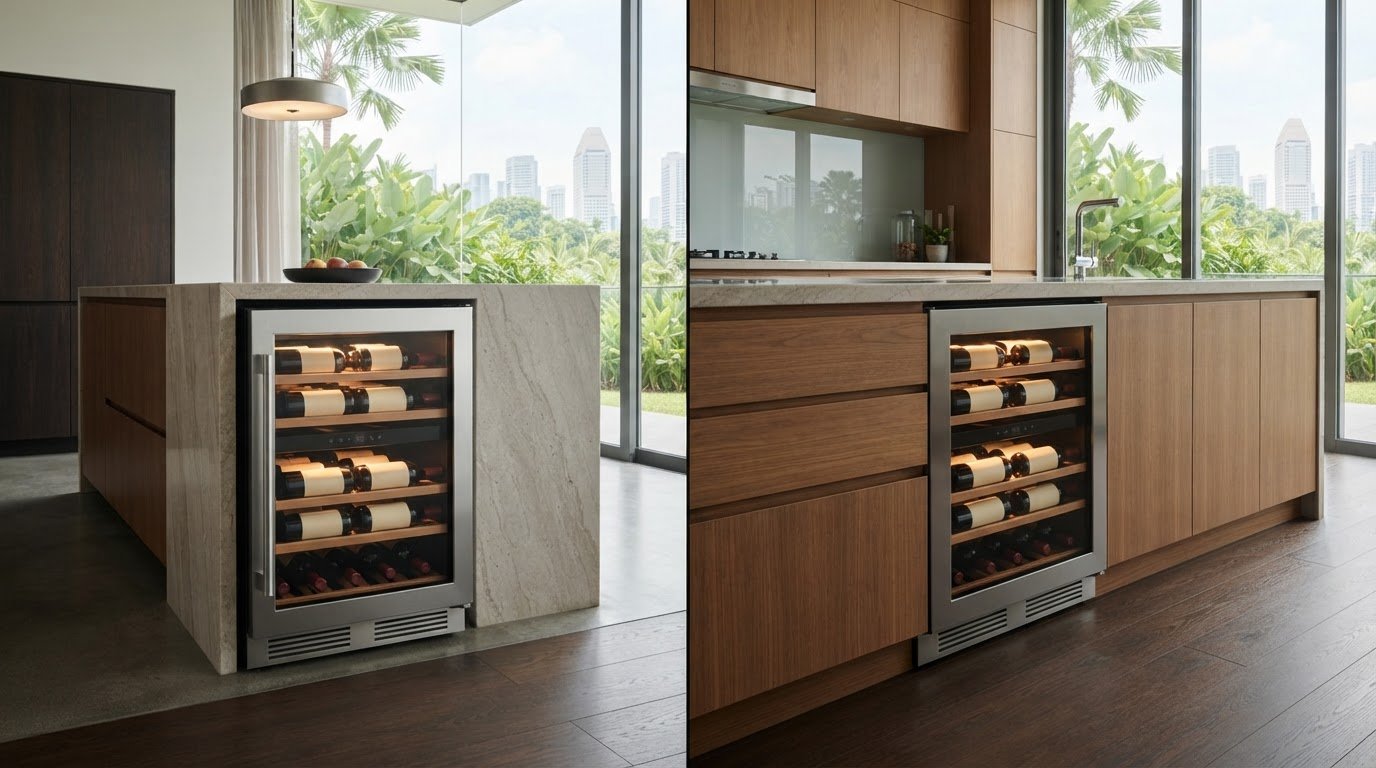
Built-in and under-counter models need careful planning. Confirm that the specific unit is designed for the intended installation and follow its ventilation and clearance requirements. Don’t enclose a freestanding cabinet unless its manufacturer allows it. Measure the space, including door swing and access to power, before choosing.
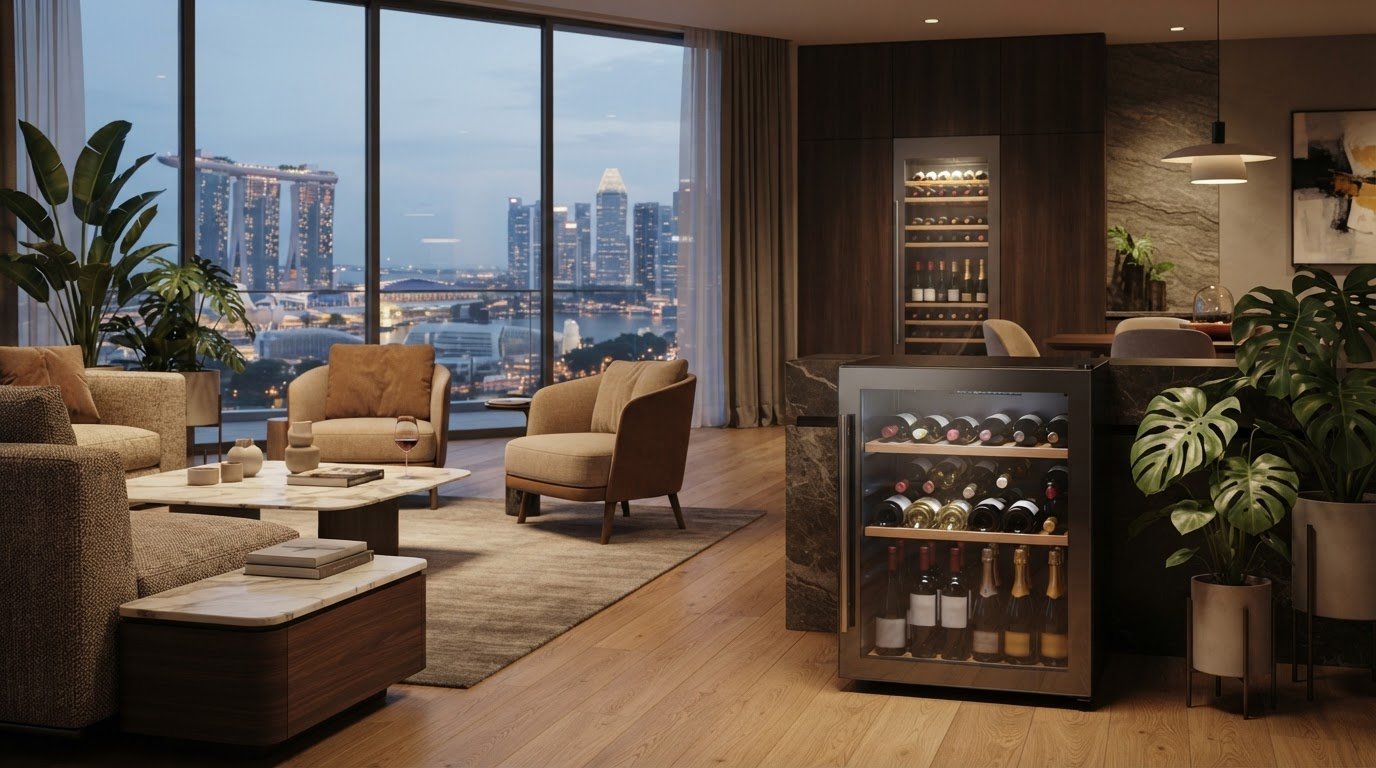
A freestanding model can be a considered design feature in a dining area, while a suitable built-in unit can create a cleaner, integrated look. In a compact home, consider a narrower footprint and a location that won’t obstruct walkways or everyday storage. Check the cabinet’s dimensions and the space around it, not just its advertised capacity.
Before deciding, list your current bottle count, note the shapes you buy most often and estimate how your collection may grow. Then compare zone needs, installation requirements and finish against your home’s layout. This helps prevent a stylish cabinet from becoming cramped or inconvenient.
Explore wine storage options at Stellez Vine to compare cabinets from brands including Eurocave, Kadeka and Liebherr, and consider which configuration best fits your collection and space.
Elevating Your Collection with Stellez Vine
A thoughtfully chosen wine fridge is only part of the experience. The bottles you select, how you store them and the glassware you use all shape how you enjoy each wine. Stellez Vine brings together fine wines, professional storage options and glassware for customers across Singapore.
Explore wines from South Africa, France and Argentina, including selections such as Chateau Canon Chaigneau and Matias Riccitelli. Pairing a considered collection with suitable storage helps you care for bottles according to how you intend to enjoy them, whether that means opening them soon or laying them down. Discover more about fine wine in Singapore and Argentina’s Matias Riccitelli.
Choose Storage with a Wine Specialist
A general appliance store can help you compare dimensions and basic functions. A wine specialist can help you focus on your collection: bottle shapes, storage plans, serving habits and the cabinet’s climate-control specifications. That context can help you weigh a Vintec wine fridge against alternatives such as Eurocave or Kadeka, without treating one brand as the right answer for every collector.
Before deciding, note how many bottles you own, which styles you favour and whether you plan to age wines or serve them regularly. Then compare that list with a cabinet’s capacity, zone configuration and installation requirements. Check what delivery and any installation or after-sales support include, and confirm the terms directly before purchasing. These details can vary by model and retailer.
Build a Cellar that Suits Your Home
Start with your collection and available space, then choose a storage configuration that supports both. A suitable cabinet gives your bottles a dedicated storage environment, while glassware helps you enjoy them. Stellez Vine offers glassware alongside wine and storage options, so you can consider these parts of your home collection together.
Ready to compare storage for your home? Explore Kadeka wine chillers and consider how their capacity and configuration fit your bottles, space and plans for future growth.
Choose Storage That Grows with Your Collection
The right Vintec wine fridge is the one that suits your collection, your home and how you enjoy wine. Prioritize stable conditions for bottles you plan to age, or choose a configuration that keeps different wines ready to serve. Capacity, bottle shapes and installation requirements matter just as much as the brand name.
Stellez Vine offers Eurocave wine fridges, Liebherr wine cabinets and Kadeka wine chillers, alongside an international wine selection. As you compare options, check the exact model specifications and confirm delivery arrangements for appliances before purchasing.
Explore wine fridges and storage options at Stellez Vine to compare cabinets and choose a configuration that suits your collection and home.
Frequently Asked Questions
Is a Vintec wine fridge suitable for long-term aging?
A Vintec wine fridge may suit long-term aging if the specific model maintains stable storage conditions. Look for reliable temperature control, suitable humidity management, low vibration and protection from light. Check the manufacturer’s specifications for the exact cabinet, then consider its capacity and installation requirements. A dedicated wine cabinet is generally better suited to preserving a collection than leaving bottles in a warm room or a regular refrigerator.
What is the difference between a wine fridge and a regular refrigerator?
A wine fridge is designed to store wine at a steady temperature, with features that may help manage humidity, light and vibration. A regular refrigerator is made for food and typically runs colder than the 12–14°C reference range for wine aging. Its frequent door openings and changing contents can also create temperature fluctuations. For bottles you plan to keep beyond a short period, choose purpose-designed wine storage.
How many temperature zones do I need for a mixed collection?
Choose zones based on whether you’re aging bottles or keeping different wines ready to serve. A single-zone cabinet suits a collection stored at one consistent temperature. A dual-zone model can separate groups at different settings, while multi-zone designs offer more flexibility for entertaining. Check the model’s temperature range and usable capacity in each zone, then match those details to your collection rather than paying for flexibility you won’t use.
Do wine fridges in Singapore require special maintenance due to humidity?
They need sensible, regular checks, especially in a warm, humid climate. Inspect the door seal for damage or gaps, keep ventilation openings clear and look for persistent condensation or musty smells. Follow the manufacturer’s cleaning and maintenance instructions, and don’t block airflow around the cabinet. If moisture continues to collect or the temperature becomes unstable, check the manual and contact the retailer or manufacturer for model-specific guidance.
Can I use a Vintec wine fridge for both red and white wines simultaneously?
Yes, if the cabinet’s configuration supports the storage temperatures you want. A single-zone model keeps all bottles at one setting, which works for cellaring but may not suit reds and whites you want ready to serve at different temperatures. A dual-zone or multi-zone cabinet can provide separate settings. Confirm the model’s temperature ranges and compartment layout before choosing, and follow the manufacturer’s guidance for each wine style.
How noisy are premium wine cabinets like Liebherr or Vintec?
Noise varies by model, installation and operating conditions, so there isn’t one reliable rating for every Liebherr or Vintec cabinet. Check the exact model’s published noise level and compressor details, then consider where it will sit in your home. Keep required ventilation clear and place the unit on a stable, level surface. If it’s near a bedroom or living area, noise specifications deserve particular attention before purchase.
Should I choose a glass door or a solid door for my wine cabinet?
Choose based on placement, light exposure and the look you want. A glass door displays your collection, but check whether the model specifies UV protection and how it manages condensation. A solid door conceals bottles and avoids direct display, though its insulation performance still depends on the cabinet’s construction. Compare the exact specifications, and place either type away from direct sunlight and heat-generating appliances.
What happens to my wine during a power outage in Singapore?
During a power outage, the cabinet stops actively controlling temperature, but how quickly its interior changes depends on insulation, room conditions and outage duration. Keep the door closed to reduce warm-air exchange, and avoid moving bottles unless necessary. Once power returns, check that the cabinet resumes normal operation and monitor its temperature. For a prolonged outage or persistent temperature changes, follow the manufacturer’s instructions for your model.

Comments