
The Best Wine Fridge for Singapore HDB Flats: A Collector’s Guide to Compact Luxury
- Stellez Vine

- Jul 22
- 12 min read
What if your carefully curated wine collection is aging three times faster than it should simply because of the air in your kitchen? In the relentless tropical heat of Singapore, a standard cupboard is often a graveyard for fine vintages where high ambient humidity turns pristine labels into moldy relics. Finding the best wine fridge for Singapore HDB spaces requires more than just measuring a corner of your BTO layout; it demands a climate fortress that fits your modern lifestyle. You likely already know that the fluctuating temperatures in an open-concept home can ruin a delicate bottle in weeks, yet you shouldn't have to compromise on floor space or acoustic comfort to protect your investment.
Discover how to elevate your home storage with a high-performance chiller that masters the unique constraints of local apartments. This guide promises to help you select a reliable, professional-grade solution that fits HDB dimensions and electrical limits perfectly. We will preview the essential features of compact luxury, from vibration-free compressors to advanced humidity controls, ensuring your collection is preserved for the ultimate pour.
Table of Contents
The Tropical HDB Challenge: Why Standard Storage Fails
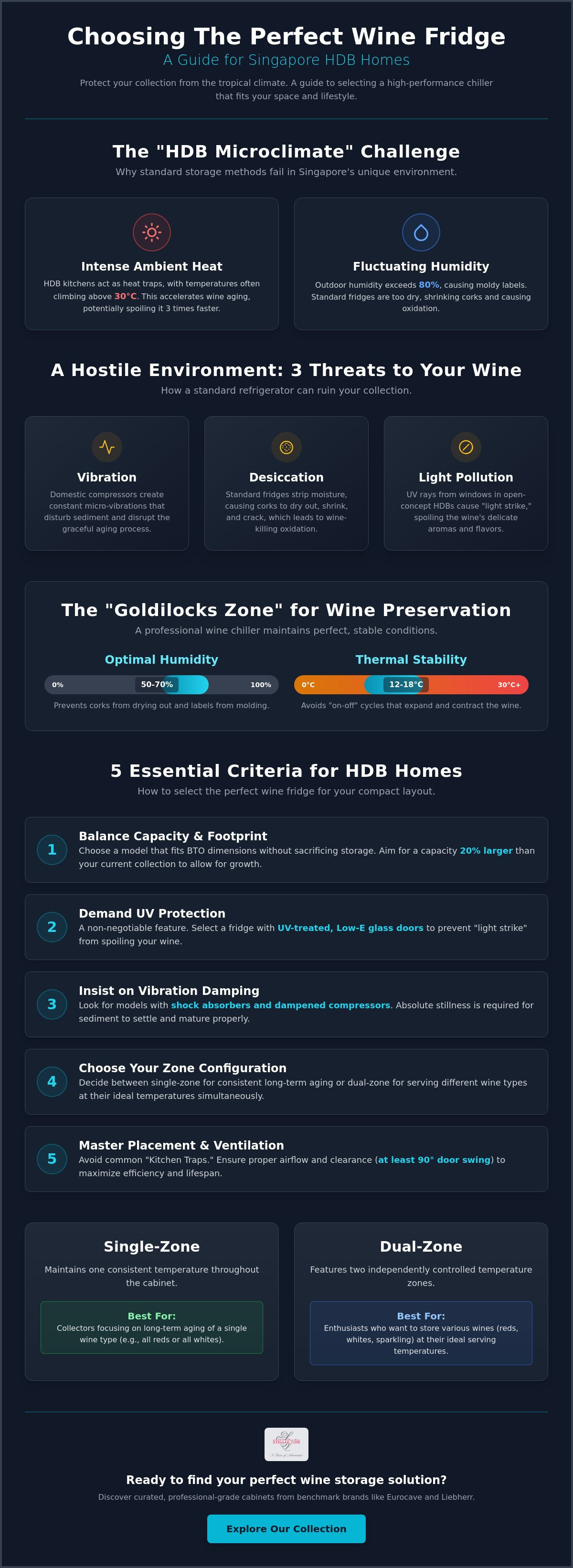
Living in a Singapore HDB flat brings unique environmental hurdles that most international wine guides simply don't address. Your kitchen, particularly in modern BTO layouts or high-floor resale units, often acts as a heat trap where ambient temperatures frequently climb above 30 degrees Celsius. This "HDB Microclimate" is the primary enemy of a refined collection. While a standard domestic refrigerator is excellent for keeping perishables fresh, it's a hostile environment for fine wine. These appliances are typically far too cold, lack humidity control, and produce constant micro-vibrations that disturb the sediment and chemical balance of your bottles. Finding the best wine fridge for Singapore HDB homes isn't merely about aesthetic luxury; it's a necessary investment in thermal survival.
Standard cooling fails because it ignores the delicate biology of a cork. Without professional-grade stability, your wine faces three major threats in a tropical flat:
Vibration: Domestic compressors shake the shelving, preventing the slow, graceful maturation of the wine.
Desiccation: Standard fridges strip moisture from the air, causing corks to shrink and crack.
Light Pollution: Exposure to UV rays in open-concept HDB living rooms can lead to "light strike," spoiling the wine's aroma.
The Humidity Factor in Singapore
Singapore’s outdoor humidity often exceeds 80 percent, a level that invites aggressive mold growth on paper labels and wooden racks. Conversely, a standard fridge is a dry environment that saps moisture from corks. Professional storage solutions maintain a "Goldilocks zone" of 50 to 70 percent humidity. This balance is critical for maintaining cork elasticity and preventing oxidation. Without active humidity management, your handpicked South African reds or delicate French whites are at risk of "breathing" in the humid tropical air, leading to premature spoilage and ruined labels.
Thermal Stability vs. Simple Cooling
True preservation relies on steady-state cooling rather than the aggressive "on-off" cycles found in budget appliances. In a compact HDB layout, every degree matters. Frequent temperature swings cause the liquid inside the bottle to expand and contract, which prematurely ages the wine and destroys its nuanced profile. Understanding the principles of wine storage reveals that thermal stability is the benchmark of quality. Premium cabinets utilize the concept of "thermal mass," where the unit's internal components work together to maintain a consistent environment. This ensures that even when the afternoon sun hits your kitchen wall, your wine remains in a serene, undisturbed state of maturation.
Selecting Your Setup: 5 Criteria for HDB Homes
Choosing the best wine fridge for Singapore HDB flats requires a shift from simple appliance shopping to intentional climate curation. In a space-constrained BTO or resale unit, every square centimeter must justify its existence. You aren't just buying a cooler; you're securing a sanctuary for your collection. Start by balancing your current inventory with your future refined adventures. A common mistake is selecting a unit that fits today's bottles but leaves no room for the rare finds you'll discover next year. Aim for a capacity 20 percent larger than your current needs to allow your passion to grow without restraint.
Protection goes beyond temperature. Singapore’s bright, airy flats often expose appliances to significant ambient light. Ensure your selected model features UV-treated, Low-E (low-emissivity) glass. This is non-negotiable for preventing "light strike," which can degrade the complex organic compounds in your wine. Additionally, look for sophisticated vibration damping. Fine wines, especially those intended for long-term aging, require absolute stillness to allow sediment to settle. Quality cabinets utilize shock absorbers and dampened compressors to ensure your bottles rest in total serenity, a requirement supported by scientific backing for ideal wine storage conditions.
Step 1: Measuring for the Perfect Fit
Precision is paramount when navigating modern HDB floor plans. Follow this three-step measurement protocol to avoid costly installation errors:
Calculate the Swing: Ensure the door has a full 90-degree clearance to allow shelves to slide out without hitting adjacent kitchen cabinetry or walls.
Mind the Gap: Freestanding units require a 5cm to 10cm ventilation gap at the rear and sides to dissipate heat effectively in our tropical climate.
Height Alignment: Standard under-counter models typically sit at 82-87cm, but slimline "tower" models can utilize vertical space in narrow service yards or dining alcoves.
Step 2: Evaluating Cooling Power
In Singapore, where ambient kitchen temperatures often hover around 30°C, compressor-based systems are the only viable choice. Thermoelectric coolers often struggle to maintain a 12°C internal environment when the outside air is hot. Premium brands like Eurocave or Liebherr provide the heavy-duty cooling recovery needed every time you open the door to savor a bottle. If your fridge will live in an open-concept living room, prioritize noise levels. Look for units rated under 40dB to ensure your evening relaxation remains undisturbed by mechanical hums. To see how these technical specifications translate into real-world elegance, explore our curated selection of premium chillers tailored for local homes.
Single Zone vs. Dual Zone: Mapping Your Habits
The decision between a single and dual zone cabinet isn't just about technical specs; it's about mapping your personal consumption habits against the physical limits of your flat. Finding the best wine fridge for Singapore HDB residents often comes down to a fundamental choice: are you a long-term investor or a frequent host? While the allure of multiple temperature settings is strong, your storage strategy should reflect how you actually enjoy your collection. A single zone unit offers a dedicated sanctuary for aging, whereas a dual zone model provides the immediate gratification of a bottle ready for the glass.
Serious collectors understand that consistency is the soul of preservation. Adhering to the Purdue University wine storage guidelines ensures your collection remains in the 10-16°C range, protecting it from the accelerated chemical reactions caused by Singapore's ambient heat. For those focusing on high-end French vintages like Chateau Canon Chaigneau, a single zone environment set at a steady 12°C is the gold standard. It minimizes mechanical complexity and maximizes the usable volume within the tight footprints of modern HDB layouts.
The Case for Single Zone Aging
If your goal is to nurture a collection over several years, a single zone cabinet is your most reliable partner. These units are engineered for thermal stability, providing a uniform climate that mimics the conditions of a traditional underground cellar. By maintaining one perfect environment, you eliminate the risk of temperature "bleed" between compartments. This setup is particularly effective for those who prioritize bottle capacity in small kitchens or dining alcoves, as single zone designs typically offer more shelving flexibility for diverse bottle shapes, from slender Rieslings to wider South African Cabernet Sauvignons.
The Versatility of Dual Zone Chillers
Lifestyle curators who entertain frequently often find the dual zone configuration indispensable. These cabinets allow you to separate your "service" inventory from your "storage" bottles. You can maintain one section at a crisp 7°C for immediate white wine enjoyment while keeping the other at 18°C for your reds. This eliminates the common mistake of serving red wine at "room temperature," which in a non-air-conditioned Singapore HDB can be as high as 30°C. A dual zone chiller ensures you can savor the nuanced aromatics of your wine exactly as the winemaker intended, without the wait. For the ultimate connoisseur, multi-zone cabinets represent the benchmark, offering three or more distinct climates to accommodate long-term aging, white wine service, and red wine decanting temperatures simultaneously.
Placement and Performance: Integrating Storage into HDB Layouts
Properly integrating your chiller into a Singapore apartment requires more than just finding an empty corner. It demands an understanding of thermal dynamics. The best wine fridge for Singapore HDB living is one that isn't just seen but is allowed to breathe. Poor ventilation remains the primary cause of compressor failure in local homes. When a unit is squeezed into a tight cabinet without adequate airflow, the compressor works overtime to fight the tropical heat, eventually leading to a costly burnout. Strategic positioning ensures your investment lasts as long as the vintages it protects.
Avoid the common "Kitchen Trap." Placing your wine cabinet next to a heat-generating oven or a stovetop forces the unit to consume significantly more energy to maintain its internal climate. Instead, consider the living room or dining alcove. Modern HDB designs often favor open-concept layouts where a sleek, stainless steel or matte black chiller serves as a sophisticated statement piece. This transition from utility to lifestyle centerpiece elevates the entire home bar experience while keeping the unit away from the steam and grease of active cooking zones.
The Science of Airflow
Distinguish between front-venting and rear-venting models before committing to your renovation plans. Built-in units are engineered with front-facing vents, allowing them to be flushed against cabinetry for a seamless look. Freestanding models, however, require a minimum clearance of 5cm to 10cm at the rear and sides to dissipate heat. If you're considering placing your unit in a utility room or a "bomb shelter," be cautious. These spaces often lack natural airflow. Ensure the room has sufficient mechanical ventilation; otherwise, the ambient temperature in these small spaces can skyrocket, rendering even the most premium cooling systems ineffective.
Aesthetics and Lighting
Curation is about the visual as much as the visceral. Choose internal LED lighting that offers a soft, amber glow to showcase your bottles without introducing harmful heat or UV rays. In the tight quarters of an HDB flat, odor management is also essential. Ensure your unit features an active charcoal filter to keep the internal air fresh and free from persistent kitchen smells. This attention to detail ensures that when you finally savor a glass, the experience is untainted. To find a model that perfectly balances these technical needs with your home’s interior design, explore our premium range of wine chillers.
Finally, prioritize electrical safety. A wine fridge is a high-performance appliance that should always be plugged into a dedicated wall socket. Avoid using extension cords or multi-way adapters. These can lead to voltage drops that damage sensitive electronic controllers or pose a fire risk in the long run. By securing a direct power source, you ensure the consistent, uninterrupted performance your collection deserves.
The Premium Collection: Curated Storage for Singaporean Homes
Selecting the best wine fridge for Singapore HDB flats is a definitive step toward mastering the art of the home cellar. It's a move from simple refrigeration to intentional preservation. We've handpicked three benchmark brands that define the intersection of craftsmanship and compact luxury. These manufacturers understand that a Singaporean home requires more than just cooling; it needs a climate fortress that respects both your floor plan and your palate. Whether you're a long-term investor or a lifestyle curator, your choice of cabinet should reflect the standard of the vintages you keep.
Securing your collection involves a clear, three-step journey to excellence. First, identify your primary goal, whether it's aging or immediate service. Second, select a brand that matches your HDB's aesthetic and technical requirements. Third, partner with a specialist who understands local delivery logistics and warranty needs. This methodical approach ensures that your refined adventure into the world of wine is supported by unmatched thermal precision and heritage engineering.
Eurocave: The Gold Standard
Eurocave remains the undisputed benchmark for those who view wine as a heritage investment. The La Première range offers a professional-grade entry point for high-value French reds, providing the exact thermal consistency required for long-term aging. These cabinets are the expert curator's choice, featuring patented vibration exclusion systems that ensure your bottles rest in total, undisturbed stillness. By recreating the exact conditions of a natural limestone cellar, Eurocave allows your collection to reach its full potential within the modern confines of a high-rise apartment.
Kadeka and Liebherr: Modern Efficiency
For the modern minimalist, Kadeka’s Signature series provides tailored efficiency with sleek, seamless designs that complement contemporary HDB interiors. These units are engineered for high-performance recovery, ensuring the internal temperature remains stable even after frequent openings during a dinner party. If you're navigating the tight confines of a BTO kitchen, Liebherr’s under-counter solutions offer unmatched German precision in a space-saving form. These brands represent the pinnacle of regional and global engineering, optimized specifically for tropical performance and quiet operation in open-concept living spaces.
Elevate Your Experience
Buying through a specialist like Stellez Vine Singapore transforms you from a consumer into a partner. You benefit from dependable delivery logistics and a localized warranty that generic retailers simply can't match. We handle the technical research and heavy lifting so you can focus on the joy of the pour. Don't leave your investment to chance in a standard cupboard or a budget cooler. Savor the peace of mind that comes with professional-grade climate control.
Secure your collection's future today. Explore our Stellez Vine Singapore wine fridge collection to find the perfect fit for your home. Once your storage is set, consider our premium wine delivery service to fill your new cabinet with exclusive South African or French selections, or even discover our corporate gifting options for the ultimate connoisseur's gesture.
Elevate Your Collection: Secure the Perfect Pour
Your journey from a casual enthusiast to a refined collector begins with mastering your environment. Protecting your vintages from the unique HDB microclimate of high humidity and fluctuating kitchen heat is essential for long-term enjoyment. By prioritizing active humidity management and precise ventilation, you ensure that every cork remains intact and every label stays pristine. Investing in the best wine fridge for Singapore HDB apartments is the ultimate commitment to quality, transforming a compact footprint into a professional-grade cellar.
As an authorized distributor for world-class brands like Eurocave, Liebherr, and Kadeka, we provide more than just premium appliances. We offer a reliable partnership that includes specialized delivery and installation tailored specifically for Singapore HDB layouts. Our expert curation service is also available to help you fill your new cabinet with exceptional bottles that deserve such sophisticated protection. Capture the full potential of your wines by providing them with the sanctuary they require.
Explore Our Curated Range of Premium Wine Fridges
Savor the confidence that comes with knowing your collection is aging gracefully in the heart of your home. We look forward to helping you discover the perfect storage solution for your space.
Frequently Asked Questions
Can I put a wine fridge in my HDB bomb shelter?
Placing a wine fridge in an HDB bomb shelter is generally discouraged unless the space has dedicated mechanical ventilation. These rooms are designed to be airtight, which means they trap heat generated by the fridge's compressor. Without proper airflow, the ambient temperature inside the shelter will skyrocket, forcing the unit to work harder and eventually leading to a premature mechanical failure.
How much electricity does a wine chiller use in Singapore?
A typical modern wine chiller in Singapore is surprisingly energy efficient, often consuming less power than a traditional 40W light bulb. When selecting the best wine fridge for Singapore HDB flats, premium compressor models are the superior choice. They utilize less energy to maintain stable temperatures in our tropical heat compared to thermoelectric versions, which must run constantly to fight high ambient temperatures.
What is the ideal temperature for storing wine in a tropical climate?
The ideal temperature for long term aging remains a steady 12°C to 14°C, regardless of the intense tropical heat outside. Consistency is far more important than the specific number. Frequent fluctuations caused by poor insulation or cheap cooling systems will cause the wine to expand and contract, which prematurely ages the liquid and ruins its complex flavor profile.
Do I really need a dual-zone fridge for my HDB flat?
A dual zone unit is not a necessity for every collector, especially if your primary focus is long term aging rather than immediate service. Determining the best wine fridge for Singapore HDB layouts involves evaluating your lifestyle. If you frequently host and want whites ready at 7°C and reds at 18°C, a dual zone is convenient. Otherwise, a single zone offers more storage for aging.
Why is my wine fridge making a loud humming noise?
Loud humming is usually a sign of an unlevel unit or insufficient clearance that causes the compressor to vibrate against surrounding cabinetry. Ensure your fridge has at least 5cm to 10cm of space on all sides for proper ventilation. If the noise persists, check that the internal shelves are securely seated, as loose racks can rattle during the cooling cycle.
How often should I change the charcoal filter in my wine cabinet?
Change your active charcoal filter every 12 months to maintain a pristine, odor free environment for your collection. In the compact quarters of an HDB flat, kitchen smells can easily permeate the cabinet during the air exchange process. A fresh filter acts as a vital gatekeeper, preventing strong aromas from seeping through the cork and tainting your wine.
Is it okay to store my wine fridge next to the oven in a small kitchen?
Avoid placing your wine fridge directly next to an oven or stove, as the external heat source forces the compressor to work overtime. This constant strain significantly reduces the lifespan of the appliance and can cause internal temperature spikes. If your kitchen layout is tight, use a heat shield or leave a wide cabinetry gap to protect the chiller's thermal stability.
What is the difference between a wine chiller and a wine cellar?
While the terms are often used interchangeably, a wine cellar is specifically designed for long term aging with advanced humidity and vibration controls. A basic wine chiller is often intended for short term service and may lack the sophisticated active humidity management found in heritage brands. For serious collectors, a "cellar" cabinet is the benchmark for preserving investment grade bottles.


Comments