
Wine Preservation in Singapore: Tropical Guide
- Stellez Vine

- 2 days ago
- 11 min read
You finally uncork an exceptional bottle of South African Savage Red on a quiet Tuesday evening, savoring a single, perfect glass. By the next morning, the relentless Singapore heat has already begun its work, turning your premium investment into a flat, oxidized shadow of its former self. It's a heartbreaking reality for many local collectors, but mastering wine preservation Singapore shouldn't feel like an impossible task. The constant battle against 30°C temperatures and stifling humidity often makes opening a rare vintage feel like a race against time.
We understand the frustration of wasting world-class labels or feeling pressured to finish a bottle before it fades. This guide empowers you to protect your collection using a sophisticated blend of chemical displacement and mechanical climate control. You'll discover how to enjoy your cellar on your own terms without compromise. We'll examine the essential tools, from Eurocave wine cabinets to precision argon systems, that maintain the integrity of every drop. Prepare to elevate your home tasting experience and ensure your finest bottles, like a delicate Chateau Canon Chaigneau, remain pristine for days.
Table of Contents
The Tropical Challenge: Why Wine Preservation in Singapore is Different
Comparing Preservation Technologies: Argon, Vacuum, and Professional Systems
A Collector’s Routine: Best Practices for Preserving Opened Bottles
The Ultimate Shield: Pairing Preservation with Professional Storage
Curating for Longevity: Selecting Wines that Age and Preserve Well
The Tropical Challenge: Why Wine Preservation in Singapore is Different
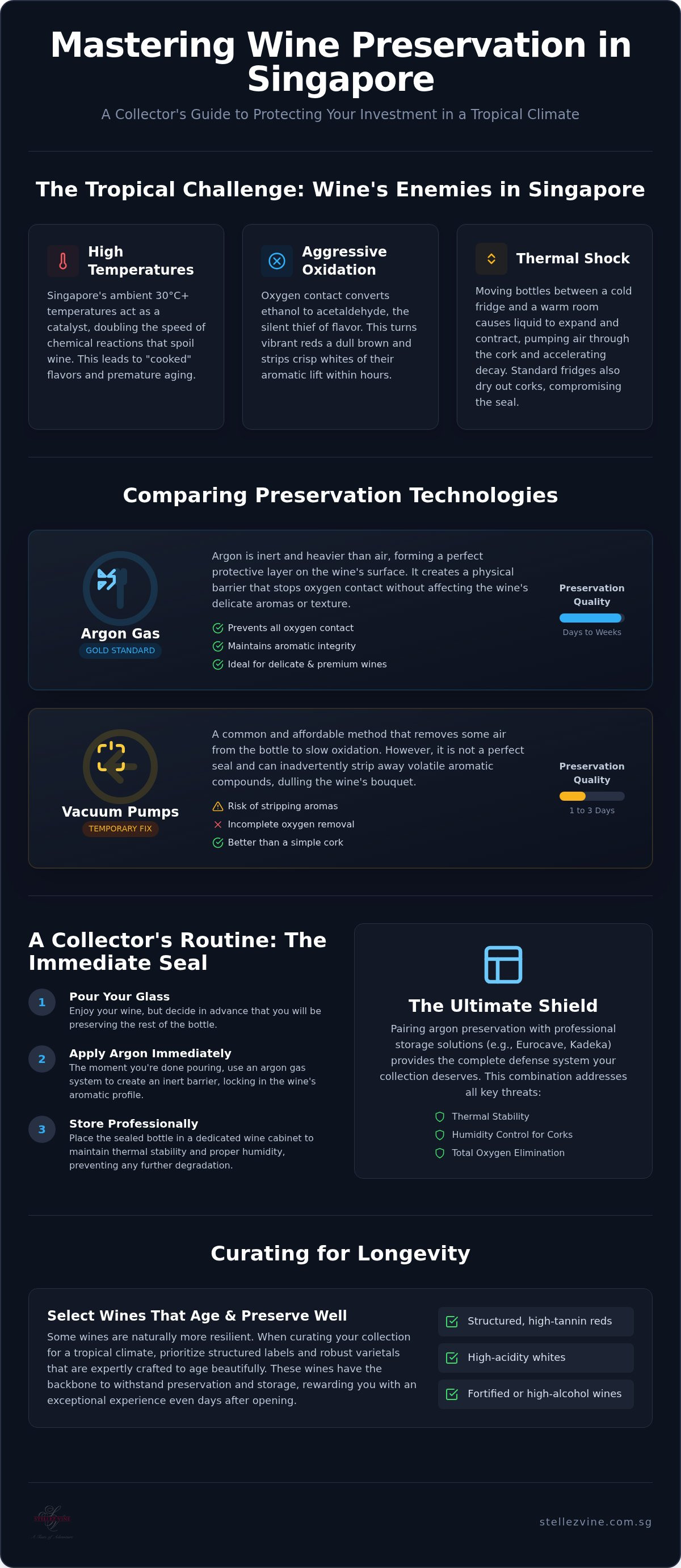
Mastering wine preservation Singapore requires more than just a decorative stopper. It's the technical craft of halting oxidation to protect the aromatic integrity of your handpicked vintages. In our tropical city, ambient temperatures often soar above 30°C, creating a high-energy environment where chemical reactions happen at double the speed of cooler climates. While the basics of wine storage suggest stability, Singapore's volatility demands a more proactive approach. A simple re-cork and kitchen fridge method fails premium labels because it ignores the fundamental physics of heat and gas exchange.
Oxidation: The Silent Thief of Flavour
Oxygen is wine's greatest friend during decanting but its most aggressive enemy once the bottle is stored. Chemically, this process involves the conversion of ethanol into acetaldehyde. You'll recognize the damage through sensory cues: a vibrant red turning a dull, brick-like brown or a crisp white losing its floral lift for a flat, nutty aroma. Oxidation is a controlled burn that must be managed. Without intervention, an exceptional bottle of Savage Red loses its soul within hours. Effective wine preservation Singapore is about creating an airtight barrier that stops this chemical decay in its tracks.
The Temperature Trap for Opened Bottles
Heat acts as a catalyst for spoilage. At a steady 25°C, an opened bottle degrades significantly faster than one kept at a professional 12°C. The typical Singapore kitchen counter is a danger zone for fine wine. Fluctuating temperatures from cooking and air-conditioning create "thermal shock." This causes the liquid to expand and contract, which effectively pumps air through even the tightest seal. Moving a bottle in and out of a cold fridge into a 30°C room repeatedly is a recipe for premature aging and "cooked" flavours.
Don't overlook the role of humidity in this equation. While Singapore is naturally humid, the interior of a domestic refrigerator is notoriously dry. This environment saps moisture from natural corks, causing them to shrink and lose their elasticity. A compromised cork allows oxygen to seep in, rendering your preservation efforts useless. To protect a serious collection, you must move beyond temporary fixes and embrace professional-grade solutions. Standard home appliances fail to address the three pillars of preservation:
Thermal stability to prevent chemical acceleration.
Humidity control to maintain cork integrity.
Inert gas displacement to eliminate oxygen contact.
By understanding these tropical hurdles, you can transition from simply storing wine to truly curating an experience that lasts well beyond the first pour.
Comparing Preservation Technologies: Argon, Vacuum, and Professional Systems
Selecting the right equipment for wine preservation Singapore depends on the specific requirements of your collection and how long you wish to extend the life of an open bottle. We categorize these solutions into three distinct tiers: inert gas displacement, mechanical vacuum removal, and professional-grade preservation systems. Each technology interacts differently with our local environment. It's about matching the sophisticated chemistry of the wine to a tool that can reliably arrest its decay without stripping away its character.
Argon Gas: The Heavyweight Champion
Argon remains the gold standard for still wines because of its unique physical properties. It's entirely inert and significantly heavier than air, which allows it to settle directly onto the surface of the liquid. When you utilize Argon gas preservation, you create a physical barrier that prevents oxygen molecules from ever touching the wine. This is the only method we recommend for high-altitude, nuanced labels like Matias Riccitelli, where the aromatic profile is delicate and easily compromised. Unlike nitrogen, argon doesn't strip away the delicate oils that provide texture and mouthfeel.
Vacuum Systems: A Practical but Temporary Fix
Vacuum pumps are common in Singapore households, often available as affordable manual sets with rubber stoppers. These tools work by physically removing air from the headspace of the bottle. While they are functional for a robust, young red you plan to finish within 48 hours, they have limitations. The mechanical force of a vacuum can "pull" volatile aromatic compounds out of the wine, leaving it smelling muted. If you choose this route, ensure the bottle rim is clean and dry to maintain the seal. It's a convenient stop-gap for daily drinkers, but it lacks the precision required for long-term protection of a premium vintage.
For collectors who demand the pinnacle of performance, professional-grade preservation towers offer a more advanced alternative. These systems utilize precision sensors to create a perfect vacuum for still wines or re-pressurize sparkling wines with CO2 to maintain their effervescence for up to 21 days. This level of technology is ideal for those who wish to enjoy a single, perfect glass of a rare label without the pressure to consume the entire bottle. To ensure your collection is ready for this level of care, you can discover our curated selection of premium labels that are built to thrive under expert preservation.
A Collector’s Routine: Best Practices for Preserving Opened Bottles
The difference between a spoiled vintage and a preserved masterpiece often comes down to the first sixty seconds after the cork is pulled. In our tropical climate, the "Immediate Seal" rule is your primary defense. Never leave an opened bottle sitting on the dinner table for the duration of a meal. Pour your glass, then seal the bottle immediately to minimize the volume of warm, humid air entering the vessel. This simple habit is the cornerstone of effective wine preservation Singapore, ensuring that the oxidation process is halted before it gains momentum.
When applying argon gas, precision is more important than quantity. Use two short, one-second bursts rather than a single long spray. This creates a more stable, stratified layer of gas. Once sealed, you must store the bottle vertically. While we typically store unopened bottles on their sides to keep the cork moist, a preserved bottle relies on the argon "blanket" sitting undisturbed on the surface of the liquid. Laying the bottle flat increases the surface area and can cause the protective gas layer to shift, exposing the wine to the very oxygen you're trying to exclude.
The Red Wine Protocol
Robust reds, particularly structured labels like South African Pinotage or a bold Savage Red, possess the tannins to withstand short-term oxygen exposure. However, they still require a disciplined approach. After being preserved and chilled, these reds need a brief "re-awakening" before the second pour. Allow the wine to sit in the glass for ten minutes to reach a slightly warmer cellar temperature, which helps the aromatics unfurl. For a deeper look at which varietals thrive under these conditions, explore our South African wine guide to understand the structural nuances of the Cape’s finest offerings.
Whites and Rosés: Keeping the Crispness
Delicate whites and rosés are significantly more fragile. For high-altitude French whites or unique Thai GranMonte labels, maintaining a constant temperature of 8-10°C is vital even after gas application. These wines are prone to absorbing "fridge odours" through the micro-pores of low-quality stoppers. Always use professional-grade silicone or stainless steel stoppers that provide a true airtight seal. Most light whites will remain pristine for three days under argon, while more acidic, structured whites can often stretch to five days without losing their characteristic lift and vibrancy.
The Ultimate Shield: Pairing Preservation with Professional Storage
Argon gas acts as a chemical shield, yet it cannot fight the physical acceleration caused by heat. In Singapore, the true danger lies in thermal instability. If your ambient temperature fluctuates, the air inside the bottle expands and contracts. This "breathing" effect can compromise even the most precise argon blanket. Achieving true wine preservation Singapore requires a synergy between inert gas and a dedicated, climate-controlled environment. Without this thermal equilibrium, the chemical reactions that spoil your wine will simply continue at a slower, but still destructive, pace. Stability is everything.
Eurocave: The Professional Standard at Home
Eurocave remains the undisputed benchmark for collectors who refuse to compromise. It's more than a storage unit; it's a professional vault designed to replicate the conditions of a subterranean French cellar. Their patented technology manages humidity and eliminates the micro-vibrations that can disturb a wine's sediment. A Eurocave wine fridge ensures your corks remain supple and airtight. This protection is vital for maintaining the internal pressure needed to keep your preservation gas in place. It transforms your home into a sanctuary for labels like Chateau Canon Chaigneau, where aromatic integrity is paramount.
Kadeka and Liebherr: Versatile Solutions
Kadeka offers sleek, high-performance solutions tailored for modern Singapore apartments and compact kitchens. Their units are designed for efficiency and style, fitting seamlessly into contemporary living spaces. Many models include adjustable shelving that accommodates upright, preserved bottles. This is a critical feature for effective wine preservation Singapore, as it allows the argon gas to sit undisturbed on the liquid's surface. Liebherr cabinets take this further with multi-temperature zones. You can store a preserved red at 17°C while keeping a crisp white at 8°C in the same cabinet. This versatility is a core component of the long term wine storage Singapore experts recommend for diverse collections.
Invest in the right infrastructure to support your habits. A professional cabinet provides the thermal "home base" that preservation tools need to be truly effective. Follow this three-step cycle for every bottle: apply the gas, seal the stopper, and return the bottle to a dedicated wine cabinet. Explore our collection of premium storage solutions and secure the future of your finest bottles today.
Curating for Longevity: Selecting Wines that Age and Preserve Well
Successful wine preservation Singapore begins long before you depress an argon canister; it starts at the point of selection. Wines with high tannin levels and vibrant acidity possess a natural structural resilience that makes them superior candidates for multi-day enjoyment. A classic Bordeaux red, such as Chateau Canon Chaigneau, is built for endurance. Its firm structure allows it to maintain its aromatic profile even after the initial exposure to air. Similarly, the meticulous craftsmanship behind Savage Wines from South Africa creates a depth of flavour that rewards patient, glass-by-glass consumption.
Your choice of glassware plays a subtle but vital role in the final presentation of a preserved wine. Even a perfectly shielded vintage can feel lackluster if served in substandard glass. Fine crystal enhances the aromatic release of a wine that has been under argon, helping it unfurl more efficiently after being removed from a chilled environment. By selecting bottles with the structural backbone to resist oxidation, you ensure that your preservation efforts yield the highest possible sensory return.
The Connoisseur’s Selection
Curate a cellar that balances vibrant daily drinkers with rare, age-worthy labels. This strategic approach ensures you always have a bottle suited to your evening's mood. Argentinian Malbecs are particularly forgiving candidates for 3-5 day wine preservation Singapore. Their plush fruit and moderate tannins hold steady under an argon blanket, making them ideal for mid-week indulgence without the pressure to finish the bottle. If you're looking to share this refined lifestyle, consider how corporate wine gifts can serve as a medium to educate others. Including a set of professional stoppers with a premium bottle adds a layer of thoughtful, practical luxury to any executive gesture. It shows you value their experience as much as the gift itself.
Final Checklist for Singapore Collectors
Maintaining a pristine home cellar in the tropics requires a regular audit of your equipment and sourcing habits. It's a proactive routine that protects your investment. Follow this three-point checklist to stay prepared:
Inventory check: Ensure you have a surplus of fresh silicone stoppers and pressurized argon canisters. Don't wait until you've opened a rare vintage to realize you're out of gas.
Storage check: Confirm your wine fridge is serviced and set to the optimal 12-14°C. A failing compressor in our humidity can ruin a collection in days.
Sourcing check: Always acquire your bottles from a trusted online wine shop in Singapore that guarantees temperature-controlled logistics from warehouse to doorstep.
Master the Art of the Perfect Pour
Protecting a serious collection in the tropics requires a proactive blend of precision technology and disciplined routine. You now understand that shielding your wine from oxygen with argon gas is only half the battle; true stability comes from professional climate control. By choosing resilient, structured labels and maintaining the right hardware, you transform wine preservation Singapore from a challenge into a seamless part of your lifestyle.
We are here to support your journey as a discerning collector. As an authorized distributor for Eurocave and Kadeka, Stellez Vine Singapore provides the benchmark storage solutions your vintages deserve. Elevate your collection with Stellez Vine Singapore’s curated wines and professional storage, featuring an unmatched selection of boutique global labels and fast, reliable delivery across Singapore. It's time to savor your finest bottles without the pressure of the clock. Trust your palate, invest in quality, and enjoy the luxury of a pristine glass every time you uncork a favorite vintage.
Frequently Asked Questions
How long can I keep a bottle of wine fresh after opening in Singapore?
You can keep a bottle fresh for up to five days in Singapore if you utilize argon gas and professional storage. Without intervention, the 30°C ambient heat will degrade a premium red within 24 hours. Robust varietals like Pinotage generally last longer than delicate whites. Always ensure the bottle is stored vertically in a climate-controlled environment to maximize the effectiveness of your wine preservation Singapore routine.
Is a vacuum pump or argon gas better for wine preservation?
Argon gas is the superior choice for fine wine because it is entirely inert and heavier than air. While vacuum pumps are affordable, they risk stripping volatile aromatics from complex, high-altitude labels. Use argon for your Argentinian Malbecs or French vintages to maintain their sensory profile. Save the vacuum pump for simple, robust table wines that you intend to finish within a single evening.
Can I store an opened bottle of red wine in a regular kitchen fridge?
You should place opened reds in a fridge, but a standard kitchen unit is too cold and dry for long-term health. The constant vibration and odors from food can also seep into the wine via the stopper. A dedicated wine cabinet from Liebherr or Eurocave is far better. If you must use a kitchen fridge, allow the wine to rest at room temperature for 15 minutes before pouring.
Does wine preservation work for sparkling wine and Champagne?
Standard argon systems are not designed for Champagne as they don't maintain the necessary internal pressure. You require a specialized CO2 injection system to keep the bubbles active for up to 21 days. For home enthusiasts, a high-quality pressure-seal stopper can maintain carbonation for about 24 to 48 hours if kept consistently chilled. This prevents the wine from becoming flat and losing its characteristic effervescence.
How many times can I use an argon gas canister for preservation?
A standard portable argon canister typically provides 15 to 30 applications depending on your technique. Use two short, one-second bursts rather than a continuous spray to conserve gas while ensuring full coverage. It's a cost-effective way to protect your investment in labels like Chateau Canon Chaigneau. Always keep a spare canister in your inventory to avoid being caught without protection for a rare, opened bottle.
Will a wine fridge help preserve an already opened bottle?
A wine fridge is essential for wine preservation Singapore because it provides the thermal stability that argon needs to function. Fluctuating temperatures cause the wine to "breathe," which can disrupt the protective gas layer. Storing your sealed bottle in a Kadeka or Eurocave unit prevents this expansion and contraction. This synergy between gas and hardware is the most effective method collectors can employ in the tropics.
What are the signs that a preserved wine has finally gone bad?
Look for visual browning in reds or a deep yellowing in whites as the first sign of terminal oxidation. On the nose, you'll detect flat, nutty aromas or a sharp, vinegar-like scent of acetic acid. If the vibrant fruit notes have disappeared entirely, the wine has likely passed its prime. Once these chemical changes occur, no preservation system can reverse the damage to the original flavor profile.
Is it worth using a preservation system for wines under S$50?
It is absolutely worth using a preservation system for mid-range bottles if you enjoy drinking a single glass over several nights. Wasting half a S$45 bottle is a loss of value that adds up over time. Using a basic argon spray ensures that your Wednesday night glass tastes just as exceptional as the first pour on Monday. It allows you to explore diverse labels without the pressure of immediate consumption.


Comments