
Preventing Mold in Wine Fridge: The Collector’s Guide to Tropical Storage

Did you know that moderate mold damage can slash the secondary market value of a rare bottle by over 40%? In Singapore's relentless humidity, keeping your collection pristine often feels like a losing battle against the elements. You've invested in fine vintages and high-end cooling, yet the challenge of preventing mold in wine fridge units remains a persistent anxiety for many serious collectors. It's a frustrating paradox where the moisture required to keep your corks healthy simultaneously threatens to ruin your prized labels.
We understand that a musty odor in your kitchen or a damp-stained label isn't just a nuisance; it's a threat to your investment and your passion. This guide will help you master the art of humidity control within the unique context of a tropical climate. You'll discover how to maintain a mold-free storage environment that preserves every detail of your collection's heritage. We will walk through the technical specifications of benchmark brands like Eurocave and Liebherr, explain the science of dew points, and provide a clear roadmap for proactive maintenance. It's time to elevate your storage standards and savor your collection with absolute confidence.
Table of Contents
The Tropical Challenge: Why Mold Thrives in Wine Fridges
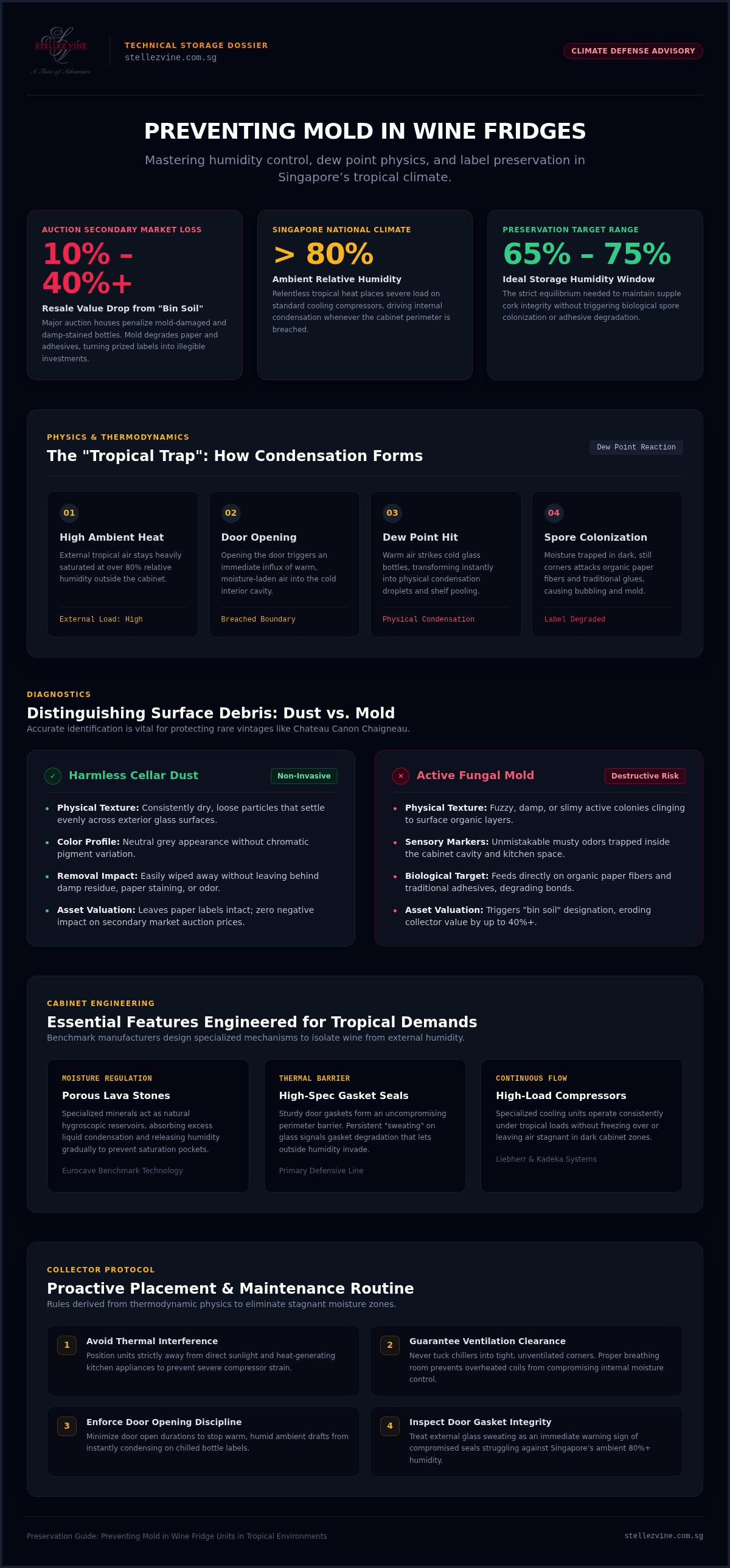
Singapore’s climate presents a unique set of obstacles for any serious collector. With ambient humidity often soaring above 80%, the battle for preventing mold in wine fridge units begins the moment you plug in your appliance. Mold isn't a random occurrence; it's a biological response to specific environmental triggers. While moisture is necessary to keep corks supple, excessive dampness combined with stagnant air creates a breeding ground for fungal spores. To maintain the integrity of your collection, aim for an ideal humidity range between 65% and 75% to ensure label safety without risking cork desiccation.
Humidity vs. Condensation: Knowing the Difference
It’s vital to distinguish between relative humidity and physical condensation. When warm, moisture-laden air hits a cold surface, it reaches its dew point and transforms into liquid droplets. This temperature differential is the primary cause of water pooling on shelves or forming on bottle glass. A high-quality seal is your first line of defense, acting as a sturdy barrier against the external tropical heat. If you notice persistent "sweating" on the glass door, take it as an early warning sign. It indicates that your fridge is struggling to maintain its internal environment against the outside elements, often due to a compromised gasket or extreme external temperatures.
The Singapore Factor: National Climate Realities
Standard kitchen refrigerators are designed for food preservation, not the delicate nuances of proper wine storage conditions. In Singapore, the year-round heat puts immense strain on cooling compressors. Specialized wine chillers, like those from Kadeka or Liebherr, are specifically engineered to handle these high-load environments. Placement is equally critical for success. You must position your unit away from direct sunlight and heat-generating appliances to prevent the compressor from overheating. A unit tucked into a hot, unventilated corner will eventually fail to regulate moisture, regardless of its brand pedigree.
Every time you open the fridge door, you trigger what experts call the "Tropical Trap." A rush of warm, humid air enters the cabinet, causing immediate condensation on the chilled bottles. This moisture gets trapped in the dark, still corners of the fridge, leading to mold growth on porous paper labels. By minimizing door openings and ensuring your unit has adequate breathing room, you proactively defend your investment. Preventing mold in wine fridge setups isn't just about high-end tech; it’s about understanding the physics of your own home and managing the airflow that keeps your collection pristine.
Preserving the Label: The Impact of Mold on Your Collection
For the discerning collector, a bottle of fine wine is a tangible piece of history. When mold begins to creep across a label, it does more than just obscure the vintage; it signals a failure in storage discipline. In the high-stakes world of secondary auctions, condition is everything. Major auction houses frequently classify mold-damaged bottles as "bin soiled," a designation that can slash resale values by 10% to over 40% depending on the rarity. This financial hit is a direct consequence of neglecting the essentials of preventing mold in wine fridge environments. Beyond the monetary loss, there is a psychological toll. The act of pulling a rare bottle from your collection should be a moment of anticipation, not a sensory encounter with musty odors and damp paper.
Distinguishing between a light layer of harmless cellar dust and invasive fungal growth is a critical skill for any enthusiast. Dust is typically dry, grey, and easily wiped away without leaving a stain. Mold, however, is often fuzzy, colorful, or slimy, indicating active colonization. If left unchecked, these spores don't just sit on the surface. They feed on the organic materials found in paper and traditional adhesives, eventually turning a pristine label into a fragmented, illegible mess. A clean, odor-free storage space is the hallmark of a professional-grade collection.
Label Integrity and Resale Value
Label preservation is a science of balance. High-moisture environments cause the glue behind the label to degrade and ferment, leading to unsightly bubbling or detachment. For benchmark producers like Chateau Canon Chaigneau, the label is a hallmark of quality that buyers expect to see in perfect condition. Protecting these assets requires a proactive approach to moisture management. You can explore our curated storage accessories to find tools that help maintain this delicate equilibrium without compromising the aesthetics of your display.
Structural Cork Health and Hygiene
While we often focus on the visual impact, mold can pose a silent threat to the wine’s flavor profile. The EPA moisture and mold control guidelines emphasize that mold thrives wherever moisture is mismanaged. Over several decades, aggressive mold odors can permeate through porous natural corks, potentially tainting the wine with off-flavors. Maintaining a sterile, well-ventilated environment is non-negotiable for long-term aging. You must keep the cork sufficiently moist to prevent oxygen ingress while ensuring the surrounding air remains clean and free of fungal spores. This dual-focus approach ensures that when you finally pull the cork, the only bouquet you encounter is the one the winemaker intended.
Engineering Prevention: Features that Combat Moisture Buildup
High-performance wine cabinets are far more than simple cooling units; they are sophisticated atmospheric regulators. When you invest in a premium chiller, you are choosing between active and passive humidity management. Active systems, such as those found in benchmark Eurocave models, utilize precise sensors to dynamically adjust moisture levels. Passive systems rely on thermal mass, often through stippled aluminum walls, to maintain stability. For the collector in Singapore, forced-air cooling is a non-negotiable requirement. Unlike static cooling, which allows pockets of humid air to stagnate in corners, forced-air systems circulate air constantly. This movement is the secret to preventing mold in wine fridge cabinets, as it denies spores the still environment they need to colonize.
Many elite units, including those from Kadeka, incorporate porous clay balls or lava stones in a specialized tray. These materials act as a natural buffer for your collection. They absorb excess condensation during humidity spikes and release moisture back into the cabinet during drier compressor cycles. This creates a self-regulating ecosystem that protects your labels from the "Tropical Trap" discussed earlier. By choosing equipment engineered for these extremes, you ensure your wine ages in a stable, controlled environment that mirrors a traditional limestone cellar.
Charcoal Filters and Air Purification
Activated carbon filters serve as the primary defense against airborne contaminants. These filters strip mold spores and neutralize odors that could otherwise penetrate the cork over several decades. While some generic guides suggest filters last indefinitely, the reality of the Singaporean climate demands a stricter schedule. You must replace your charcoal filter every 12 months to ensure it remains effective against high ambient humidity. Eurocave models often feature a digital countdown for this task, while Liebherr units utilize high-efficiency FreshAir filters to maintain a pristine internal environment free of fungal threats.
Hygro-control and Smart Sensors
Modern cabinets have evolved into smart devices that offer peace of mind. Digital hygrometers provide real-time data on moisture levels, allowing you to react before a problem starts. Smart alarms are particularly useful in tropical settings; they notify you immediately if the door has been left ajar or if humidity deviates from the safe zone. This technology is a core component of successful long term wine storage in Singapore. As highlighted in Wine Spectator's guide to wine storage, excessive humidity is just as dangerous as desiccation, making these smart sensors an essential investment for preventing mold in wine fridge setups and preserving label integrity.
The Collector’s Maintenance Routine: A Prevention Checklist
While high-end engineering provides the foundation for a stable environment, consistent human oversight is the final layer of defense for your collection. A five-minute monthly audit is your most effective tool for preventing mold in wine fridge cabinets. Start by inspecting the bottom shelves and rear corners. These zones are where cold air settles and condensation is most likely to pool. Look for "sweating" on bottle glass or a slight dampness on the labels. Catching moisture early allows you to intervene before fungal spores can colonize the porous paper of your most prized vintages.
Airflow Optimization and Loading Patterns
Air must move freely to remain fresh and dry. Overstuffing your unit is the leading cause of stagnant mold pockets. When bottles are packed too tightly, they block the "Chimney Effect," which is the natural upward flow of air against the back cooling wall. Always leave at least a two-centimeter gap between your bottles and the rear plate to allow this circulation to continue. The choice of shelving also impacts moisture management. Wooden shelves, common in Eurocave and Liebherr models, act as a natural buffer by absorbing micro-droplets of condensation. In contrast, metal shelves offer no absorption, meaning moisture can run down and pool more easily if the humidity spikes.
Maintain Vertical Gaps: Ensure air can flow between levels, not just side-to-side across the racks.
Rear Wall Clearance: Never let bottle capsules touch the back cooling plate, as this creates a direct path for condensation.
Label Orientation: Store bottles with labels facing up to allow for quick visual inspections during your monthly audit.
Cleaning Protocols for the Tropical Cellar
If you discover mold, remain calm and act with precision. You must never use bleach or harsh chemical sprays inside your wine cabinet. Chlorine-based cleaners can react with the wood phenols in your shelving to create 2,4,6-trichloroanisole (TCA). This is the same compound responsible for "corked" wine, and it can ruin your entire collection if it permeates the corks. Instead, use a gentle solution of one part distilled white vinegar to two parts water. This natural disinfectant kills mold spores effectively without risking the aromatic integrity of your wine.
Pay close attention to the drainage hole at the back of the unit. In Singapore's humid environment, dust and biofilm can quickly clog this channel, causing the internal drip tray to overflow onto your floor or bottom shelves. If the interior feels excessively damp despite a clear drain, place a few packets of food-safe silica gel in the corners to strip away excess moisture safely. Consistent vigilance ensures your equipment performs at its peak for decades. Consult our experts for professional wine storage advice to keep your collection in pristine condition.
Elevating Your Storage: Choosing the Right Fridge for the Climate
Selecting a storage solution in a tropical environment is a decision of engineering over aesthetics. While entry-level chillers might suffice in temperate zones, the sheer humidity of Singapore demands a more robust approach. In this market, price often serves as a proxy for the sophistication of the humidity control system. Premium units are specifically built to manage the massive dew point differentials that lead to condensation. When you invest in high-tier equipment, you aren't just buying a cooler; you're securing a sophisticated ecosystem dedicated to preventing mold in wine fridge units and safeguarding your liquid assets.
Eurocave’s Superior Humidity Management
Eurocave remains the benchmark for collectors who refuse to compromise. Their patented NeoFresh and Hygro-control systems provide active monitoring that maintains the ideal 65 to 75 percent humidity window with surgical precision. One standout feature is the use of embossed aluminium walls. These textured surfaces are designed to manage condensation by directing droplets toward the drainage channel rather than allowing them to pool against your bottle labels. This thoughtful design is a core reason why many consider these units the ultimate choice for serious aging. Discover more in our Eurocave wine fridge Singapore guide.
Kadeka’s Smart Cooling for National Homes
For the modern Singaporean apartment, Kadeka offers a reliable and technologically advanced solution. Their units feature robust tropicalized compressors paired with energy-efficient inverter technology. This allows the fridge to maintain stable internal temperatures even when external heat peaks during the afternoon. Kadeka’s triple-glazed, UV-protected glass doors are essential for preventing mold in wine fridge setups, as they provide superior insulation and minimize the risk of exterior sweating. When selecting your model, always choose a capacity that allows for the airflow patterns we discussed in the previous section to ensure every bottle stays dry.
Transitioning your collection to a more reliable storage solution is a proactive step toward long-term preservation. Start by auditing your current inventory for any signs of label degradation or "bin soiling." As you move bottles into a new Eurocave or Kadeka unit, take the opportunity to clean them with a natural vinegar solution and ensure they're dry before cellaring. This clean start, combined with benchmark engineering, provides the ultimate peace of mind for any connoisseur. Your passion deserves a storage environment that celebrates heritage and guarantees quality for years to come.
Protecting Your Vintages for the Years Ahead
Your collection represents a curated history of taste and heritage, deserving of a storage environment that mirrors its prestige. In Singapore's demanding climate, mastering the art of preventing mold in wine fridge units is an ongoing commitment to quality. By integrating the technical features and maintenance habits discussed, you ensure every label remains pristine and every cork stays structurally sound for decades to come.
As an authorized Singapore dealer dedicated to preserving fine wine since 2009, Stellez Vine Singapore provides the expert technical support and after-sales service necessary to navigate these tropical challenges. We act as your trusted gatekeeper, simplifying the complexities of luxury storage so you can focus on the sensory experience of discovery. Our team understands that quality isn't just a preference; it's a standard for living well.
Explore our curated range of Eurocave and Kadeka Wine Fridges to elevate your home cellar today. With the right technology and a proactive approach, you'll savor your collection with absolute confidence, knowing your investment is protected by the highest standards of craftsmanship.
Frequently Asked Questions
Is it normal to have some moisture inside my wine fridge?
Yes, a degree of moisture is essential for preserving natural corks. Maintaining a relative humidity between 50% and 70% ensures that the cork remains elastic, preventing oxygen from seeping in and oxidizing your vintage. However, excessive liquid pooling is a sign of poor drainage. Balancing this humidity is the core challenge of preventing mold in wine fridge units, as stagnant water quickly invites fungal growth.
Will mold on the outside of the bottle spoil the wine inside?
Surface mold on a label won't immediately ruin the liquid inside, but it poses a long-term threat. Fungal spores can eventually penetrate porous corks, leading to off-flavors and musty taints. Beyond the sensory impact, mold significantly devalues your collection. Auction houses often reject bottles with bin-soiled labels, making it difficult to realize the true resale value of a rare French or South African vintage.
How often should I change the charcoal filter in my wine chiller?
You should replace the activated carbon filter every 12 months to maintain air purity. In Singapore's high-humidity environment, these filters work overtime to strip mold spores and odors from the air. Brands like Eurocave and Liebherr include digital alarms to remind you of this schedule. Neglecting this annual change allows contaminants to build up, which compromises the sterile environment required for professional-grade aging.
Can I use a dehumidifier in the same room as my wine fridge to prevent mold?
Using a dehumidifier in the surrounding room is a proactive strategy for preventing mold in wine fridge cabinets. By lowering the ambient humidity, you reduce the amount of moisture that rushes into the fridge every time the door is opened. This minimizes the pumping effect that leads to internal condensation. It’s a practical way to support your Kadeka or Eurocave unit in maintaining its internal atmospheric balance.
What is the ideal humidity setting for a wine fridge in Singapore?
The benchmark humidity for wine storage in Singapore is between 60% and 70% relative humidity. This range is high enough to keep corks from drying out but low enough to inhibit aggressive mold growth on paper labels. If your fridge lacks an internal hygrometer, consider placing a digital sensor inside to monitor these levels in real-time, especially during the wetter monsoon months when ambient humidity spikes.
Should I wipe down my bottles before putting them in the fridge?
It’s a best practice to wipe down every bottle with a clean, dry cloth before cellaring. Bottles arriving from external warehouses or local shops often carry dust and microscopic mold spores on their glass surfaces. By removing these contaminants before placement, you ensure a cleaner internal environment. This simple step prevents the introduction of foreign fungi that could thrive in the dark, cool corners of your wine cabinet.
How do I remove mold from a wine label without destroying it?
Removing mold from a delicate paper label requires a cautious approach. Use a soft cotton swab lightly dampened with a 70% isopropyl alcohol solution or white vinegar. Gently dab the affected area without rubbing, as excessive moisture will tear the paper or dissolve the glue. Once finished, ensure the bottle is completely dry before returning it to the fridge. Always prioritize airflow to prevent the mold from returning.
Why is mold growing only on the bottom shelf of my wine cabinet?
Mold typically appears on the bottom shelf because cold air is denser and sinks to the lowest point of the cabinet. If airflow is restricted by overstuffing, moisture gets trapped in these lower zones, leading to localized condensation. Ensure the drainage hole isn't blocked and that your bottles aren't touching the back wall. Promoting vertical circulation is essential for maintaining a uniform, mold-free environment across all levels.


Comments