
How to Start a Wine Collection at Home: The Collector’s Definitive Guide
- Stellez Vine

- Jul 22
- 12 min read
What if your next bottle of wine wasn't just a purchase, but a liquid legacy that evolves alongside your own palate? Most enthusiasts feel a flicker of anxiety when they consider the technicalities of aging, fearing that a single humid afternoon might spoil a prized investment. It's an understandable hesitation; the world of viticulture often feels like an exclusive club with a complex set of unwritten rules. If you want to learn how to start a wine collection at home without making expensive mistakes, you need a strategy that balances immediate pleasure with long term potential.
We've curated this definitive guide to provide you with a professional framework for building and protecting a world-class collection. You'll gain the confidence to navigate storage logistics and secure access to exclusive, non-mainstream labels from South Africa to the vineyards of Thailand. We'll show you how to select benchmark vintages, invest in premium climate technology, and tailor your cellar to your unique lifestyle. Discover the art of the intentional collection, where every bottle is a handpicked masterpiece waiting for its perfect moment to be savored.
Table of Contents
Defining Your Collecting Philosophy and Intent
A home wine collection is a curated library of your personal taste, not a mere storage locker for random purchases. It represents a handpicked selection of bottles intended for future enjoyment, celebration, or strategic investment. Before you acquire your first case, you must identify your primary goal. Are you seeking refined bottles for daily consumption, benchmark vintages for special milestones, or long term financial appreciation? Establishing this intent early prevents the common pitfall of aimless accumulation. When you first explore how to start a wine collection at home, adopting a professional mindset means viewing every bottle as a purposeful addition to a larger narrative.
Starting small is the most sophisticated approach a new collector can take. It allows you to remain agile as your preferences evolve. Your palate is not static; it matures as you discover new regions, producers, and styles. By acquiring wines in smaller quantities initially, you can track this evolution without being burdened by a cellar full of styles you have outgrown. This methodical pace ensures that your collection remains a source of pride and discovery rather than a source of clutter.
The Difference Between a Stockpile and a Collection
Buying what you like is a foundational step, but a professional collection requires a deeper layer of strategy. The primary differentiator is understanding the aging process to accurately identify a bottle's drinking window. This window represents the period when a wine’s tannins, acidity, and fruit profile reach a harmonious peak. Understanding these timelines dictates your purchase volume. If a specific vintage has a short three year window, don't buy a full case if you only intend to open one bottle per year.
Professional collectors also value the vertical collection. This involves acquiring the same label across several consecutive years. This practice allows you to experience vintage variation, witnessing how climate and soil conditions shift the character of a single vineyard over time. It transforms a simple drink into a masterclass in viticulture and craftsmanship.
Setting a Sustainable Acquisition Budget
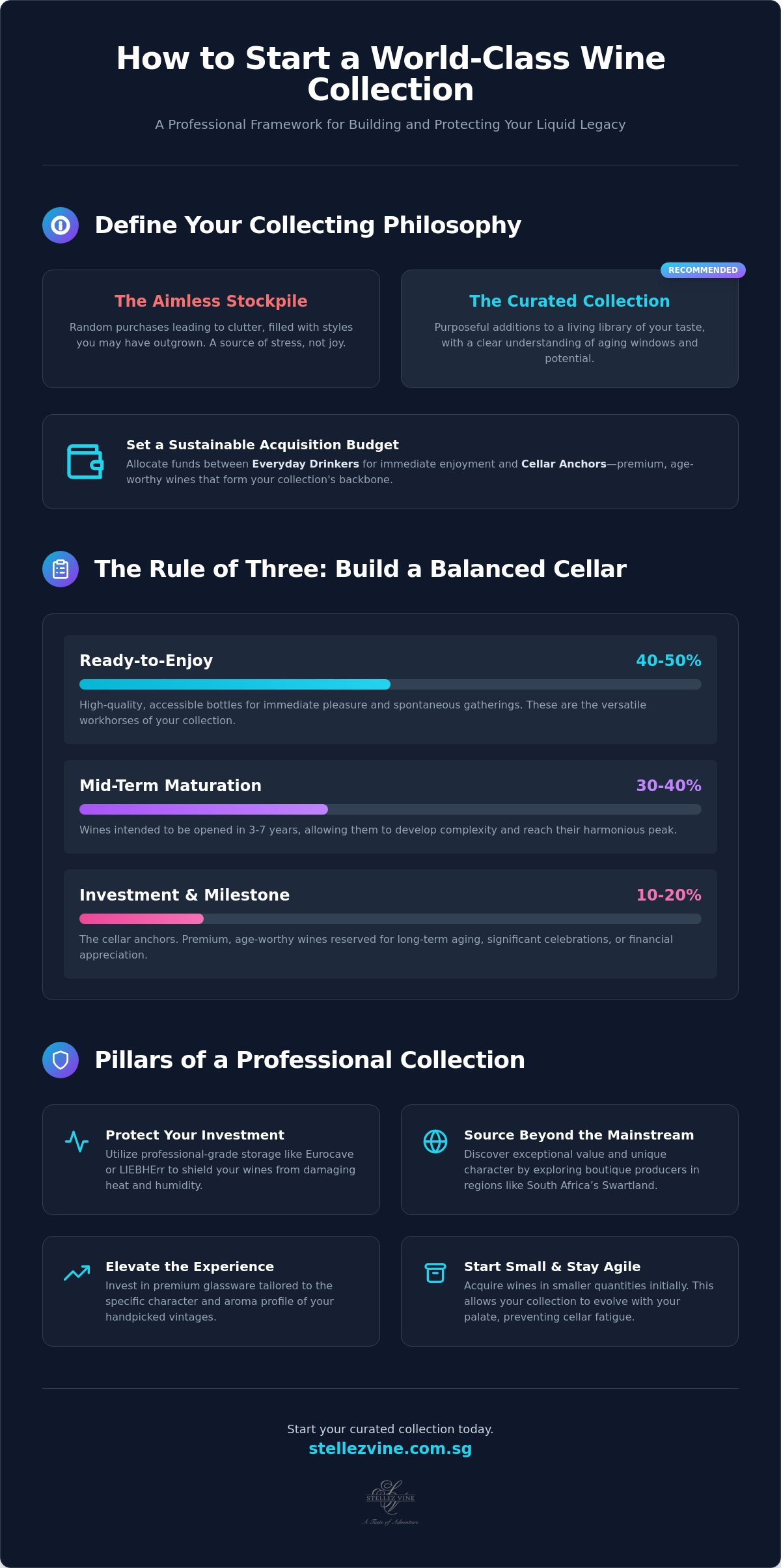
Maintain a confident and proactive stance regarding your finances by setting a clear acquisition budget. A balanced cellar requires you to allocate funds between two primary categories: everyday drinkers and cellar anchors. Everyday drinkers are high quality, accessible bottles intended for immediate enjoyment. Cellar anchors are the premium, age worthy wines that form the backbone of your long term collection.
Utilize the Quality-to-Price Ratio (QPR) as your most valuable metric. This helps you identify exceptional value in boutique regions. For example, exploring the rugged terroir of South Africa’s Swartland or the precision of Savage wines can yield benchmark quality without the inflated prices of more mainstream regions. Avoid the trap of over investing in a single famous region too early. Instead, use your budget to discover, capture, and savor a diverse range of global styles. This disciplined approach is the secret to how to start a wine collection at home that remains both sustainable and exciting for years to come.
The Rule of Three: Building a Balanced Home Cellar
Cellar paralysis is a common frustration for the unguided collector. It occurs when your storage is filled with prestige bottles that require a decade of aging, leaving you with nothing to open for a Tuesday night dinner or a spontaneous gathering. To master how to start a wine collection at home, you must implement a structural framework that ensures accessibility while protecting your long term goals. A balanced cellar functions as a living library, offering a diverse range of readiness that caters to every occasion.
Adopt a professional ratio to guide your acquisitions. Allocate 40-50% of your space to "Ready-to-Enjoy" bottles, which provide immediate pleasure. Dedicate 30-40% to "Mid-Term Maturation" wines that will peak in three to seven years. Finally, reserve 10-20% for "Investment and Milestone" anchors intended for long term aging. These ratios are flexible; if you have limited storage, tilt your focus toward the "Drink-Now" category to maintain high turnover and freshness. This strategic approach mirrors Wine Folly's 10 tips for building a collection with purpose and variety.
Selecting Your 'Drink-Now' Essentials
Focus on versatile, high-character wines that don't require years of patience. These are the workhorses of your collection. Look to the vibrant Chenin Blancs from South Africa or the expressive, boutique reds from Argentina, such as those handpicked from Matias Riccitelli. These wines offer exceptional quality-to-price ratios and are perfect for home entertaining. Select varieties like Sauvignon Blanc or lighter styles of Pinot Noir that capture fresh fruit profiles and bright acidity. They ensure your cellar remains functional and inviting from day one. You can discover a curated selection of these accessible gems to begin your journey today.
Identifying Age-Worthy Anchors
Structural integrity is the primary requirement for a wine intended to evolve. When you learn how to start a wine collection at home, you must identify bottles with the right balance of tannin, acidity, and alcohol. These components act as preservatives, allowing the wine to develop complex tertiary flavors over time. French classics from Lalande-de-Pomerol, such as the refined offerings from Chateau Canon Chaigneau, serve as essential cellar foundations. Additionally, explore the emerging potential of high-altitude Argentinian Malbecs. These wines possess the concentrated fruit and firm structure necessary for mid-term aging, rewarding a few years of careful storage with unmatched depth and elegance.
Mastering the Logistics of Tropical Wine Storage
In a tropical climate like Singapore, the environment is the primary adversary of your collection. While generic guides often suggest a "cool, dark cupboard," this advice is disastrous in regions where temperatures regularly exceed 30°C. If you want to learn how to start a wine collection at home that actually survives to maturity, you must view storage as a non-negotiable technical requirement. Wine is a living, breathing entity. Without professional intervention, the heat will "cook" the delicate fruit profiles, leading to flat, oxidized flavors that no amount of decanting can rescue.
Protecting your liquid assets requires a defensive strategy against the four enemies of wine: heat, light, vibration, and fluctuating humidity. Heat accelerates chemical reactions, causing premature aging. UV light penetrates glass to trigger "light strike," spoiling the wine's aroma. Constant vibrations from standard household appliances can disturb the slow, graceful integration of sediments. Finally, improper hygrometry is a silent killer. If humidity drops below 50%, corks shrink and allow oxygen to enter. If it rises too high without airflow, mold will destroy your labels, stripping the bottle of its provenance and aesthetic value. Professional technology is the only way to safeguard your investment.
The Necessity of Professional Wine Cabinets
Mimic the conditions of an ancient limestone cellar by investing in a specialized wine cabinet. Eurocave remains the global benchmark for this technology, offering unmatched precision in temperature and humidity control. For those living in modern urban apartments, LIEBHErr and Kadeka provide exceptional alternatives that blend seamlessly into contemporary interiors. When selecting your unit, prioritize three essential features. Ensure the glass is UV-protected to block harmful rays. Verify the compressor is vibration-free to keep the wine in a state of perfect rest. Finally, look for integrated charcoal filters, which purify the internal air and prevent odors from tainting the wine through the porous cork.
Organizing Your Cabinet for Accessibility
A well-organized cabinet prevents the need for constant rummaging, which causes temperature spikes every time the door is opened. Consider grouping your bottles by drinking window rather than just by region. This ensures that your "Ready-to-Enjoy" selections are always at the front, while your long term anchors rest undisturbed at the back. Maintain proper airflow by avoiding the temptation to over-stack shelves; air must circulate freely to keep the temperature consistent. To manage your inventory with professional efficiency, use a digital tracking app. This allows you to browse your collection on your phone, identifying the perfect bottle for dinner without ever breaking the climate seal of your cabinet. Mastering these logistics is the most critical step in how to start a wine collection at home that thrives in any environment.
Sourcing Strategy: Looking Beyond the Mainstream
Chasing only the "Blue Chip" labels of Bordeaux and Burgundy is a common mistake when learning how to start a wine collection at home. While these regions offer undeniable prestige, focusing exclusively on them limits your collection's potential for both variety and value. A sophisticated cellar should reflect a sense of refined adventure, moving beyond the predictable to include handpicked gems from emerging global leaders. This proactive approach allows you to discover unmatched quality before it reaches the mass market, ensuring your cellar remains a dynamic library of taste rather than a stagnant museum of labels.
Consider the allure of "Tropical Viticulture" and high-altitude craftsmanship. Labels from GranMonte in Thailand or Mystic Island in China provide a unique narrative and sensory experience that traditional regions often lack. These producers are redefining what's possible in the vineyard, creating benchmark wines that deserve a place in any serious home cellar. To secure these exclusive allocations, you must build relationships with specialized distributors who act as knowledgeable filters in a crowded market. They do the research so you don't have to, providing a clear path to the world's most exceptional boutique finds.
The Rise of Boutique South African Labels
South Africa is currently producing some of the most exciting wines in the world. Brands like Savage Wines have become essentials for collectors who value craftsmanship and heritage. The unique terroir of the Western Cape, specifically in regions like Swartland and Stellenbosch, produces wines with exceptional aging potential. South African Chenin Blanc and Syrah now rival traditional Old World benchmarks, offering a complex profile of fruit, earth, and acidity. These bottles are not just additions; they are the future cornerstones of a balanced collection that prioritizes character over mere brand recognition.
Exploring Argentinian and Italian Traditions
Diversifying your regions protects your collection against the risk of localized vintage failures. Integrate the evolution of high-altitude Argentinian viticulture through producers like Matias Riccitelli. These wines capture the rugged elegance of the Andes, providing a modern contrast to established European styles. Pair these with the reliable Italian classics from Casa Vinicola Caldirola to ensure your cellar has a solid foundation of tradition. This blend of the avant-garde and the established creates a resilient and intellectually satisfying collection. By looking beyond the mainstream, you elevate your home cellar into a truly world-class experience. You can secure your next exclusive allocation by exploring our curated selection of global boutique labels today.
Elevating the Experience: Glassware and Service
A collection is only as good as the tools used to serve it. You have spent months researching how to start a wine collection at home, investing in benchmark labels and professional storage. To stop there is to trip at the finish line. The final act of the collector is one of service and presentation. It requires a meticulous approach to the sensory details that transform a simple drink into a memorable event. Follow this four step protocol to ensure every bottle in your cellar reaches its full potential when the cork is finally pulled.
Step 1: Invest in Premium Glassware. Tailor your vessels to your primary wine styles. A handpicked vintage loses its nuance when served in thick, clunky glass.
Step 2: Master Decanting. Aerate young, bold reds to soften tannins; carefully decant aged bottles to separate sediment while preserving delicate, fleeting aromas.
Step 3: Calibrate Temperature. Serve your reds at "cellar temperature" around 15 to 18°C rather than the stifling "room temperature" of a tropical home.
Step 4: Execute Regular Audits. Review your inventory every quarter to ensure no bottle passes its peak drinking window.
Why Premium Glassware is a Collector's Essential
The physical shape of a wine glass is a matter of science, not just aesthetics. The specific curve of the bowl dictates exactly where the wine hits your palate and how the aromas are delivered to your nose. Thin rimmed glasses are essential; they minimize the tactile interference between the wine and your senses, allowing the texture of a premium Syrah or Chenin Blanc to shine. While variety specific shapes offer the ultimate precision, a high quality "universal" glass provides a versatile solution for the modern minimalist. Choose glassware that feels balanced in the hand and nearly invisible on the lip.
The Final Step: Curating for Special Occasions
The true joy of a home cellar is the ability to curate experiences for others. Whether you are selecting a bottle for corporate gifting or hosting an intimate dinner, the choice should reflect the occasion's weight and the recipient's taste. Leverage the expertise of a trusted partner like Stellez Vine Singapore for tailored recommendations that align with your guests' palates. Sharing a perfectly aged bottle with fellow enthusiasts is the ultimate reward for your patience and discipline. When you understand how to start a wine collection at home, you aren't just hoarding glass; you are capturing moments, heritage, and the exceptional craftsmanship of the world's finest winemakers.
Cultivate Your Liquid Legacy
Building a world class cellar is a journey of refined adventure that transforms your home into a sanctuary of taste. By balancing immediate enjoyment with long term maturation and securing your investment with professional grade climate technology, you ensure every bottle reaches its peak. You now have the framework for how to start a wine collection at home with confidence, moving beyond mainstream labels to discover the unmatched character of boutique producers. It's a process that rewards patience and celebrates the finer details of craftsmanship.
As the exclusive distributor of Eurocave and LIEBHErr wine cabinets in Singapore, Stellez Vine Singapore provides the technical foundation your collection deserves. Pair this protection with our handpicked selection of exceptional South African and French wines, curated specifically for the discerning collector. Whether you're a seasoned connoisseur or just beginning your journey, the expert led guidance at Stellez Vine Singapore simplifies the complexities of luxury. Elevate your home collection with Stellez Vine Singapore's curated selections and professional storage solutions.
The perfect bottle is waiting for its moment. Start curating your personal history today, one benchmark vintage at a time.
Expert Insights for New Collectors
How many bottles do I need to officially have a wine 'collection'?
There is no specific number that defines a collection, but most professionals consider 12 to 24 bottles a legitimate starting point. A collection is characterized by intent and curation rather than sheer volume. If you have a dozen bottles handpicked for specific milestones or styles, you have officially transitioned from a casual buyer to a collector. It's about shifting from random consumption to a proactive strategy of acquisition and preservation.
Can I store wine in a regular refrigerator if I don't have a wine fridge?
You should never use a regular kitchen refrigerator for long term aging. Kitchen fridges are designed to be too cold and too dry, which eventually causes corks to shrink and crack. They also vibrate constantly, which disturbs the wine's natural sedimentation process. For a collection to thrive, you need a dedicated environment like a Kadeka wine chiller or a Eurocave cabinet that maintains a steady 12°C to 14°C with controlled humidity.
Which wines are the best for long-term investment in Singapore?
Focus on "Blue Chip" regions like Bordeaux or Burgundy, but increasingly look toward boutique South African labels with proven aging potential. Wines from producers like Savage or high altitude Malbecs from Matias Riccitelli offer excellent prospects for those learning how to start a wine collection at home. Ensure every investment bottle is stored in a professional cabinet to maintain its secondary market value and protect the integrity of the liquid inside.
How do I know when a wine in my collection is ready to be opened?
Check the producer’s recommended drinking window and use a cellar management app to track your bottles' maturity. Most premium wines enter their peak between five and fifteen years after the vintage date. You can also research previous years of the same label to see how they have evolved. If the tannins feel integrated and the tertiary aromas are developing, it's time to savor the bottle and share it with fellow enthusiasts.
Is it worth collecting white wines, or should I focus only on reds?
A balanced collection should include both, as many high quality whites age beautifully. While reds are the traditional cellar anchors, premium Chenin Blancs from South Africa or Rieslings from established estates develop incredible complexity over a decade. Including whites ensures you have a versatile library that can pair with a wider range of cuisines and occasions, from casual seafood lunches to formal dinners that require a sophisticated, aged white.
What are the most common mistakes beginners make when starting a cellar?
The most frequent error is buying too much of a single style before your palate has fully matured. Beginners also often neglect the logistics of storage, assuming a dark room is enough for a tropical environment. To successfully understand how to start a wine collection at home, you must avoid aimless accumulation. Focus on building a diverse portfolio of benchmark styles rather than chasing fleeting trends or over investing in one region too early.
How does Singapore's humidity specifically affect wine corks and labels?
High humidity in Singapore can cause mold to grow on labels and deteriorate the adhesive, which ruins a bottle's aesthetic and resale value. Conversely, if you use air conditioning that dries the air too much, the cork can dry out and allow oxygen to spoil the wine. A professional LIEBHErr cabinet regulates humidity perfectly, preventing these extremes while protecting the integrity of your handpicked selections and keeping your labels in pristine condition.
Should I buy wine by the case or as individual bottles?
Buy by the case for wines you intend to track over several years, and buy individual bottles for exploration. Purchasing a case of six or twelve allows you to open one bottle every year or two to witness its evolution firsthand. Individual bottles are better suited for boutique labels or experimental regions like Thailand's GranMonte, where you want to discover the style before committing to a larger quantity for your permanent collection.


Comments