
How to Clean Wine Glasses Without Streaks or Water Spots

A streak-free wine glass depends as much on drying as on washing. To learn how to clean wine glasses without streaks, rinse with warm water, use a little mild detergent only if needed, and rinse thoroughly to remove all soap. Dry and polish the glass while it’s still lightly damp, using a clean, lint-free microfibre cloth and gentle pressure.
Cloudy marks and water spots can dull a carefully chosen glass, even when it looks clean. A few precise habits make a visible difference and help protect delicate stems from unnecessary strain.
Follow a simple hand-washing and polishing routine, learn when a dishwasher is suitable, and avoid common mistakes that leave residue, streaks or fingerprints. You’ll also find practical ways to tackle cloudiness and dried wine marks, so your glassware is ready to bring clarity to the table.
Table of Contents
How do I clean a wine glass?
Rinse gently, then dry and polish each glass before the water evaporates. These four steps help protect delicate stems, remove residue and reduce spots.
Choosing Water for RinsingRinse with clean water, then drain the glass promptly. Distilled or filtered water isn’t essential for streak-free results: a thorough rinse and immediate drying matter more. If mineral marks appear after air-drying, try filtered water for the final rinse. Wash glasses in small batches and keep them apart to reduce knocks.
Selecting the Water TemperatureRinse wine glasses with warm, not hot, water. Excessive heat or a sudden temperature change can crack delicate glass. Keep the water comfortably warm, and don’t move a cold glass straight into hot water. Rinse away all soap, let excess water drain briefly, then dry with a clean cloth.
Considering Vinegar and Home RemediesUse a vinegar soak only when cloudiness needs attention. Mix one part white vinegar with three parts warm water, soak the glass for one hour, then wash and rinse thoroughly. For stubborn stains, gently apply a baking-soda-and-water paste with a soft cloth. Scrub lightly, and rinse away every trace before polishing.
Drying With a Lint-Free ClothDry each glass immediately with a clean, lint-free microfibre cloth to limit evaporation marks and fibres. Use two cloths if needed: one to hold the glass and one to polish. Support the bowl, avoid twisting the stem, and gently polish the inside with a bunched cloth corner. Rinse an empty decanter with warm water and dry it carefully; a hair dryer can also help prevent spots.
Common mistakes when washing glassware
Protect delicate glass by choosing a washing method suited to its shape and handling it carefully. Avoid excess detergent, pressure on the stem and crowded dishwasher racks.
Hand-Washing Long-Stemmed GlassesHand-wash long-stemmed glasses with warm water, a soft cloth and mild washing-up liquid. Hold the bowl rather than gripping or pressing the stem; twisting the bowl against the base can stress the join. Use a little detergent, then rinse thoroughly. Avoid sink brushes and rough sponges, which can scratch the glass or catch on a fragile rim.
Hand-Washing Crystal StemwareClean crystal stemware gently in warm water, and avoid sudden heat. Hot water can stress delicate glass, while a rapid temperature change may cause cracking. Use a mild glass-cleaning solution sparingly and support the bowl as you wash. Don’t stack crystal in the sink or knock it against a tap; contact with hard surfaces can chip the rim.
Hand-Washing Wine GlassesUse no more than a drop of detergent when hand-washing a wine glass. The bowl’s inside is rarely dirty, so avoid vigorous scrubbing; swirl warm water and detergent inside if needed. Rinse thoroughly to remove soap residue, which can leave a dull film. Wash a few glasses at a time and keep them apart to prevent accidental knocks.
Secure dishwasher-safe glasses on the top rack, apart from plates and cutlery. Choose a gentle, short cycle at a low temperature, and skip heated drying. Glasses that touch can scratch or break during the cycle. Long-stemmed designs are generally better washed by hand, so you can handle each glass individually.
Polishing glasses to prevent water spots
Polish each glass gently to lift water marks and reveal a sparkling finish. Work while the glass is warm and lightly damp, then inspect it in good light.
Choosing a Lint-Free Polishing ClothChoose a clean microfibre or flour-sack towel for polishing. Check that it’s lint-free and free of detergent residue, which can transfer to clear glass. Avoid paper towels and fuzzy cloths because they can leave fibres behind. Use a fresh, dry section for each glass, and keep the cloth’s seams away from the rim to prevent smears.
Steaming Glasses Before PolishingHold a washed glass over steam only when extra shine or hard-water marks call for it. Let steam lightly cover the interior, then polish immediately with a clean cloth. Don’t let the glass touch boiling water or a hot surface. Keep your hand clear of the steam source, and hold the glass securely by its base to control movement.
Polishing Glasses While Warm and DampPolish the glass while it’s still warm from rinsing and lightly damp. Support the bowl with one hand, then gently move the cloth over the surface with the other. Don’t twist the stem or press hard against the bowl. To polish the inside, bunch one end of the cloth and guide it into the glass rather than putting your hand inside.
Polishing Before ServingPolish each glass after washing and drying, then check it before serving. If fingerprints or streaks appear while handling it, gently touch up that area with a clean cloth. Inspect the bowl in good light, and polish the rim last with light pressure. This final check catches marks without requiring you to repeat the full polishing process.
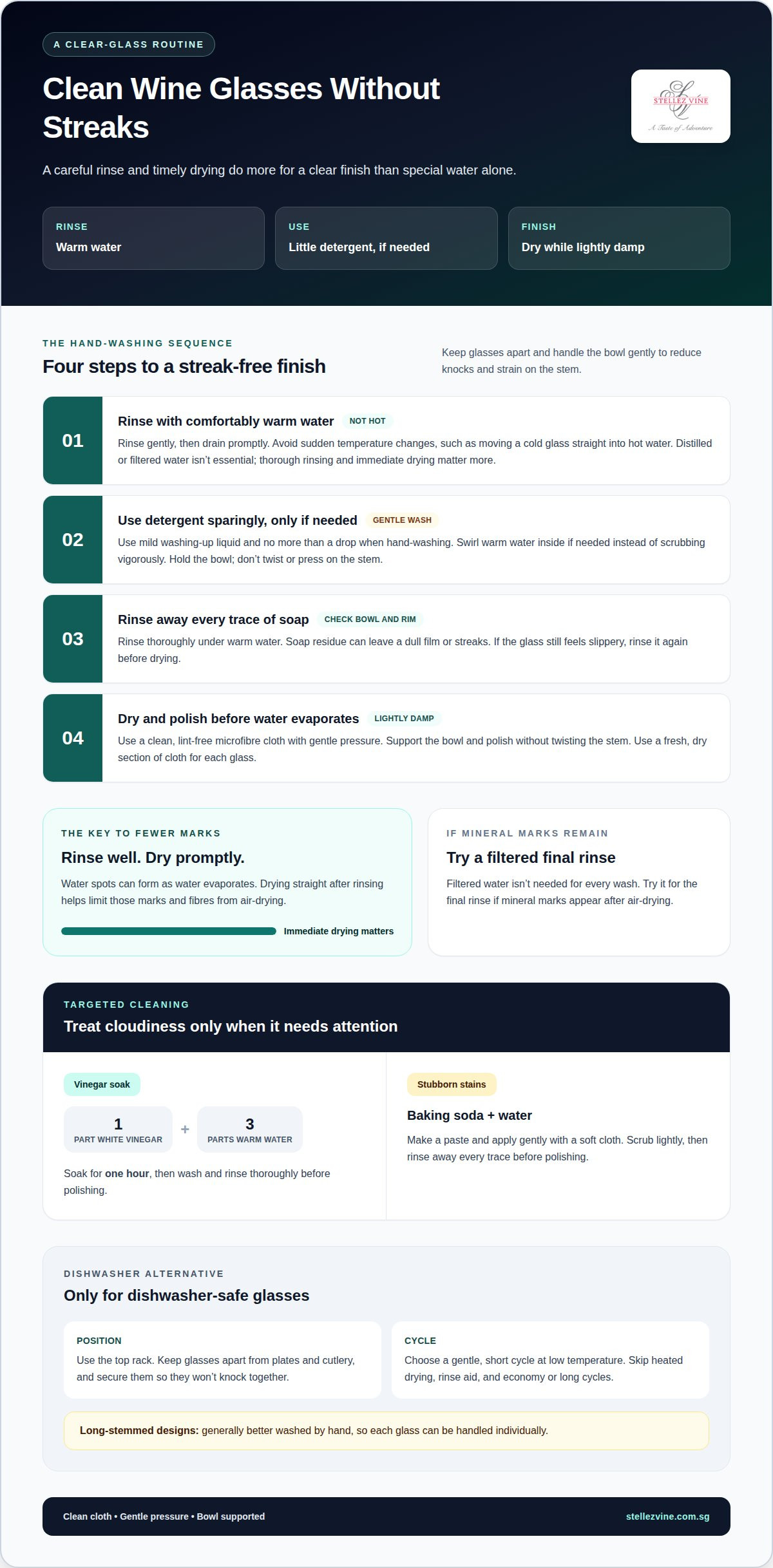
Cleaning glassware without streaks
A reliable approach to how to clean wine glasses without streaks starts with removing all detergent and drying the glass before water evaporates. Dishwasher washing can also work for suitable glasses when they’re secured and the cycle is gentle.
Yes, dishwasher-safe wine glasses can be washed without streaks. Choose a gentle, short cycle, then air-dry or polish away any remaining droplets.
Use detergent sparingly when hand-washing. Excess soap creates foam and can leave dull residue or streaks. Rinse each glass thoroughly under warm water, checking the bowl and rim for suds. A clear, even rinse prepares the surface for drying. If the glass still feels slippery, rinse it again before polishing.
Place dishwasher-safe glasses on the top rack, apart from plates and cutlery. Secure each glass so it won’t knock against another during the cycle. Choose a gentle glassware setting with a short duration and low temperature. Skip rinse aid, which can leave residue, and avoid economy or long cycles.
Choose air-drying instead of heated drying. Open the dishwasher when the cycle ends and let excess water drain. If droplets remain, dry the glass promptly with a clean, lint-free towel. Inspect the bowl in good light, where water spots and fingerprints are easier to see.
When learning how to clean wine glasses without streaks, treat cloudiness with a targeted clean rather than stronger detergent. Soak the glass in one part white vinegar and three parts warm water for one hour, then wash and rinse thoroughly. For a stubborn wine stain, gently rub the mark with baking-soda paste and a soft cloth.
Keep the dishwasher clean and limescale-free to help prevent residue and unwanted odours on glasses. After polishing, store each glass upright in a clean, closed cabinet, leaving space between pieces to prevent scratches. For a considered selection of wine glassware, explore options suited to your table.
Stellez Vine Singapore
Stellez Vine Singapore brings together fine wines and wine-storage options for readers who want to make every pour a considered experience. Once your glasses are clean and polished, explore South African Wines or Savage wines for your table, and consider Kadeka Wine Chillers, Eurocave Wine Fridges or LIEBHErr Wine Cabinets for wine storage.
Turn to Stellez Vine Singapore when choosing wines or considering how to store them at home. Thoughtful glass care preserves clarity at the table, while well-chosen wines and storage solutions add to the enjoyment of every bottle.
For help exploring these offerings, contact Stellez Vine Singapore.
Make clarity part of the occasion
Make clear glassware part of the ritual, not a last-minute task. A steady routine for how to clean wine glasses without streaks leaves you with one less detail to manage before serving and helps the table feel composed from the first pour.
Build that ritual around the way you enjoy wine at home. Choose a glass that suits the occasion, keep it ready for serving and make time to enjoy the conversation instead of fussing over fingerprints or cloudy marks. The same thoughtful approach can shape what you pour and how you care for it.
For a considered next step, explore the wines and storage options available through Stellez Vine Singapore. Contact Stellez Vine Singapore to continue planning a more enjoyable wine experience, and bring a little more care to your next gathering.
Frequently Asked Questions
What is the best way to wash wine glasses without streaks?
Wash glasses in small batches and rinse each until no suds remain. After serving red wine, rinse the glass soon rather than letting residue dry in the bowl. If a glass still looks cloudy after washing, treat the film separately instead of adding more detergent. This keeps your cleaning routine focused on the mark’s likely cause.
Which dish soap is best for washing wine glasses without residue?
Choose a mild dish detergent rather than a highly concentrated or abrasive cleaner. Use only a little, since excess soap can create foam and leave a dull film. There’s no need for extra detergent inside a glass that held wine. Rinse thoroughly, especially around the rim, where soap residue can go unnoticed.
How do you dry and polish wine glasses without leaving lint or streaks?
Use a clean, lint-free microfibre or flour-sack towel, with a dry section ready for the final pass. Check the bowl in good light, then gently remove any remaining fingerprints with the cloth. Avoid handling the polished bowl afterward; lift the glass by its base when setting it down. That small change helps preserve the clear finish.
How do you remove hard-water spots and cloudy film from wine glasses?
For cloudy mineral deposits, soak the glass in one part white vinegar and three parts warm water for one hour, then wash and rinse thoroughly. If the film feels soapy or appears after washing, rinse again before trying a soak. For a stubborn wine stain, gently work baking-soda paste over the mark with a soft cloth.
What microfiber cloths or polishing towels work best for wine glasses?
Choose a clean, lint-free microfibre cloth or flour-sack towel with a smooth surface. Avoid fuzzy towels and paper towels, which can leave fibres behind or make polishing harder to control. Keep a dedicated cloth for glassware, and replace it if it becomes damp or visibly soiled. A clean section helps prevent transferring marks from one glass to another.
How should you hold a wine glass while washing and drying it to prevent breakage?
When hand-washing, support the bowl and avoid squeezing or levering against the stem. Don’t twist the bowl while holding the base, as opposing pressure can stress the join. For polishing, hold the base securely and support the bowl as needed. Work with one glass at a time over a clear, uncluttered surface to avoid accidental knocks.
Comments