
Home Wine Storage Solutions Singapore: The Collector’s 2026 Guide

Your prized 2010 Bordeaux isn't just resting in your Singapore condo; it's fighting a silent battle against 80% humidity and the constant micro-vibrations of modern household life. Collectors across the island understand that our tropical climate acts as a natural adversary to a fine vintage. You've likely experienced the disappointment of a damp, peeling label or the nagging worry that fluctuating air-conditioning is "cooking" your investment through thermal shock. It's a valid concern for anyone serious about the craft of curation.
Master the art of preservation with our definitive guide to home wine storage solutions Singapore. We'll show you how to create a benchmark environment for long-term aging by selecting the right technology for your specific property. Discover how to balance high-performance cooling from brands like Eurocave and Liebherr with the reality of 2026's record electricity tariffs of 34.78 cents per kWh. We'll evaluate the latest inverter technology, explore space-saving cabinets for urban living, and ensure your collection remains an exceptional asset for years to come.
Table of Contents
The Singapore Climate Challenge: Why Standard Cooling Fails
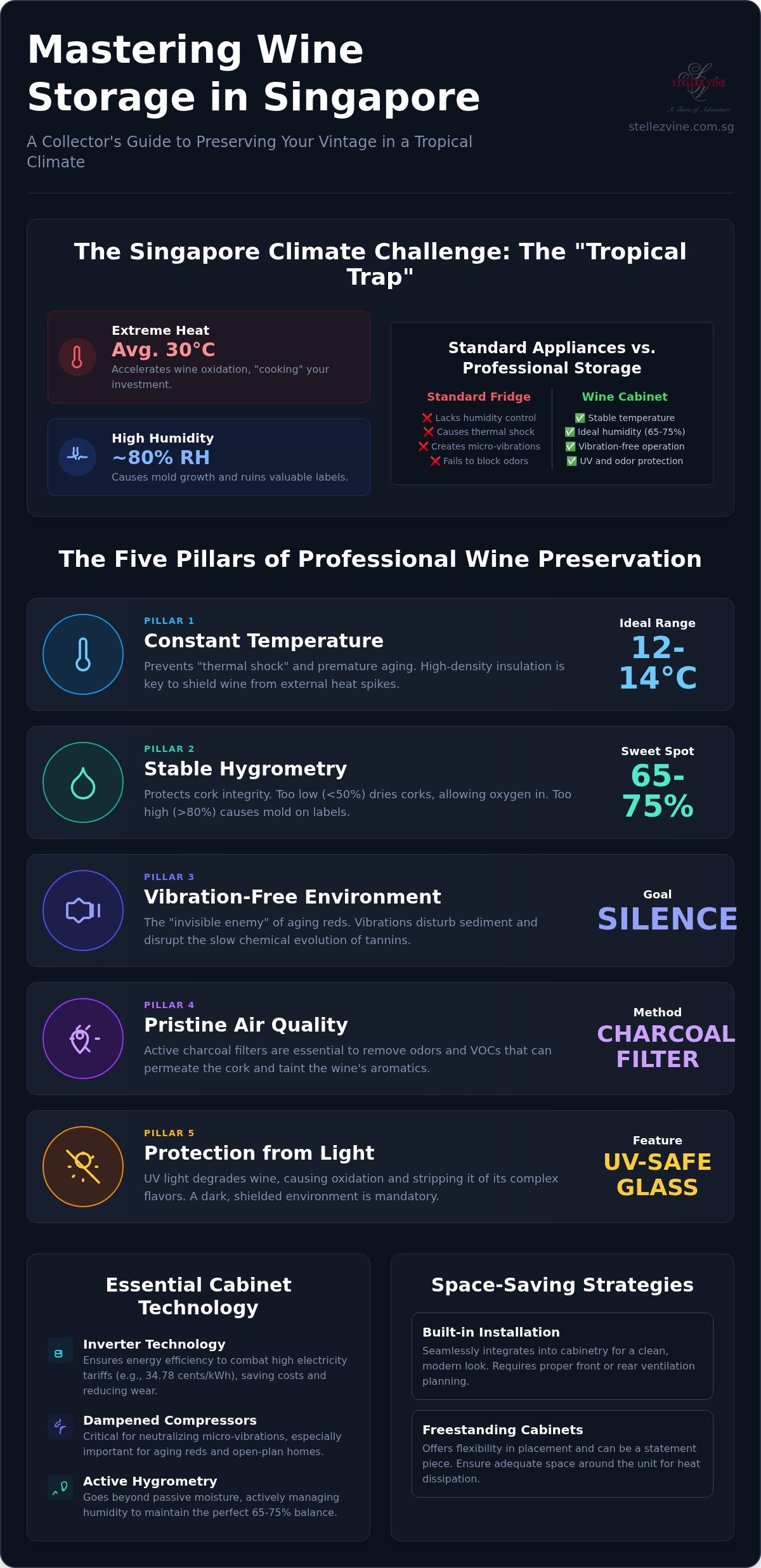
Singapore’s relentless 30°C heat and 80% humidity create a "Tropical Trap" that actively accelerates wine oxidation and destroys the integrity of your collection. While a standard kitchen fridge might keep a bottle cold for a dinner party, it lacks the sophisticated engineering required for long-term preservation. These domestic appliances are designed for food; they drop temperatures rapidly and lack the moisture control necessary to protect a natural cork. In our equatorial environment, climate stabilisation is the proactive process of maintaining a static, cellar-like atmosphere to ensure your vintage matures exactly as the winemaker intended.
Condo living presents a unique risk through thermal shock. Many collectors switch off their home air-conditioning when they leave for work, causing ambient temperatures to spike by 5 or 6 degrees in just a few hours. This constant expansion and contraction of the liquid inside the bottle forces air through the cork, prematurely aging the wine and muting its complex aromatics. Secure your investment with the professional home wine storage solutions Singapore experts recommend to shield your bottles from these daily temperature swings.
Fluctuation vs. Stability
Consistency is the benchmark of quality. A bottle kept at a constant 18°C is significantly safer than one subjected to a 2-degree daily shift. High-density thermal insulation in premium cabinets acts as a barrier, ensuring the internal environment remains unmoved by the sweltering heat outside. Low-end chillers often struggle in our climate; their compressors run almost continuously to fight the ambient heat, leading to mechanical failure and unwanted vibration that disturbs delicate sediment. Professional units prioritize a stable core temperature to protect the chemical evolution of your aged reds.
The Humidity Battle
Managing moisture is a delicate paradox. If humidity drops below 50%, corks dry out and shrink, allowing oxygen to enter and spoil the wine. Conversely, Singapore’s natural 80% humidity can lead to mold growth and ruined labels. Aim for the "sweet spot" of 65% to 75% humidity. While standard fridges rely on passive moisture, premium units use active hygrometry systems based on the principles of wine storage to maintain this balance. Achieving successful long term wine storage Singapore requires this active management to protect both the liquid and its market value. Invest in a system that breathes, ensuring fresh air circulation without compromising the humidity levels required for natural cork preservation.
The Five Pillars of Professional Home Wine Storage
Preserving a world-class collection requires more than just a cool corner of the room. It demands a holistic approach to environmental control. When researching home wine storage solutions Singapore, collectors must look beyond basic cooling to find systems that address the critical pillars of viticultural preservation. These pillars ensure that whether you're storing a delicate Pinot Noir or a robust South African Cabernet, the wine evolves gracefully over decades. A constant temperature between 12°C and 14°C remains the non-negotiable benchmark for multi-varietal aging, providing the stability needed for chemical harmony.
While temperature is the foundation, storing wine in Singapore's tropical climate also requires an obsession with air quality. Professional cabinets utilize active charcoal filters to strip the air of volatile organic compounds and pungent odors. Without this purification, "fridge smells" from nearby kitchens can permeate the cork and taint the liquid, stripping away the nuanced aromatics you've invested in. Fresh air circulation prevents stagnant pockets of air, ensuring the environment remains as pristine as a traditional underground cellar.
Vibration and Sediment Health
Vibration is the invisible enemy of aging reds. Even micro-vibrations from standard household appliances can agitate the wine, disrupting the slow, chemical evolution of tannins and preventing sediment from settling naturally. Premium systems from Eurocave and Liebherr utilize dampened compressors and shock-absorbing shelving to neutralize these movements. This silent operation isn't just about technical perfection; it's essential for open-plan Singaporean apartments where the kitchen and living spaces merge. Protecting the molecular structure of your wine ensures that every glass poured is as clear and refined as the day it was bottled.
Light and Oxidation
Singapore’s abundance of natural light is a silent "wine killer." UV rays penetrate standard glass, triggering chemical reactions that lead to "light strike," which creates off-flavors and dulls the wine's color. High-end home wine storage solutions Singapore residents choose often feature triple-glazed, argon-filled glass doors. These act as a high-performance sunblock, reflecting harmful rays while still allowing you to admire your labels. It's clear that a wine fridge is worth it in Singapore for UV protection alone, providing the necessary darkness for long-term maturation. If you're ready to secure your collection, explore our curated range of storage systems designed for the modern connoisseur.
Comparing Premium Systems: Eurocave, Liebherr, and Kadeka
Selecting the right hardware is a defining moment for any collector. In our tropical environment, the market for home wine storage solutions Singapore offers three distinct paths to excellence. Eurocave remains the undisputed "Gold Standard" of French craftsmanship, specifically engineered to replicate the steady, humid conditions of a natural limestone cellar. Their patented hygrometry systems don't just cool; they manage the very air your wine breathes, ensuring that labels remain pristine and corks stay supple for decades.
Liebherr represents the pinnacle of German precision and modern digital integration. Their 2026 models prioritize energy efficiency, a critical factor given current record-high electricity tariffs. These units offer granular temperature control and seamless smart-home connectivity, allowing you to monitor your collection’s health from your smartphone. For the modern minimalist, Kadeka provides an unmatched balance of reliability and versatility. Their recent Signature Series utilizes advanced inverter compressor technology to minimize energy consumption while maintaining the silent operation necessary for urban high-rise living.
Heritage vs. Innovation
The choice between heritage and innovation often depends on your specific curatorial goals. Eurocave focuses on the "soul" of the cellar, using high-density materials that provide a thermal mass standard domestic fridges can't match. Conversely, Liebherr’s Monolith series treats wine storage as an architectural statement, integrating professional-grade refrigeration into the very fabric of your kitchen. For the collector of vibrant, complex labels like Matias Riccitelli wine Singapore, these systems ensure that the energetic character of high-altitude Argentinian Malbec is preserved exactly as the winemaker intended.
The Value Proposition
Evaluating the right home wine storage solutions Singapore requires a clear understanding of your collection’s trajectory. We categorize systems into three primary tiers based on capacity and intent:
Chillers (30-50 Bottles): Ideal for compact condo kitchens and wines intended for consumption within 1-3 years.
Mid-Range Cabinets (80-120 Bottles): The "sweet spot" for growing collections, offering professional vibration neutralization.
Aging Cabinets (180-220+ Bottles): Investment-grade systems designed for long-term maturation in landed properties or large apartments.
Local support is a non-negotiable factor. As an authorized retailer, we ensure that every Eurocave and Liebherr unit comes with the technical backing required to maintain peak performance in our climate. Kadeka remains a favorite for high-performance urban living because of its slimline footprints and robust local service network, making it a dependable partner for the Singaporean collector.
Space-Saving Strategies for Singaporean Homes
Condo life in Singapore demands a sophisticated approach to spatial logistics. When integrating home wine storage solutions Singapore collectors often face the challenge of reconciling a growing collection with a fixed square footage. Under-counter models provide an elegant, seamless solution for modern kitchens, allowing you to maximize every inch of your cabinetry without sacrificing the aesthetic integrity of your home. Aesthetic integration is about more than just size; it's about selecting finishes, from seamless stainless steel to bespoke glass doors, that complement the premium interiors of a high-rise residence.
Choosing between built-in and freestanding units requires a clear understanding of your property's ventilation capacity. Built-in units are specifically engineered with front-venting systems, making them ideal for the tight niches of a designer kitchen. Freestanding cabinets, however, require significant clearance on all sides to dissipate heat effectively. In our climate, failing to account for this breathability is the quickest way to shorten your unit's lifespan and risk the health of your collection.
Ventilation and Placement
Breathability is the paramount consideration for any installation. A common mistake is placing a wine fridge adjacent to heat-generating appliances like ovens or dishwashers, which forces the cooling system to work overtime. Don't leave your investment to chance; ensure your chosen location is away from direct sunlight and features a perfectly level floor. Leveling is critical because an uneven surface causes the compressor to rattle, creating the micro-vibrations we previously identified as a threat to tannin evolution. Follow a simple three-step check: verify clearance, isolate from heat, and level the base.
Dual-Zone vs. Single-Zone
Determine your storage intent before selecting a unit. A single-zone aging cabinet is a dedicated sanctuary for long-term maturation, while a dual-zone service cabinet offers the versatility to store whites and reds at their respective serving temperatures. This is particularly useful when managing a diverse South African vs Argentinian wine collection. You can keep your crisp Chenin Blanc at a refreshing 8°C while allowing your Argentinian Malbec to rest at a steady 14°C. Look for units with adjustable shelving to accommodate larger Champagne or Magnum bottles, ensuring your storage grows with your tastes. Explore our tailored range of dual-zone cabinets to find the perfect fit for your lifestyle.
Curating Your Home Cellar with Stellez Vine
Hardware is only the beginning of your curatorial journey. At Stellez Vine, we believe the true value of home wine storage solutions Singapore lies in the synergy between the cabinet and the liquid it protects. We act as a knowledgeable filter, selecting only the finest labels from global markets so you can explore with confidence. Our expert consultation service goes beyond technical specifications; we help you match your unit’s storage capacity with your personal drinking habits and long-term investment goals. It’s a proactive approach that ensures your cellar is always stocked with wines that reflect your evolving palate and lifestyle needs.
The Stellenbosch to Singapore Connection
South African boutique wineries produce some of the world's most energetic and age-worthy bottles. However, the best South African wine in Singapore demands the precise climate stabilization we’ve discussed to reach its peak. Whether it’s a rare vintage from Savage Wines or a French benchmark from Chateau Canon Chaigneau, these labels deserve the uncompromising protection of a Eurocave or Liebherr system. We source these exclusive bottles specifically for collectors who appreciate heritage and craftsmanship. Building a collection isn't just about personal enjoyment; it's also about having the perfect bottle ready for special occasions or high-end corporate gifting.
Seamless Experience
Modern collectors value efficiency and expert backup. As a premier online wine shop in Singapore, we provide a streamlined journey from the first click to the final pour. We coordinate the delivery of both your premium storage unit and your curated wine selection, ensuring your new cabinet is ready to perform from day one. This full-circle service simplifies luxury, allowing you to focus on the discovery of new tastes while we handle the complex logistics of preservation and delivery. Elevate your home experience by partnering with a reliable partner who understands both the hardware and the heritage of fine wine. Discover the difference that expert curation and professional-grade storage can make for your collection today.
Elevate Your Collection: The Path to Preservation
Protecting a fine vintage in our tropical environment is a commitment to quality. You now understand that climate stabilization, vibration neutralization, and UV shielding are the absolute guardians of your wine's chemical integrity. By selecting from the heritage of Eurocave, the precision of Liebherr, or the urban versatility of Kadeka, you ensure your investment reaches its full potential regardless of external heat spikes or high humidity.
Since 2009, Stellez Vine has acted as a trusted gatekeeper for the modern connoisseur. As an authorised retailer of global premium brands and specialists in tropical climate preservation, we offer the expert curation your collection deserves. It's time to integrate professional home wine storage solutions Singapore into your property and savor the results of meticulous care. Explore our curated range of Eurocave, Kadeka, and Liebherr wine fridges to discover a bespoke solution for your home. Your next exceptional bottle is waiting to be perfectly preserved.
Frequently Asked Questions
Can I store my wine in a regular kitchen fridge in Singapore?
Avoid using a regular kitchen fridge for anything other than short-term chilling. These appliances operate at roughly 4°C, which is far too cold for maturation and eventually stunts the wine's development. They also lack humidity control, leading to dry, brittle corks. A dedicated unit for home wine storage solutions Singapore maintains the precise 12°C to 14°C range and 65% to 75% humidity required for a collector's investment to thrive.
What is the ideal temperature for a wine fridge in a tropical climate?
Set your wine fridge between 12°C and 14°C for the ideal balance. This range is the universal "sweet spot" that allows both reds and whites to age gracefully without the risk of thermal shock. In a tropical climate, maintaining this steady temperature is critical. Fluctuations are more damaging than a slightly higher but constant temperature, so ensure your unit features high-density insulation to repel Singapore's ambient heat.
Do wine fridges consume a lot of electricity in Singapore?
Modern wine cabinets are designed with high energy efficiency in mind. While Singapore's electricity tariff reached 34.78 cents per kWh in late 2026, premium brands like Liebherr and Kadeka utilize inverter compressor technology to minimize consumption. These systems only run at the speed necessary to maintain the internal environment. Choosing an energy-efficient model ensures that professional home wine storage solutions Singapore remain a sustainable part of your luxury lifestyle.
How often should I change the charcoal filter in my wine cabinet?
Replace your active charcoal filter once every 12 months. This annual maintenance is essential for stripping volatile organic compounds and kitchen odors from the air before they permeate the cork. Stagnant or tainted air can permanently mute the delicate aromatics of a fine vintage. Marking your calendar for a yearly filter change ensures the internal atmosphere remains as pristine as a traditional underground limestone cellar.
What is the difference between a wine cooler and a wine cellar cabinet?
A wine cooler is designed for short-term service, while a cellar cabinet is engineered for long-term aging. Coolers often lack the sophisticated humidity management and vibration neutralization found in professional cabinets from Eurocave or Liebherr. If your goal is maturation, a cellar cabinet is necessary to provide the "Five Pillars" of storage. These units protect the wine's chemical evolution, ensuring it reaches its peak complexity over several years.
Is it better to have a freestanding or built-in wine fridge for a condo?
Built-in units are generally superior for Singaporean condos because they feature front-venting systems. This design allows them to be tucked into cabinetry without overheating. Freestanding models require at least 5cm to 10cm of clearance on all sides to dissipate heat, which is often impractical in compact urban kitchens. Always verify your ventilation path before installation to prevent the compressor from overworking in our humid environment.
How do I prevent mold from growing on my wine labels?
Maintain a stable humidity level between 65% and 75% to prevent mold growth. Singapore's ambient humidity often exceeds 80%, which creates an environment where mold can thrive and destroy your labels. Professional units use active hygrometry systems to shed excess moisture while keeping enough to protect the cork. Ensure your cabinet has proper air circulation and avoid overfilling shelves, as stagnant air pockets are primary breeding grounds for mold.
Why is vibration such a concern for fine wine storage?
Vibration disrupts the slow, chemical evolution of tannins and prevents sediment from settling. Even micro-vibrations from standard household motors can agitate the liquid, leading to a gritty texture and muted flavors. Premium storage systems utilize shock-absorbing shelving and dampened compressors to neutralize these movements. This protection is vital for aged reds, ensuring the wine remains clear and the flavor profile develops the nuanced complexity intended by the winemaker.


Comments