
Crystal vs Glass Wine Glasses: Which Suits Your Wine,

The clearest clue may be the note a wine glass makes, not the sparkle it catches. Crystal is a type of glass, while everyday drinkware is usually soda-lime glass. When tapped, crystal produces a sonorous ring, while cut glass does not. Sound is a useful clue when comparing crystal vs glass wine glasses, though the materials also differ in feel, appearance and care.
It’s easy to see why the choice feels close: both can look elegant on the table, but crystal’s finer rim and brighter refraction can feel more refined. The right option depends on how you serve wine, how much care you’re willing to give your glassware and whether everyday practicality or a polished tasting experience matters most. Read on to compare glass, lead crystal and lead-free crystal, learn how to identify crystal, and decide which material suits your wine. A clear comparison can help you choose confidently, from versatile everyday stemware to a special glass for a favourite bottle.
Table of Contents
Why should I buy lead-free crystal wine glasses?
Lead-free crystal offers a refined appearance and fine-rimmed feel without lead in its composition. Mineral additives help it bend light more strongly than ordinary glass, creating brighter sparkle and clearer detail around cut patterns. If you value a smooth lip and an elegant table setting, lead-free crystal can enhance the experience without choosing lead crystal.
Weight and thickness offer subtler clues. Crystal is generally heavier than ordinary glass, yet it can be formed into thinner objects while retaining strength. Lead-free optical crystal doesn’t gain weight from lead, so its feel depends on design and manufacturing. A thin rim may feel more delicate against the lips, while a heavier bowl can feel more substantial. Compare the rim, stem and overall balance, not weight alone.
Are crystal wine glasses more delicate than regular glass? Generally, yes. Soda-lime glass is more resistant to chipping and sudden temperature changes, while a thin crystal rim needs gentler handling. Handwashing crystal with mild detergent helps prevent scratches. Some lead-free crystal is labelled dishwasher-safe, but handwashing is generally recommended to preserve its brilliance.
What should you consider when choosing wine glasses for different wine styles? Think about the wine’s aromas, the bowl shape and how the rim feels when you take a sip. For aromatic wines, choose a bowl that gives their scents room to develop. For everyday pours, prioritise a comfortable rim and practical care. Do crystal glasses improve the taste or aroma of wine? Their refined structure can concentrate aromas and direct wine towards receptive areas of the palate, shaping perception without changing the wine itself.
Choose lead-free crystal for a fine rim and luminous presentation, or ordinary glass for everyday durability and easier care.
Differences between glass, lead crystal, and lead-free crystal
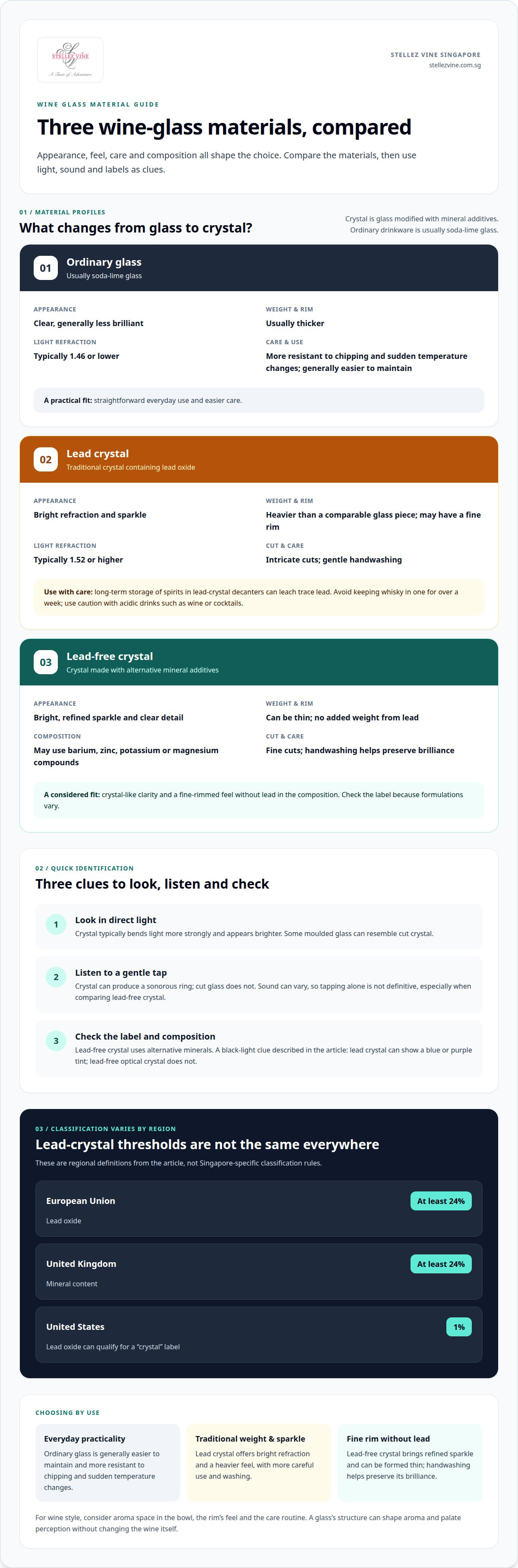
Glass is the starting material; crystal is glass modified with mineral additives. In clarity, weight and sound, crystal typically refracts light more strongly and produces a ringing note when tapped, while cut glass does not.
Lead Crystal
Traditionally, lead crystal contains lead oxide, which increases its weight compared with a similar glass piece. Its refractive index is typically 1.52 or higher, compared with 1.46 or lower for ordinary glass, so it bends light more strongly and appears especially bright. A crystal glass also rings sonorously when tapped. Intricate cuts can add to manufacturing effort, while mass-produced molded glass is sold at a lower price.
Lead-Free Crystal
Lead-free crystal replaces lead with mineral additives such as barium, zinc or potassium. It can retain crystal’s strong light refraction and clear appearance without the extra weight associated with lead. The sound of glassware can vary, so tapping alone is not a definitive way to compare it. The finish and cost depend on the material and manufacturing process: a finely cut design involves different work from a simple moulded form.
Ordinary drinking glasses are usually made from soda-lime glass, using silica, soda ash and limestone. They generally refract less light and lack crystal’s brilliance. Some moulded glass resembles cut crystal, but moulding allows larger-scale manufacturing and a lower selling price. For a simple comparison, view the glass in direct light, then tap it gently and listen for resonance. Black light offers another clue: lead crystal can show a blue or purple tint, while lead-free optical crystal does not.
The difference between crystal and glass goes beyond appearance: composition affects refraction, weight and resonance. Choose ordinary glass for straightforward everyday use, lead crystal for traditional weight and sparkle, or lead-free crystal for crystal-like clarity without lead.
Lead and lead-free crystal
Lead crystal and lead-free crystal use different mineral compositions, and classification thresholds vary by region. These distinctions matter when choosing glassware for wine service, everyday use or display settings.
Lead Crystal Classification and Safety
In the European Union definition, lead crystal contains at least 24% lead oxide. In the United States, glass with 1% lead oxide can be labelled crystal; in the United Kingdom, a glass product needs at least 24% mineral content to qualify as crystal. These are regional definitions, not Singapore-specific classification rules.
Lead makes a comparable crystal piece heavier, but its presence also calls for careful use. Long-term storage of spirits in lead crystal decanters can leach trace lead into the liquid. For example, avoid keeping whisky in a crystal decanter for over a week. Pour only what you plan to serve, then return leftovers to the bottle. Use lead crystal cautiously with acidic drinks such as wine or cocktails.
Lead-Free Crystal Materials
Lead-free crystal replaces lead with alternatives such as barium oxide, zinc oxide or magnesium oxide. Some formulations use barium or potassium to achieve qualities associated with lead crystal. Composition varies by glassware, so check the label to distinguish lead-free crystal from traditional lead crystal.
For serving wine, lead-free crystal offers a way to choose crystal without lead in its composition. It can have a fine rim and intricate cuts without the added weight of lead. That makes it a considered option for wine service, whether you’re choosing glassware for everyday use or special occasions.
Choose according to how you’ll use the glass: lead-free crystal suits regular wine service, while lead crystal is better reserved for occasions when careful handling and short-term use are practical. For spirits in a decanter, keep storage brief and return any remaining drink to its original bottle.
Telling crystal from cut glass by sound
A clear ring can help distinguish crystal from cut glass. Crystal glassware produces a sonorous ringing sound when tapped, while cut glass does not. The difference comes from the material, not simply the elegant pattern on a drinking glass. Use sound as a practical clue alongside appearance, weight and how the glass is made.
Try this gentle comparison with two clean, empty glasses. Hold each securely by its stem or base, then lightly tap the bowl with a fingertip. Listen for a clear, sustained ring from the crystal; cut glass gives a shorter, duller response. Use the same tapping point and force for both glasses, and avoid striking the rims, where delicate edges can chip.
Cut glass is formed by grinding patterns into glass, so its facets can resemble crystal’s intricate cuts. A decorative surface alone doesn’t identify the material. Compare the sound with other clues: crystal tends to refract light more strongly and feel heavier than standard glass. A matching ring and brighter sparkle make crystal more likely than an affordable moulded drinking glass.
Sound is useful, but it doesn’t tell you whether crystal contains lead. Lead-free crystal can also ring, so tapping can’t distinguish its composition from lead crystal. Check the glassware’s material description instead. Appearance and resonance reveal qualities of the piece, not its exact ingredients.
Wash glasses gently before testing or serving wine. Soap film or water spots can cloud the bowl and make visual comparisons less clear, while forceful handling risks damaging delicate stemware. Dry each glass and compare it in the same light. This simple sequence gives you a fairer assessment of resonance, clarity and finish.
Ready to choose an elegant glass for your table? Explore glassware for wine service and compare the style that suits your next pour.
Stellez Vine Singapore: Glassware
Stellez Vine Singapore offers glassware for readers choosing wine glasses to suit their table and serving preferences. Once you’ve weighed the differences between ordinary glass and crystal, use those priorities to guide your selection: consider the look and feel you prefer, plus how you’ll care for the glasses. Glassware sits naturally alongside the wines you serve, including South African Wines, while Kadeka Wine Chillers and Eurocave Wine Fridges provide wine-storage options for your home. Explore these offerings as you shape a considered wine setup, whether you’re refining everyday service or preparing for a special bottle. For help with your selection, contact Stellez Vine Singapore.
Choose a Glass That Makes the Moment Yours
Let your next choice reflect how you want wine to feel at home. Choosing crystal vs glass wine glasses isn’t simply about picking the more elaborate option; it’s a chance to create a table that feels personal, welcoming and ready for the bottles you enjoy. Think about the occasions you’re preparing for, how you like to serve wine, and whether your glassware should blend into everyday meals or bring a sense of ceremony to a gathering. A thoughtful choice can make setting the table feel as considered as selecting the wine.
Take that preference into your next glassware selection and build a wine ritual that feels natural to you. For guidance on your next step, contact Stellez Vine Singapore. Choose with confidence, then raise a glass to the moments ahead.
Frequently Asked Questions
What Is Crystal?
Crystal is glass made with added minerals that alter its optical and physical qualities. Lead crystal uses lead oxide, while lead-free crystal uses alternatives such as barium, zinc or potassium compounds. A wine glass labelled lead-free crystal is still glass, but its composition differs from standard soda-lime drinkware. The term describes a material category, not a naturally occurring crystal.
What Is the Difference Between Glass and Crystal?
Crystal is a modified form of glass, while standard drinkware is commonly made from soda-lime glass. Added minerals can make crystal brighter, more resonant and suitable for finer shapes. To tell them apart, compare the glass in the light and listen to its sound when gently tapped. These clues can help identify crystal, but they don’t reveal whether it contains lead.
Crystal or Ordinary Glass: Which Material Should You Prefer?
Choose ordinary glass for frequent everyday use and simpler care, or crystal for refined presentation or focused wine tasting. For example, a household that prefers dishwasher convenience may favour standard glass, while someone setting a special table may value crystal’s fine rim and brilliance. Let your handling habits, storage space and frequency of use guide the decision.
Investment Value: Is Crystal Worth the Price?
Choose crystal for the experience and craftsmanship you value, not as a guaranteed financial investment. Its appeal may come from a fine rim, intricate cuts or the way it presents a favourite bottle at dinner. Consider how often you’ll use it and whether you’re comfortable with gentler washing and storage. If those qualities matter to you, crystal can earn a place in your glassware collection.
Safety Considerations: Is Crystal Safe?
Lead-free crystal contains no lead. Handle traditional lead crystal carefully around wine and other acidic drinks, and don’t use a lead-crystal decanter for long-term spirit storage. Pour only what you plan to serve, then return leftovers to the bottle. For regular wine service, lead-free crystal or ordinary glass avoids the concern associated with storing drinks in lead crystal.
Which Is Better?
Neither material is universally better; the right choice depends on how you serve and care for wine. Select standard glass for practical everyday use, lead-free crystal for a refined feel without lead, or lead crystal for occasions when careful use suits your routine. If you’re building a versatile collection, start with the material that best fits your usual meals and serving habits.
Comments