
Best Glassware for Bordeaux: How to Choose the Right Wine Glass in 2026

Updated: 2 days ago
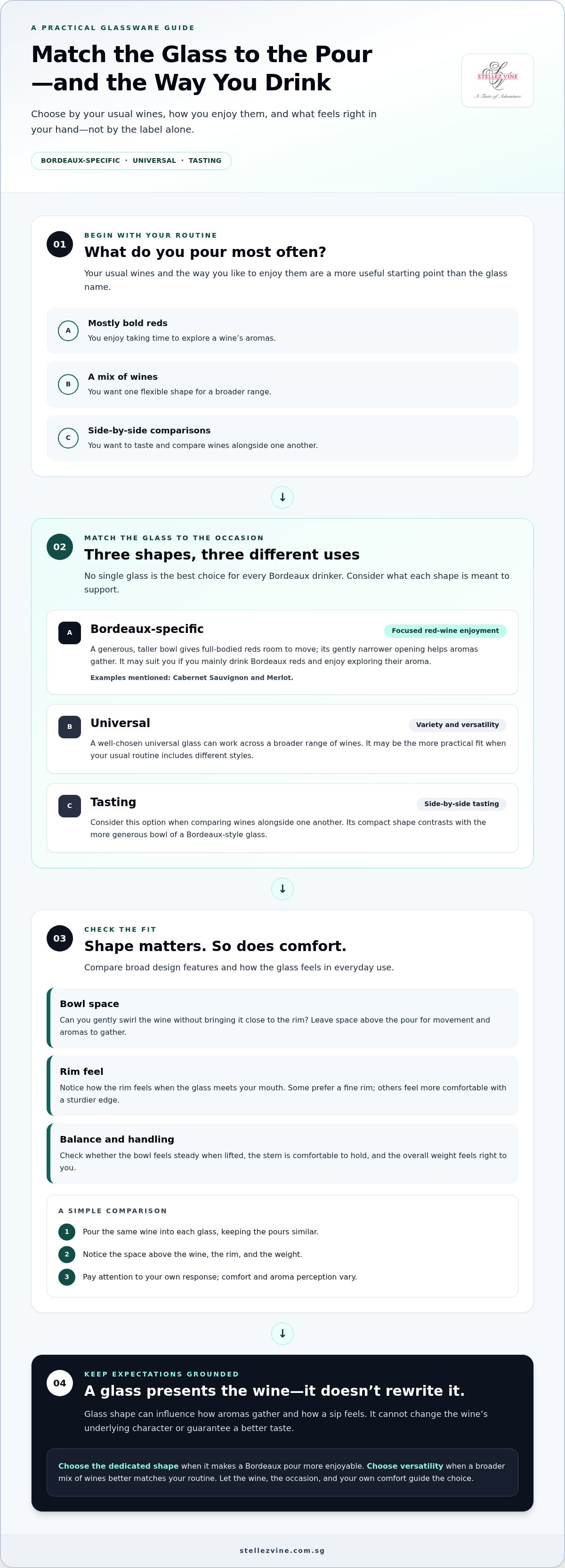
The glass with “Bordeaux” on the label isn’t automatically the best choice for every bottle. The best glassware for Bordeaux depends on what you pour most and how you like to enjoy it. A dedicated glass gives bold reds room to move, while a well-chosen universal glass can work across a broader range of wines. If you want one set for everyday dinners and special occasions, the key question is whether a specialist shape will suit your routine.
Choose by shape, balance and versatility, not by the label alone. A Bordeaux glass’s tall, generous bowl gives full-bodied reds space to open up, while its tapered rim helps focus their aromas. That shape can make it easier to explore a wine, but it doesn’t transform the wine or make a specialist glass essential.
This guide compares Bordeaux-specific, universal and tasting glasses, then covers the features that matter, from bowl design and handling to storage and care. Use the comparisons and practical checks to choose glassware that fits your favourite wines, hosting habits and the way you want to savour each pour.
Table of Contents
Best glassware for Bordeaux: what the shape does
A Bordeaux-specific glass is an option, not a requirement. The right choice depends less on the name printed beside a glass than on whether its shape suits the wine you’re pouring and feels comfortable in your hand. Glassware can influence how aromas collect and how a sip is presented, but it can’t guarantee that a wine will taste better or change its underlying character.
A Bordeaux glass is a generously bowled wine glass with a gently narrower opening, designed to give full-bodied reds room for their aromas to gather before each sip. Think of it as a useful shape for serving certain styles, not a rule every Bordeaux bottle must follow.
What distinguishes a Bordeaux-style wine glass?
The defining feature is space. The bowl is typically larger and taller than a compact tasting glass, with an opening that narrows somewhat towards the rim. It gives you room to swirl the wine without crowding it, while the space above the pour allows aromas to gather as you bring the glass closer.
That’s the intention, not a promise of a particular flavour. A glass may shape your perception of aroma and the way wine reaches your palate, but your experience also depends on the wine itself and your own senses. For a helpful overview of the science behind wine glass shapes, consider how bowl proportions and rim design can affect the way a wine is presented.
There’s no single universal specification for a Bordeaux glass. Makers vary the bowl’s proportions, the degree of taper and the overall feel, so two glasses sold for the same purpose may look and handle differently. When comparing them, focus on the broad design: a generous bowl, a controlled opening and a shape that feels balanced when lifted.
Which Bordeaux wines might prompt a dedicated glass?
Cabernet Sauvignon and Merlot are familiar Bordeaux grape examples. A fuller-bodied red made from either may be the sort of pour that inspires you to reach for a larger-bowled glass. The shape gives the wine room to move as you swirl, so you can explore its aromas at your own pace.
Still, regional origin alone doesn’t settle the glass decision. Bordeaux wines vary in style, and personal preference matters. You may enjoy a dedicated shape for a particular bottle, or find a versatile glass better suits your usual routine. If you mainly drink Bordeaux reds and enjoy taking time over their aroma, a Bordeaux-style glass can feel like a tailored choice. If you serve a mix of wines, one flexible shape may be more practical.
Let the wine and the occasion guide you. Choose a dedicated glass when its proportions make the experience more enjoyable, not because every bottle from Bordeaux demands its own vessel.
How Bordeaux glass shape influences aroma, balance, and each sip
A glass presents a wine; it doesn’t rewrite it. The wine’s fruit, acidity, tannins and other qualities come from the wine itself, while the vessel can affect how its aromas gather and how the sip feels. Glass shape can influence how you perceive a wine, but it can’t change the wine’s inherent character or guarantee a better taste.
That distinction keeps expectations grounded. A Bordeaux-style bowl may make it easier to notice aromas before a sip, but it won’t add aromas that aren’t there or soften every wine in the same way. Your perception also depends on the wine’s serving temperature, how long it has been open, the food alongside it and your own sensitivity to aroma and texture.
Bowl space and aroma concentration
A wider bowl leaves space above the wine where aromas can gather. Swirling moves the wine around the bowl and brings more of it into contact with air, which can help some drinkers notice different aromatic impressions. It’s an invitation to explore, not a required step or a technique that guarantees every note will appear.
When assessing a glass, check that you can gently move the wine without bringing it close to the rim. A modest pour leaves space for aromas and movement. The best glassware for Bordeaux is not simply the largest glass, but one whose bowl gives you useful room while remaining manageable at the table.
Rim, balance, and comfort at the table
The rim is where the glass meets your mouth, so its thickness, shape and finish affect the physical feel of each sip. Some people prefer a fine rim that feels less noticeable; others are more comfortable with a sturdier edge. Neither preference proves that one glass improves the wine more than another.
Balance matters in the hand, too. Notice whether the bowl feels steady when you lift the glass, whether the stem is comfortable to hold and whether the overall weight feels right. During a long meal, a glass that’s easy to grip and doesn’t feel tiring may be more enjoyable than one chosen for appearance alone.
Try a simple comparison if you have more than one glass available: pour the same wine into each, keep the pours similar, and notice the space above the wine, the rim and the weight as you take a sip. Hold serving conditions steady as much as you can. Pay attention to your own response rather than searching for a prescribed result. Comfort is personal, and aroma perception varies from drinker to drinker.
Let the glass serve the occasion as well as the wine. For a considered Bordeaux pour, choose a shape that lets you explore its aroma and feels natural in use. If you’re refining your table setup, you can explore glassware alongside curated wines as part of a thoughtful wine experience.
Bordeaux-specific vs universal vs tasting glasses: which suits you?
There’s no single glass that earns the title of best for every Bordeaux drinker. A specialist shape focuses on a particular style of red, a universal glass keeps your collection flexible, and a tasting glass supports close comparison. Compare them by what you pour, how you use your glasses and how much variety you want to store and care for.
The trade-off is straightforward: a dedicated shape gives Bordeaux a considered place at the table, while a universal glass makes fewer demands on storage and routine. A tasting glass has a different priority, helping you focus on what’s in the glass rather than creating a formal serving style.
When a dedicated Bordeaux glass makes sense
Choose a dedicated Bordeaux glass if you frequently pour Bordeaux and enjoy matching glassware to the wine. Its appeal is the focused experience: a shape selected with fuller reds in mind, rather than a promise of superior taste. The practical compromise is having another glass type to store, wash and set out, especially when serving several wine styles at one meal.
When a universal or tasting glass is the smarter fit
A universal glass suits drinkers who want one dependable shape for varied bottles and everyday occasions. A tasting glass is a practical choice for side-by-side comparisons, where consistent glassware can help you concentrate on differences between pours. For a table with several wine styles, consider the menu as well as the glass. This guide to choosing wine for a dinner party can help you plan the pours.
Make the final call by looking at your habits, priorities and personal preference. If Bordeaux dominates your table, a specialist glass may feel worthwhile. If you host varied meals or prefer a simpler cupboard, universal glassware can be more useful. If comparison is the pleasure, keep tasting glasses in the mix. The best fit is the one you’ll reach for and enjoy using.
How to choose Bordeaux glassware for your table and routine
Choose glassware for the way you actually drink, not for an idealised cellar or a single special occasion. A quick decision sequence keeps the choice practical: identify your usual pours, compare the shapes, assess how each glass feels, then consider storage and care. The best glassware for Bordeaux is the option that suits your wines and routine, not simply the most specialised one.
Match the glass to how you drink wine
Start with an honest question: do you mostly enjoy Bordeaux, open a special bottle now and then, drink a mix of wine styles, or compare wines side by side? Frequent Bordeaux pours may make a dedicated glass appealing. For occasional celebrations, a versatile glass may be more useful because you can also use it throughout the week. If your household often serves different wines, fewer glass types can make hosting simpler.
For formal hosting or a considered present, think about how the glass will fit the recipient’s habits and table. Specialist glassware can make a focused gift for a Bordeaux enthusiast; a versatile choice may suit someone whose menu and bottles change from gathering to gathering. If wine is part of a business occasion, explore ideas in this guide to corporate wine gifts.
Assess comfort, care, and practical fit
Handle a glass before deciding if you can. Notice whether its weight feels comfortable, the stem is easy to hold, and the rim feels pleasant against your mouth. Picture using it through a full meal, not just lifting it once. Then consider where it will live: check that the bowl and stem fit your storage space, and think about how easily you can wash and dry it without awkward handling.
Breakage is a practical ownership consideration, particularly if glasses will be used often or by a busy household. It doesn’t mean you should avoid fine glassware. It simply makes care, storage and everyday handling part of the decision, alongside shape and appearance. Follow the care guidance provided for the glass you choose rather than assuming all glassware should be cleaned the same way.
Use this checklist before buying:
Use: Will the glass serve Bordeaux often, occasional special bottles, varied wines or comparative tastings?
Shape: Does the bowl suit your preferred pours without making the glass cumbersome?
Comfort: Do its weight, grip and rim feel right to you?
Practicality: Can you store, clean and handle it comfortably at home?
Choose the shape that earns its place at your table. Explore Stellez Vine Singapore's glassware alongside a curated wine selection.
Explore Bordeaux glassware and make your choice with confidence
Your decision comes down to how you drink. A dedicated Bordeaux shape makes sense if you regularly pour Bordeaux and enjoy choosing glassware for a focused experience. A universal glass is the practical alternative if you want one shape for a wider range of wines and occasions. Neither guarantees a better bottle; the right glass complements the wine and makes the ritual of serving it your own.
Keep the goal simple: find a glass you’ll reach for, enjoy holding and feel comfortable caring for. The best glassware for Bordeaux isn’t defined by a label alone. Match the shape to your usual pours, then weigh that choice against the realities of your table, storage and routine.
A final three-point Bordeaux glassware checklist
Before choosing, run through these three points. They turn a broad comparison into a decision you can use while browsing:
Match your wines and occasions. Think about whether Bordeaux is a frequent pour, an occasional special bottle or one of many styles you serve. Let your real habits set the priority.
Check the practical fit. Consider how the glass feels in your hand and whether you have room to store it. Factor in the care you’re comfortable giving it, especially if it’ll be used often.
Choose for actual use. Go specialist if a focused Bordeaux experience matters to you; choose a versatile glass if broader everyday use matters more. Don’t let the name alone make the decision.
That’s a sound choice whether you’re setting the table for a relaxed dinner or bringing out a bottle you’ve saved for a meaningful occasion. If you’re still deciding between specialist and versatile glassware, picture the next few times you’ll use it. Which option would you naturally reach for? That answer is often more helpful than searching for a single “perfect” shape.
Discover glassware alongside your wine selection
Glassware is one part of a considered wine experience. It contributes to presentation, handling and the pleasure of serving, while the wine itself remains at the heart of the occasion. Pair your choice with the wines you enjoy, whether that means exploring a Bordeaux pour or selecting a broader mix for the table.
Stellez Vine brings glassware together with a curated wine selection, including French wines, for readers shaping their own approach to serving and hosting. Browse the glassware and wines, then choose a combination that feels right for your next gathering. A thoughtful glass is a refined finishing touch, not a substitute for wine quality. Make your selection with confidence and savour the next Bordeaux pour in a way that suits you.
Explore Stellez Vine’s glassware and curated wines for your next Bordeaux moment.
Make your next pour a new discovery
Your glass can become part of a personal ritual: the familiar reach for a favourite bottle, a thoughtful place setting, or a new wine shared around the table. As you enjoy more bottles, notice which glass feels right for the moment. The best glassware for Bordeaux should support that pleasure, not turn wine enjoyment into a set of rules. A considered choice complements a wine; it doesn’t replace the character or quality already in the bottle.
Let your next purchase follow curiosity. Stellez Vine offers glassware alongside a curated selection of premium wines, including French wines, so you can explore both parts of a considered wine experience. Explore glassware and discover your next favourite wine, then bring your choice to the table with confidence. A memorable pour starts with the wine you’re excited to share.
Frequently Asked Questions
What is the best shape of glass for Bordeaux wine?
A tall glass with a generous bowl and a gently narrowing rim is a classic choice for Bordeaux. Its proportions give you room to swirl and space above the wine to notice its aromas. For a practical comparison, pour the same wine into two glasses and compare how each feels to hold and sip from. The best glassware for Bordeaux is the one that suits your wine and your preferences.
Do you need a special glass for Bordeaux?
No, a special glass isn’t essential to enjoy Bordeaux. A clean, comfortable wine glass that lets you appreciate the wine is a practical choice. A dedicated shape may appeal if you often open Bordeaux and enjoy matching glassware to the occasion. If you’re serving one bottle at dinner, use a glass you like rather than delaying the pour for a specialist option.
Can you use a universal wine glass for Bordeaux?
Yes, a universal wine glass can work well for Bordeaux, especially if you prefer one shape for different bottles. Choose one with enough room to move the wine gently and a rim that feels comfortable. For example, if you’re serving a red alongside a white at the same meal, a universal glass can keep the table setting simple. It’s a useful choice, not a compromise by default.
What is the difference between a Bordeaux glass and a Burgundy glass?
A Bordeaux glass is generally taller and more upright, while a Burgundy glass typically has a broader, rounder bowl. These shapes reflect different serving traditions: Bordeaux glasses are often associated with Cabernet Sauvignon and Merlot, while Burgundy glasses are commonly used for Pinot Noir. Designs vary between makers, so treat the names as helpful style cues, not strict rules about which glass a wine must use.
How large should a Bordeaux wine glass be?
A Bordeaux glass bowl commonly holds about 18 to 22 ounces, though capacity varies by design. That figure describes the glass’s total volume, not the amount to pour. Leave ample space above the wine so you can move it gently without risking a spill. When comparing glasses, check the stated capacity and consider whether the overall size feels practical for your table and storage.
Does an expensive wine glass make Bordeaux taste better?
Not necessarily. A higher price doesn’t guarantee that you’ll enjoy Bordeaux more, and a glass can’t improve the wine’s underlying quality. What matters is whether its shape, weight and rim suit your preferences. If considering a premium glass, focus on details you can assess, such as how it feels to hold and whether you’ll use it often. A comfortable, well-chosen glass can make serving more enjoyable without changing the wine itself.
How do you clean and store fine wine glasses safely?
Follow the care instructions supplied with your glasses, since cleaning guidance can differ by design. Handle each glass gently, avoid knocking it against the sink or other dishes, and dry it without twisting the stem. Store glasses in a stable place where they won’t bump into one another. For a particular glass, follow its maker’s guidance rather than assuming it’s suitable for a dishwasher. Utilizing dedicated drying mats, stemware holders, or other handy kitchen gadgets—such as those available from Happy Home Shopping Guyana—can also help make cleaning and storing delicate home barware much safer.
Comments