
Aging Potential of French Bordeaux: What Collectors Should Know

A bottle of Bordeaux can be old without being ready, and ready without becoming better if you wait. That’s the key to understanding the aging potential of French Bordeaux: time is an opportunity, not a guarantee. The right drinking window depends on what’s in the bottle and how it has been kept.
Bordeaux’s reputation for longevity is well earned, but it can make choosing when to open a bottle feel like guesswork. A château’s standing or a wine’s age alone won’t tell you whether it has the structure to mature gracefully. Vintage conditions, style, balance and storage all matter, and even excellent wines evolve at their own pace.
This guide will help you assess those factors, judge a bottle’s likely drinking window and decide whether to buy, cellar or open it now. You’ll also see why a wine that can age doesn’t necessarily need years in the cellar, and how careful storage helps preserve its character. The aim is simple: make your next Bordeaux decision with more confidence, and savour the wine at the stage that suits you.
Table of Contents
What Does Ageing Potential Mean in French Bordeaux?
Bordeaux’s reputation for ageing can make every bottle seem like a cellar project. It isn’t. Some Bordeaux wines are crafted for earlier enjoyment, while others have the structure to develop over time. The question isn’t simply how old the wine is, but whether its character, condition and your own taste make waiting worthwhile.
Ageing potential is a wine’s capacity to evolve over time while retaining balance and interest. It describes what a wine may be capable of, not a promise that it will improve or a rule that it must be kept. The aging potential of French Bordeaux varies from bottle to bottle, so the region’s reputation is a starting point for investigation, not a drinking instruction.
What does it mean for a wine to age well?
As wine matures, its aroma, flavour and texture can change. Fresh fruit notes may give way to more developed scents such as dried fruit, cedar or earthy nuances. Tannins may feel less firm, and the overall impression can become more integrated. These are possibilities, not a checklist every bottle will follow. Ageing well means that change preserves a wine’s balance and gives the drinker continued interest, rather than simply making it older.
Bordeaux’s varied growing conditions and winemaking traditions contribute to its distinctive regional character, as outlined in Winemaking in Bordeaux. Yet even a wine with ageing capacity can be enjoyable while young, when its fruit may be more prominent and its structure more immediate. Think of maturity as one possible expression of the wine, not an automatic improvement.
Separate two questions: Can this wine develop? and Which stage will I enjoy most? A drinker who loves bright fruit and a more direct profile may prefer a Bordeaux earlier, while someone curious about mature aromas may choose to wait. Neither preference makes the wine more or less worthy.
Does every Bordeaux need to be cellared?
No. Bordeaux includes wines intended for earlier enjoyment as well as wines suited to longer maturation. The region, its banks and its classified estates aren’t single, uniform styles; a label alone doesn’t establish that a bottle needs years in storage. Assess the individual wine, vintage and condition rather than assuming that age or status means “wait.”
Before setting a bottle aside, consider whether you have a reason to wait. Perhaps you value the possibility of a more developed profile, or want to explore how the wine changes. If you already appreciate its present character, opening it can be the right choice. Cellaring is only useful when the wine’s potential, suitable storage and your patience align.
Age is a possibility to assess, not a rule for drinking. That distinction turns Bordeaux’s ageing reputation into a practical choice: understand what the bottle may offer, then decide when you’d most enjoy it.
Which Wine Characteristics Shape French Bordeaux’s Ageing Potential?
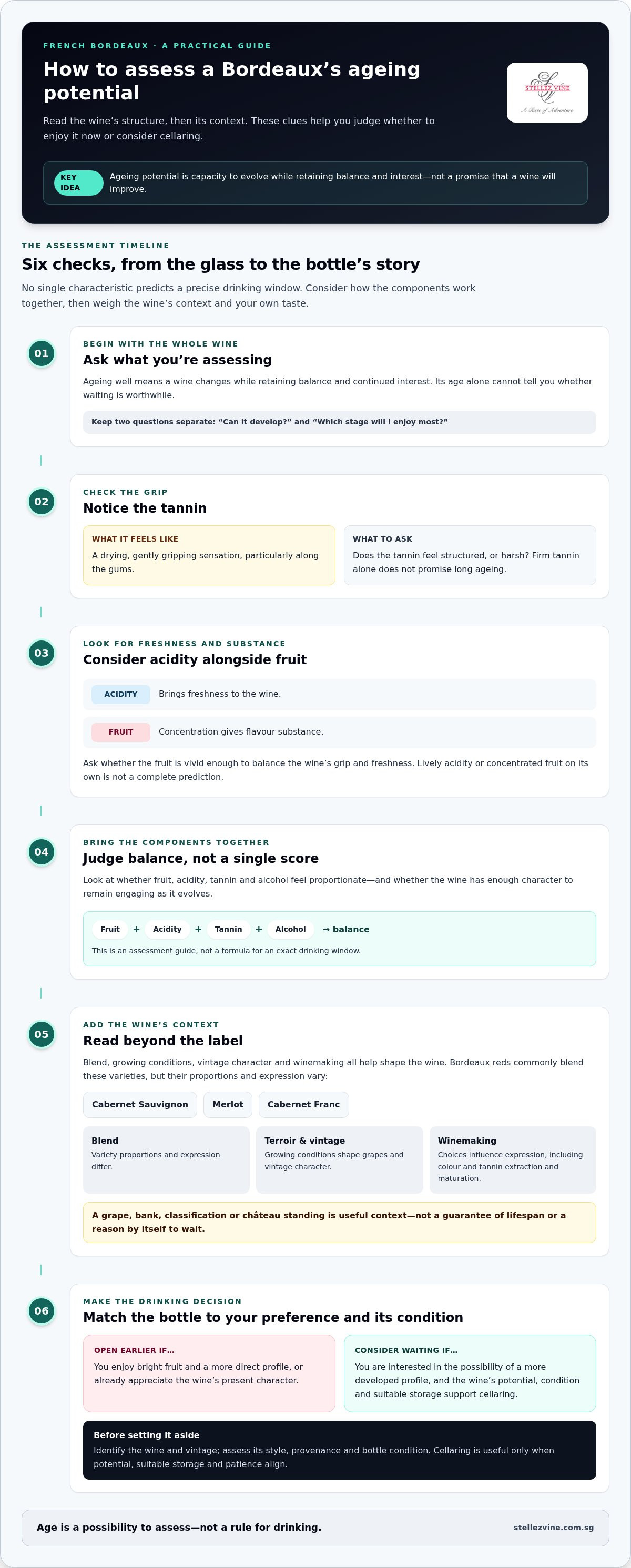
To judge a Bordeaux bottle, look beyond its age and consider how its components work together. The aging potential of French Bordeaux reflects the interaction of grape varieties, growing conditions, vintage character and winemaking, expressed through tannin, acidity, fruit concentration and balance. These qualities offer clues, not guarantees: no single feature can promise how a wine will develop.
Start with the wine’s overall structure. Ask whether its fruit and freshness feel integrated with its tannins, or whether one element dominates. That gives you a more useful first impression than treating any one characteristic as a simple score for longevity.
How do tannin, acidity, fruit, and balance contribute?
Tannin creates a drying, gently gripping sensation, particularly noticeable along the gums. It contributes structure and can feel firm in a young red, but high tannin alone doesn’t mean a wine is destined for long ageing. Consider how it sits alongside the wine’s fruit and other components.
Acidity brings freshness, while fruit concentration gives flavour substance. Neither is a standalone predictor: lively acidity without sufficient fruit may not create a compelling whole, and concentrated fruit without freshness can feel heavy. Look for balance, where fruit, acidity, tannin and alcohol feel proportionate, and the wine has enough character to remain engaging as it evolves. These are assessment points, not a formula for predicting a precise drinking window.
Why do blend, terroir, and winemaking matter?
Bordeaux reds commonly blend Cabernet Sauvignon, Merlot and Cabernet Franc, but their proportions and expression vary across wines. Each variety contributes differently to a blend’s flavour, texture and structure, yet none guarantees a particular lifespan. Read the wine as a whole rather than assuming that a particular grape automatically means “age-worthy.”
Terroir brings together the growing conditions that shape the grapes, helping give a wine its sense of place. Vintage conditions also affect how grapes ripen and the character they bring to the blend. Winemaking then influences how those grapes are expressed, including the extraction of colour and tannin and choices around maturation. Together, these influences help explain why two Bordeaux wines can feel quite different even when they share a region or grape variety.
For a practical first pass, consider these questions:
Does the tannin feel structured or harsh?
Is the fruit vivid enough to balance the wine’s grip and freshness?
Do the components feel integrated, or does one quality dominate?
What do the vintage and producer’s style add to your reading of the bottle?
Use the answers to guide further research, not to declare a guaranteed outcome. If you’re ready to compare Bordeaux styles, explore French wines and discover how individual bottles express their character.
Can Bordeaux Ageing Potential Be Judged by Bank, Classification, or Vintage?
Bank, classification and vintage can help you read a Bordeaux label, but none can tell you on its own whether a particular bottle is ready to drink or will improve with time. Treat them as context, then assess the wine itself and, for an older bottle, its condition and storage history. Prestige and age are not proof of quality or readiness.
What can Left Bank and Right Bank tell you?
Left Bank and Right Bank are useful geographic reference points, and they often suggest differences in blend and style. Left Bank reds are commonly Cabernet Sauvignon-led, while Merlot is often more prominent in Right Bank blends. These are broad tendencies, not fixed rules: proportions and wine character vary by estate, vintage and wine. A dedicated guide to Right Bank terroir can add useful regional context alongside this broad comparison.
How much should classification and vintage influence a decision?
Classification can help orient your research, but it is not a direct measure of a bottle’s current condition or future development. Systems also differ: the 1855 Médoc classification remains static, while Saint-Émilion’s classification is revised periodically. A ranking can provide historical and regional context, but the individual producer, wine and vintage still deserve attention.
Vintage matters because growing conditions affect ripeness, balance and the wine’s overall structure. Its significance depends on how a particular wine was made and how it has been stored, so avoid turning a broad vintage reputation into a guaranteed forecast. For a vintage-specific judgement, use reliable, current wine references and look for information grounded in the exact wine. Don’t assign a drinking date based on a general vintage label alone.
The aging potential of French Bordeaux is best judged through several clues together: bank and classification help frame expectations, while vintage, producer, bottle condition and your own taste sharpen the decision. An older bottle may be beautifully mature, past its best or still developing. Let evidence guide the choice, not prestige or the number of years on the label.
How Should You Assess a Bordeaux Bottle Before Cellaring It?
Turn a label and bottle into a practical decision, not a guess. For the aging potential of French Bordeaux, follow a clear sequence: identify what you have, assess its style, review its history, then decide whether cellaring suits the wine and your plans. The more complete the information, the more confidently you can choose to open, hold or investigate further.
What should you check on the label and bottle?
Start with the producer, appellation and vintage. If blend information is available, note it as another clue to the wine’s style. These details help you research the specific bottle, but none predicts its condition or drinking readiness on its own.
Next, examine the bottle without treating appearance as a verdict. Look for signs such as leakage, a pushed cork, a damaged capsule or an unusually low fill level. Sediment can occur in mature red wine and does not, by itself, mean the wine is faulty. Visible clues can prompt further investigation, but tasting is the only way to assess what is in the glass.
Keep a simple record as you build a collection: when and where you acquired the bottle, any storage details provided, and changes in its condition. That history can make later decisions more informed.
How does storage history affect ageing confidence?
Ageing potential assumes that a wine has been kept in suitable conditions. A bottle’s years in storage don’t reveal whether those conditions were consistent, and an unknown history makes its present state harder to judge. Treat provenance as part of your assessment, especially for an older bottle or one acquired second-hand.
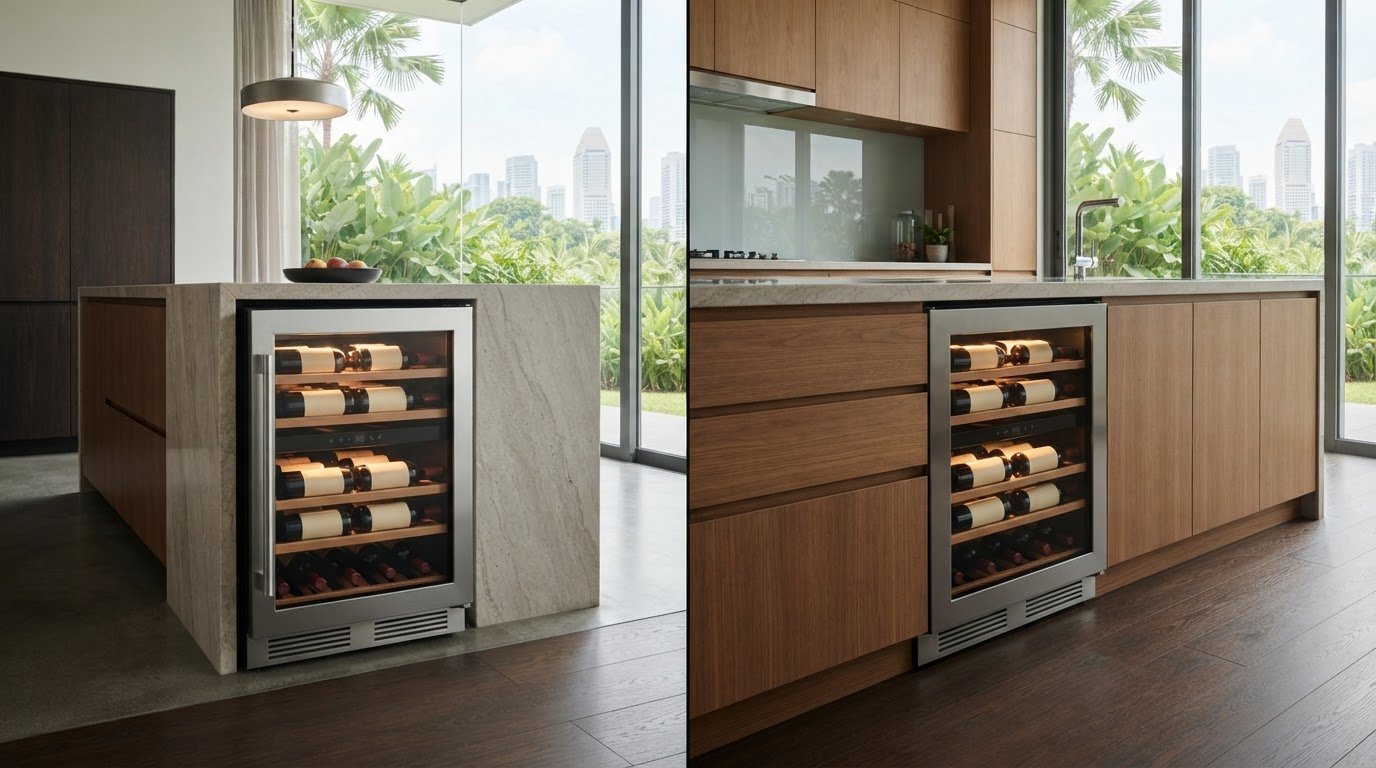
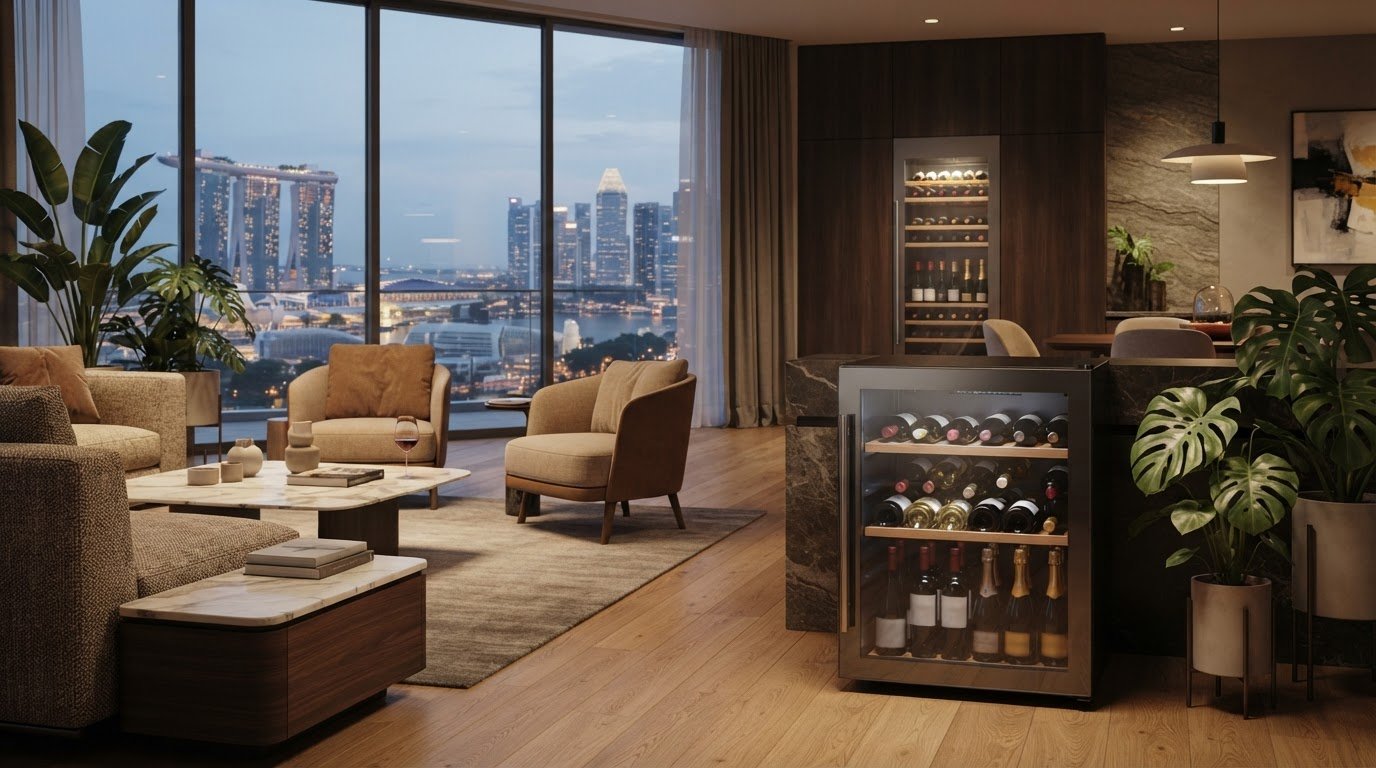
For bottles you plan to keep, prioritise stable, appropriate storage rather than relying on age alone to preserve quality. A wine fridge can provide a dedicated storage option. When choosing one, first decide where it will fit and whether you need single-temperature storage, which is best for long-term storage, or a multi-temperature unit intended for high-turnover venues such as restaurants and bars. Stellez Vine Singapore offers wine fridges from Eurocave, Kadeka and Liebherr.
Check the fitting style before choosing a model. Built-in units are intended for kitchen cabinet integration, while countertop units are usually bigger in size and come with front vents. A freestanding unit should not be placed in cabinets or under islands. Leave a minimum of 5 cm clearance on all sides, keep the fridge away from direct sunlight and heat sources, and make sure it should not be completely enclosed. These placement details help you plan the space before selecting a fridge.
Once you’ve gathered the clues, use this short checklist:
Open: You’re curious about its current character, or the available history gives you little confidence that further storage will help.
Hold: The wine’s style appears suited to development, its condition gives you confidence, and you can store it appropriately.
Investigate: The vintage, provenance or bottle condition raises questions. Seek information specific to that wine before making a cellaring decision.
Make the next choice with the bottle in mind. Explore French wines and consider a wine fridge from Stellez Vine Singapore for suitable storage.
When Should You Open Bordeaux, and What Is the Next Step?
The best time to open a Bordeaux depends on what you want from it. You might prefer the lively fruit and direct character of a younger wine, or be curious about the savoury, more developed notes that can emerge with maturity. If you’re considering cellaring, the wine’s style, condition and storage history matter more than a simple count of years.
Should you drink Bordeaux young or wait?
There’s no universal age threshold that makes a Bordeaux ready, and time doesn’t improve every bottle. A wine’s capacity to evolve is only part of the decision; your preferred style matters just as much. Choose the experience you want, then assess the bottle against it. If you’re unsure, reliable information about the specific producer and vintage can help guide the choice without promising a precise drinking window.
For immediate enjoyment, consider whether you’d rather savour the wine as it presents today than wait for a possible change in character. For mature character, look for sound bottle condition and a credible storage history, then weigh those details against what you know about the wine. For considered cellaring, make sure you can store it appropriately and are genuinely happy to wait. The aging potential of French Bordeaux is a reason to make an informed choice, not an obligation to delay opening.
How can you explore Bordeaux with confidence?
As you browse, compare the producer, appellation and vintage, then look at any available details about the bottle and its history. Use these clues together rather than relying on one prestigious label or a region-wide reputation. If you’re still learning your preferences, exploring different Bordeaux wines can help you discover which styles you enjoy young and which you’d be interested in revisiting after time in the cellar.
Stellez Vine’s French selection includes Château Canon Chaigneau, a way to explore a Bordeaux wine without assuming a particular ageing window. Consider the bottle on its own merits: its identity, available information, condition and the kind of experience you hope to enjoy. If cellaring is part of your plan, make suitable storage part of the decision from the outset; a wine’s potential depends on more than the label and vintage.
Let curiosity lead, then choose with care. Explore Stellez Vine’s curated wine selection and discover a French wine to suit your next pour or your cellar plans.
Make Your Next Bordeaux Pour Count
Let your next bottle be a choice, not a test of patience. The aging potential of French Bordeaux can make cellaring an enticing possibility, but the most rewarding decision is the one that suits your taste, your curiosity and the bottle in front of you. You might open a wine to enjoy its vivid, youthful character, or set one aside because you’re eager to discover how it changes. Both are worthwhile ways to appreciate Bordeaux.
If you’re building your collection, follow that curiosity across producers and styles. Château Canon Chaigneau offers a French wine to explore, while a broader selection of international wines and storage products can help shape a collection around the experiences you want to enjoy.
Explore Stellez Vine’s curated wine selection and find a bottle to savour now or consider for your cellar. Choose with care, then enjoy the discovery.
Frequently Asked Questions
Can all French Bordeaux wines age well?
No. Bordeaux includes wines made for enjoyable, relatively early drinking as well as bottles with the structure to evolve over time. The aging potential of French Bordeaux depends on the individual wine, not the regional name alone. For example, a straightforward bottle bought for a casual meal may offer its best appeal in its fresh, fruit-forward character, without gaining anything from extra years in storage.
Does Bordeaux wine get better with age?
Not always. Age can change a wine’s aromas, flavours and texture, but change isn’t automatically improvement. A well-kept bottle may develop complexity that you enjoy, while another may lose freshness or pass its preferred stage. Think of maturity as a different expression, not a guaranteed upgrade. If you’re choosing between opening a bottle now and waiting, consider whether you enjoy its current style and have a sound reason to hold it.
How can you tell if a Bordeaux wine is ready to drink?
Use information about the specific producer and vintage as a starting point, then consider the bottle’s storage history and condition. No label or visual check can establish readiness with certainty. Once opened, pour a small taste and notice whether the fruit, acidity and texture feel appealing to you. If the wine seems muted or unbalanced, give it a little time in the glass before deciding; its response can offer useful clues.
Does a Bordeaux wine’s classification determine its ageing potential?
No. Classification gives context about an estate within a particular system, but it doesn’t guarantee how an individual wine will develop or whether it’s ready today. Two bottles with similar status can differ by producer choices, vintage and provenance. Use classification to guide your research, then look for information about the exact wine and bottle. A prestigious label is a reason to learn more, not proof that prolonged cellaring is necessary.
Can you drink Bordeaux wine young?
Yes. Many Bordeaux wines can be enjoyed while young, particularly if you prefer a more immediate, fruit-led style. There’s no universal minimum age that applies across the region. Consider the producer’s guidance and the wine’s character, then open it if that suits your occasion. A young bottle served with a meal can be a rewarding way to explore Bordeaux without treating cellaring as a requirement for appreciating it.
What happens if Bordeaux wine is stored poorly?
Poor storage can hasten a wine’s development and compromise its freshness, aroma and flavour. Excessive warmth or repeated temperature swings may cause it to age unevenly; strong light can also damage its character. If the seal is compromised, unwanted oxygen exposure may further affect the wine. A bottle’s appearance alone can’t confirm the damage, so consider its storage history and taste it before deciding whether it remains enjoyable.
Comments